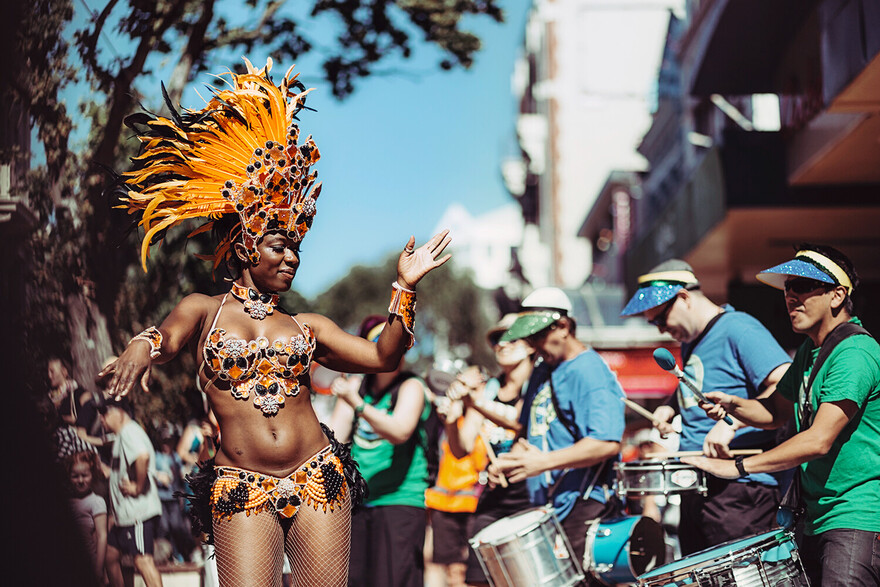
Batucuda 13, at CubaDupa 2016. - Amandala Photography
Since 2015, Wellington has come together every March to celebrate CubaDupa. In just over a decade, this free, weekend-long festival – incorporating live music alongside art, dance, parades and more – has become a true staple on the capital’s cultural calendar.
CubaDupa’s story begins when Wellington’s Creative Capital Arts Trust (CCAT) established itself in 2011. CCAT formed to take charge of several regional artistic events, including New Zealand’s annual Fringe Festival. Although events run by the trust vary, they share the common goal to focus on artists in the first decade of their career, delivering events for Wellington and by Wellington by sharing knowledge bases, infrastructure and office costs.
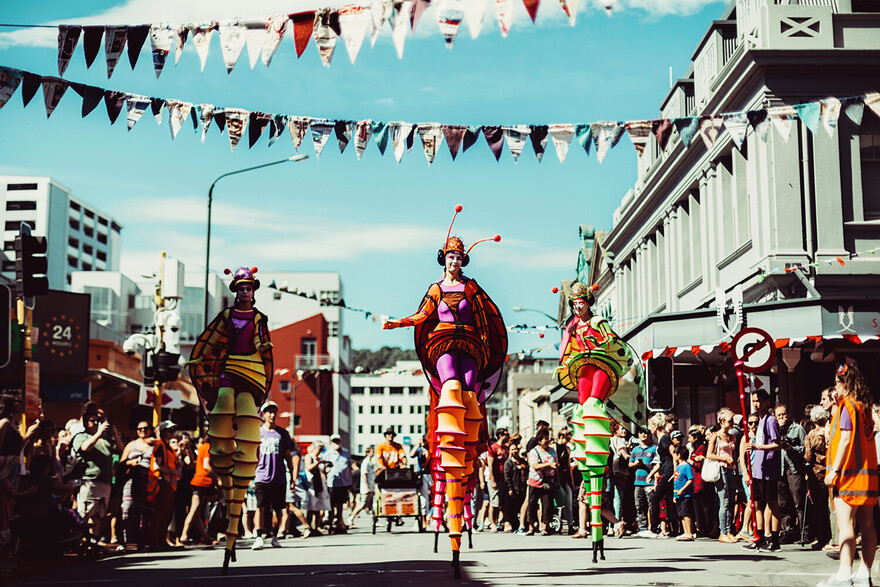
Lady Bug Opera on Cuba Street, CubaDupa 2016 - Amandala Photography
Around 2014, the trust approached then-Womad director Drew James to conceptualise a new festival for Wellington’s Cuba precinct. James immediately imagined the festival as a spiritual evolution from Cuba Street Carnival, a street parade taking place in Pōneke since the late 1990s which took inspiration from international celebrations like Rio de Janeiro’s Carnivale.
“It drew really big audiences, but the cost of putting it on made it unsustainable,” says James. Having recently toured several European street festivals, he had taken note of how they kept audiences moving to improve operational capacity. Thus, while his new festival would maintain the carnival’s parade and dance elements, James would prioritise clearer, safer organisation and a layout encouraging turnover. “We didn’t want people to sit in front of a stage all day, we wanted them to see an act then go somewhere else to see another, and more while they’re going from place to place.”
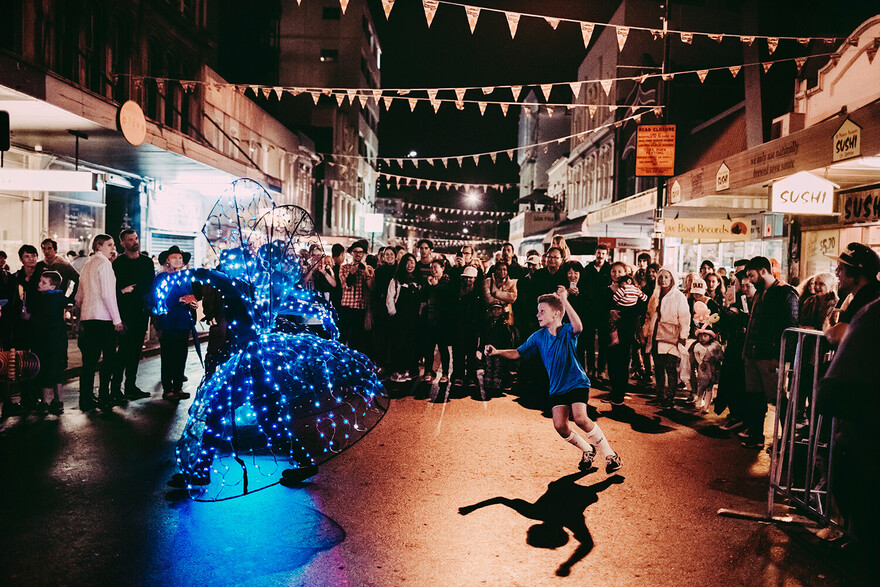
Vospertron Galaxy Dresses, CubaDupa 2017. - Amandala Photography
Paying tribute to Cuba Street’s history also played a pivotal role in James’ early planning. “In many instances, that was the first street that people stepped onto when they arrived to Wellington on a sailing ship in the 1860s,” he says. The street is even named after an early settler ship. “It was always a very independent street … A place where people went for entertainment and live music.”
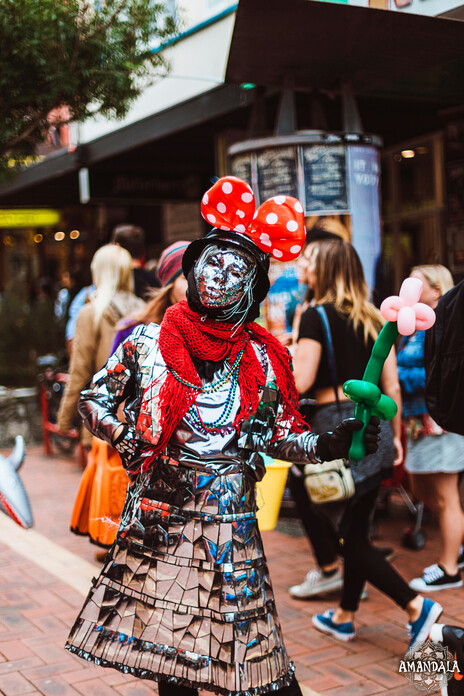
Mirrored costume, CubaDupa 2017. - Amandala Photography
The carnival’s successor would be an equal collaboration between the Creative Capital Arts Trust and the Cuba Street neighbourhood. After surveying the precinct’s businesses about their experiences with the street carnival, James found that it had been their worst trading day each year, due to market stalls blocking off shop entrances. So instead of bringing in market vendors, James sought resource consent for the existing restaurants and stores to run onto the streets. “I worked with them to develop programmes inside, as well as, licensed areas outside … That became the catalyst for how the ownership by the community really started.”
As a free festival for the community, people would turn up no matter what, so James programmed to give punters experiences they wouldn’t otherwise have. He fondly remembers introducing acts such as queer ballroom, opera and Brazilian samba. “It creates an opportunity not only for the performers to gain confidence and be appreciated, but it also opens the eyes for the wider community … That’s such an important gift.”
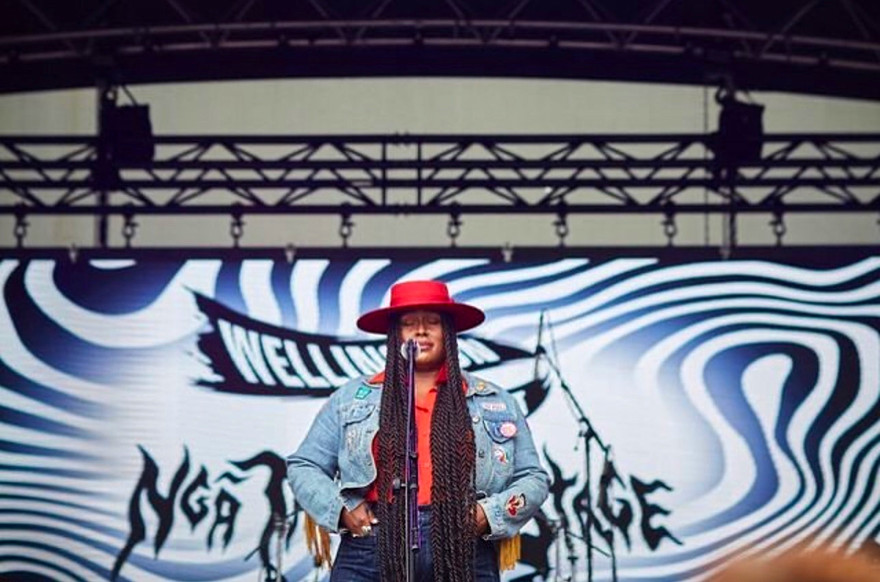
Deva Mahal at CubaDupa, Wellington
The festival’s name spontaneously came to him one fateful night dining at a Malaysian restaurant in Leftbank Arcade, off Cuba Mall. “CubaDupa … I went, ‘Oh right, that works!’” The festival’s topsy-turvy style evolved over the years, even toying with annual themes during the 2020s, but maintaining its own character. “When people talk about something, they talk about it being quite CubaDupa … It almost becomes a verb,” James smiles. “Certainly, it’s something I’m very proud of.”
Shortly after the first CubaDupa in 2015, which proved a roaring success, James met musician Gerry Paul on a night out at Havana Bar. In between jobs, Paul expressed his need to “find the next thing” in his artistic career, so James invited Paul to run the festival’s 2016 music programming. Over the next few years, Paul took on further roles from organising food vendors to stage production. As the festival gained a thriving reputation, he stepped up as festival director in 2019.
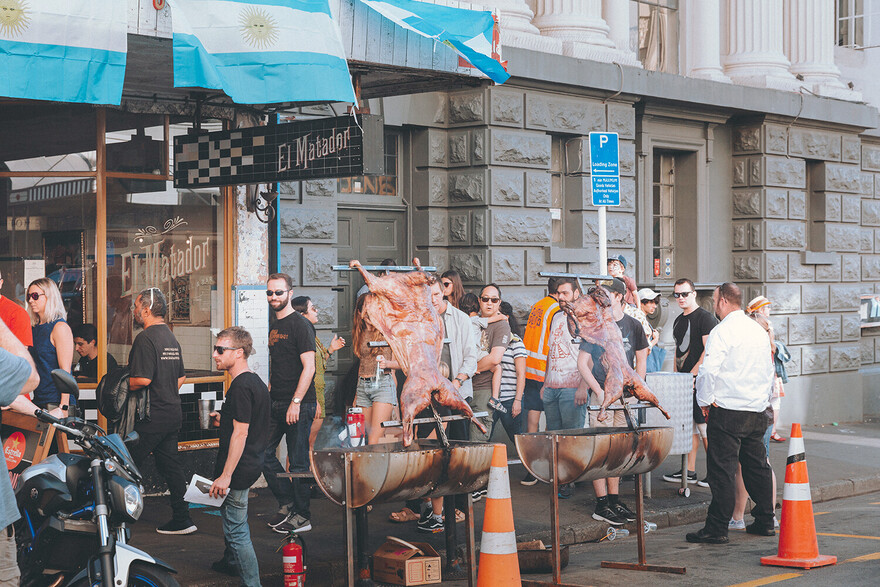
Meat life, outside El Matador and Logan Brown, on Cuba Street, CubaDupa 2019
Paul’s turn as festival director immediately hit a rocky start due to the Christchurch mosque shootings. “By the time we realised the whole country was going into high security alert, we had around a week to reprogramme the whole festival in an indoor context,” he explains. “We had to either hold it indoors, or if it was outdoors, be able to fence it off and bag check everyone.”
That year’s CubaDupa team collaborated with existing venues like Rogue and Vagabond and San Fran to transform the programme for indoor shows. “We lost some of the parades, but we managed to retain most of the performances.” The contrast to the usual outdoor approach made for an unforgettable event. “Seeing Alien Weaponry inside the Opera House with metal heads who had probably never been in there before was a real highlight,” Paul recalls, smiling.
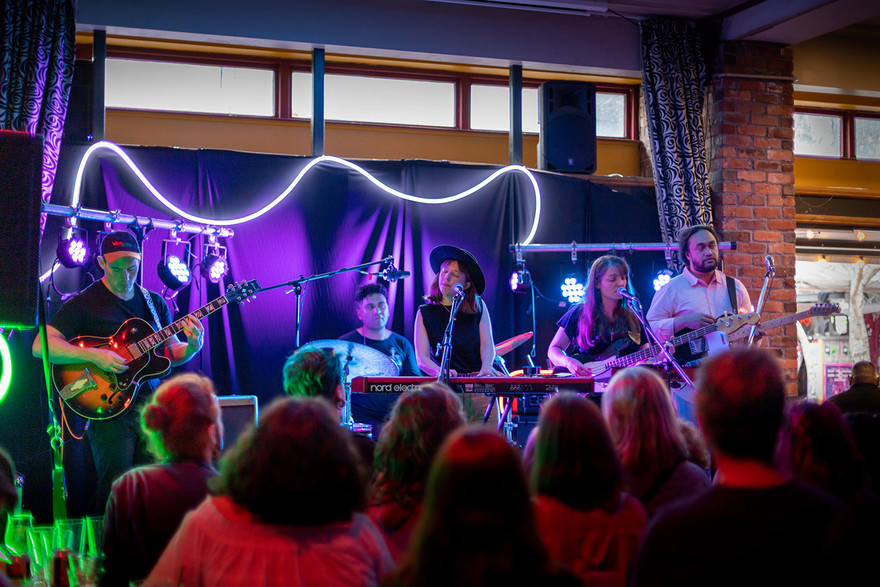
French For Rabbits performing at CubaDupa.
But the following year would only prove even more difficult, as the Covid-19 pandemic forced 2020’s total cancellation. Only four weeks prior, Bianca Bailey had joined the fold through the NZ Music Commission’s internship programme. Before that year’s event collapsed, Bailey built the CCAT’s new festival management software through AirTable, which all of their event expressions of interest, budgeting and programming now runs through. She became a pivotal player as the 2020 team pivoted to what would become a new recurring event, Classical on Cuba.
“When things started opening up,” Bailey says, “Orchestra Wellington had Covid funding for their wages, but no events to play, because an 80-person orchestra was too big [in one space].” So, for intimate classical shows, the orchestra separated into small ensembles throughout Cuba Street’s bars and restaurants.
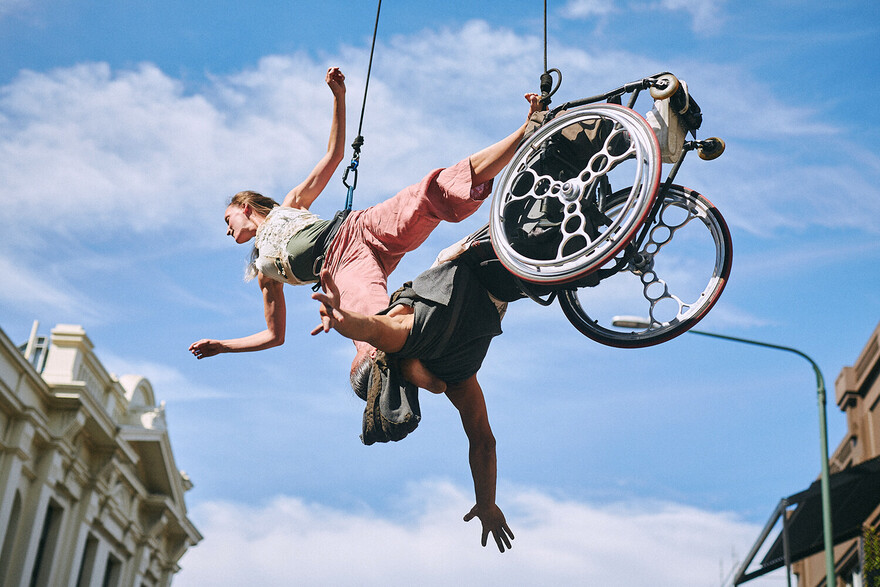
Aerial ballet above Cuba Street, CubaDupa 2021. - Oliver Crawford
Bailey’s success with the team in such a trying year led her to the role of festival co-ordinator in 2021. As the rest of the world remained on lockdown, New Zealand could freely run events, temporarily giving CubaDupa the status of the biggest street festival in the world. Not only was it Bailey’s first year actually delivering the festival, but it was also her first performing, fronting her rock project Wiri Donna. “That was such a stressful experience … running around making sure the parades are starting, and then realising I’m supposed to be line checking!”
The 2021 festival proved an absolute favourite for the team and town alike. “People had missed it so much … It was just massive,” Paul says. “We had an incredible line-up, I think we had 50 different stages and zones.”
One of the year’s major additions was a stage in Te Aro park to showcase Māori artists, programmed by newly appointed Ngā Toi Māori director Noel Woods. Consulting with local iwi revealed the space to be important whenua, in need of a line-up to reflect its cultural significance.
All three festival directors also note CubaSonic as an undeniable highlight of 2021’s event. Led by conductor John Psathas, CubaSonic spread hundreds of musicians throughout the precinct to perform a singular piece of music together. Taking several years to come to fruition, CubaSonic required 52 speakers panning the sound down the street.
“It was the most amazing thing, everyone was standing in total anticipation for 10 minutes,” says James. “Some people stood exactly where they were, they might be standing next to a band, others walked up and down. There were people in tears, it sent shivers up your spine. This group experience is something that totally took over … It only happens there, and then it’s over.”
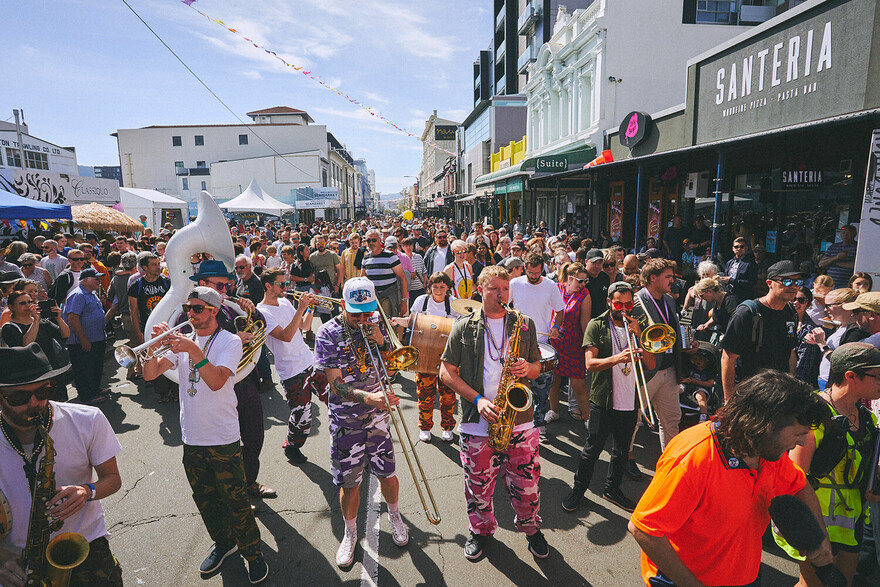
Brass pied pipers lead the masses, south end of Cuba Street, CubaDupa 2021. - Oliver Crawford
Mass music events like CubaSonic have been a mainstay of the festival from the start. In 2016, CubaDupa introduced Battle of the Bones, where 76 trombonists performed jazz standards led by the late Rodger Fox. Performers approached from two separate ends of Cuba Street, then met in the middle for a riff-off. The event recurred for several years, uniting trumpeters, saxophonists and horn players to play similar pop-up performances. The finale took place in 2019, with 50 trumpeters playing a Cuba Street fanfare composed by Mikey Taylor.
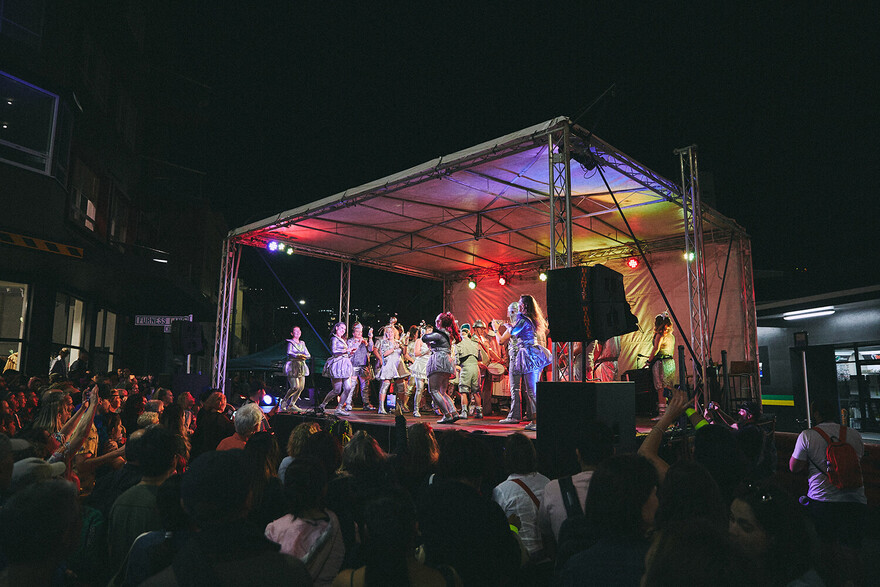
On the night shift, CubaDupa 2021. - Oliver Crawford
Other group performances have activated the street in memorable ways, from kapa haka, batucada and roaming choirs, to aerial choreographists strung up over Ghuznee Street. “Stages are great, it’s good to have a sound system and lighting,” notes Drew. “But where you can take it into the audience and mix it up is where the magic happens.”
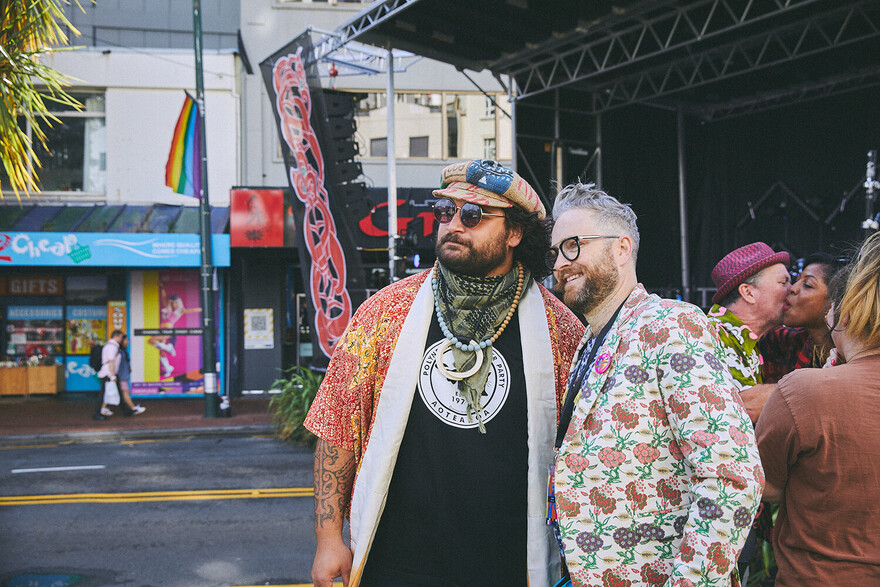
I love my floral jackets: Troy Kingi and friend, CubaDupa 2021. - Oliver Crawford
Unfortunately, after 2021’s triumph, the following year Covid was back with a vengeance, forcing another cancellation. “We were trying to figure out how to deliver the festival within zones so that people could scan their vaccine pass,” says Bailey. “The level of fencing and staffing required to manage that was more than we had the funds to do, but we were so committed ... The government just took it out of our hands [introducing the traffic light system]. We couldn’t even attempt the crazy hard thing.”
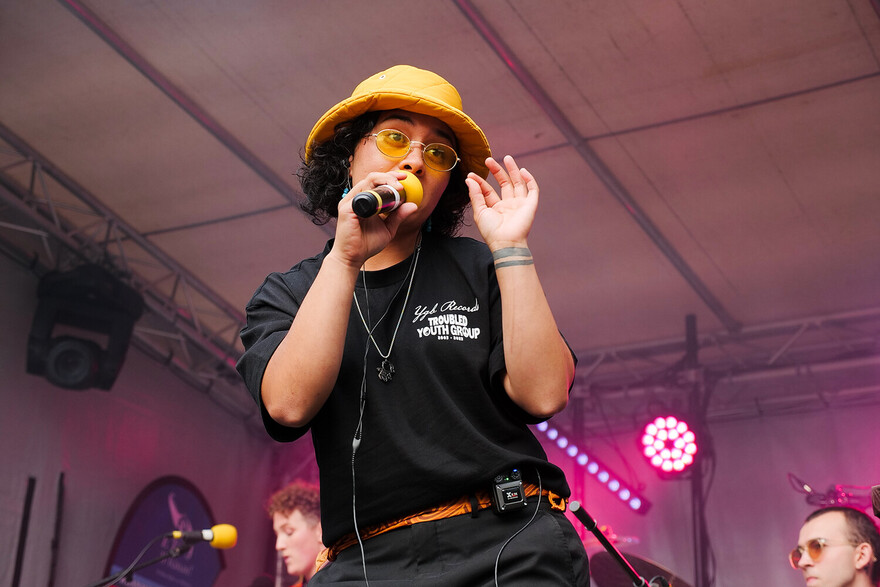
Mā x Wynona, CubaDupa, Wellington 2023. - Maeve O'Connell
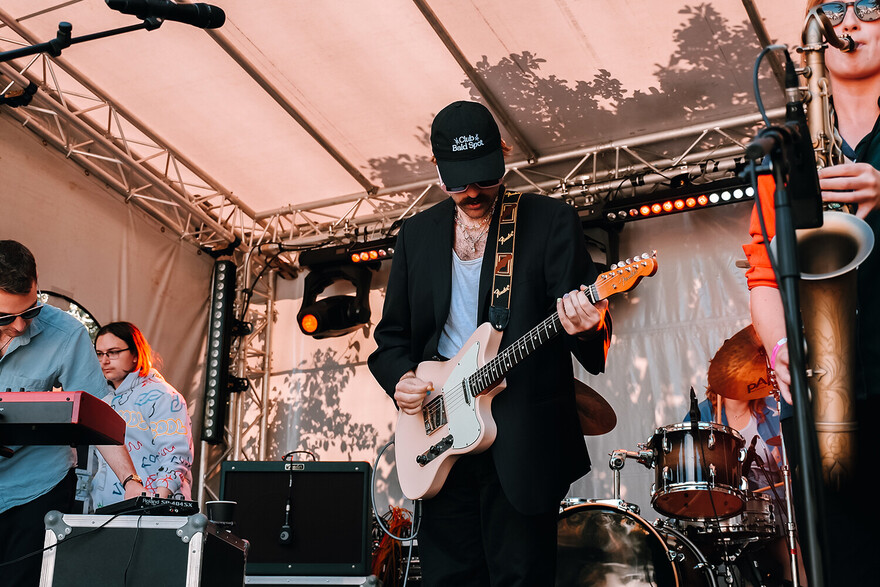
Elliott Dawson, CubaDupa 2023. - Maeve O'Connell
Facing burnout and seeking “a change of scenery,” Gerry Paul stepped down as festival director, returning the role to Drew James for another year. But it wouldn’t be long until James also moved onto new horizons, joining the World Buskers Festival held in Christchurch in late 2023. The position finally fell to Bianca Bailey in 2024, who continues to direct CubaDupa.
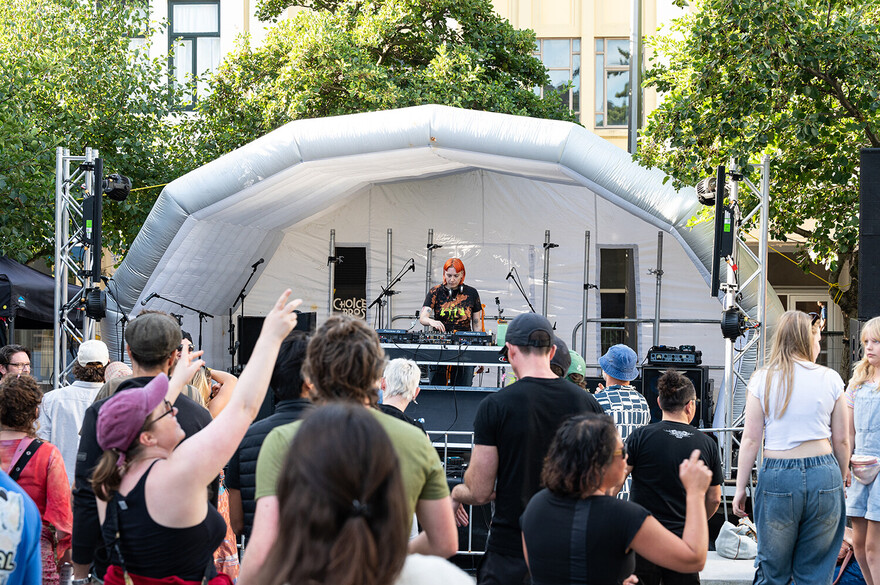
CubaDupa 2024. - Jo Mohi Photography
As a free festival, CubaDupa operates through several income streams, with Wellington City Council covering just over half of the cost. The CCAT then approaches central government funding avenues, and commercial sponsors including Lion Foundation, Creative NZ and Weta Workshop.
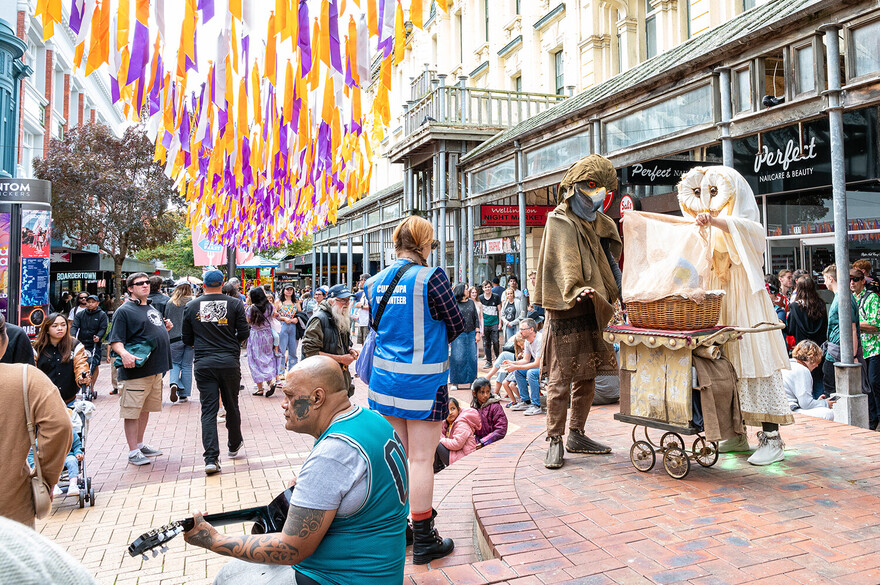
Street theatre on Cuba Mall, CubaDupa 2024 - Jo Mohi Photography
“At the moment we’re in a great position on a three-year contract with the council,” explains Bailey, “so we’re able to start [next] year with at least 55% of base operational funding covered. Although it’s nice to have that stable deal with the council, it is a set amount that doesn’t increase year on year, so when we get to the third year of the cycle things have inflated and everything costs 10% more … I don’t know if it’s ever not been challenging, really.”
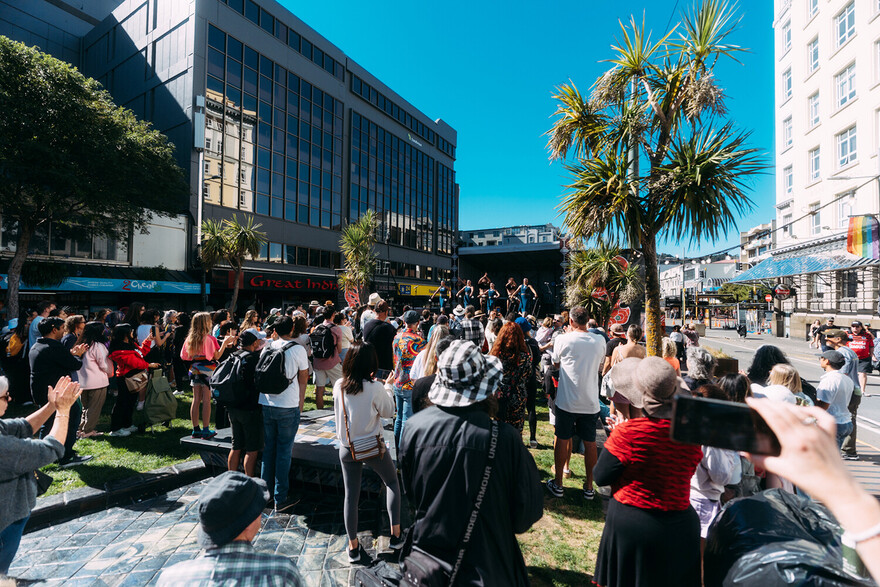
A scene at Te Aro Park, Dixon Street, CubaDupa 2025. - Sambath Ouch
Due to the festival’s not-for-profit model, volunteers play a vital role in making CubaDupa happen. In 2026, 75 volunteers contributed over 386 hours across the weekend, from waste and crowd management to artist support. “The volunteer contribution really is significant,” Bailey says. “We definitely wouldn’t be able to deliver the festival without them.”

CubaDupa 2025. - Sambath Ouch
Local businesses also contribute majorly by providing their own programming. Some venues, among them Heyday and Valhalla, hire and register their own line-up for the weekend, operating in close communication with the CCAT to adhere to health and safety expectations. This community-led approach has created legendary moments like politician Tamatha Paul’s 2025 DJ set on the balcony of Hunters and Collectors. It’s also created a sense of community between local vendors. Gerry Paul remembers fondly how multiple bars reported CubaDupa helps them see their neighbours not as competitors, but “collaborators”.
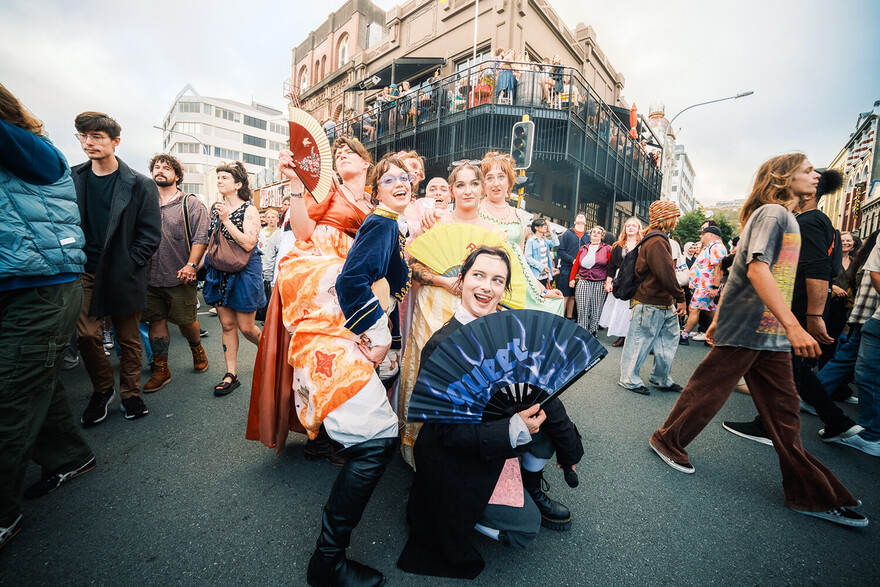
Fans on the southwest corner of Ghuznee and Cuba streets, CubaDupa 2026. - JM Beltran
Despite the community focus, CubaDupa also frequently expands beyond Wellington acts, bringing international performers down under so their expertise can inspire local experiences. For instance, the Mardi Gras Indian funk band Cha Wa attended CubaDupa in 2019 to run workshops, then participate in live shows the next day. This collaboration also opens up opportunities for funding, such as The American Embassy supporting the Air Force band’s visit, or the Canadian High Commission funding travel for their Tequila Mockingbird Orchestra.
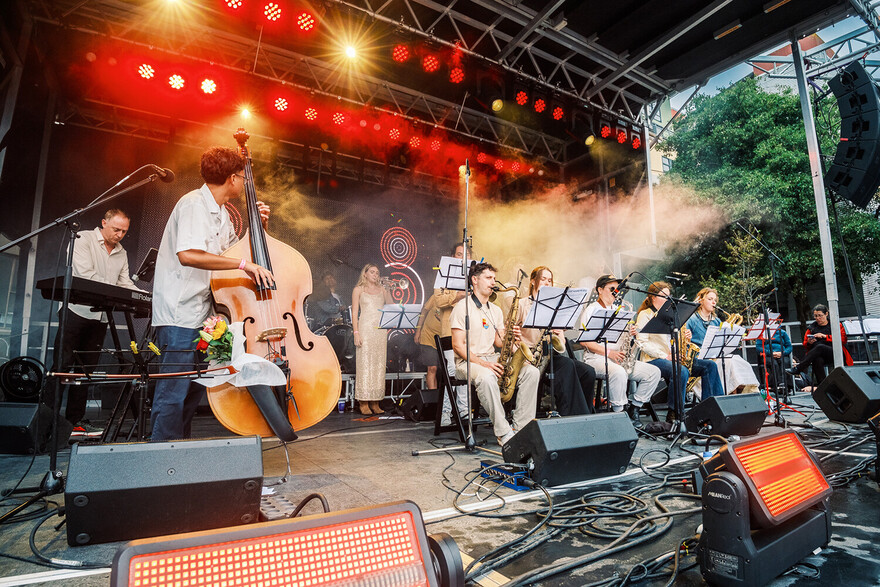
Seth Boy Band, on the Wellington Airport Ngā Taniwha Stage, Swan Lane, CubaDupa 2026. - JM Beltran
“It becomes a small world when you start making connections,” says Paul. “[Booking international acts] spreads the word about CubaDupa and Wellington … So many people come here and are blown away by the scale. You find some common ground and go from there.”
When it comes to tracking that scale, Bailey says, laughing, “We love the phrase ‘tens of thousands’ ... In 2025, [CubaDupa weekend] was the highest peak of public transport use across the whole year in the Wellington region, so we know there are a lot of people coming into the city for the festival.”

Tahini Bikini, on the Wellington Airport Ngā Taniwha Stage, Swan Lane, CubaDupa 2026. - JM Beltran
But with thousands of people living within the site and no clear main point of entry, it’s almost impossible to track how many attendees CubaDupa hits each year.
“You never know how many people will turn up, it’s almost impossible to count how many people are there at any one time,” says James. “You don’t know how many toilets you need, how much security.” Those resources are a constant logistical struggle, Paul adds. “There’s so much behind the scenes to make every one of those performances happen. Bringing that many people together creates a lot of risks.”
Pleasing the sheer number of stakeholders is always a tough balance. “There are so many different voices and stakeholders that are all valued, full stop,” says Bailey. “We just all have very different needs, it’s quite hard to constantly meet all of those.”
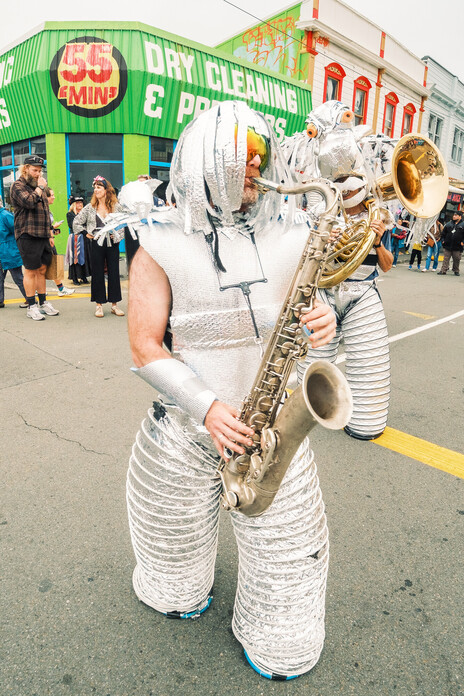
Alien Junk Monsters, corner of Cuba and Abel Smith streets, CubaDupa 2026. - JM Beltran
But creating an event which every person experiences so uniquely is also the beauty of CubaDupa. James: “You have those people who get the line-up, sit there and work out exactly what they’ll see minute to minute. Other people immerse themselves and see what happens. Others stumble across it and don’t even know it’s on.” He sees the festival’s unpredictability as its appeal. “Inevitably you’re gonna lose your friends along the way and have a different experience to theirs … CubaDupa couldn’t happen anywhere else but Wellington. But you could do something else. You’ve got to listen to the community and figure out what that thing is.”
With a decade of successful events under their belt, the CubaDupa team aren’t necessarily looking for growth. Instead, with Bailey at the helm, they seek to maintain a festival where “anyone can attend and find their community.” The 2025 and 2026 festivals stand out as highlights in Bailey’s mind, as necessary remedies to the alleged “negativity” exhausting Wellingtonians.
“There are some great things happening here that should be talked about … It needs to be this fiercely protected community celebration,” Bailey says. “CubaDupa is a moment of communal joy for the different creative communities throughout this city. We have the ability to sing and dance about the positive things. CubaDupa is inherent to Wellington’s culture, and an intense moment of pride.”
--
Link: CubaDupa.co.nz