Sap stains on my hands
Alan Young (“I became Al in Australia in the late 70s, and it stuck”) was born in Dunedin and raised in Tapanui, West Otago. He was a teenage devotee of cool jazz, especially Dave Brubeck, until one day while riding in the back of the family car, The Rolling Stones came on the radio playing Buddy Holly and the Crickets’ ‘Not Fade Away’. “Woah! I leapt into that, boots and all. The Stones, The Animals, The Pretty Things … all the British beat boom bands.”
Upon leaving school, Young returned to his holiday job at the state-owned Conical Hill sawmill, but before long signed on as junior reporter at the Otago Daily Times. “I quit the mill on a Friday, and walked into the ODT on Monday with the sap stains still on my hands, and I was in newspaper journalism until I retired.”
The job took Young to Dunedin, where a flatmate had the 1944 Lead Belly Capitol recordings. “I’d never heard anything like it. I said, ‘that’s bloody awful, get that shit off my turntable’. But one night I was home on my own and I listened to it again and thought, that’s not bad, not bad at all …” In 1966, Young moved to Auckland to join the NZ Listener. A flatmate had records by the likes of Sonny Terry and Brownie McGhee, and Young started listening in earnest, soon realising that all the rock records he liked were based on the blues.
Folk club folk
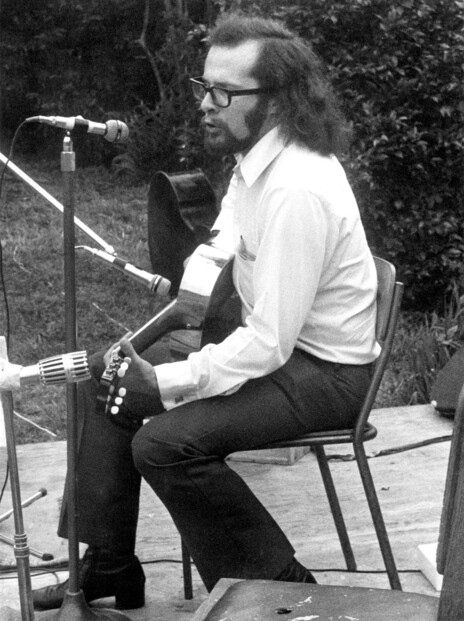
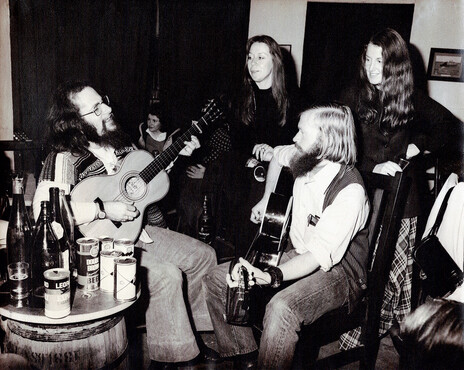
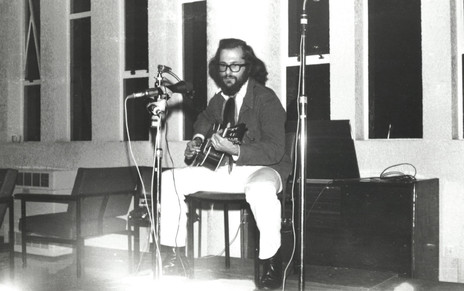
“I met Beverley end of 66, early 67. One night, we went along to the new Devonport Folk Club, and absolutely loved it. There were people there like John Sutherland and Graham McGregor playing acoustic blues, and I decided that’s what I wanted to do. Boy, did I take it seriously! I’m a night-owl, but I’d get up early in the morning so I could play guitar for an hour before I went to work” Young started picking up gigs, while Beverley had taken up British traditional folk music and was also gaining a reputation.
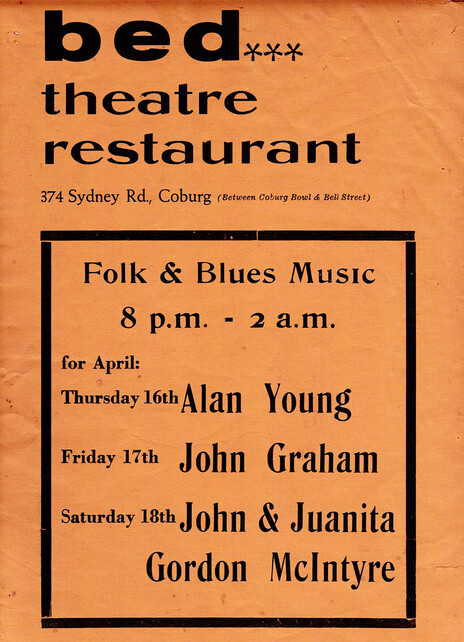
In 1968, the couple moved to Melbourne. “I’d hit the jackpot! There were record stores there that imported all this old blues stuff. Tony Standish was a jazzer who had this little record shop in Frank Traynor’s Jazz Club on the weekends – I got quite a bit from him. Then there was Peter Mann’s Discurio. I walked in there one day and he’d just got a new shipment in. I walked out with 29 albums.”
“I don’t view blues as just a form of guitar music – it’s the music of a culture”
Young began studying and learning about the music he loved. “I don’t view blues as just a form of guitar music. It’s the music of a culture, Black American culture from the 1890s until about the 1960s. You could argue that I’m guilty of cultural appropriation, but actually I’m preaching. If you like what I do, then I hope you’d go and buy one of the original records.”
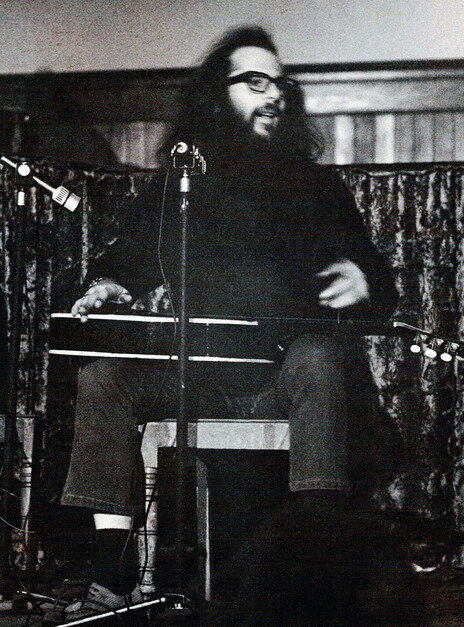
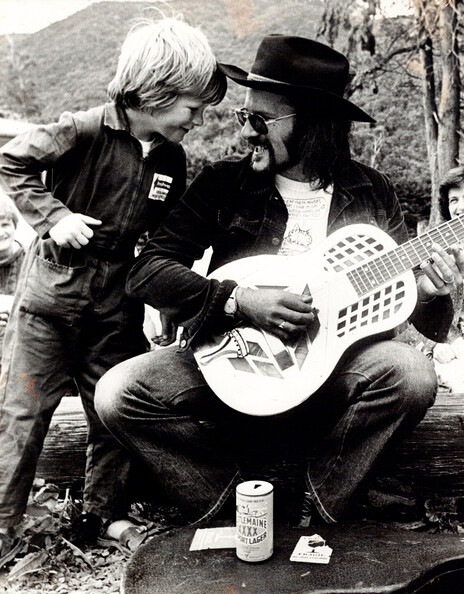
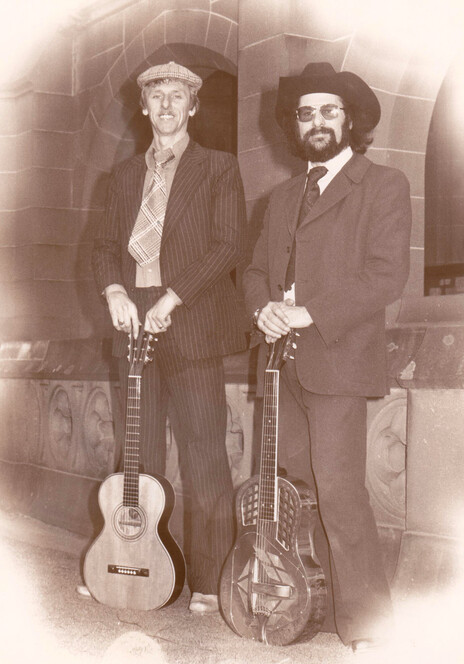
He bought his first resonator guitar, an Australian-made Wayne, off a Melbourne folk singer named John Graham. “He told me it was a 1918 Dobro; I knew that was bullshit, but it sounded OK.”
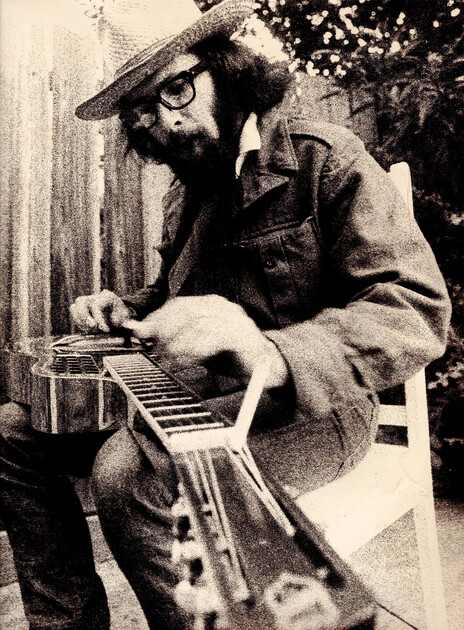
A year later, in 1968, he found his first real National steel guitar, in a music store on Melbourne’s central-city Russell Street. “It cost me a bloody fortune, about 250 bucks at a time when I was making 80 bucks a week. I still have it.”
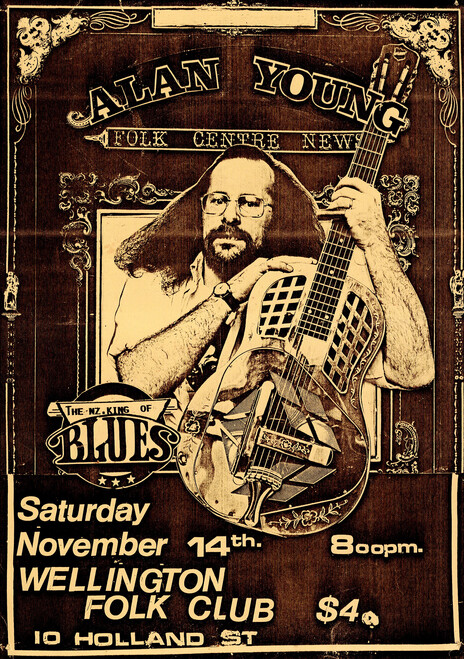
Young was playing at Frank Traynor’s, the Outpost Inn, and getting coffee bar gigs. “After a couple of years, we came back to New Zealand and found we’d completely missed the Kiwi blues boom; the festival at Moller’s Farm, bands like Killing Floor … a scene which only lasted for a couple of years. So I carried on playing at places like the Devonport Folk Club and The Poles Apart. The Wynyard Tavern was the closest thing around to a professional folk gig, run for most of its life by Geoff Bendall. Unlike the folk clubs, where anyone got a go, you didn’t play at the Wynyard if you weren’t good enough. I worked my arse off to get a spot there.”
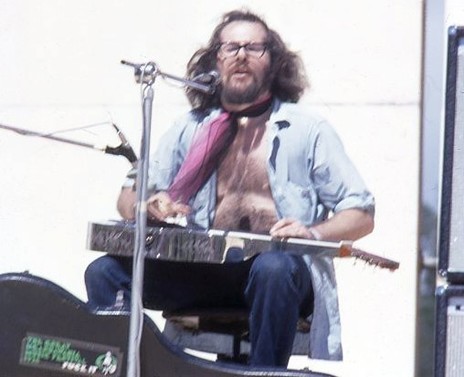
1972 was the year of the Great Ngāruawāhia Music Festival. Young was building a reputation for playing hard-edge blues, and scored a solo spot at the now legendary event. “I was originally supposed to follow Corben Simpson, but they shifted me to a better place on the bill. Just as well – Corben took all his clothes off and caused a big stir. He would have been a hard act to follow.”
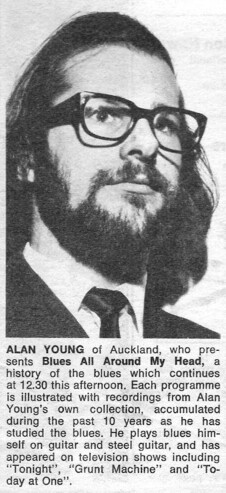
In the early 70s, Young played in an acoustic blues band called Amazing Hoggett, with Derek Burfield (ex-Railway Pie) and Englishman Dave Temple. He also started hosting workshops on blues, gospel and guitar styles at folk music festivals, and in 1977-78 presented two 13-part series on blues history and styles on RNZ’s National Programme.
Electric blues country
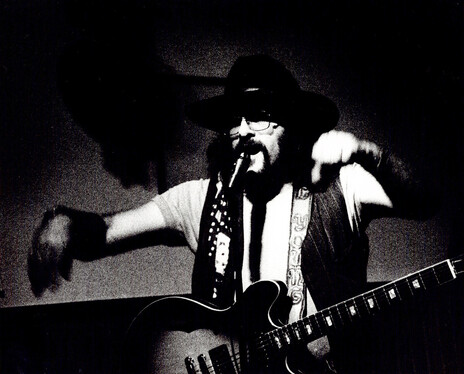
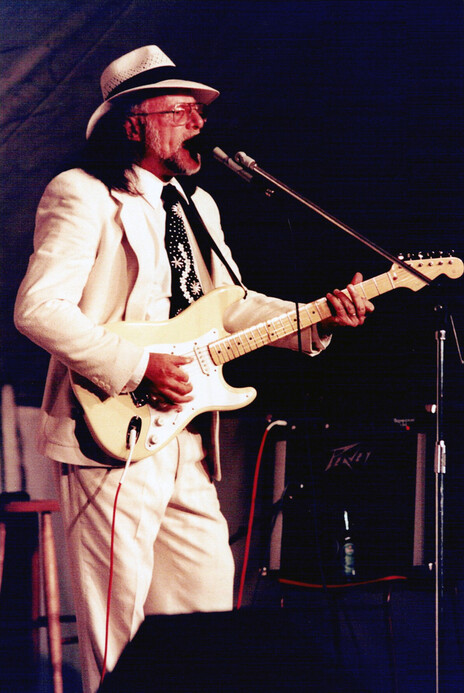
“I didn’t play a pub until 1976, when I bought my first electric guitar, a Guild Starfire Mark III. I got a Saturday afternoon gig in the lounge bar of the Occidental Hotel. The public bar was respectable, Auckland Star journos and lawyers down from the Magistrate’s Court drank there, but the lounge bar was definitely a picture from life’s other side. All sorts of weird people. I had a rule, I drew an imaginary line across the floor and if the fight crossed it, I bailed. I was pretty much playing my acoustic repertoire on the electric guitar, which is how the old blues players like Big Bill Broonzy and Muddy Waters started doing it, and then gradually it shifts as you discover the electric’s potential. But I still finger-pick the electric guitar – like Freddie King or Albert Collins – rather than using a flatpick.”
The Youngs went back to Australia in 1979, moving to Sydney. Young had gotten interested in the old Australasian country singers from the 1930s and 40s, artists like Tex Morton. He joined Brian K Kelly’s country band, and discovered his blues stylings worked well in a country setting. “Then I joined Glenn Cross’s band, the Electric Chair Cowboys. Glenn was a bit of a folk legend around Auckland in the 60s and 70s before he went to Australia. With the Electric Chair Cowboys, we’d do a couple of sets of mainly outlaw country material, then I’d step up with my electric slide and do a George Thorogood-type thing – he was very big at the time.”
“I still finger-pick the electric guitar, rather than using a flatpick”
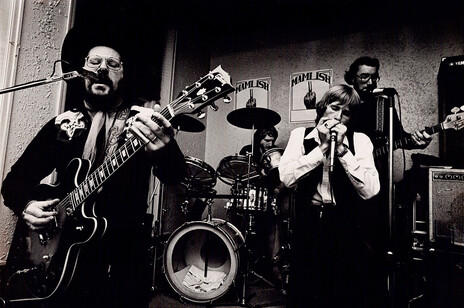
Upon returning to New Zealand, Young decided to put his own band together. With bassist Mike Wright, guitarist-harmonica player-vocalist Neil Finlay and drummer Richard Linklater, he formed Mamlish, a blues-rock band that became a fixture on the Auckland pub scene for the next five years. “We had a long residency at the Shakespeare Hotel in Albert Street – we did very well there, but I probably didn’t make as much as I spent as I was working for the NZ Herald, and the Shakes was our local. Then we were at the Brownzy (the Browns Bay Sports Bar) for a while, as well as a whole bunch of other pubs all over Auckland. One week we did six gigs in five days, all pubs.”
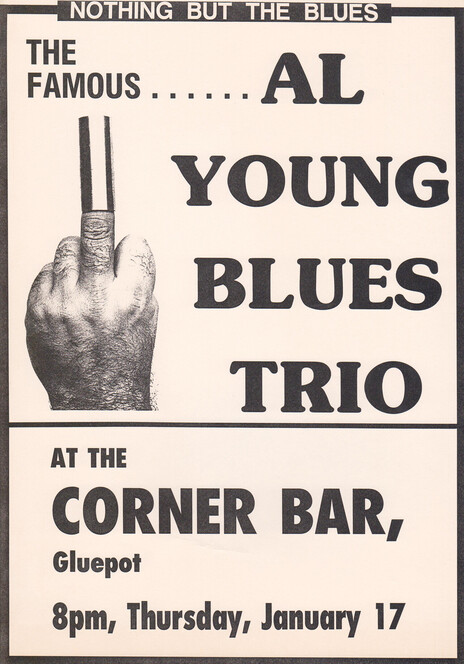
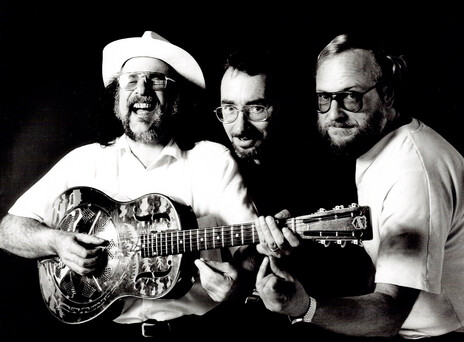
When Mamlish folded, Young went back to the folk clubs for a while before starting the Famous Al Young Blues Trio. “That was a hell of a lot of fun. I had more front than Woolworths in putting myself out as the sole guitar player, because I wasn’t Jimi Hendrix by any stretch, but with the slide and a few power chords, I got away with it. Mike Wright was on bass again, and the drummer was Mike Visser, from South Auckland. We got a lot of work. We had the public bar at the old Mt Wellington Trust Hotel – that was always an adventure – the Masonic in Devonport, the Shakespeare (again) ...”
That’s no way to get along
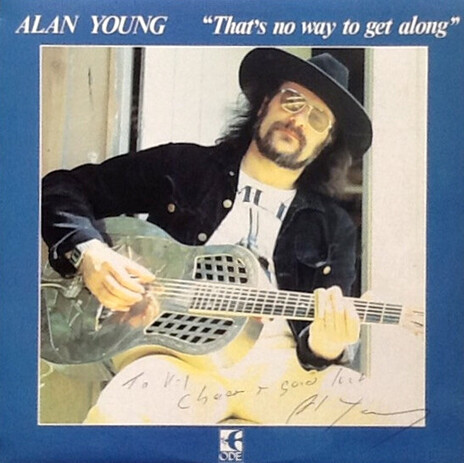
In 1985, Young recorded an album for the Ode label at Mandrill Studios in Auckland. “We did it live to tape with a case of beer on the floor, and just played through some favourite tunes.” Colin Heath was on double bass, Neil Finlay played harmonica, and David Temple played second guitar. That’s No Way To Get Along won the RIANZ music award for Best Folk Album in 1985 (Beverley Young won the same award for her Bushes And Briars album two years later). Though the material was chosen in an almost offhand manner, the selection tells a story. The finger-picking styles of Atlanta’s Blind Willie McTell on ‘Love Changin’ Blues’, the steel guitar in the Hawaiian guitar classic ‘Maui Chimes’, and Robert Wilkins’s ‘That’s No Way To Get Along’ triangulate the territory occupied by Al Young. Wilkins, whose career spanned blues, jug bands and gospel, later became a preacher, and reworked his song into a gospel number titled ‘The Prodigal Son’, recorded by The Rolling Stones on their Beggars Banquet album in 1968.
In the early 90s, Young joined Neil Finlay, drummer Rex McLeod and bass-player and singer Ian “Tiny” Thompson in The Blues Adventure. “‘That was a good band; we played Java Jive and quite a few other venues. But by this time, I’m getting a bit sick of standing in clubs and working my tits off. My feet hurt, and I’m just running out of rope.”
Woke me up this morning
In 1988, Young was seconded from his job as deputy editor of the Sunday News to oversee its conversion to electronic production. “It was a big job, so when it was done, general manager Alan Hitchens said, ‘Well, we owe you a trip. Where do you want to go?’ I said I’d always fancied myself at the New Orleans Jazz and Heritage Festival. I was probably supposed to have said ‘the Gold Coast’, but Hitch copped it, and off we went to New Orleans.”
At that time, Young was developing an interest in black gospel music, particularly the vocal quartets, and the festival featured a large gospel tent. “Beverley was not always pleased with me, but any downtime I had that’s where I was.”
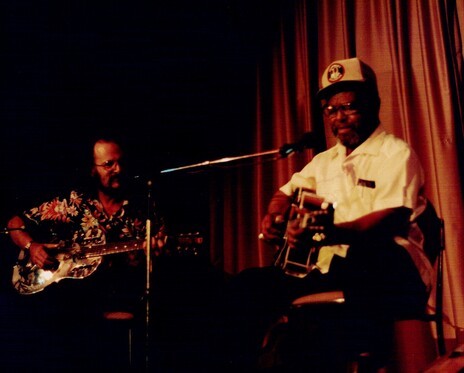
Terry Toohill (Railway Pie) put Young in touch with David Evans, a professor of music at Memphis State University and an internationally respected blues expert. “It turned out we had similar views on several of the controversies of the blues – including that ‘Robert Johnson sold his soul to the devil’ nonsense – and we both liked whiskey. He had a band, The Last Chance Jug Band, and I played with them one night, opening for James Cotton, which was a real buzz.”
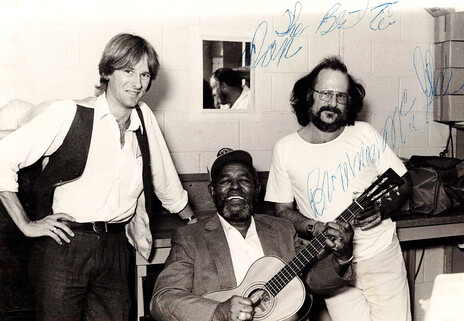
Young returned to the United States several times, and played three Beale Street Messarounds, an event that each year honoured a different Memphis blues musician. “The last one I did was at B B King’s Club on Beale Street, and it was for Booker (‘Bukka’) White, who’s my number one blues hero. At that time, I’d seen enough blues shows to know that if someone gets up before you and does your song, you back yourself to get up and do it too, and cut them. My big song was Bukka White’s ‘Poor Boy’, and some English guy played it before me. So I got up and did it, and mine went over real well. The English guy was really pissed off.”
Rather than write yet another book on the blues, Young chose gospel
Young’s friends and family kept suggesting he write a book on the blues. “Do you know how many books there are on blues? It’s difficult to see how to make a significant contribution. But there’d been bugger all done on gospel music.” So Young decided to do a gospel book, writing a potted history of the music and linking that to interviews with people involved at the grassroots level in various aspects of the music. An underlying theme in the book is the relationship between blues and gospel.
A visit to the Northeast Mississippi Blues and Gospel Festival in Holly Springs turned up the hard-to-find legend Roma Wilson. “Roma is quite famous, he and his sons made harmonica quartet recordings, an amazing sound. But Roma vanished and no one was sure what had happened to him. I got three or four interviews at that one festival, but Roma was the one I was really pleased about.”
Young also wanted to investigate the workings of the black gospel style of preaching.
“I managed to get not one, but three preachers to talk about the mechanics of how you do it, how you gauge the congregation.” One was Rev Willie Morganfield, a cousin of Muddy Waters and a well-established preacher and singer. “He disliked people going to his church just to see Muddy Waters’ cousin; once I told him I had no interest in Muddy Waters we got along a lot better.
“He spoke in scripture a lot, quoting Bible verses to illustrate a point. At one stage during my interview, he said ‘It’s like it says in Hebrews 13.8 …’ and I said it along with him – ‘Jesus Christ, the same yesterday, today and forever’. He didn’t say anything, but he gave me a look … and the interview came to life. How did I know that one? At the Auckland Star, the sub-editors used to pin all the bloopers and headlines that didn’t work on a big pillar, and right up the top, one of the guys had put ‘Hebrews 13.8’, which he called the sub-editor’s creed – ‘Jeesus Christ, the same yesterday, today … ’”
Young remains proud of the book, and says, “The stuff I got on preachers is actually the most significant.”
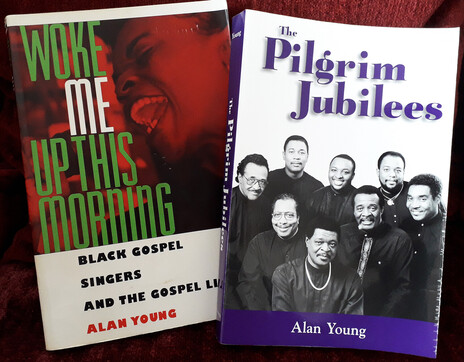
Woke Me Up This Morning: Black Gospel Singers and the Gospel Life was published by the University Press of Mississippi in 1997. “The book title comes from an old testimony; the Lord woke me up this morning, put food on my table, shoes on my feet, clothed me in my right mind …”
The Gospel Highway
For his second book, Young decided to write a gospel quartet biography, and in 1998 went to Philadelphia to the Gospel Music Workshop of America’s annual convention. “I walked in there, and in the same room were the two groups that I really wanted to write about, the Mighty Clouds of Joy, and the Pilgrim Jubilees. I spoke to both of them and got positive reactions, but decided I had to do one or the other.
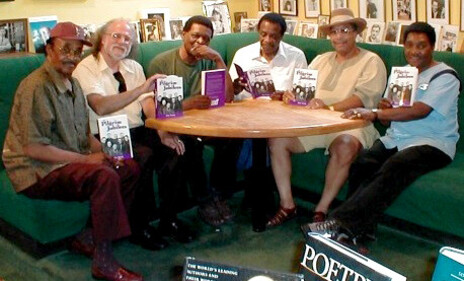
Young decided on the Pilgrim Jubilees, who were still working the equivalent of the blues world’s chitlin’ circuit, “the gospel highway”, playing a gruelling circuit of churches, school halls and similar venues. “They were all in their sixties, still out there doing it and boy could they put on a show. Most of them lived in Chicago but they toured mostly in the south, so they’d all meet in Meridian, Mississippi, rehearse there, then go and do their gigs. I pretty much lived and travelled with them for about six weeks.”
For his second book, Young wrote a biography of the Pilbrim Jubilees gospel quartet
All this researching and writing sidelined Young’s playing for most of a decade. “The Pilgrim Jubilees came out in 2002, again on University Press of Mississippi, and I just didn’t have any great drive to go back into the pub-band thing. So I carried on playing acoustic sets and did other gospel music projects.” Among these were liner notes for albums, including some for the Big Legal Mess label, a subsidiary of Mississippi’s Fat Possum label, and a cover story on Roma Wilson in leading UK magazine Blues & Rhythm: The Gospel Truth.
Al and Beverley Young also have a longtime liking for bluegrass and, in the early 2000s, were part of a scratch bluegrass band, Beverley and the Clench Mountain Boys, put together for the Auckland Folk Festival’s annual bluegrass club concert. Months later, a Dunedin Folk Festival organiser called Young and asked if the band still existed. “It didn’t, but I said it did, and we were booked for the Dunedin festival.”
The band went on to play other gigs, including a concert at the Wellington Bluegrass Society, and recorded an album. Band members at this time were Beverley, lead vocals and guitar; Young, guitar and dobro; Bryan Christianson, banjo; and Garry Trotman, double bass.
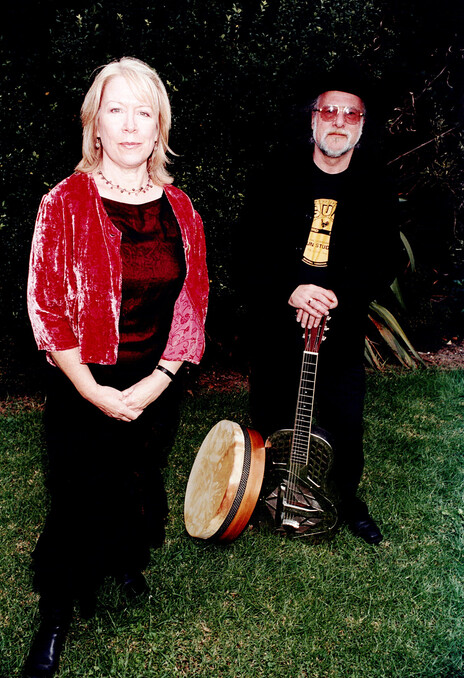
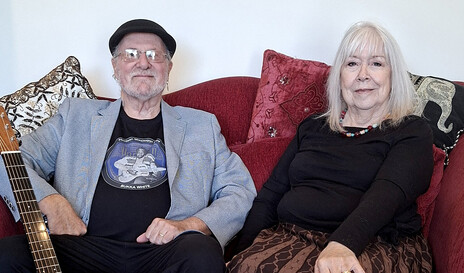
On the folk scene, Al has always worn two hats: one as a solo blues performer, and one as guitarist for Beverley’s British traditional songs. But a third act has also emerged. “Beverley and I solo are two separate acts, but I do a lot of her accompaniments, and folk club organisers started to book us as Beverley and Al Young. Our response has been to play almost completely country music, a good middle ground for both our specialties.”
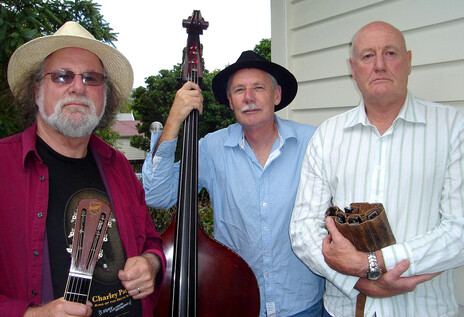
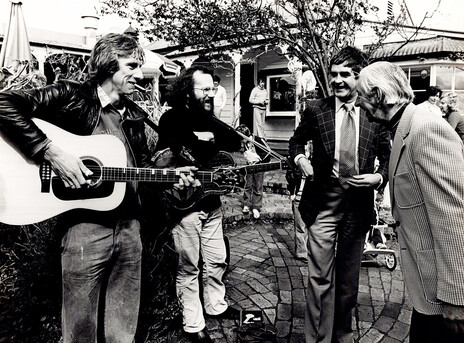
Having known all the members since 1972, Young is now a member of Railway Pie, New Zealand’s longest-running jug band, joining the band when guitarist and singer Steve Evans left to live in the UK. “I had known them a long time – I met them soon after that Great Ngāruawāhia Music Festival, and we’re all still mates.”
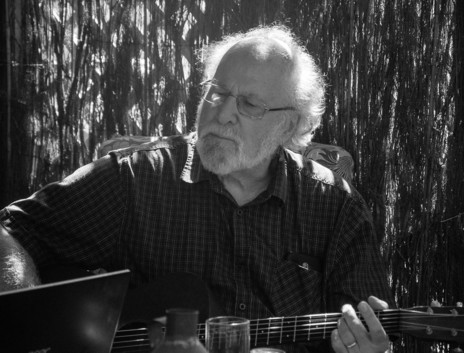
Today, as the big 8-0 looms, Al Young is still “pickin’ and grinnin”, playing folk gigs, Railway Pie gigs and the occasional pub gig in a duo featuring himself on electric guitar and Garry Trotman on bass, in which Young will spin some yarns between tunes. Worth catching; the man has tales to tell.