There were numerous close friendships within the Dunedin music scene of the late 1970s and 1980s and some significant and lifelong; none more so that between three of its leading performers, David Kilgour, Peter Gutteridge and Martin Phillipps.
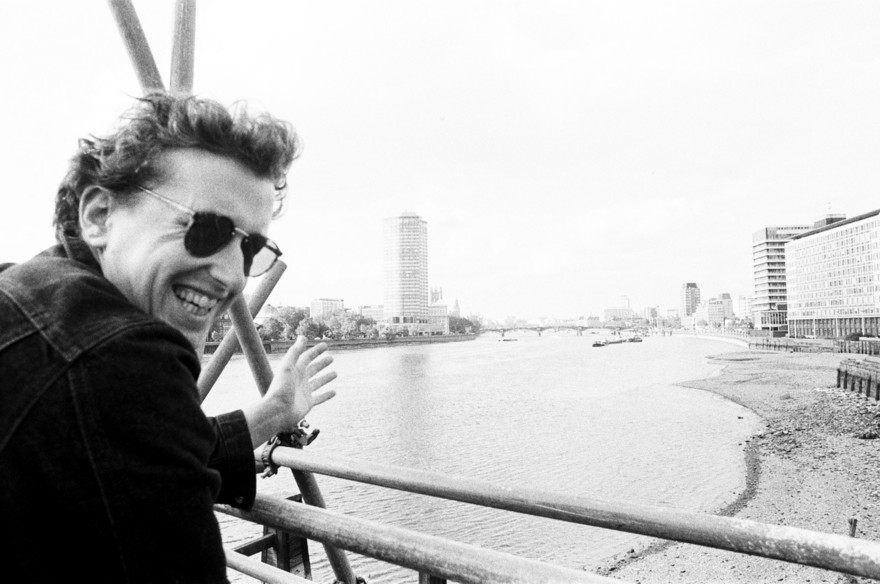
David Kilgour in London, 1989. - Photo: Chris Knox
David Kilgour and Peter Gutteridge met as schoolboys and jammed together plugged into a radiogram – that led to the formation of The Clean in the first months of 1978. As a 16-year-old Martin Phillipps was sitting in on some of The Clean’s practices; in that same year – 1979 – he and Peter Gutteridge, on a musical adventure together in Auckland, planned to form The Chills.
The friendships between the trio spanned four decades, and were important as they each pursued making music; they inspired and encouraged each other, and on many occasions took to the stage together.
Peter Gutteridge was still making guest appearances in The Clean in 2014 – 35 years after he was first kicked out of the band for failing to practice enough. David Kilgour spent a year with Peter’s band, Snapper, including playing guitar on the 45 ‘Vader/ Gentle Hour’. Martin Phillipps played keyboards live with The Clean (and once with Snapper) on and off for years.
Gutteridge’s stint in The Chills in 1980 lasted just three months; he has his own songs to write and his own path to follow. Peter could be uncompromising and idiosyncratic – he had a sound in his head, and he would pursue it. As would Martin. As would David.
There were periods when they annoyed each other, periods when they did not see each other regularly, but fundamentally they always had each other’s backs. When they were in different cities or countries, they occasionally wrote to each other.
In my research of the scene, I’ve had access to some of their correspondence including several letters between them in 1987. That was a significant year for all of them – David Kilgour, after the early successes of The Clean and the Great Unwashed, was forming a new band, Stephen; Peter Gutteridge was about to unleash the full power of Snapper; and Martin Phillipps was in Auckland, about to tour Europe with The Chills and base the band in London.
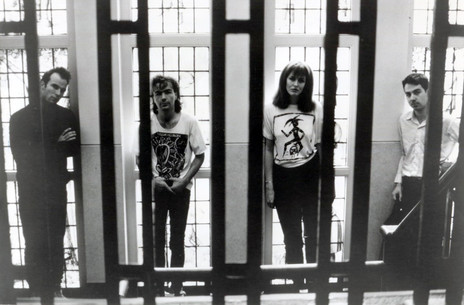
The Chills, 1987. Left to right: Justin Harwood, Andrew Todd, Caroline Easther, Martin Phillipps
Martin wrote to David Kilgour on the eve of band’s departure in mid-February 1987.
“I’m thinking now of the move to England I must soon have to take one way or another whether I like it or not. I wish there was a whole lot of us ready to go. Do you still want to do that sort of thing or did you ever? I thought you really did even when you said you didn’t. I worry about your music. It’s always seemed to me you don’t really play so well without Hamish or maybe it’s different now.”
David Kilgour had written to Martin questioning the move to live in England.
“It seems by your letter that you go to London to live. For how long? It disturbs me greatly. I just think it’s important to keep in contact with NZ. Like physically. It’s bad enough with you being in AK and out of touch with the landscape to some degree and out of touch with the original ideals of why you started playing music in the first place.
“I think NZ is getting in a position to tell the world hey look here you shitheads this is where it’s happening. People like you can allow this to happen. You have the gift through music to do this. I’d hate to read about you as a NZer overseas doing your thing. Make them look here. Anyway, you’re probably gonna write back and say you’re only going for a few months or blah blah. I just really wanted to say all this to you. Whatever you do I always love you very much and support you ok? I mean we can’t all see it my way. We do have our own dreams and want them fulfilled.”
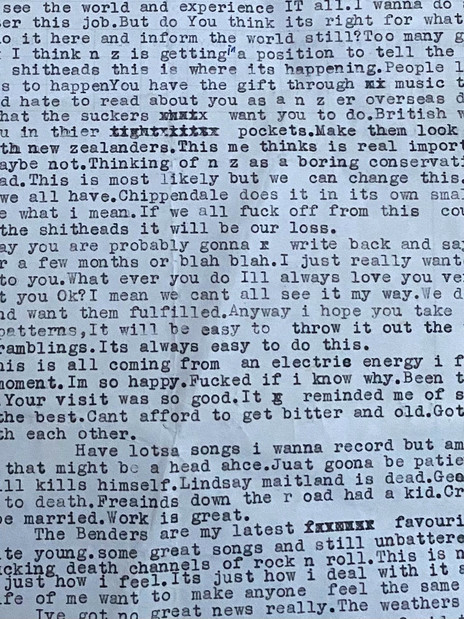
David Kilgour's letter to Martin Phillipps
Martin Phillipps himself was conflicted about the move. He was in a relationship in Auckland, and he was facing that fact that it might not survive the period of separation.
“Me and Kate [Tattersfield] getting on well but the move is going to be traumatic. I could stay but the longer I’m stifled and stuck the more tense and irritable I get so I gotta go. Boo hoo! Then I find out if I can get by without her or not but we are talking of meeting in London and basing ourselves there next year so it could work.
“I’ve been writing a lot of music but lyrics still a problem so I’ve been reading quite a bit to stimulate the flow of words. Lyrics do seem to improve with practice so I intend just going for it whether I feel in a wordy mood or not. What about you? Any more goodies lately? Write again before we drift apart and meet on a street in ten years and both get really embarrassed and uncomfortable OK.”
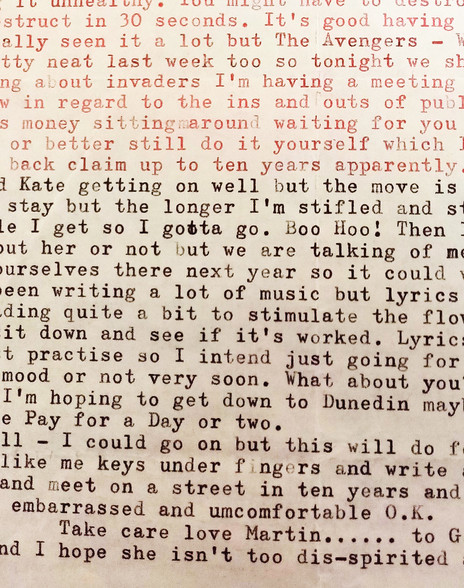
Martin Phillipps writes to David Kilgour, 1987
The Chills spent most of 1987 touring in Europe, the US and England and recorded their debut album, Brave Words, in London. During that time his relationship with Kate Tattersfield came apart. Martin would write one of his most affecting songs about their time together, ‘Submarine Bells’. He acknowledges her with that breathy, regretful intimation of her name as the song closes “…K …K …Oh…K”.
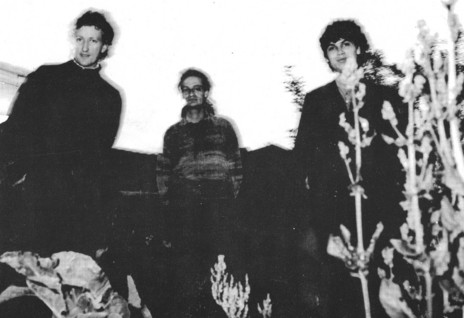
Seed Cake, soon to be renamed Stephen. From left: David Kilgour, Geoff Hoani, Alf Danielson
While on tour Martin Phillipps telephoned David Kilgour and wrote a postcard to him. David responded with a letter, updating him on the Dunedin scene including progress of his band, the yet-to-be-named Stephen.
“Band has been playin’ quite a bit and is coming together well. Songs are coming slowly but that will hopefully improve when I buy Roy Colbert’s A77 2-track Revox soon. Going to ChCh with Pete’s band Snapper at the end of this month. God Snapper are a truly great band. Still no name for our band. God band names are a pain. Hope to have a record out before Xmas. Have sold a few paintings in the last month or two which has been good as I’m broke as ever but manage to keep my head just above the water. New Straitjacket Fits recordings are good. Very Lush Big reverb sound. Good songs. 4 track EP. They have progressed a lot since starting.”
By August of 1987 Peter Gutteridge had moved into his house on Blacks Rd in North East Valley. He and Martin had not been in touch that often and Peter sat down to rectify that by writing a four-page letter outlining, among other things, his plans for his band, Snapper. Initially the band was called The Phroms but within a year they had changed the name and turned up the volume. Armed with guitars and keyboards, Gutteridge knew they were becoming a potent force.
“This coming weekend The Phroms (Snapper) are supporting the Tall Dwarfs at The Oriental. Should be good. I’m looking forward to unleashing some new songs on an unsuspecting audience. We’re hoping to record and if I can find a good technician we’ll do it real soon.
“Dunedin is very boring, personally speaking. I’ve been living here far toooo long. Still compensations and diversions there are, mainly being chemical and musical. Scrawny ambition crawling through a fog of apathy, satisfying stuff indeed. Looking out the window thinking of my friends in Europe. Walking up NEV [North East Valley] to a band practice – with thoughts of escape. What can I say Martin, life goes by and I know that I’m working towards a solid recording basis before I move.”
“I’m spending my time writing and recording songs at Blacks Rd – now that the house is finished. I concentrate as much as possible on developing the Phroms sound and music.”
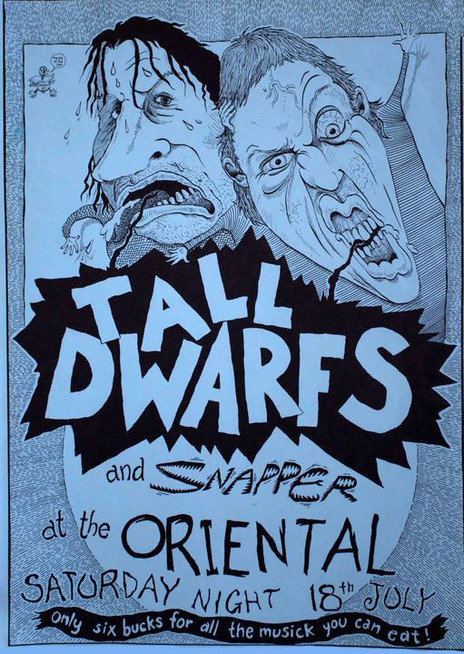
Tall Dwarfs and Snapper at the Oriental, Dunedin, Saturday 18 July 1987
Playing in Snapper had reunited Peter Gutteridge with drummer Alan Haig who he had played with in the original incarnation of The Chills back in 1980. Seven years later Peter had a renewed appreciation of his skills, which he told Martin about.
“Alan’s [Haig] just bought himself a second-hand Ludwig kit and is as interested as ever in playing. It’s great. I have developed a sympathy with Al that I’ve never found with other drummers. He’s very sensitive though and part of the knack of getting the best from him is knowing how to inspire and build his confidence – which despite Al being an excellent rock’n’roll drummer by anyone’s standards is always going up and down. The art of being in a successful band is very dependent on keeping one together. Sort of people first, music second. I’m always aware that no matter what demands the band is under coming up with good new material is a number one priority in keeping things fresh and exciting.
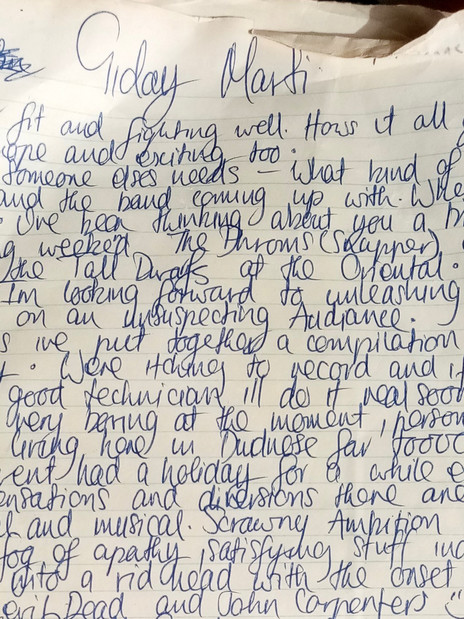
Peter Gutteridge letter to Martin Phillipps, July 1987
Alan Haig adds: “Peter and I became close friends at Otago Boys’ High School as with Terry Moore [The Chills] and David Kilgour, all the same age. We listened to a lot of Iggy Pop (Lust for Life) & The Stooges in Peter’s bedroom while I was staying overnight at his family’s house, occasionally tasting his father’s liquors, as you do. I lived with Peter at Blacks Road for a year or two. We had a lifetime connection even though we went on separate directions musically from time to time. Snapper worked out really well. Basically the whole house turned into a giant musical practice environment.”
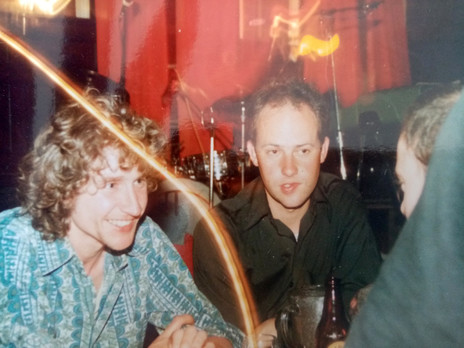
Peter Gutteridge, Alan Haig, Terry Moore
Peter continued in his letter to Martin: “If anything my playing has become increasingly simple which makes my songs easy to learn but I’m aware that a sameness sometimes creeps in – there are only so many chords to choose from. I really feel that what a good teacher is what I need – there’s just so much I don’t know. For instance, I don’t know a technical thing about singing.
“It’s strange to be thinking of music constantly; except for David [Kilgour] and the band I don’t feel I have a lot in common with many other musicians in Dunedin. Although there is plenty of moral support around. Or maybe we do, we all live in the same city/environment. Things become too well known to be new again. Travel is a definite future necessity … Ah I wish Europe wasn’t so bloody far away I’ve only begun to appreciate how isolated NZ is.”
“You know Martin you and I are so out of contact with each other, and we have been for a few years. In some ways we no longer know each other, I’m so far away from the person you know when Dunedin was your home, and I know so little of your life and aims nowadays. I think music is a common ground for both of us although this is quite a recent thing. My talents have grown or rather I know how to use what talents I have and communicate my ideas to other people. I think I have more respect for myself, and people have more respect for me and what I do. Music for me very much a statement of what I am or what I want to be.”
In the first six months of 1988 Snapper recorded its first EP, a five-song statement of intent by Peter Gutteridge and the band if ever there was one. David Kilgour had left the country, on his first trip overseas, before hearing it. He wrote to Peter from London after The Clean had briefly reunited and played two gigs there.
“The Clean gigs were fun and that’s why we did it! It was recorded on 16-track and the results are good [in-a-live EP]. Had virtually no news back from NZ. I wonder how your recordings finished up and how Snapper’s doing. My memories of the unfinished recordings were good – surprisingly after your descriptions. I imagine they ended up well?!?
“I’m pissed off I didn’t have sample of Snapper on tape as there is lotsa interest in the band from people who are aware of your Great Unwashed period. Snapper would go down well in London as the indie shit that is popular is very B grade with most bands only having 4 good songs and some image like 60’s psychedelia, heavy Stooges look/sound etc.”
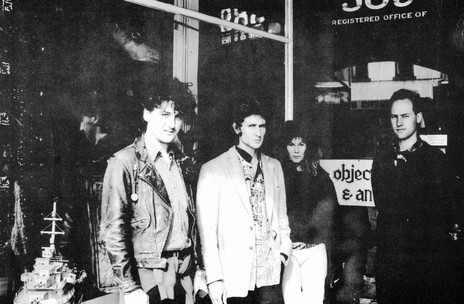
Snapper. Left to right: Dominic Stones, Peter Gutteridge, Christine Voice, Alan Haig
Peter Gutteridge had written of his desire to tour overseas – “travel is a definite future necessity” – in the letter of 1987 to Martin Phillipps but he was never able to get it together to make it overseas with Snapper. By contrast The Chills worked hard and toured relentlessly for years. Martin Phillipps told me in one of his final interviews that he thought Peter developed an underlying strain of bitterness that The Chills were more successful than Snapper. “For a long time, he could not understand that I was more famous than him, it got so bad he could barely talk to me. I mean physically, his throat would kind of clench up.”
Despite that when Martin returned to live permanently back in Dunedin he and Peter continued their friendship through their mutual interests in music and creative endeavours and mind-altering pursuits. In that 1987 letter Peter was anxious that they should continue to be friends, and he spelt out his admiration for Martin.
“Dunedin has fostered a strangely entwined group of musicians that have all sort of grown up together. An early infection of an obsession with real music. I still haven’t figured out what caused this abundance of people whose chief interest in life was to write original music.
“You know Martin I love you, you’re still one of my closest friends but I feel like there’s been a lot of misunderstanding between us and that we’re only starting to see each other for what we really are and accept and appreciate it. I still think about you and wonder how you are, what you’re feeling, what kind of thoughts are sliding through your brain, what’s getting translated into Chills songs.”
Martin would have liked to have been able to reflect on that frank declaration when he and Peter were at odds in later years. But Peter, for some reason, never sent that letter to Martin. It was found among Peter’s possessions after he died in 2014.
--
Richard Langston, journalist and TV director, was the founder and editor of the Garage fanzine, which was anthologised in the book Pull Down the Shades (Hozac Records, Chicago, 2023). His oral history of The Clean, In the Dreamlife You Need a Rubber Soul, will be published by Auckland University Press on 9 April 2026.