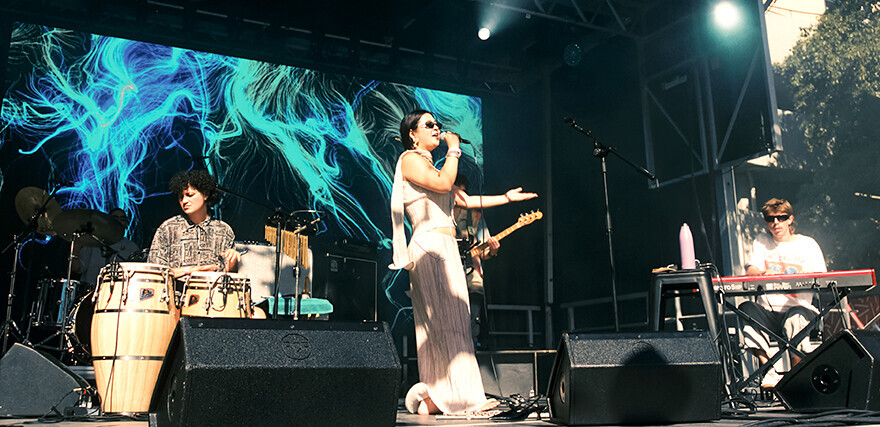
Crystal Chen with Adam Tobeck on drums, Ruby Fainaa on congas/percussion, Michael Howell on bass, Joe Kaptein on keyboards. - Nicola Sandford
There are always two ways you can look at a situation: from the inside and from the outside. Both perspectives have advantages and merits. They also have their flaws.
As I observed in 10 New Zealand Jazz Records from 2016 to 2025, for the longtime players and keepers of the faith, jazz never really goes away. However, as someone who sits in the audience rather than standing on stage, I’ve observed a resurgence of interest in jazz with younger audiences over the last decade.
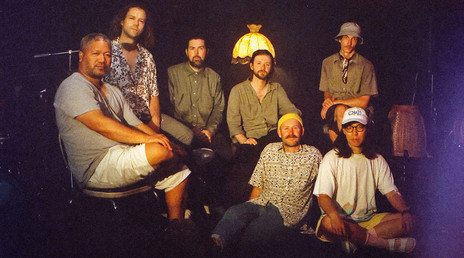
The Circling Sun, from left to right: Ben Turua, Finn Scholes, Julien Dyne, Guy Harrison, Cam Allen, Matt Hunter, J Y Lee. - Crystal Chen
This time around, especially in the UK, the US, Australia, and increasingly here in Aotearoa, the new wave has often hybridised traditional jazz with stylistic affectations drawn from psychedelia, hip-hop, electronica and ambient music. On the other end of the spectrum, we’ve also seen the rise of a new generation of solo artists and groups making music in the same traditions as modal, spiritual, and Latin jazz, while sometimes blending 20th-century styles from across Africa into the mix.
If things have been ramping up again over the last decade, the modern New Zealand jazz scene, and the adjacent bands who drink deeply from jazz, had a real moment in 2025.
From Tāmaki Makaurau to Ōtepoti and back again, a bevy of established groups and newer names turned out world-class albums last year, many of which received world-class recognition. Here are 10 of them for your consideration and enjoyment.
Carnivorous Plant Society – The Lizard
The Lizard is the first in a series of three EPs from Tāmaki Makaurau Auckland multi-instrumentalist, composer and producer Finn Scholes’ Carnivorous Plant Society group. Described on their Bandcamp page as “an Auckland-based musical ensemble who play cinematic jazz music and create custom animations,” they’ve been releasing weird and wonderful records for 13 years now.
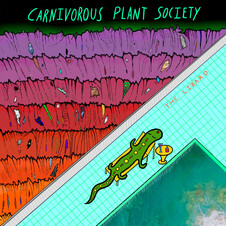
Carnivorous Plant Society – The Lizard (2025)
Writing about the record before it was released, Under The Radar’s Chris Cudby described The Lizard as “a generous six tracks teleporting listeners to realms of friskily percussive synth-assisted exotica, heavy grooving horn-injected avant-rock, lounge-jazz fantasia, cinematic spaghetti-western sizzle, and inter-dimensional vocal radiance.” There’s no hyperbole here either. Their music is playful, childlike and hopeful in all the right ways.
This time around, Scholes is joined by Tam Scholes (guitar), Cass Basil (bass), Alistair Deverick (drums), Siobhanne Thompson (violin), Michael Barker (drums and percussion on ‘On & On’), Lewis McCallum (clarinet on ‘The Sinking Village’), and Rafferty Randell-Scholes (baby noises on ‘Love Monolith’). Follow The Lizard down the rabbithole. You know you want to.
Clear Path Ensemble – Black Sand
Since 2020, the Te Whanganui-a-tara Wellington drummer/percussionist, composer and producer Cory Champion has released three albums as Clear Path Ensemble. Project by project, he’s mapped out an introspective soundworld in which several strands of jazz – spiritual, Latin and fusion – dovetail together with ambient music, electronica and minimalist composition.
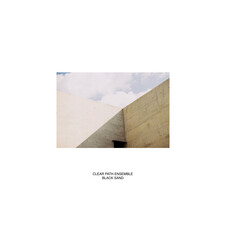
Clear Path Ensemble – Black Sand (2025)
Inspired by the concept of the jazz kisa, a type of Japanese café and bar focused on listening to records on hi-fi audio systems, Clear Path Ensemble’s third LP, Black Sand, represents a high-watermark moment in Champion’s still-growing oeuvre.
Recorded with a cast of local players including Johnny Lawrence (double bass, electric bass), Daniel Hayles (piano, Rhodes, clavinet), James Illingworth (synth), Louisa Williamson (flute), and Mike Isaacs (bass clarinet), Black Sand yielded Champion’s breakout composition, ‘Cascade d'Ars’.
That free-flowing waterfall of an ambient jazz tune won him the 2025 APRA Best Jazz Composition Award. Fittingly, it was also showcased by the taste-making DJ broadcaster Gilles Peterson on his BBC Radio 6 show.
Crystal Chen – You Can Call Me CC
You Can Call Me CC is the debut album from the Chinese-New Zealand singer-songwriter and photographer Crystal Chen. Ostensibly, the foundations of Chen’s music are cool jazz intermingling with lounge music. Once you settle into the vibe, touches of neo-soul, R&B, bossa nova, and breezy samba fill out her palette.

Crystal Chen – You Can Call Me CC (2025)
I like to think of this album as a collection of handwritten letters set to music performed by an extravagant cast of musicians. Over 12 songs, Chen shares stories of love, loss and listless ennui through a soft, rose-tinted lens that feels like a natural fit with the gorgeous medium format film portraits she shoots for clients.
As AudioCulture contributor Graham Reid observed at his Elsewhere site, “It's not all polished smooth – the opening of ‘Top Down’ arrives like a warm hailstorm before the groove kicks in, ‘The Forecast’ rocks up a little – but Chen aims for a mature place where there are satin sheets, red wine by candlelight, and a distant saxophone plays.”
Darren Pickering Small Worlds – Three
Ōtautahi Christchurch jazz pianist, composer, educator, modular synthesist and session musician Darren Pickering has been building a following for a few years now. A jazz academic with international credit, he also likes to turn his hand to popular music, lending his composition and keyboard skills to recordings by the likes of Shapeshifter, Julia Deans, Cairo Knife Fight, Pacific Heights, The Tiny Lies, and Sacha Vee.
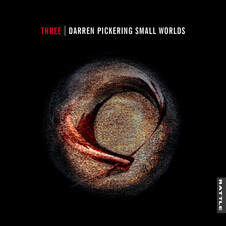
Darren Pickering Small Worlds – Three (Rattle, 2025)
After their Volume One (2022) and Volume Two (2023) records, his Darren Pickering Small Worlds group did what anyone else who loves numerically titled albums would do: they released their third album, Three, through Rattle Records. Alongside Heather Webb (guitar), Pete Fleming (bass), and Jono Blackie (drums), Pickering combines jazz and folk-rooted song structures and improvisation modes with the cinematic textures afforded by modular synthesis.
In a review for The 13th Floor, John Bradbury described Three as asking questions about mood, memory, and place. “It doesn’t answer them, and that’s one of the reasons it’s worth returning to, again and again,” he observed. “It sits somewhere between jazz and ambient, taking elements of both to create powerful, textured soundscapes that reward attention.”
Devil’s Gate Outfit – When The Rivers Run Red
One of the highlights of Te Whanganui-a-tara’s annual jazz festival is attending wild late-night performances by a sprawling, stomping ensemble that makes music that sounds like the capital’s south coast feels: the Devil’s Gate Outfit. Ostensibly led by the master drummer and composer Anthony Donaldson (Primitive Art Group, The Six Volts, Village of the Idiots, etc), they’re a rogues’ gallery of jazz musicians and improvisers with a vivid command of mood, tone and atmosphere.
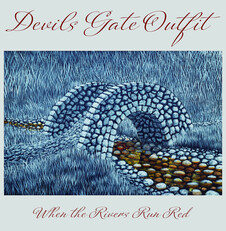
Devil's Gate Outfit – When the Rivers Run Red (Kiwijahzz, 2025)
Over the last five years, the Devil’s Gate Outfit has released two modern classics, Jazz from the Underground Nightclubs of Aotearoa Vol. 5 – Devils Gate Outfit (2021), and When the Rivers Run Red (2025), through the Kiwijahzz label.
Opening with the 2025 APRA Best Jazz Composition Award-nominated piece ‘Tone Clocks’, When the Rivers Run Red is a journey through the exotic and the familiar. Expect Balinese gamelan-inspired sensibilities rubbing against fiery improvisation, Latin jazz meets psychedelic rock, and the sound of a brass band under the influence in the right way.
Joe Kaptein – Pool Sharks
The Tāmaki Makaurau multi-instrumentalist and composer Joe Kaptein is one of those musicians who effortlessly moves between the mainstream and the underground. On any given week, you might find him playing keyboards with Six60, Princess Chelsea and The Dream Warriors, and Crystal Chen, recording with Tom Scott or Muroki, or fronting his solo project.
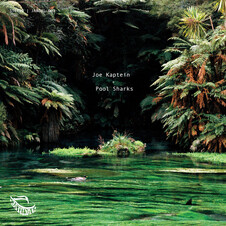
Joe Kaptein – Pool Sharks (Jandal Records, 2025)
Kaptein keeps it low-key, but his own music is anything but. Across his 2025 album, Pool Sharks, released through his Jandal Records label, he’s joined by a backing band, also named Pool Sharks. Over nine playful and imaginative songs that bend jazz in a variety of directions, Kaptein takes the lead on keyboards, synths, organ, glockenspiel and guitar. It’s his show, but he also lets his fellow musicians shine when it makes sense.
In a review for Radio New Zealand, Tony Stamp observed that jazz can sometimes seem like a private club, with barriers to entry if you haven’t done enough homework. In his words, “But that’s not the case with up-and-coming keyboard wizard Joe Kaptein, whose music – infused with funk and fusion alongside more traditional modes – seems geared toward an enjoyable listening experience as much as giving his players space to flex their chops.”
Louisa Williamson – Groundwork
Groundwork is a collection of songs that the Te Whanganui-a-tara composer, woodwind player, and session musician Louisa Williamson wrote and composed between 2016 and 2024, while she was finding her place within Aotearoa’s musical communities.
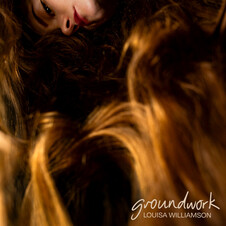
Louisa Williamson – Groundwork (2025)
The seven-track collection arrived three years after her striking debut, the expansive ambient, modern classical, and big-band jazz album What Dreams May Come. Where her debut traded in minimal sensibilities inspired by the composers Brian Eno and Maria Schneider, Groundwork offers a mix of more traditional jazz and jazz-funk.
You can hear the influence of New York’s longstanding jazz traditions on Williamson’s songs, which – whether uptempo or sedate – often seem underscored by the feeling of orange leaves falling in autumn.
Two obvious album highlights include ‘Red Pepper’ and ‘In Tune’ featuring fellow Te Whanganui-a-tara singer-songwriter MĀ. On ‘Red Pepper’, a breakbeat that wouldn’t have sounded out of place on a 90s hip-hop record snuggles with a funky bassline, while triumphant woodwinds and electric guitar dance in an improvised dialogue overhead. ‘In Tune’ opens with a flurry of sounds before settling into a sedate and soulful mood.
Piecemeal – Metabolism
Between 2022 and 2025, the Ōtepoti Dunedin musicians Finn Butler (keys), Ro Rushton-Green (soprano saxophone), Peter Claman (trombone), Regan McManus (bass), and Ryan Finnie (drums) spent countless hours playing together as Piecemeal in the band cave at King Edward Court.
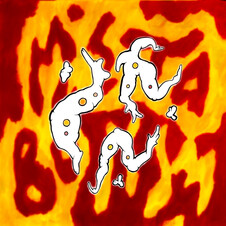
Piecemeal – Metabolism (2025)
Last year, they recorded their first album, Metabolism, at the John McGlashan College Music Department, before self-releasing it. Splitting the difference between noise-improvised jazz and math rock, Piecemeal divide their time between the margins and the centre of jazz.
On Metabolism, they serve up a tasty reinterpretation of the composer Angelo Badalamenti’s Twin Peaks theme, a cover of a 1940s jazz standard by Thelonious Monk and Kenny Clarke, and seven original compositions with esoteric and not-so-esoteric names.
Hopefully, we’ll be seeing more of this playful and humorous – but well-practiced – group around the motu over the years to come. They’ve got spirit, atmosphere and heart on their side.
The Circling Sun – Orbits
For many years, The Circling Sun were one of Tāmaki Makaurau’s great open secrets: a jazz band that held regular residencies around town and covered modal classics, devotional obscurities, and life-affirming records from Africa and Latin America. Who else was playing Bobby Hutcherson, Gene Harris, Airto Moreira, Mulatu Astatke, Milton Banana, and Tunde Williams tunes in the city?
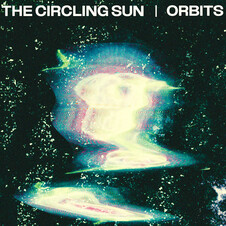
The Circling Sun – Orbits (Soundway Records, 2025)
One time, Jay-Z’s drummer sat in with The Circling Sun for a set. When you talk about their shows, everyone has a story.
In 2023, they put their own compositions on wax with their debut album, Spirits, released through the prestigious UK label, Soundway Records. If Spirits got people talking, their 2025 follow-up, Orbits, put them on the international jazz map.
Through a free-flowing confluence of spiritual jazz, Brazilian bossa nova, and samba soul influences, The Circling Sun offer up seven considered compositions that reach out on a universal scale, while holding a torch for the highs and lows of lives lived under the overlapping social, political, and environmental pressures that bear down on many of us today.
Wave Infinity Junction – Wave Function Infinity Live
Wave Infinity Junction Live is the first release from Wave Infinity Junction, an ensemble curated by the Wāhine in Jazz collective in Tāmaki Makaurau. As the name suggests, they’ve spent the last four years advocating for female jazz musicians in Aotearoa and Te Waipounamu.
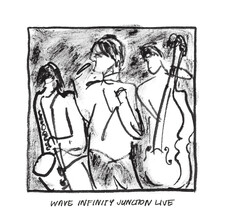
Wave Infinity Junction – Wave Infinity Junction Live (Monosoak Records, 2025)
Released through Monosoak Records, this live recording, captured at the Audio Foundation on August 23, 2024, showcases original writing from by Crystal Choi (Phoebe Rings), Kathleen Tomacruz (Pocket Money), Wren Probett and Wynefred Wang, and arrangements from Minju Kim and Jenna Aspeling.
A mixture of vocal and instrumental pieces, the six recordings included on Wave Infinity Junction Live mix traditional and spiritual jazz sensibilities. Regardless of who did the writing or is leading the vocal, the common theme is a feeling of ascent towards something lofty, higher and celestial. As their ensemble name suggests, they’re reaching for the infinite and the sublime, just as many of the other jazz musicians included in this article are.
--