Since 1994, Tim Ward has helped set and recalibrate the tempo and tone of nightlife and hospitality in Wellington. He’s played this role through operating and co-operating a multiplicity of music venues, nightclubs and bars, across several successive eras: Hole In The Wall, The Matterhorn, Shopping, Good Luck Bar, San Fran, The Hunter Lounge, Club 121, and B.Space. Between them, these spaces have helped nurture several generations of Wellington bands and DJs, while providing performers from out of town and overseas with solid foundations in the capital.
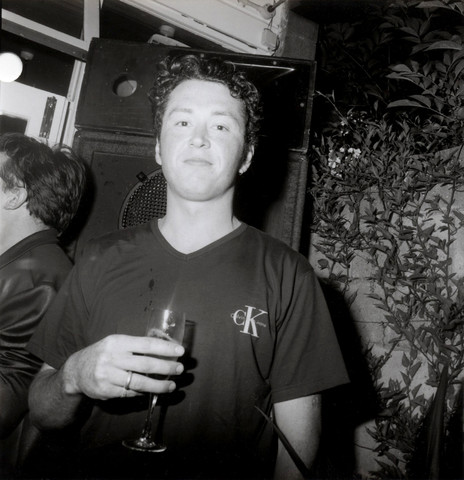
Tim Ward: helped recalibrate nightlife in Wellington
Early days
Ward got his first taste of the excitement of Wellington nightlife in 1991, when he organised an end-of-school graduation party during his final year at Onslow College. He hired a storied waterfront function room, The Boatshed, and booked several bands as entertainment. “It was about bringing people together through music,” he says.
Thirty-six years later, that sentiment remains the same. “Once someone says, ‘Thanks for the great party, that was a phenomenal night I’ll never forget, none of the difficult parts matter,” Ward enthuses.
At the end of 1991, he travelled to San Francisco, California, and spent a season working in a photocopying shop on the city outskirts and going to concerts in the evenings. “I was invited because I’d looked after an American exchange student who was in a difficult situation,” Ward remembers. “She lived with my family for a while. In kind, her parents offered to give me a job and house me for three months before I went to university.”
On New Year’s Eve 1991, he attended a triple bill at The Cow Palace Arena in Daly City featuring the Red Hot Chili Peppers, Nirvana, and Pearl Jam. “It made me think about how cool it would be to have a space where musicians could perform and audiences could see them,” Ward reflects. Back in Wellington, his feelings galvanised while spending more time at the original Bar Bodega.
In 1992, Ward enrolled with Victoria University to study geography, politics and art history. “I went for anything interesting, because my heart wasn’t really in university,” he admits. “I was doing it for family and societal reasons.” In his first year, he went off the rails. “I crashed out with a chunky criminal conviction and spent a year incarcerated,” Ward says.
“Once someone says, ‘Thanks for the great party’, none of the difficult parts matter”
Early in 2025, Ward ran for a seat on the Wellington City Council in the Lambton Ward. Although he was unsuccessful, it was a clarifying experience. During his campaign, he posted a video on Facebook and Instagram that elaborated on those events. Thinking back to when he was 18, he recalled being sentenced to two years at Mount Crawford maximum security prison for importing LSD. In his words, “While in prison, I came to a clear fork in the road. I could carry on down the path I was on, or I could choose another. My upbringing, both loving and financially secure, gave me the option to change direction … Prison is the worst place to put a young person. It is a breeding ground for crime and gangs, not for rehabilitation.”
On reflection, he realised the extent to which spending time inside shaped his worldview. He continues, “I believe strongly that if you treat a person as they are, they will remain that way. If you treat a person as who they might become, you give them a chance to grow into that person.”
Ward made a mistake that could have had a severe impact on the rest of his life, but he was fortunate enough to turn it around into something positive. Part of how he was able to do that was through having a lot of time to think. “I started drawing floor plans of venue layouts,” he says. Over time, an idea germinated.
After Ward served his sentence, he started working for hospitality businessman Matt Wilson at a redlight-era Vivian Street coffee shop, the Kia Ora Coffee Lounge. After he mentioned wanting to open a venue, Wilson told him about a vacant space in the Poon Fah Association building nearby. “It was owned by an old Chinese association that met upstairs every month,” Ward says. “The rent was ridiculously affordable. I promptly moved in and lived there while I did it up with a friend, Ben Cochrane.”
Hole In The Wall
The humble, roadside space Wilson told Ward about had formerly housed an early Wellington drag club, The Purple Onion. In Ward’s hands, it became his first live music venue, Hole In The Wall. Not long after they opened in 1994, Ward became the sole owner and continued to operate the venue until 1996. “One of the reasons I opened it was to provide a platform for some of the younger bands who couldn’t get stage time at Bar Bodega or Trekkers Hotel [on Cuba Street],” he says. An early hire was Jayne McCall from Auckland venue Bob Bar. McCall helped plug Ward into the broader music scene, leading to Wellington alt-rock royalty like Head Like A Hole and Shihad using Hole In The Wall for warm-up shows before embarking on national tours.

Tim Ward c. 1995, outside Hole in the Wall, Vivian Street, Wellington
Having spent time nightclubbing at Clares, Naked Angel, Tatou, Sol (later La Luna) and Ecstasy Plus, Ward was connected with what was happening on the DJ side of things. “I remember hearing Mu play drum and bass for the first time,” he enthuses. “Nobody knew how to dance to it, but we loved it.” Soon enough, Hole In The Wall began accommodating DJ nights organised by early jungle/drum & bass promoters like Subtronix and more esoteric bands. “Tardus played there, which was Scott Towers from Fat Freddy’s Drop’s early jazz electronica band,” Ward says. “It was really helpful not to be pigeonholed for one thing. Our music policy was that genre didn’t matter. It was about quality.”
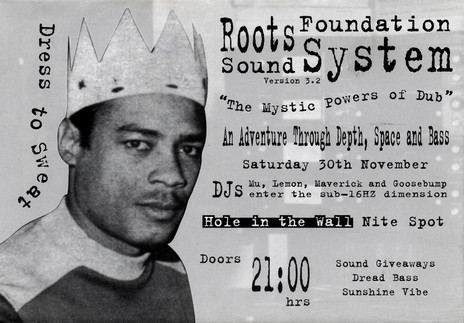
Hole in the Wall flyer, 1996
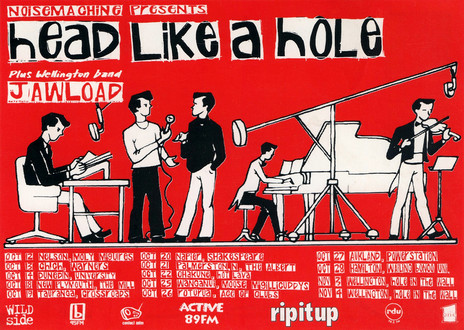
Head Like A Hole tour poster, including a date at Wellington venue Hole in the Wall
Foreshadowing his later ventures, Hole In The Wall wasn’t just about who was on stage. The audience mattered as well. In her AudioCulture profile, Berlin-based New Zealand house DJ and producer Philippa McIntyre recalls spending her evenings in the dive bar. “She was a massive regular,” Ward remembers, noting other familiar faces, including musician and visual artist Otis Chamberlain aka Mephisto Jones, Nigel Regan and Andrew Ashton from Head Like A Hole, and music retailer Brent Gleave. “Later on, Andrew [Durno] would DJ for us on Tuesdays at our cheap drinks night,” he continues. “Brent sold me a lot of trip hop which I fell in love with at the time, and Andrew sourced music from Brent too. Hole In The Wall is easily the venue I’m the most proud of, mostly because the space continues to be used for a similar purpose today, as Valhalla.”
You can dig more into the story of 154 Vivian Street in AudioCulture writer Ben Lynch’s history of the role the space has played in Wellington culture here.
The Matterhorn
In 1996, Ward sold Hole In The Wall. “I was getting a bit bored,” he admits. Not long after, he had a sliding doors moment when the late New Zealand painter Bill Hammond was exhibiting at the Peter McLeavey Gallery. “I saw one of his human torsos with bird head paintings,” he says. “It was selling for the exact amount I’d made off Hole In The Wall.” That same week, he talked with an interior design course graduate, Allistar Cox, who was on the verge of opening a boutique design practice. Cox pitched him a cosmopolitan lounge bar and restaurant located inside the historic Matterhorn coffee lounge on Cuba Mall. “Allistar had a business partner in mind for me,” he says. “He wanted to design the bar and leave it to us to own, run and fund it.”
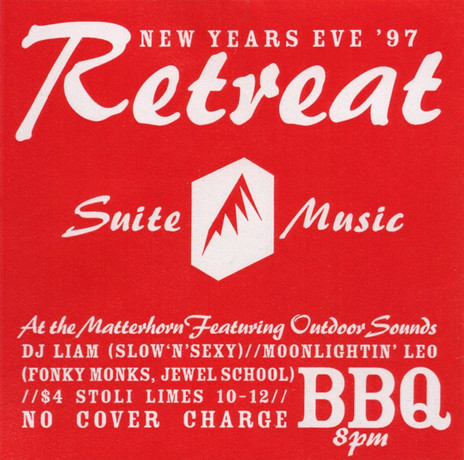
New Years Eve Retreat, Matterhorn, 1997
Once Ward had met up with Cox’s proposed business partner, Leon Surynt, it was a no-brainer. A film and television industry runner who DJed with the Fonky Monks collective, Surynt was plugged into local culture. “He was also connected with the student radio station, Radio Active,” Ward continues. Between them, they had a solid grasp of the city. The Matterhorn represented a very real chance to create something special.
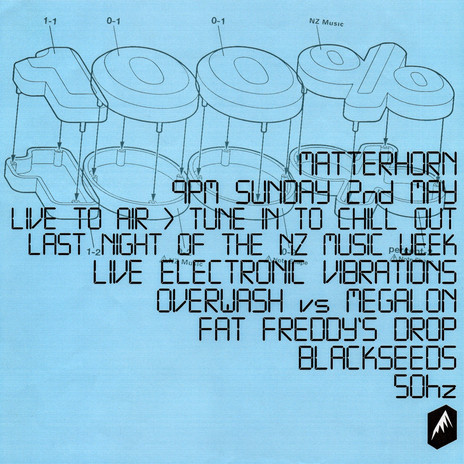
Matterhorn, last night of NZ Music Week, 1999
“It should be no secret that The Matterhorn was Allistar’s vision,” Ward admits. “He had travelled through Europe and been exposed to a seven-day-a-week hospitality culture where they served breakfast, lunch and dinner on the same premises. Allistar knew Wellingtonians did travel and understood these ideas. He envisioned a Mediterranean-style menu with cocktails and European beers in a beautiful space. Our job was entertainment and looking after the audience.”
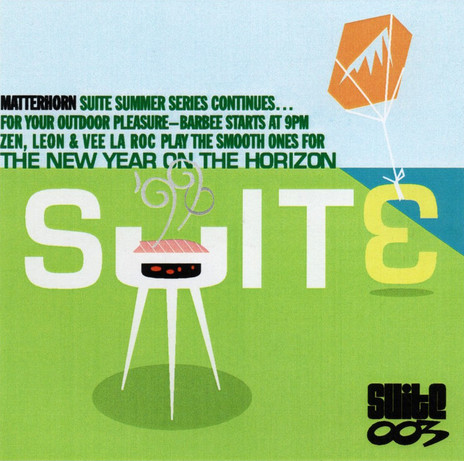
A new year on the horizon at Matterhorn's Suite Summer Series.
When The Matterhorn opened in 1996, it delivered. Despite essentially being a small rectangular hallway with an equally small courtyard out back, Ward, Surynt and their staff made the most of the venue. Soon enough, Wellingtonians were rolling in for coffee, food, drinks and music in the evening. “A lot of the audience from The Hole In The Wall followed me down to The Matterhorn,” he explains. “That meant a few worlds started colliding: the rock scene, jazz and the DJ scene.”
Outside of Ward and Surynt, some of the original Matterhorn crew included kitchen hand Ben Farrant aka DJ Nikal, who now co-owns Highwater Eatery on lower Cuba Street, and Weta drummer Clinton den Heyer, who worked as the bar manager. On the other side of the bar, local DJs such as the late Mu, Vee and Flic ran the turntables. When the black wax wasn’t spinning, you could find a range of local jazz, soul and funk musicians and bands like Twinset entertaining the crowd. “After I became friends with Iain Gordon, his group Bongmaster started performing outside in the courtyard occasionally,” Ward recalls.
Nearly 30 years on, he realises that what The Matterhorn was really about for him was helping highly creative people mingle and being able to cheer them on from the sidelines later on. “I’ve got a real pride in what everyone went on to do,” Ward enthuses. It was one of the businesses that inner-city dwellers and workers treated as a second living room. “There were a lot of film and television production companies in Wellington at the time,” he says. Ward also remembers university students bringing their parents in to revisit their favourite 1960s and 70s coffee lounge in its new form.
Shopping
By 1998, nights at The Matterhorn had swelled to capacity. Everything pointed to a demand for more. In response, after a conversation with the property developer Ian Cassells, Ward and Surynt took a short lease on a larger space just off Cuba Mall, which was scheduled for demolition. “Allistar Cox designed a really fast fit out for us, which was driven by a lot of black paint and cool low seats you could lounge in,” Ward recalls. After that, they applied for a series of special licenses to serve alcohol and Shopping was born.
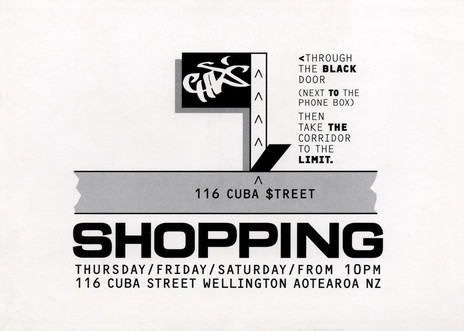
Flyer for the legendary summer pop-up venue, Shopping
A legendary summer pop-up, Shopping created lore that resonates through Wellington’s nightlife and hospitality community to this day. “The premise was to produce a nightclub for everyone coming to The Matterhorn who wanted to stay out late into the night,” Ward says. Shopping was here for a good time, not a long time, and the vibe was great. Some notable evenings there included a Roots Foundation birthday party and DJ Mu and Dallas Tamaira performing together, pre-Fat Freddy’s Drop. “One night [the hip-hop rock band] Police Lucifer played as well,” he says, noting their singer Paora Apera went on to front the heavy soul band Shapeshifter as P.Digsss. In a sense, Shopping foreshadowed the transformative times ahead for the capital.
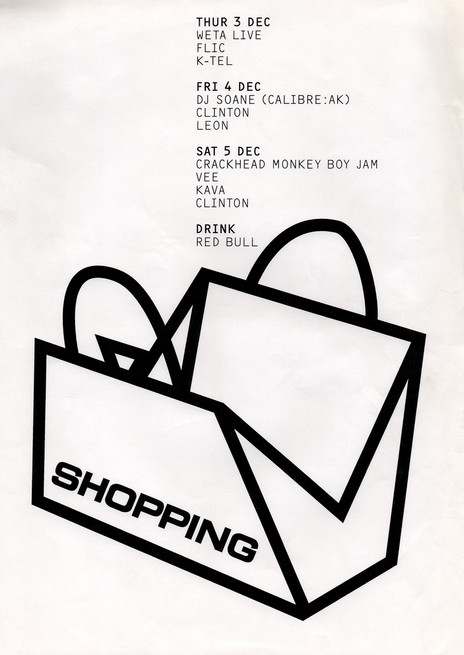
Shopping flyer, 1998. "Shopping was here for a good time, not a long time, and the vibe was great."
In 1999, Ward detoured away from nightlife. As he puts it, “We closed Shopping, I sold my shares in The Matterhorn, and I vowed never to do hospitality again in my life.”
For the next few years, he worked as a set builder in the local film, television and theatre sectors. “I did a couple of jobs at Circa Theatre and Downstage Theatre, before ending up on The Lord of the Rings during the tail end of the films,” he says. “At the end, I helped organise a wrap party at St. Johns, which Fat Freddy’s Drop played with [punk band] Paselode.”
Good Luck Bar
Inevitably, Ward reneged on his vow and went into business with his Matterhorn bar manager, Clinton den Heyer. Their first venture was a basement bar on Upper Cuba Mall, Good Luck Bar. “I was starting a family, so I asked Clinton to come in and run the bar,” he remembers. “We had a seated service cocktail lounge and a tiny dance floor.”
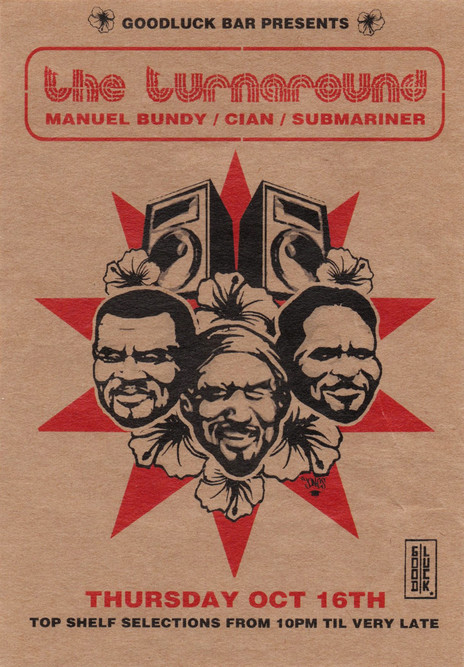
The Turnaround, with Maunel Bundy, Cian, and Submarina - 16 October 1997.
After opening in 2002, the bar cultivated a hip audience who came for the cocktails and selection skills of regular DJs, including the late Jason Harding aka Clinton Smiley, Vee, Riki Gooch, Marek and Duncan. “I wanted to create something unique, different and lasting,” Ward explains. “It was very much a hip-hop club. The music was fun, sexy and cool.”
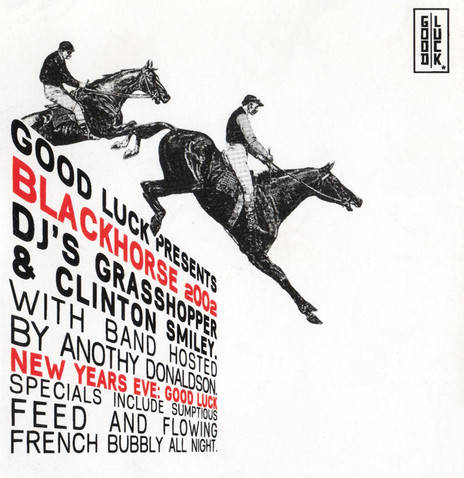
New Year's Eve at Good Luck, with Grasshopper and Clinton Smiley
Designed by Allistar Cox, Good Luck evoked a similar big city cool to The Matterhorn, this time through a lens that borrowed more from Asia. “What I always find remarkable about this period is that we were on these two little islands in the South Pacific without any real internet access – some of us had travelled, some of us hadn’t – and we were able to create these original and outstanding spaces,” he notes.

"Opium den opulence" - Chinese New Year at San Fran, 1 February 2003
As time went on, Good Luck Bar became a home base for local DJ crews such as Fried Chicken Sound System to throw fun, intimate events that might have been a risk at a bigger nightclub like Studio Nine or Sandwiches. “For our first seven years, we were strong,” he says.
San Fran
In 2006, Ward embarked on a new venture, converting Cuba Street’s Indigo Bar and Venue into a refreshed live music performance space, The San Francisco Bath House (later San Fran). “Before I came in, the space was already multi-genre,” he says. “They had rock nights, DJ nights, comedy showcases, and reggae bands.” Ward had some personal history with the space as well. Thinking back to his teenage years, he remembers seeing a combination of colourful characters stumbling out of the bar in the mornings. “They always looked so happy, which made me think it must be a lot of fun there,” he says, laughing.
Having spent some time on the road as a tour manager during his Hole In The Wall years, Ward had a sense of the issues bands and their technical crews faced while touring New Zealand. He’d also had conversations with Fat Freddy’s Drop and The Black Seeds about [the European touring experience]. Ward had a vision for a venue with a well-designed stage, solid sound and lighting rigs, a properly provisioned backstage area, and smooth-flowing bar service. “We wanted to go back to basics,” he says. “The idea was to look after the promoters and bands, so they could look after the audience by giving a great performance.”
In the process, they helped reset the benchmark. “How we set it up, ran it and looked after the community around it made the venue valuable to promoters and musicians,” he continues. San Fran, of course, is a story unto itself, as documented by AudioCulture writer Michael Hollywood here.
While Ward was getting San Fran off the ground, one of the Good Luck Bar security guards, Ziggy Ziya, approached him about working at the new venue. Over the following 14 years, Ziya became an integral part of the business. By the time Ward sold San Fran to Live Nation Entertainment in 2020, Ziya was a co-owner. “He and I supported each other through personal crises, business challenges, and professional development,” Ward says. “I’ll forever see him as a great friend and central to the longevity of success that San Fran experienced.”
Five years after opening San Fran, Ward was ready for another venture. When a tender process came up, he submitted a proposal to run the student bar, cafe, and takeaway food retail facilities at Victoria University. The result was The Hunter Lounge venue, the Milk & Honey cafe and, as he puts it, “a fancy tuck shop”. Ultimately, the university landscape wasn’t for him, but it helped lay the foundations for some further ventures later on down the line.
Club 121
In 2016, Ward heard about a young dance music crew, 121, who were throwing crazy pop-up house and techno parties in flats, skateparks and carpark spaces. The following year, he had a meeting with 121’s leaders, Olly de Salis and Cam Morris, and made a proposal. “I’d sold Good Luck Bar and the people who bought it went into liquidation, so I needed a tenant,” he explains. “I took the 121 guys down there to see if they’d like to run a nightclub, and their eyes lit up in the same way mine did when I saw that space for the first time.”
“I took the 121 guys down [to the Good Luck space] to see if they’d like to run a nightclub, and their eyes lit up”
De Salis and Morris were the first to admit they had no idea how to run a nightclub. At their behest, Ward helped them get their vision, Club 121, up and running. Having steered the ship in the past, he felt it was important to take a step back and leave the music curation and marketing to the new generation. “They had their own scene, and they were doing a great job,” he says. “Who was I to meddle with any of that?”
Club 121 ran in the old Good Luck Bar space from 2017 to 2020, before shifting to a new basement location at 21 Cambridge Terrace off Courtenay Place. Fittingly, it was formerly one of Ward’s old late teens/early 20s nightclubbing haunts, Tatou. Alongside the club, De Salis and Morris ran standalone one-off events like the 121 Carlucci Land multizone outdoor party at a mini golf course on Happy Valley Road and a warehouse rave headlined by Fat Freddy’s Drop at the Avalon Studios complex in Lower Hutt. When and as required, Ward would help with logistics and organisation. Later on, when they ran the multi-day 121 Festival in South Wairarapa, Ward took on a role as the festival’s director of operations and finance. From there, his responsibilities ballooned into a jack-of-all-trades role through the years the festival was in operation.
At the start of 2024, Club 121 closed, and Ward launched a new nightclub venture in the same location called b.space. In his words, “b.space was a directional shift. We wanted to step away from in-house programming and open the space up more to promoters as a venue. New model, new name, still dancing.” A year later, they closed temporarily for earthquake strengthening construction, which has yet to be completed.
Where next?
During the early days of Club 121, Ward made a brief foray into beekeeping. He felt ready for new challenges and a different pace of life. When he discovered he was allergic to bees, he opted for a long-held secondary option, opening the Epuni-based Abandoned Brewery and accompanying tap rooms in Petone and Porirua. After several decades of nightlife and hospitality work, he had a few ideas about what he was looking for in lagers, IPAs, hazy pale ales and the like. “The original intent was to brew beer and wholesale with a focus on Wellington, but over the last five years, we have been through some of the craziest trading conditions that I have ever known,” he reveals.
In a nod to his history, Abandoned’s Porirua and Petone taprooms occasionally host live bands and DJs. “When I think about it, a lot of what I’ve done has been about helping highly creative people meet each other through my establishments,” he reflects. “I’ve enjoyed watching them go on to create other things, and then realising how much influence I had in bringing these people together. There’s a pride in the fact I could, through accidental social engineering, help bring them together. I think I’ve kept doing it because it’s so fun to be around creative people.”
After three decades of service, he’s still passionate about music, nightlife and hospitality in Wellington. “There were definitely a couple of stages where I wanted to stop working in hospitality, and one time I intentionally did,” he laughs. “What has always drawn me back was the people I’ve surrounded myself with and the endorphins I get from service. I seldom do it these days, but I never get tired behind a counter.”