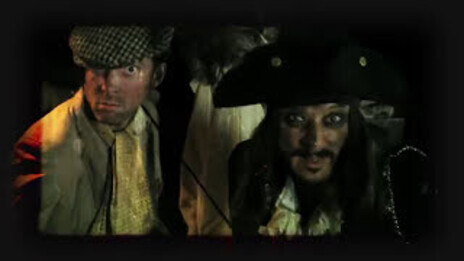
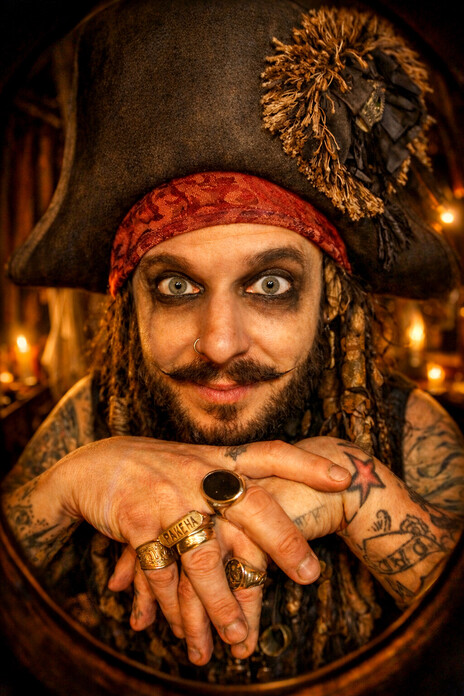
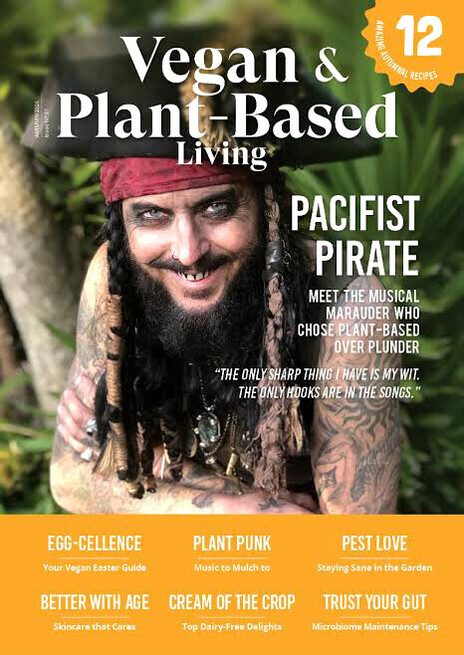
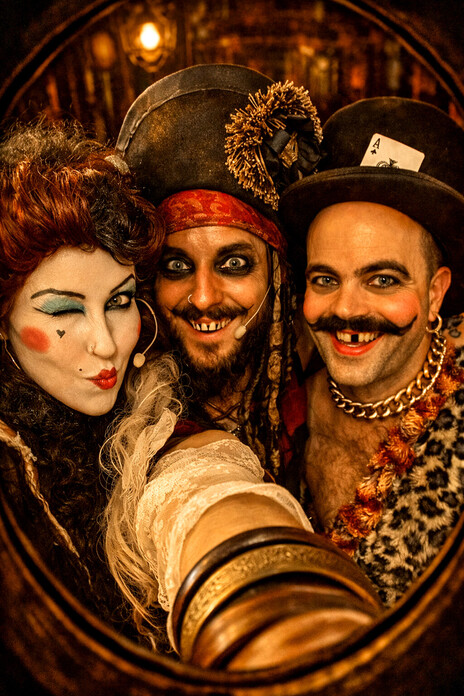
Fast forward a decade, and the same gap-toothed pirate – having just turned a very sprightly 60 – is adorning the cover of Vegan and Plant-based Living magazine’s Autumn 2026 issue, talking up the wonders of clean and peaceful living – “no drinking, no smoking, no drugs, no weapons.”
“We’re pacifist pirates,” he says.
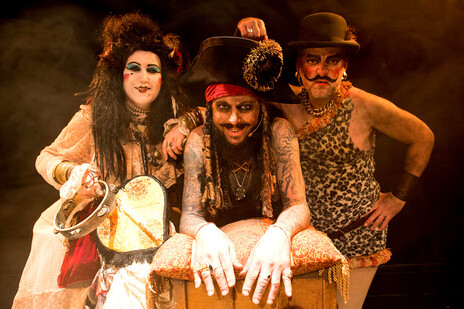
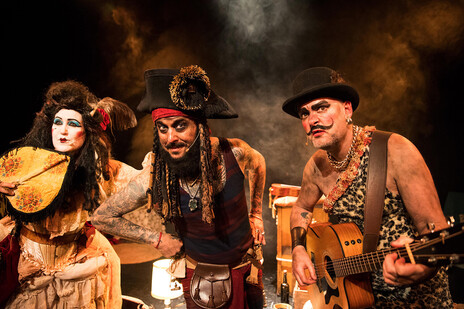
It’s just another way his vaudeville comedy music troupe vibes on smashing stereotypes, breaking down barriers, and celebrating differences. This blend of family appeal and taking good care of himself has made Captain Festus McBoyle and his Travellin’ Variety Show the most successful project of the many Manic has moved through in his music career.
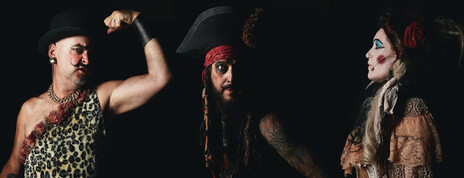
“It’s been a good 15 years with this project now. I’ve had three pirate wives and at least seven guitarists over those years – quite a journey,” chortles the self-confessed “cheap man’s Johnny Depp”, whose vaudevillian antics are often compared to the likes of Monty Python and Spike Milligan.
Born in Barking, London, in 1966, Manic moved to New Zealand with his parents in the early 1970s, settling in Manurewa when he was seven years old.
“I was this mouthy English kid, and all the Pacific Island kids were loud and confident”
“Mum and Dad wanted a better way of life for us kids,” he says. “It was pretty grim back in the seventies, so we came here. It was a massive move. I grew up in South Auckland. which was another big cultural shock because I was this slightly mouthy English kid, and all the Pacific Island kids were loud, and confident, and a bit odd to me, turning up at school in my sandals and socks (I got out of that habit pretty quick!). But, consequently, it was really culturally diverse, and that was kind of cool.”
He recalls the less hospitable mores of the era as “interesting times”.
“Back in the seventies it was ‘Punch a Pom Day’, and all that sort of thing; the English coming into New Zealand, taking jobs. The English weren’t really liked that much. But then, one day, I found out the deal they’d given Māori, and I thought they were a bunch of assholes. I never really thought of myself as being English. I thought of myself as being a Kiwi, although the older I’ve got, I can’t deny the influence it has.”
That influence can be seen in his predilection for bygone era comedians like Tommy Cooper, The Bonzo Dog Dooh-Dah Band, Ken Dodd, and Benny Hill.
Hailing from a long line of Romani, show business runs in his blood. His great-great-aunt was a circus trapeze artist known as The Human Fly, who took her act all over the world. His grandfather once drummed in a band called Reverend Bung and the Bungholes. Legend has it that one night the band got their audience so riled up the floor collapsed beneath them.
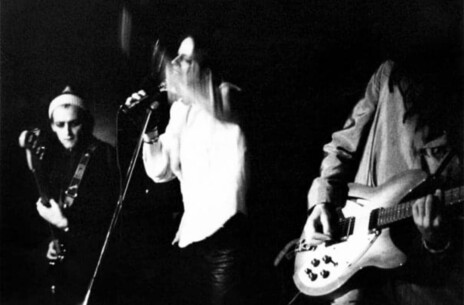
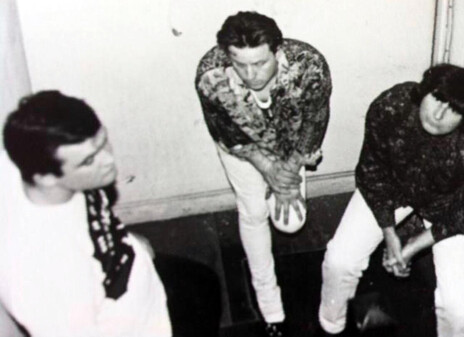
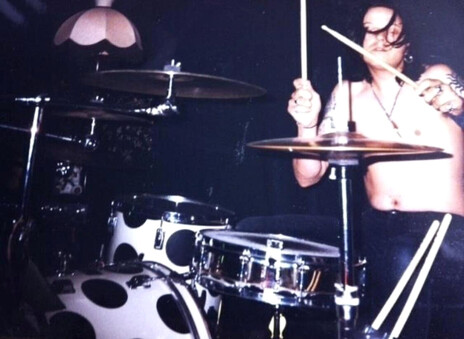
It was indeed drums Rich took up first, even though his mum wouldn’t allow him to play them in the house. He soon added a headset mic to add his vocals to the mix. In 1984, along with Nick Keesing, Mark Buchanan, and Murray Brown, he formed a Duran Duran covers band called Parisian.
“We were “absolute shit”,” he recalls, “but we looked good.”
Manic Pop Junkies, with Peter Hall and Mark Atkinson, followed in 1989.
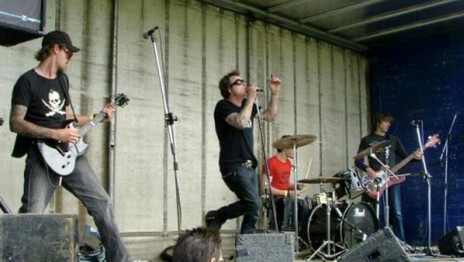
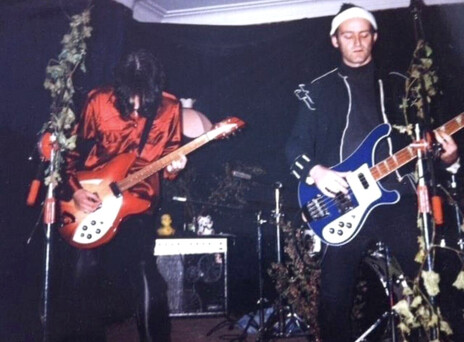
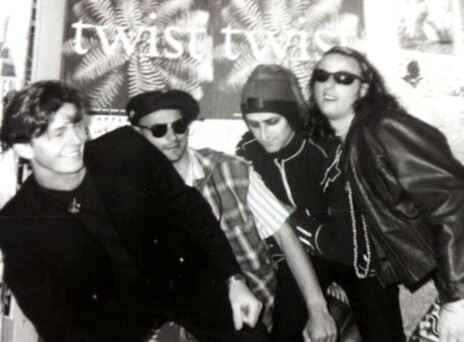
He returned to the UK at age 24 to spend a year in Tottenham, soaking up musical inspiration, before returning to form Teen Shag Superstar in 1993 with Stephen Ward, Jason Sabbage and Aidan Phillips. Other band affiliations have included Five Go Mad (with Phillips and Ward), who formed in 1995; and melodious rock groovers Runninghouse (with Liam Mills, Neil Armstrong, Scott Burst and Greg Dangerous), who formed in 1998.
a psychic told his mother: “Your son thinks he’s going to be Peter Pan forever”
If rocking and rolling means never having to grow up, his career fitted right into the literary realms of the prediction by a psychic his mother went to: “You’ve got a son who thinks he’s going to be Peter Pan forever.”
“I come from the 90s rock bands,” Manic explains. “You know, decadence and debauchery and eventual decline. That’s my background. There was a whole lot of the rock music thing, so I was doing that for years. And then disillusion with that, because we were kind of like Spinal Tap — we kept losing drummers. Got so close and so far …”
Harnessing his real-world background in photolithography, he spent seven years running a screenprinting business called Manic on High Street, printing merch for the likes of The D4, Stayfree Carefree and Head Like a Hole. He began teaching drums to young people, and worked a caretaking job at a school. All of these experiences – and the proximity they afforded him to understand potentially younger listeners – fed into his next creation, Captain Festus McBoyle.
“When I went to pirates, all of that transitioned over,” he says. “I didn’t want to be the normal children’s entertainer. I wanted to still have that rock-and-roll swagger. Not the smiley-smiley, wavey-wavey thing, which I find a bit belittling. So, I don’t have a message, but if there is one, it’s not rammed down kids’ throats. It’s subtle when it’s there, and most kids get it. So yeah, it was definitely planned. I didn’t want to be that sugary sweet. I wanted to nudge the boundaries and be the tall poppy, the kooky alternative. It transitioned over to alternative parents, punks, and creatives, where a lot of that sugary stuff — we’ve all got a place — but I’ve always found it a bit too nice-nice. So, it’s that balance, for family music.”
He and his revolving cast of collaborators shackle influences drawn from shared tastes for folk, Dixie, country, jazz, skiffle, blues, punk, and beat poetry, with a penchant for transporting audiences back in time. They incorporate liberal doses of storytelling – fact and fiction – into something the Captain does not like to call kids’ music, even if kids love it. With character names like Ida Crumpet (played by Jodie Rawle in 2013), and lyrics like, “Wednesday, short by a penny or two, so she’s out there showin’ her drawers” (from The Prose and Cons single ‘Holding the Baby’), it’s no secret he’s aiming to draw the chuckles from a broader age demographic than many bands he finds himself competing with for the younger sector.
early on, “sometimes I pushed a bit too hard. Larissa [Lofley] pulled me in a wee bit”
“I think initially, in the early stages, sometimes I pushed a bit too hard. It was Larissa [Lofley] who pulled me in a wee bit, because I got a little bit close to the edge, I suppose, at certain times. But I just get caught up in it, and I go off on a tangent, and I’m somebody else for a while there. So, she kind of reins me in a bit, which is quite good. We’ve found a really clever balance now where you can still be a bit cheeky, but you’re not crossing any boundaries. And I think that’s a real challenge. When you find it, it’s really clever.”
He has concerns that – when it comes to family music – sometimes those promoters and bills looking for it care not so much about filling stages with quality, but simply filling stages.
“I won’t do things for cheap, and we had to make that line of, what are you worth?,” he says. “And that’s why I find it challenging today, because a lot of artists are doing things really cheap. It undoes all the hard work we’ve done to get things to a certain realistic remuneration. So, it’s a hard one. You’d be playing every day if you could, but you have to realise what your worth is. Working below that, then you’re doing yourself an injustice. And you’ll always get spun lines like, ‘Think of all the exposure.’
“I think we’re all still learning in terms of negotiating and asking for fees. What we offer is two hours to get ready, for all of us each. Sometimes you do find yourself trying to justify why. But I think once they’ve seen you, they know. It’s getting past that barrier to start with. For us, I think word of mouth has been the biggest seller. We’ve had some amazing opportunities from overseas, but quite limited opportunities here. We’ve got quite a bit of presence with the Renaissance and pirate community in America, and within Canada. But it’s a hard road, to be honest.”
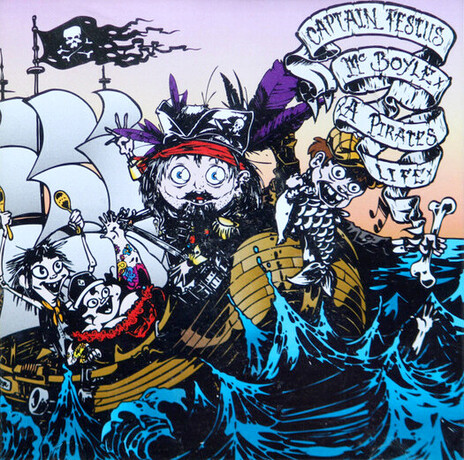
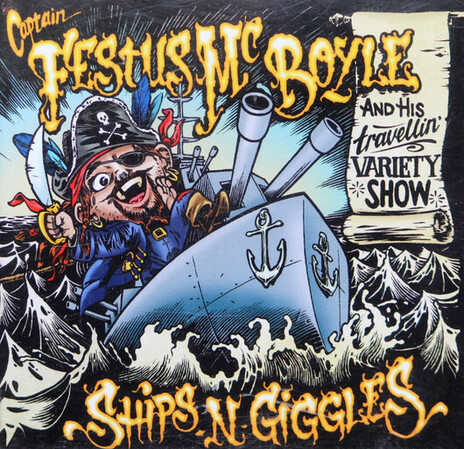
A road paved – nonetheless – with five albums released over the past 13 years. These include: A Pirate’s Life (2013); Ships n’ Giggles (2016); Bubbles n’ Squeek (2019); and Look What the Cat Dragged In (2023).
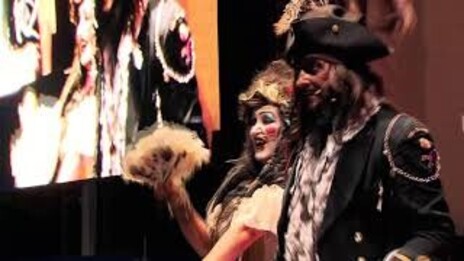
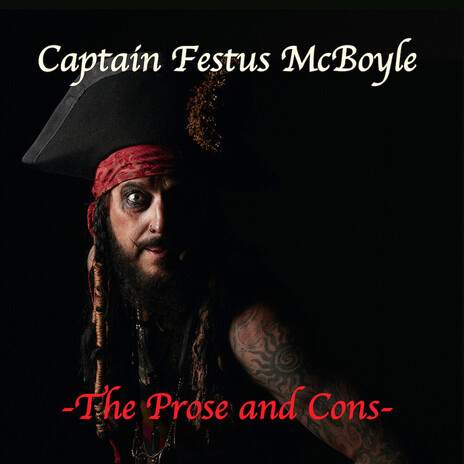
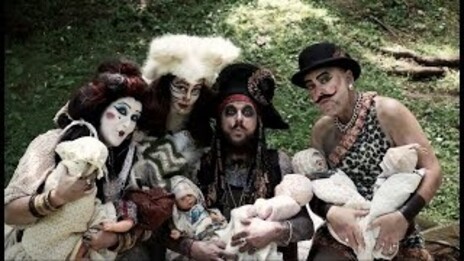
In 2025, Manic undertook the significant challenge of presenting a solo show called Captain Festus McBoyle – The Prose and Cons for the TAHI New Zealand Festival of Solo Performance at Bats Theatre in Wellington. Sam Loveridge supported him on guitar as the act’s second incarnation of Ebenezer Strong, and Larissa Lofley doubled as set and costume designer behind the scenes, and Lucy Drawers onstage. The narrative was historical in content, and stitched together with more serious threads than the usual Festus fare, nonetheless propelled by flecks of dark comedy, and the resilient closing message to “be kind”.
‘The Prose and Cons’ had flecks of dark comedy, and a resilient closing message:
“be kind”
Reviewing the attendant album of the same title, Muzic.NZ’s Daniel O’Brien declared, “This group is one of the best things to happen to children’s entertainment in decades.”
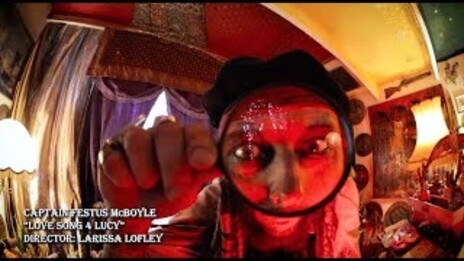
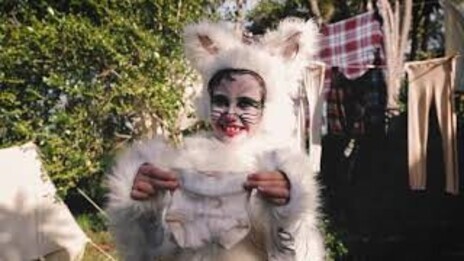
The show was a live action realisation of the video visuals that have been a big part of the magic. The COVID lockdown era video ‘Bubble’ (2020) – co-starring Chalkie the Cat (played by frequent collaborator Awa Lofley) – won the NZ On Air best children’s music video in 2021. Written and directed by Larissa Lofley and produced by Pea-Knuckle Productions, it provides an imaginatively rich peek through the porthole of the pirate’s life.
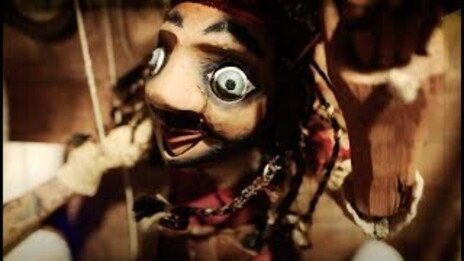
Lofley’s video for ‘Breathe’ was a finalist for the same award last year. Featuring marionettes of The Captain, Lucy, and Ebenezer, created by Lofley and frequent collaborator and onetime Ebenezer Gareth Price (Semi Lemon Kola, Augustino, and The Mamaku Project), it showcases Lofley’s talents for nostalgic world-building, and the influence she’s had on chilling her creative partner out.
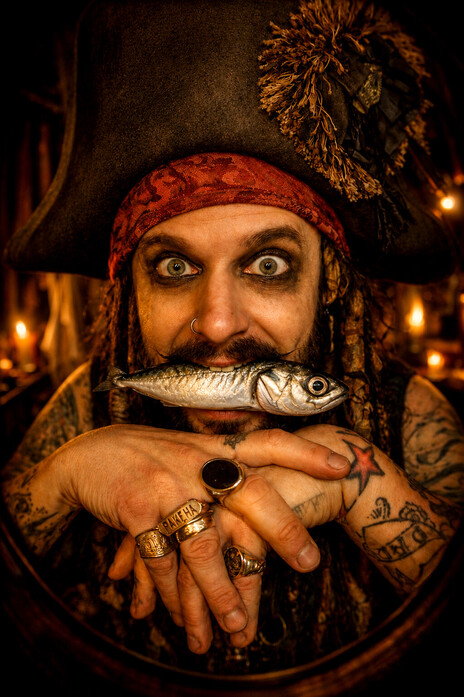
When wear and tear on his body lead to hip surgery, at Lofley’s behest, Manic turned to veganism, yoga and meditation. While the veganism didn’t quite stick – “If somebody offers me a really lovely piece of fish, I’m not going to say no” – he reckons it did him a lot of good. He limits coffee, avoids sugar and carcinogens, and listens to a lot of “Hare Krishna chanting kind of music” at home. Inspired by older performers like Joan Jett, Iggy Pop and Nick Cave, he wants to stay in the game at the level he’s delivering for as long as possible.
“I do a 15-minute kriya every day when I get up,” he says, “and it’s worth its weight in gold. Just quiet time, time to sit and relax. I still struggle with my brain swaying different places and I keep trying to pull it back in, but I figure it’s kind of good, whatever it is. I feel a bit more at peace afterwards.”
Like his really not scary after all alter ego says in ‘Little Things’: “Because those little things in life that make you happy / The little things in life that make you glad / The little things in life that tend to really float your boat / Make you grateful for the things that you have had …” (The song featured on Suzy Cato presents The Totally Awesome Kiwi Kids Album in 2018, and his own Bubbles N’ Squeek album )
A sixth album – Trinkets and Treasures – is in the cooker.