‘Fish and Chips’ remained a school assembly staple, and an enduring memory, for 30 years
The identity of its creator has not been as well known, although – following nostalgic interest in ‘Fish and Chips’ on Facebook, radio, and TikTok – an article by Lyric Waiwiri-Smith for The Spinoff was published just months before Claudia died on 17 December 2024. A Reddit thread devoted to that story, Claudia, and ‘Fish and Chips’, confirmed the song remained both a school assembly staple, and an enduring memory with the power to span three decades and the entire motu.
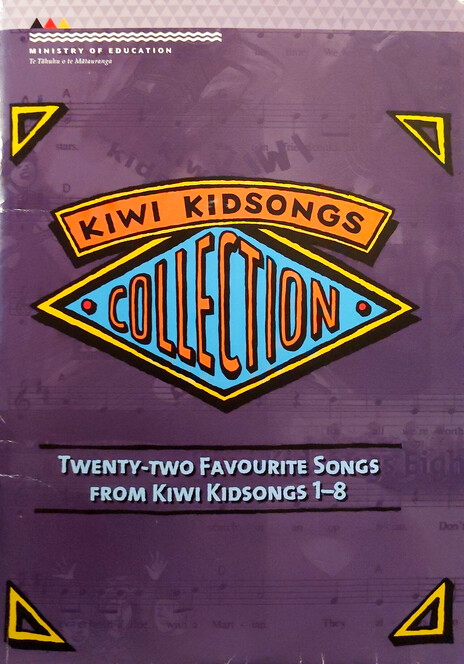
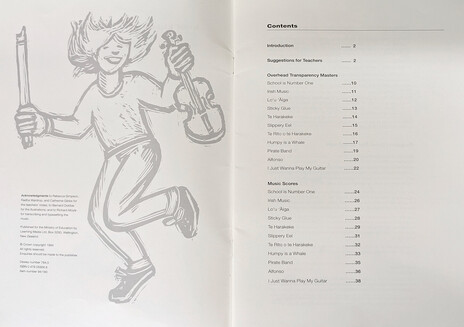
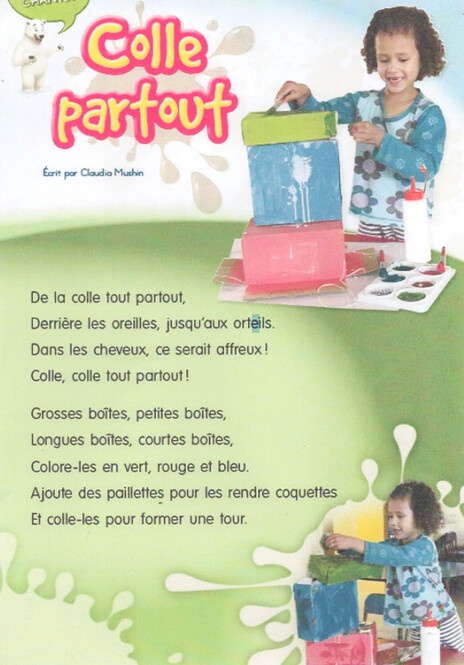
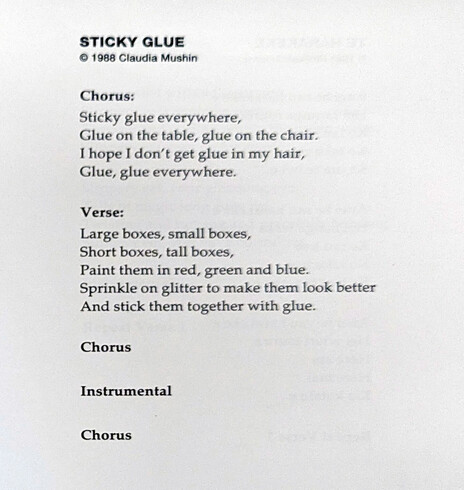
Claudia’s songs also travelled across the Tasman Sea to screen on Australian children’s television, and as far as the UK and Canada – where ‘Sticky Glue’ (from the 1994 Ministry of Education Te Tāhuhu o te Mātauranga compilation Kiwi Kidsongs 4) was translated into French (‘Colle Partout’) for publication in 2012. All the while, their creator remained humble, quite oblivious, and focused on her primary passion – and the reason for much of her songwriting – engaging children in learning.
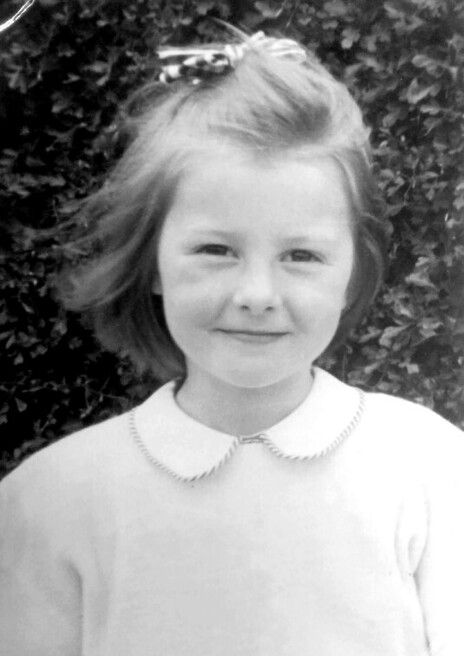
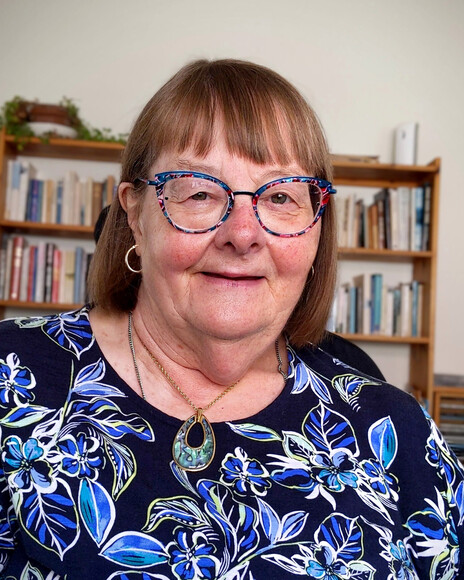
Claudia Mushin (née Garner) was born on 13 February 1946, in Canterbury, UK. The daughter of a primary school principal and a ballet teacher, she was surrounded by art every day. Her mother ran her own ballet school in Canterbury, and her father was a keen gardener, who drew and painted watercolours of nature when he wasn’t teaching.
Jude Bandtock, her lifelong friend – who met Claudia in 1953 – recalls their shared love of ballet music, musical theatre, and Elvis Presley. “Many years later, when we were both teachers of young children she sent me a couple of books of her songs for children – much used and loved,” says Bandtock.
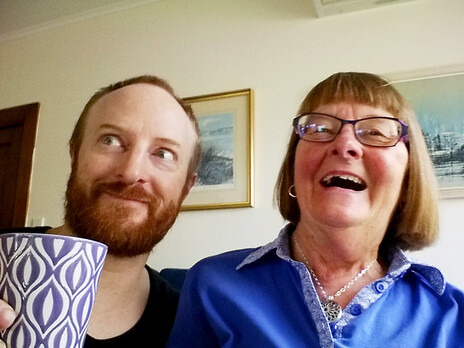
“Mum loved to dance,” her son, the award-winning illustrator, artist, inventor and designer Steve Mushin says of his mother’s early years. “Her worlds were walking, and exploring, and dance. Then polio happened, and that was then a huge part of her life.”
From 1957 Claudia was hospitalised for 19 months, much of that time spent paralysed in a full body cast. She wrote (in the British Polio Fellowship journal The Bulletin, in 2014) of being haunted by “that strong gypsum smell that remained in my nostrils until the cast was eventually removed.” She gradually recovered enough strength to return to school, with assistance from a brace on her back, callipers on one leg, and “clodhoppy” shoes. She would return to hospital for a year-long stay at age 15, receiving the surgery to her spine and legs that would restore her to greater mobility.
Claudia’s fellow student, friend, travel companion, and one-time flatmate Gail Thompson describes her as “a remarkable woman”. “She always loved music and dancing,” she says, “and it was clearly part of her. She would often be humming or singing a quick ditty, and still remembered songs she had been taught at school, often singing them to us. I remember her singing along wherever we were, but I don’t remember her compositions until she went to New Zealand and retrained as a teacher; particularly ‘Fish and Chips’ (which we all thought was great, as well as the children). She was keen to learn Māori as best she could, and tried to incorporate the language into some things she wrote to show her love of her new home.”
She used te reo Māori in her songs to show her love of Aotearoa, her new home
Steve remembers how – towards the end of his mother’s life, when she was again immobilised, living in hospital-level care – she liked to learn a little bit of the languages of each of her caregivers’ home countries, so she could speak it to them. He describes her as “the kindest person I’ve ever known”.
Thompson touches on Claudia’s deep interest in the diversity of culture as she recalls: “When we travelled during our 20s, she liked to hear music from different places and other people’s choices. I remember when we were in Nepal, we sat outside a house where some Nepali musicians were just playing for themselves; it was wonderful and we both were very moved by it.
“The biggest memory I am left with is how important laughter was, in her music and in her life. I knew her so long, and we both had wonderful and extremely difficult things to experience, but laughter and enjoyment was such a central part to much of what she created.”
Claudia trained in Brighton, England, to work as an occupational therapist, before working and travelling in Canada and Australia, eventually settling in Dundee, Scotland. It was there that her life with husband Jerry began.
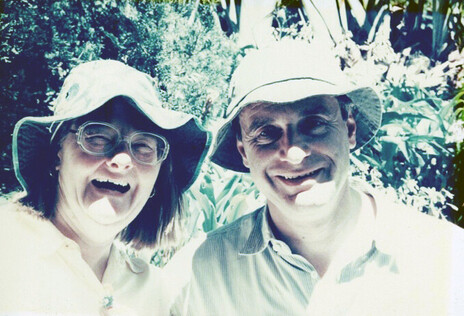
“Although it is more than a year since she died, I miss Claudia every day,” Jerry Mushin said, in autumn of 2026. “Finding her in 1974 was the best thing that happened to me. I had just started a new job as a lecturer at a polytechnic. She was a friend of the wife of one of my students.”
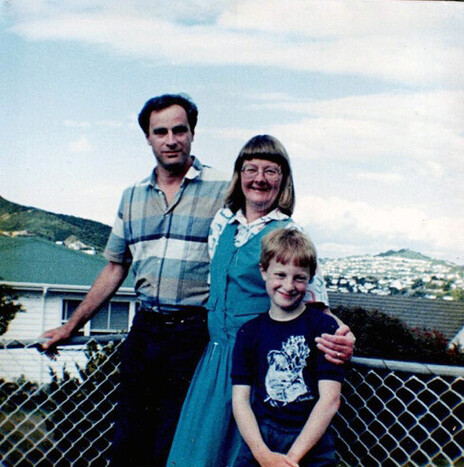
Their son Stephen (Steve) was born in 1978. His existence was destined to trigger a hit song, about 10 years later, on the other side of the world. He may have grown up to be the award-winning author and illustrator of the book Ultrawild: An Audacious Plan to Rewild Every City on Earth in 2024, but it would be far from his only claim to fame in the world of school children.
A year after arriving in New Zealand, claudia decided to train as a kindergarten teacher
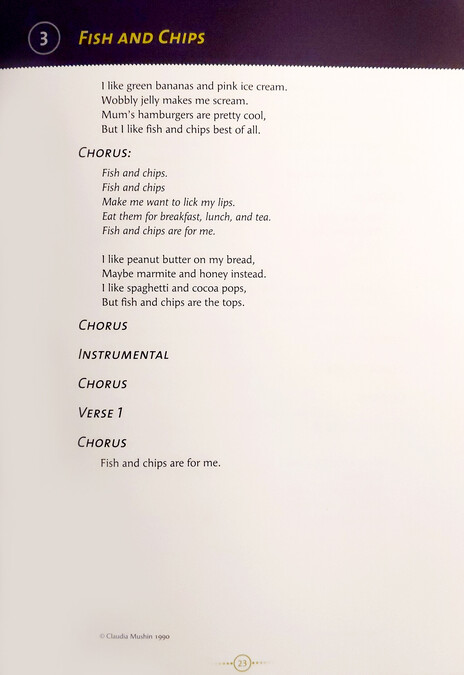
The family of three moved to Aotearoa in December 1985. Claudia continued working as an occupational therapist for a year in Porirua – at Puketiro Centre – then decided to train for kindergarten teaching, thinking that primary would be too physically demanding for her. She worked at Tūī Park Kindergarten in Linden, and – although she was only there for a year or so – it was during that time she wrote some of her most well-known songs, including ‘Fish and Chips’, inspired by a now famous dinner request from Steve.
He recalls his mother following her persistent calling to teach primary to enrol at Teachers Training College in Karori. It was there that her songwriting was encouraged greatly by her teacher, James Middleton.
“She would whistle him a tune and he would transcribe it into music, because she never learnt how to. She could read music somewhat, but she couldn’t write it. She could tinker out a little bit on the piano and the guitar, but she couldn’t really play any instruments. She always wished she had learned instruments, when she was a child. Her parents were wonderfully creative people, and I imagine – if she’d had a kind of standard childhood – she may well have, but I think there was just kind of too much.”
Claudia’s friend and fellow “mature” Teacher’s College student Joc Bryant – with whom she bonded over shared polio experiences – remembers her “fun-loving, kind, brave, determined, strong, courageous, inspirational, indomitable” friend as someone who valued the power of music.
“Claudia understood how music could bring a class of children with diverse talents and needs together,” Bryant says, “how it could lift their spirits and set the tone for the school day. She sang daily with them, introducing a wide variety of styles and languages, and there was always percussion too. In the earlier years, she would accompany them on her guitar. Claudia loved to be able to contribute to the wider life of the school and lead a school choir for many years. Claudia was the master of the ditty, no matter the occasion she would quickly put together a pertinent humourous, often punchy poem or song.”
Soon after Claudia began her schoolteaching career, she found herself tiring easily, struggling to get off the floor and low chairs, and having to use a handrail to climb stairs. She knew nothing of post-polio syndrome until she heard it spoken of on the radio, and began to put the pieces together.
Polio is “a particularly cruel disease when it reappears,” she said in 2007
“It’s a particularly cruel disease when it reappears,” she told the Dominion Post’s Rebecca Palmer in 2007. She had reduced her work to one-on-one tutoring by then, and suffered the injuries and inconveniences of several falls. Adaptations were made to her home and mobility aids – including the employment of a walking frame, christened “Wally” – and Jerry became her caregiver.
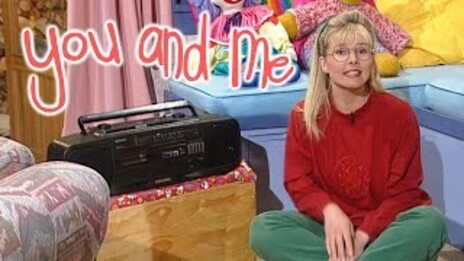
Nevertheless, the songs she enlisted help to capture proved enduringly catchy, enjoying long life spans, and popping up “all over the place” in the decades following their creation. ‘Boogie Woogie’ – which can be found on Helen Willberg’s 1988 Sounds Forty – 40 Songs For New Zealand Children Vol. 2 – was transmitted into thousands of homes on the ‘Let’s Boogie!’ episode of Suzy Cato’s iconic You and Me show in 1994. Uploaded to YouTube in September 2025, the vintage episode was approaching 7,000 views seven months later. (Claudia is not credited on the episode or the YouTube post.)
Claudia’s final decade of education focused on Reading Recovery. “That was really her passion,” says Steve. “Her joy was really language and words. She was a genius with any kind of cryptic crosswords, the puzzle in the paper. She did it every day and no one could beat her. Even in her late 70s and very ill, no one could beat her. She was so good with word associations and that kind of thing.”
After 20 years of collections being sent out to schools around the motu, funding for Kiwi Kidsongs was pulled in 2010. The series was digitised in 2024, going some way towards keeping the songs alive, and curbing the potential for non-legitimate videos of the songs messing with their accuracy and mana while bringing no reward to their original creators.
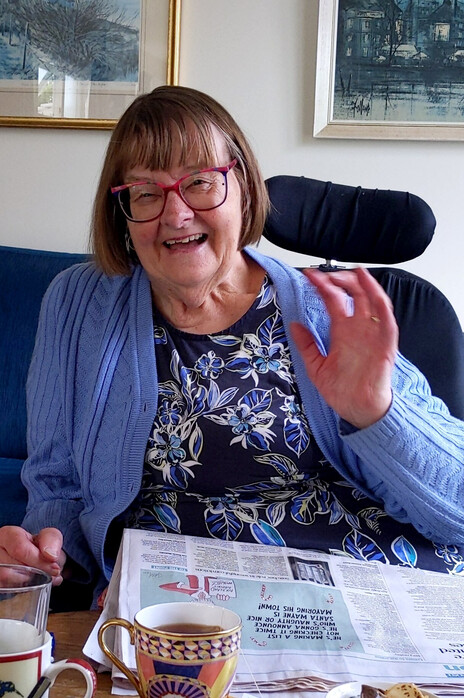
Claudia Mushin did not seek publicity in her lifetime, happy with the hands-on work making music afforded with her direct charges, exercising her knack for a tune on those nearest and dearest to her.
“She knew that her songs were famous, but she didn’t think about it much,” says Steve. “She really just kind of jotted down songs here and there. She never put herself out there into the world as a composer or as a songwriter. She would get royalty checks from Play School and ABC TV – small amounts, $100 one year and whatever it was – but that was always just kind of funny.”
Nevertheless, The Spinoff article allowed her a taste of the enduring impact her music has had on a national scale. A popular unofficial YouTube lyric video of the song from The Learning Path (on which Claudia is not credited) was linked to the article, and is sitting at 2,644,686 views in June 2026.
Steve Mushin tears up recalling the reaction the article received: “She had that moment … a lot of people wrote to her, and ex-students, and it was a really beautiful sort of mini-recognition. It was lovely. I’m incredibly grateful that story was made.
“Claudia was totally egoless ... she was completely on a different planet creatively”
“Claudia was totally egoless,” he says. “It was the weirdest thing because, as an artist myself, I’m quite ego driven. I want my thing to be the best and and I want to sell books and I want to win awards and all that stuff, like most artists do. But she seemingly was completely on a different planet creatively. She just produced songs for fun on the kitchen table, and it was usually when there was an event. Someone – a teacher – had a birthday; a teacher was leaving; a friend of hers had a baby … stuff like that, and she’d just write a song. That’s actually how the songs came about. It’s like the purest form of art.”
Jude Bandtock says Claudia’s commitment to music for both learning and fun continued to the end – “She was busy telling me about a choir she wanted to start on one of the very last phone calls we shared.” Steve confirms, she was trying to organise elderly residents of all abilities in this endeavour, at the care home where she finally resided.
Her unpublished songs – like ‘The Red Fire Engine’ and ‘Little Jamie Jim’ – live on, as Steve says, “In schools and kindies, and through the parents who learned them as toddlers.”