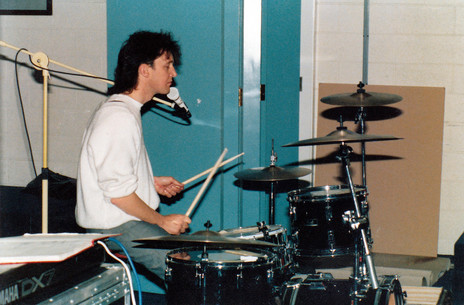
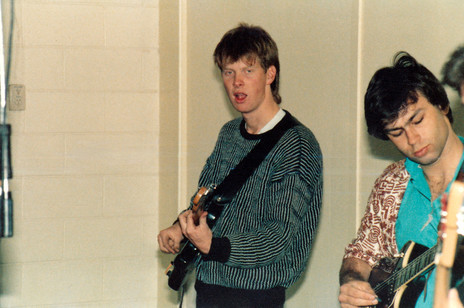
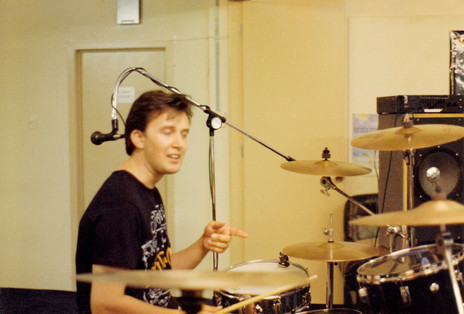
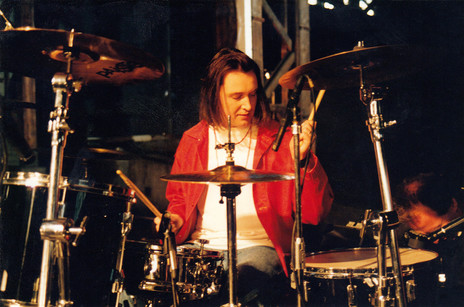
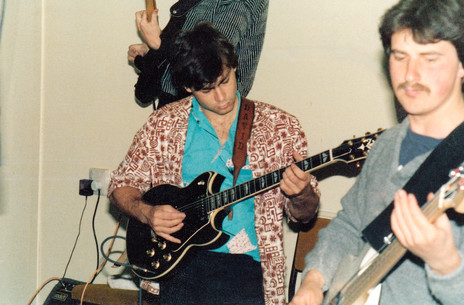
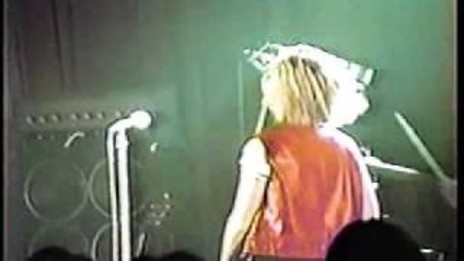
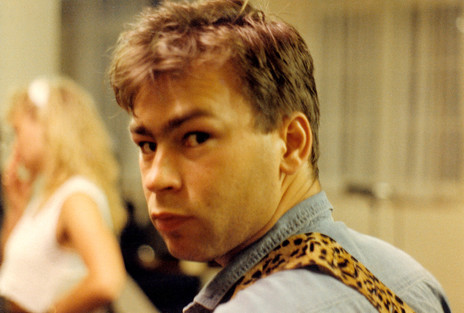
Fityus was friends with a young classical guitarist, Dave Ball, through their church, Ranui Baptist in West Auckland. Fityus traded his motocross bike for a drumkit and Ball took up electric guitar. They weren’t good enough to play covers, so started to write their own songs. Fityus’s sister Belinda joined and they formed Standing Joke, adding Andrew Horst on bass. The band scored a support slot with Simple Minds at Mainstreet and their song ‘Stop’ was included on the 1984 Ode Records compilation, All Dressed Up And No Place To Play – an album put together by a young Russ le Roq (Russell Crowe).
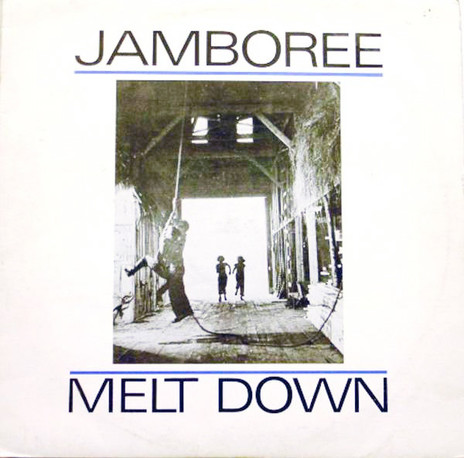
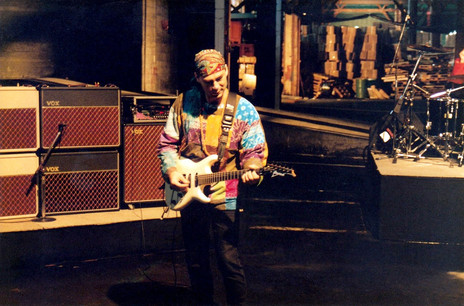
Horst left to travel overseas, and when he returned, Fityus and Ball enlisted him into a new group – Hoi Polloi – with singer/keyboardist Brent Tasker and guitarist David “Steiny” Steunebrink. An Australian group had the same name, so they switched to Jamboree. The Melt Down EP (1985) was recorded with Phil Yule at Mascot Studios and released through Jayrem Records, gaining some critical acclaim and good reviews. Music critic Colin Hogg called it one of the top 10 releases of 1984.
Jamboree supported Hello Sailor, Ardijah, Dance Exponents and Peking Man for shows around Auckland and performed at the Mainstage festival in 1987 – a Christian event co-founded by Mark de Jong, who later created Parachute Festival. They released the 12” single ‘Independence Day’ through the Hit Singles label, but stalled when Tasker left for Australia. They auditioned for a replacement and found Jenny Gullen in 1988.
As a child, Jenny’s first public performance was singing ‘Let Me Be There’ by Olivia Newton-John at a country music club in her hometown of Hamilton. The club’s resident band subsequently took her on national tours and by age 10, she’d written her first song – boldly performing it for her school class, though she was embarrassed when a classmate asked if it was about him.
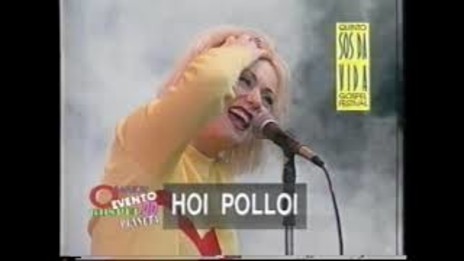
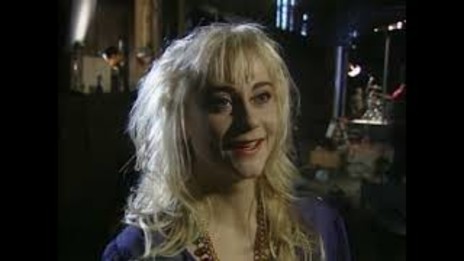
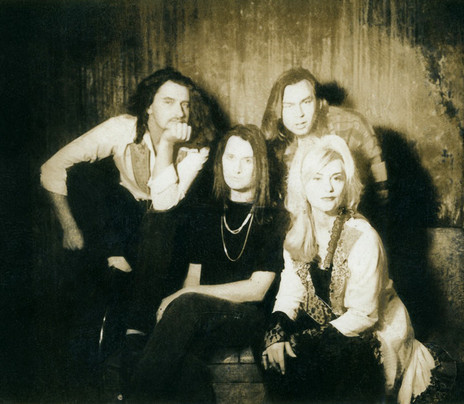
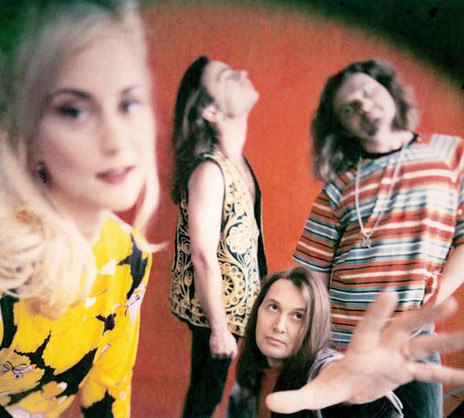
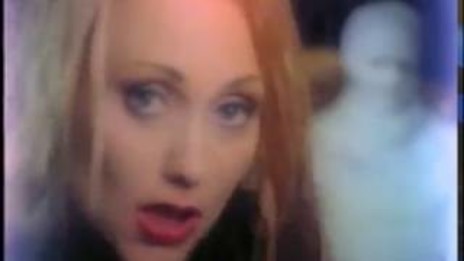
Jenny Gullen’s vocals had an evocative, quavering quality that made them stand out
Andrew Horst had already been blown away by seeing Jenny perform at the Capital Teen Convention in Wellington. Her vocals had an evocative, quavering quality that provided a bit of edge and made them stand out from the clean-cut approach of many Christian Contemporary Music (CCM) rock singers.
By the time they returned to the Mainstage festival in early 1989, they had reverted to “Hoi Polloi” and highlighted the influence of U2 on their sound by covering ‘Seconds’. Hoi Polloi were contenders to support U2 at Western Springs later in the year, and though they missed out, their music clearly reached Bono. While watching from the audience, they were stunned when he slipped a few lines from their song ‘Rest Tonite’ into one of U2’s numbers.
Hoi Polloi was initially managed by Ross Inglis, though their line-up went through an unusual rejig when Steunebrink quit as guitarist and became their manager instead. They briefly advertised for a new guitarist, then continued on as a four-piece.
They ended 1989 with an appearance at Shelterbelt, a Christian music festival held in Te Puke. The festival’s big drawcard was The Rez Band (aka Resurrection Band) from the US and the singer Glenn Kaiser was impressed by Hoi Polloi’s set. His band had come out of the Jesus People USA organisation in Chicago, which also ran Cornerstone Festival, and he invited Hoi Polloi to perform.
The year 1990 was marked by two big events: Jenny Gullen and Andrew Horst were married, and Hoi Polloi had a breakthrough performance at Cornerstone Festival in Chicago. Jenny spent the day before the show designing and printing covers for the cassettes they’d ordered for the event – the six-track demo EP Satisfy (1990). The festival headliner David Mullen failed to show, so Hoi Polloi played an extended set. They ha perfectly captured the sound of the moment – jangly guitars backed by a propulsive rhythm section – and their songs were subtle in reflecting the band’s religious beliefs, though a lyric like “you satisfy my soul” was clear enough.
“For us, the motivation for playing music isn’t evangelical,” Fityus explained to Rip It Up (April 1992), “although you can’t divorce the two because if anyone has personal belief whether it’s political or spiritual then it’s going to influence – for good or bad – their music.”
Hoi Polloi became the buzz band of the moment. Six record labels courted them, with both Word and Reunion sending reps to New Zealand. Both were Christian labels, but Reunion had a distribution deal through Geffen so the band felt they’d have more crossover reach.
Reunion had been started by Amy Grant’s managers which led to Hoi Polloi joining her Australia tour. After each arena show, the band played another set straight afterwards at a local club in each city. And back in New Zealand in February 1992, they opened for Amy at the Logan Campbell Centre.
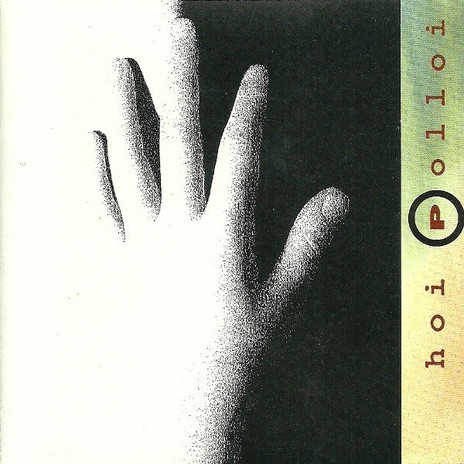
Hoi Polloi recorded their 1992 debut self-titled album at Airforce Studios in Auckland with US producer Reed Arvin, who ensured it had the slick sound that US CCM audiences expected. The opening track ‘Rest Tonite’ begins with soulful harmonised singing before the band kicks in with a busy bassline, attacking drums, and a rhythmic strumming guitar reminiscent of ‘New Sensation’ by INXS. Backing vocals on the album were sung by Annie Crummer and Dianne Swann.
The lyrics across their debut album tended to be personally inspired rather than directly religious
The lyrics across the album tended to be personally inspired rather than directly religious. ‘The Other Name’ was about discovering your partner is cheating on you, while ‘Justify Me’ came from a news story about business people in Brazil taking the law into their own hands and shooting local homeless people.
“I wrote the song around a street girl, destitute, a prostitute, attempting to personify one of the many faces we see in the street,” Jenny explained to Cross Rhythms magazine in 1993. “The chorus line ‘Love won’t you rescue me, won’t you set me free, love justify me’ is her cry – not that she’s seeking justification for her way of life, but rather her very existence. Life itself. It struck me that to stand on the sidelines and watch people in her situation, like those victimised in Brazil, and not to do anything, we are no better than she. We’ve all done wrong and yet are all loved equally by Christ. Only he can forgive us and clothe us with dignity – justification for life. That’s why I turned the lyric around at the end of the song, where it’s me crying out ‘Love won’t you rescue me’ – because I, like that woman, need Christ’s forgiveness and love.”
Hoi Polloi’s album topped the US CCM charts and the band relocated to take advantage of the growing interest, intending to stay for six months. Several of the band brought family members to the US, so they had 12 people in the wider group (including partners and children) and they would have to tour regularly to sustain themselves, especially since their visas only allowed them to gain income as musicians and not take outside work.
They saw other CCM groups wringing every dollar out of their fans at live shows – for example, by selling branded crucifixes at their merch desk. However, Hoi Polloi weren’t willing to manipulate fans’ faith to gain extra income and intended to succeed like any mainstream band – by making great music.
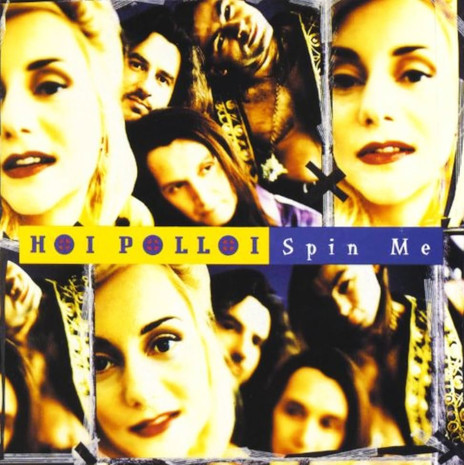
Spin Me (1993) was recorded at Battery Studios in Nashville with producer John Mark Painter. ‘Love Shine Down’ had been on their Satisfy EP, but the re-recorded version opened into an epic chorus. The album also included ‘Take Me Home’, a live favourite that Christian audiences adopted as a deeply moving worship song. ‘Angel’ hit No.1 on the CCM singles chart; they were nominated for Album of the Year and performed at the US Gospel Music Association’s Dove Awards.
They toured the United states relentlessly, using a dilapidated 1975 Dodge Vogue motorhome
They continued to tour relentlessly, using a motorhome given to them by CCM hitmakers The Newboys (which later included New Zealand bassist, Phil Urry). The vehicle was a dilapidated 1975 Dodge Vogue; it could be freezing inside during winter and required countless repairs.
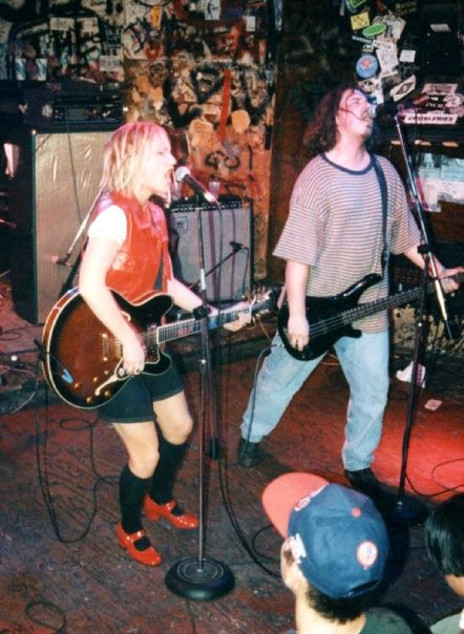
The band played around 200 shows a year, securing legendary venues such as CBGB in New York, Whisky a Go-Go in Hollywood, First Avenue in Minneapolis, and BB King’s Blues Club on Beale Street in Memphis.
One of their biggest tours was supporting Christian hard rock mainstays, Guardian. During this tour they got a sharp reminder of the conservatism of the US CCM scene. The promoter at one show didn’t want them to perform, because Andrew Horst had been spotted having a beer at a Nashville showcase. They convinced the promoter to let them perform, but it was representative of the wider culture-clash that they felt working within the US CCM scene.
Jenny later reflected on this tension in an extensive interview the band gave for the insightful book, Let’s Back Up A Bit: Conversations With Pioneering Kiwi Christian Musicians (2023) by Brett Wilson: “I was on the cover of magazines and sometimes I was told off for my skirts being too short and things like that, but it was normal to me, and in mainstream culture no one would’ve blinked an eye.”
There was a bigger challenge on the horizon. The financial pressure of touring in the US for 18 months eventually took its toll on the band and led to Fityus, Ball and their families returning to New Zealand.
American guitarist Troy Daugherty was brought on board by Andrew and Jenny. However, the group did gain another New Zealander, drummer Scotty Pearson.
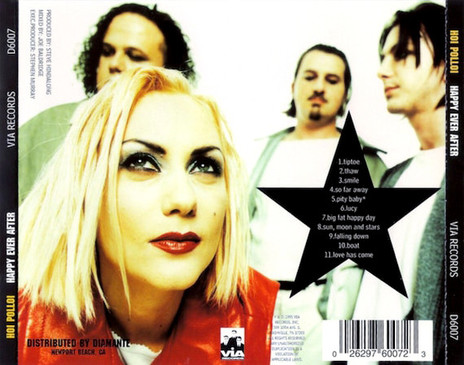
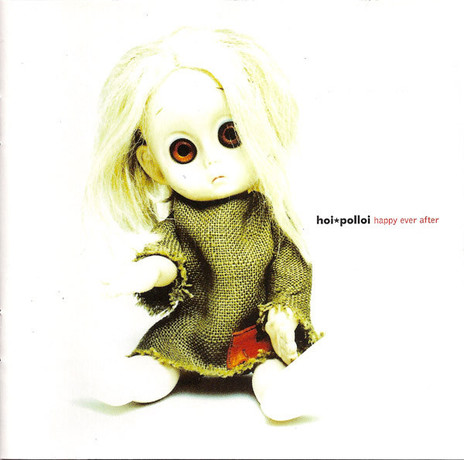
The new line-up recorded Happy Ever After (1995), which was released through short-lived Nashville label Via Records. It was produced by Steve Hindalong, founding member and drummer for alternative rock group, The Choir. The sessions took place at that band’s Neverland studio. Hoi Polloi moved towards a heavier sound, aligning themselves with the rise of alternative rock that had taken place over the previous years.
The 1995 single ‘Tiptoe’ had a hooky chorus that had Jenny jumping quickly between high and low notes. It topped the CCM charts for eight weeks, while also reaching the Top 10 on US college radio, and ‘Big Fat Happy Day’ received airplay on MTV. That same year also included the biggest show of Hoi Polloi’s career when they headlined at a music festival in Brazil in front of 40,000 people.
Pearson eventually had visa issues and headed home to New Zealand. He was replaced by a US drummer, Matt McGuyer. This line-up recorded a three-song demo cassette EP, Only Flying (1996). In 1997, after five years of relentless touring in the US and despite major label interest, Jenny and Andrew Horst chose to wrap things up and move back to New Zealand.
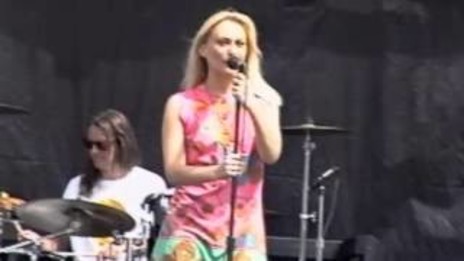
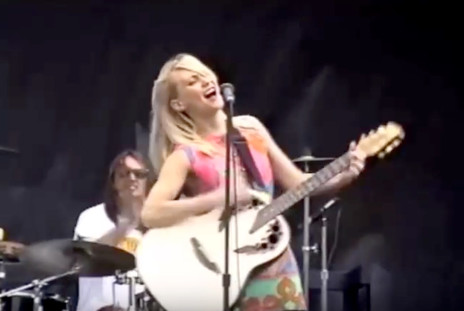
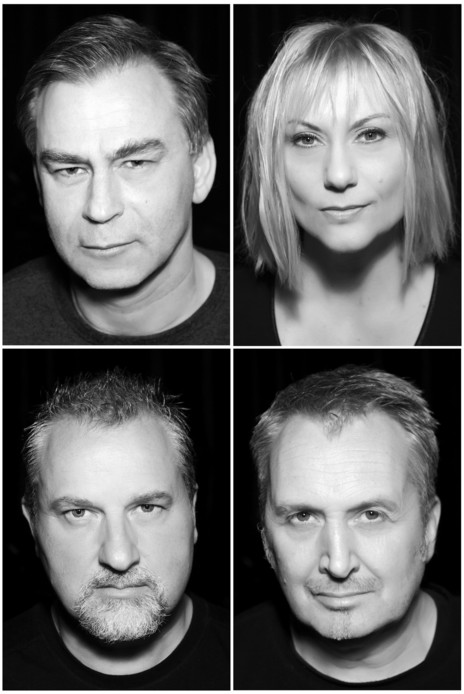
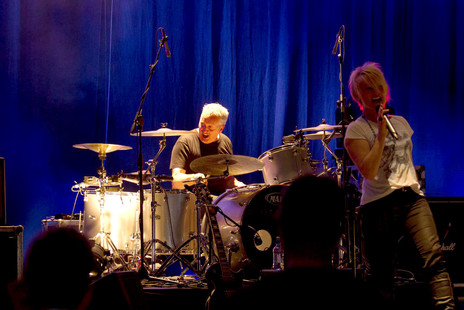
Many years later, in February 2010, the original line-up was asked to reunite to play the 20 year anniversary of New Zealand Christian rock festival Parachute, performing on the main stage. They were finally able to celebrate their impressive legacy as a rare New Zealand act to get a US record deal, and the first to break into the US CCM scene. Jenny enjoyed the chance to reunite with her bandmates onstage. “It was a real privilege to come together again,” she says, “a proper retro moment with those old songs. All told, it’s been an amazing journey together.”