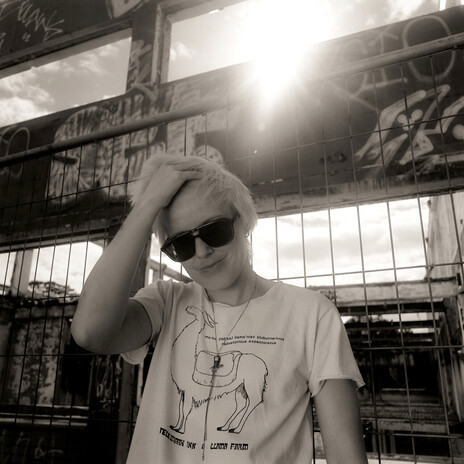
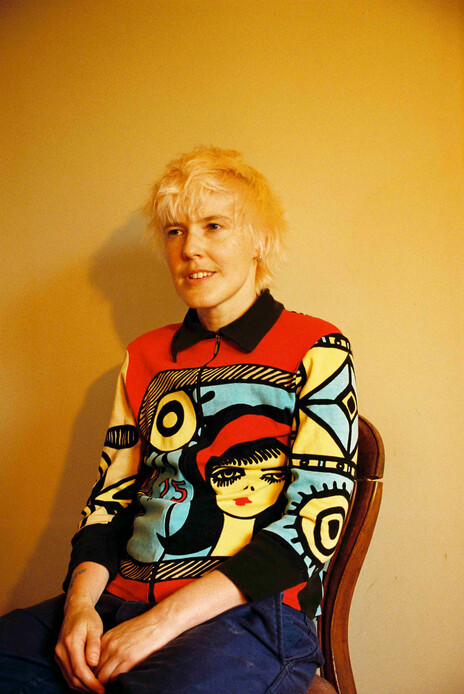
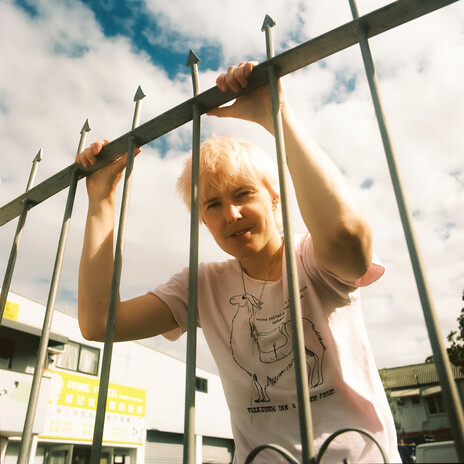
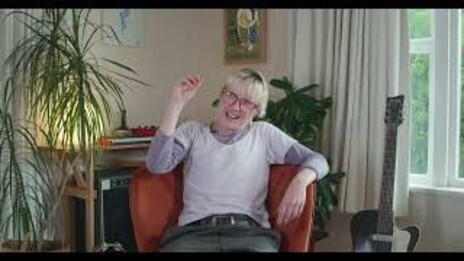
Born in 1993, Larkin grew up in Mairangi Bay on the North Shore. From his early teens, he was fascinated by reruns of 80s/90s sitcoms like Full House, skateboarding, pro wrestling, hip-hop, and the internet. “From a young age, I felt the need to create safe spaces for myself that felt good,” he explains, sitting across from me in the back courtyard of a cafe on Karangahape Road. “I used to escape by listening to music or skating, just me and my headphones.”
Inevitably, that sense of escapism gave birth to inspiration. In 2013, Larkin explained part of his origin story to Grant Smithies for the Sunday Star-Times. “When I was in high school, I would freestyle for fun, then a few years ago I started to listen to a lot of alternative [US] rap by people like Danny Brown and Odd Future and got really passionate about it. I fell in love with writing, making beats, and developing my ability to invent characters and tell stories in newer, deeper ways. I’m a big believer in humour and self-deprecation.”
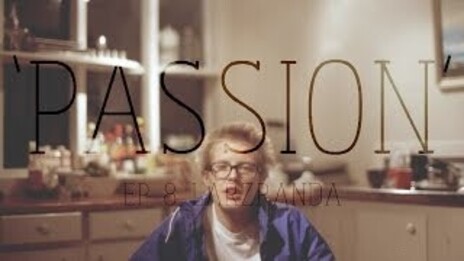
at age 18, he was uploading fun, funny beats, remixes, and rap songs under the alias Randa
That said, apart from an early foray into live performance at Smokefreerockquest and rapping for their classmates, Larkin’s creative impulses didn’t fully manifest until after he finished high school. In 2011, at age 18, he spent eight months living in Sydney above a laundromat. While he was in Australia, he was uploading fun, funny beats, remixes, and rap songs under the alias Randa. As Greg Bruce later observed about Larkin for Stuff, “Many of his early tracks reference cultural touchpoints that have influenced his life – like The Simpsons or The Cosby Show – but twist them, providing telling insights.”
In 2012, Larkin started studying electronic music at the Music and Audio Institute of New Zealand (MAINZ). That same year, he released his first EP, Lunch Box. Across nine songs, he mixed stream-of-consciousness rhymes about watching daytime talk shows with bouncy, colourful instrumental tracks and playful bravado.
Quickly, beginning with Radio Active 88.6 FM, his music came to the attention of Aotearoa and Te Waipounamu’s Student Radio Network stations. “It was kind of buzzy at first,” he remembers. “I hadn’t really imagined people listening to my music, but I just went with it and started playing shows.”
Given the attention his music was getting down in the capital, Larkin figured Wellington would be a good start. On a Wednesday night in June that year, he made his live debut on stage at a popular Cuba Street bar and venue, Mighty Mighty. The performance went so well that three months later Larkin returned to perform for the indie dance/nu-rave promoters Neon Sleep.
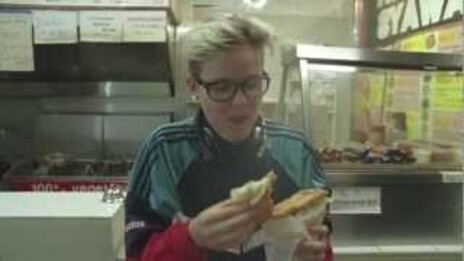
From there, opportunities began to open up for Larkin back up in Tāmaki Makaurau and further around the motu. Another key early performance was for the queer club night Proud Mary at 4:20 on Karangahape Road. In the past, Larkin had spent Saturday nights on the computer, maybe popping out for some fast food from Wendy’s. Playing gigs wasn’t just about sharing music. It was a way to find a community.
“I hadn’t really met many queer people before, and I didn’t have many queer friends yet,” Larkin explains. “I remember thinking that if I played a gig at an event, especially a queer event, I’d meet people.”
Around the same time, Trieste Douglas (then with CRS Music Management, later with Universal Music NZ) offered to be his de facto manager. Before the year was out, he found himself opening for the eccentric Canadian dance-pop star Grimes when she played at The Powerstation.
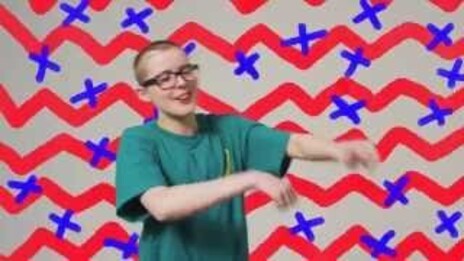
In 2013, Larkin was able to begin to scratch an itch for worldbuilding by working with the Tāmaki Makaurau film production company Candlelit Pictures on music videos for their singles ‘Orange Juice’ and ‘Frankenstein’. In the scheme of things, ‘Orange Juice’ was a relatively low-key homage to the joys of junk food. ‘Frankenstein’, on the other hand, was an elaborate retro homage to the laughtrack sitcoms Larkin grew up watching. Fittingly, in 2013, it was nominated for Best Music Video at the 2013 RIANZ New Zealand Music Awards.
‘Frankenstein’ enabled Larkin to rap vividly in their signature stream-of- consciousness style
Produced by the late Māori musician and producer Reuben Winter, aka Totems, ‘Frankenstein’ represents one of the most significant moments in the first phase of Larkin’s career. Powered by a squelchy bassline, glistening synths, and programmed drums, Winter’s beat was a perfect backdrop for Larkin to rap vividly in their signature stream-of-consciousness style. The song was well supported by student radio and even received airplay on George FM.
With references to Venice Beach, Tamagotchis, Hannah Montana, Michael Jordan, Dennis Rodman, UFOs, The Big Bang Theory, and Mary Shelley’s titular monster, ‘Frankenstein’ captured the imaginations of a generation. Vice Magazine described Larkin as sounding like “if Danny Brown was raised by the Brady Bunch and took oboe lessons with Carlton Banks.”
“Reuben Winter would’ve been about 17, and I was maybe 19,” Larkin reflects, thinking back to when they met at the Galatos venue in central Tāmaki Makaurau. “He had this interchangeable cardigan, and he was just so friendly, so kind. I remember thinking, ‘This guy’s so cool!’ I just assumed he was way older than me because he seemed so comfortable in himself.”
Not long after, Larkin released his second EP, Summer Camp. Across the seven-track project, you can hear him refining their skills as a producer and a lyricist, blending their signature rhyme style with sleek, futuristic backing tracks that recall the wonky, synth-driven music that was emanating from the Los Angeles beat scene that clustered around the Low End Theory Club night and Flying Lotus’ Brainfeeder record label.
Between projects, Larkin worked odd jobs like assembling window locks on a production line and making takeaway flat whites and long blacks in a coffee van. In 2013, he also collaborated with DJ, producer, musician and broadcaster Dan Aux on the upbeat dance track ‘Kelly Bundy’.
In 2014, several significant things happened. In January that year, he was booked to open the Lake Stage at the Big Day Out. Afterwards, he started working with the producer Josh Fountain, then best known for his work with Kidz In Space, Smashproof and Annah Mac, towards his third EP, Rangers. “I really liked him,” Larkin says. It just felt very easy to hang out. We would go to the food court at St Luke’s for lunch. We were into similar internet stuff.”
‘Rangers’ was playful but some more serious sentiments were bubbling to the surface
The result was another colourful and confident set of spacey hip-hop tracks. However, while the music still had a playful quality, some more serious sentiments were also bubbling to the surface. At the start of June 2014, Larkin took part in an extensive interview with Greg Bruce for Stuff, titled “The importance of being Randa,” in which he discussed his background and identity as a trans man while promoting Rangers. The results were empathetic, open-minded and genuinely illuminatory.
As Bruce observed, “with Rangers, [Larkin] moved beyond the dense American pop culture references and is dealing with other issues – often more personal ones, like identity.” “I’m just trying to present ideas,” Larkin said in the interview. “It’s okay to be who you are. You can be different – there doesn’t have to be a stigma.”
In October that year, Larkin was awarded the Vodafone Critics’ Choice Prize at a showcase event in Tāmaki Makaurau. Coming in ahead of Lake South and Estere, he was awarded a $10,000 recording and music video grant from NZ On Air in recognition. “I’m just super blown away,” Larkin said at the time “I can’t wait to celebrate with my family and friends. This grant means I can record a project and get back in the studio.”
Over the next few years, Larkin released a series of singles and music videos under the aliases Randa and Larz Randa. He also played shows around the country, but in the background, dealing with gender dysphoria and undiagnosed Obsessive-Compulsive Disorder took their toll. In the wake of Rangers, however, Larkin picked up several music sync placements. “I had this lump of money, so I went over to Los Angeles’ to meet up with some friends I’d made online,” he explains. I wasn’t locked in. I was just living.”
By 2018, Larkin was house-sitting for friends in East Tāmaki and working at two central city theatres, Q Theatre and Basement Theatre. “I was a bit lost,” he admits. “I was working, but I wasn’t quite making enough to get by. I was treading water, and I was well aware I’d taken a break.”
That year, he was approached about rapping in an Air New Zealand safety advert based on two well-known hip-hop songs, ‘It’s Tricky’ by Run DMC and ‘In The Neighbourhood’ by Sisters Underground. “At the time, I just saw it as a commercial brief,” Larkin remembers.
His Rangers collaborator Josh Fountain had been tapped to produce the project, and two other local artists, Kings and Theia, were on board as well. “I went for a meeting and thought, ‘Oh yeah, I could do this,’” he continues. “I needed a fresh start, so I did the job and made some money. I paid off some of my student loans and some bills.”
Featuring a cast that included Hunt for the Wilderpeople and Deadpool 2 star Julian Dennison, Air New Zealand staff, and 30 communities from around the motu, the in-flight safety clip, It’s Kiwi Safety, was filmed in Auckland, Wellington, Dunedin, Balclutha, Hokitika and Naseby in Central Otago. Rather than narrating the airline’s safety rules, Larkin and Kings rapped them. The result was a genuine spectacle, but it was also spectacularly divisive. In 2019, The Spinoff documented the fallout in an article titled “Remembering the most hated Air NZ safety video of them all.”
Rapping an airline safety video was “spectacularly divisive,” receiving many complaints
As Stuff reported that year, It’s Kiwi Safety received vocal, widespread complaints soon after its launch. Three months after it was first released, Air New Zealand withdrew the video. “I think it seemed worse from the outside,” Larkin says. “When it got all that hate, I was like, oh well. It was a character I played. I didn’t see it as me. Sometimes I’d be on a plane flight, and families would want to take a photo with me.”
Afterwards, a friend asked Larkin to create some music for their short film. Not long after, they were approached to create the soundtrack for a theatre show. “I spent a lot of time outside my comfort zone that year,” he says.
In 2019, Larkin started to feel the pull towards exploring a different American tradition, country music. In an interview for New Zealand Musician magazine with Nur Peach, he explained some of the context. “I was really obsessed with Orville Peck’s first album, and I was like, ‘Man, this is amazing’. I had never really listened to country music that I felt I connected with.”
Between 2020 and 2022, Larkin immersed himself in modern country music and began to revisit some of his teenage passions. Aside from skateboarding and hip-hop, he’d been fascinated by professional wrestling. As Larkin explained to Chris Schulz for his Boiler Room newsletter, when he briefly moved to Sydney at age 18, he tried to make good on his youthful dreams of becoming a professional wrestler by enrolling in a wrestling school. Sadly, it wasn’t to be. “Even when you do it right, when you fall correctly, it hurts,” Larkin said. “I was like, ‘Nah, this is intense. I’m not cut out for this.’” He lasted one match. “The dream died when I was 18,” he continued.
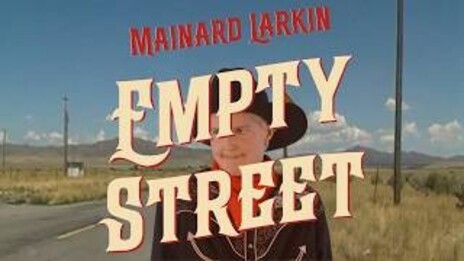
In 2022, Larkin went through a significant relationship breakdown and found himself writing poetry to cope. Staring down turning 30, he asked himself the hard questions, like, “What do I want to do?” In the process, he realised it was time to let go of Randa and Larz Randa and prepare for a rebirth of sorts. Enter Mainard Larkin.
Not long after, he met up with the songwriter, musician, and producer Shannon Fowler, aka Tom Lark, for a studio session. “Shannon had just finished recording a country album,” Larkin says. “He was really on that buzz. I liked the idea of singing, but I was unsure. He was really good at directing my vocals, encouraging, and helping me.”
After they cut a cinematic, pop-culture-referencing country song called ‘Gossip’ together, Larkin started to see a way forward for himself musically. “I thought, ‘This song is really cool’,” he remembers. “I had a day job, was financially stable, and felt like I could invest in a long-term project.” From there, they began meeting up every few months until they’d written and recorded the 10 songs that make up Larkin’s first country album, Rattlesnake Boy.
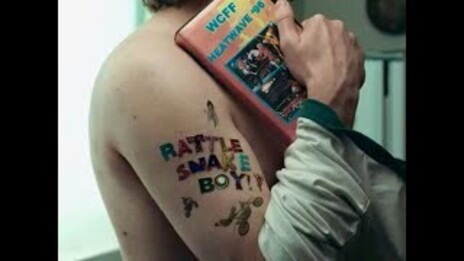
The overarching concept of the album can be understood through the title track, a playful song about a pro-wrestler facing the decline of their career and trying to keep their chin up. “When I think about wrestling, I think about storytelling and the psychology and structure of the matches,” Larkin continues. On the surface, these wistful and melancholic songs are about the rattlesnake boy, but when you listen more closely, it becomes clear that the titular character is a stand-in for Larkin.
In May 2026, Rattlesnake Boy made its way into the world through the Tāmaki Makaurau independent label, Lil’ Chief Records, on vinyl, CD and digital formats. Since its release, it’s been described by AudioCulture contributor Graham Reid on his Elsewhere website as “an album with its tongue in its cheek … [that] plays out as smart, understated pop. With some country flavours.”
Larkin’s ‘Rattlesnake Boy’ album was “smart, understated pop, with some country flavours”
In other parts of the internet, Rolling Stone Australia called Rattlesnake Boy “a confident collection of alt-country.” At the same time, Sniffers praised Larkin for reinventing himself while “retaining the cinematic storytelling that’s always been a staple [of his work]”.
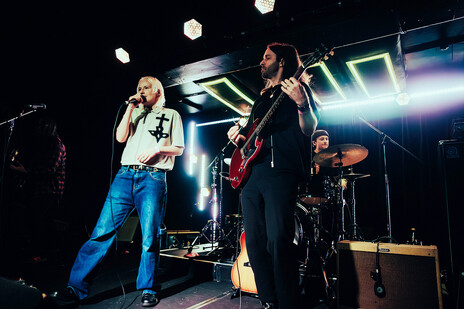
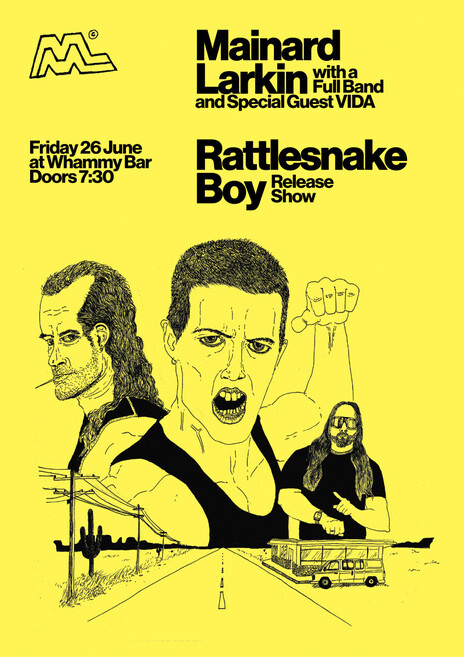
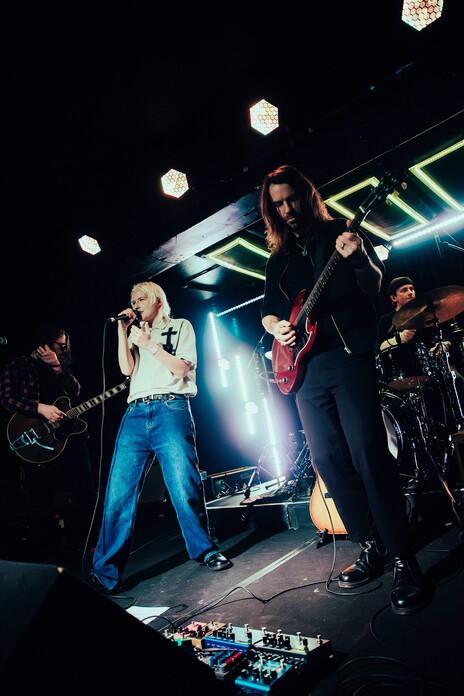
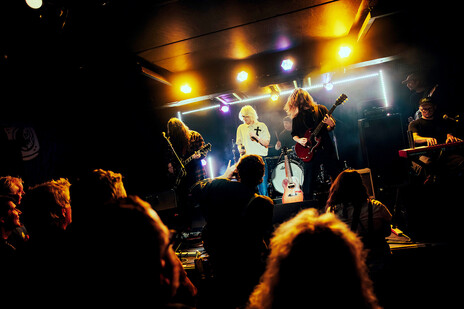
Fittingly, Rattlesnake Boy has been accompanied by a set of beautifully planned and filmed music videos, helmed by directors Joe Curtis, Ali Burns and Alexei Foster, that expand on Larkin’s vision. In the clip for the title track, he arranged for a local wrestler from Impact Pro Wrestling to scoop-slam him in the ring. In fact, when he launched Rattlesnake Boy with a full live band performance at Whammy Bar on Karangahape Road in June, Larkin and his musicians were joined on stage by wrestlers. The world-building runs deep with this project.
Having been through his ups and downs with the music industry, Larkin is keeping his hopes tempered this time around. “I try not to have too many expectations,” he says. “I hope lots of people like it and get joy from it, but it’s just exciting having a full-length album out.”
Alongside his country efforts, there’s also talk of more hip-hop in the future. “I don’t think I’ll ever not want to write raps,” he says. “I love rap music. That’s always a part of me.”
Twelve years ago, when Larkin was interviewed by Greg Bruce for Stuff, he expressed some worries. One was the idea of ending up, and his fears about becoming a 40-year-old working as a mall security guard. Since turning 30, however, those worries have receded into the distance. “Part of what’s nice about getting older is starting to realise that the things that feel completely consuming at one point in your life aren’t necessarily going to define you forever,” he says. “I think life is about allowing natural change to occur, wanting to try new things, and not just sticking to what you know.”