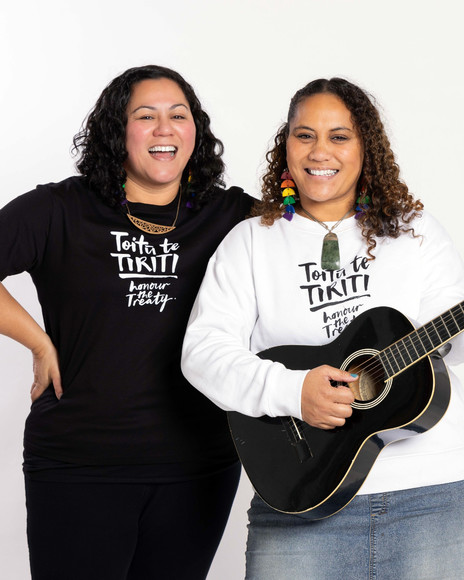
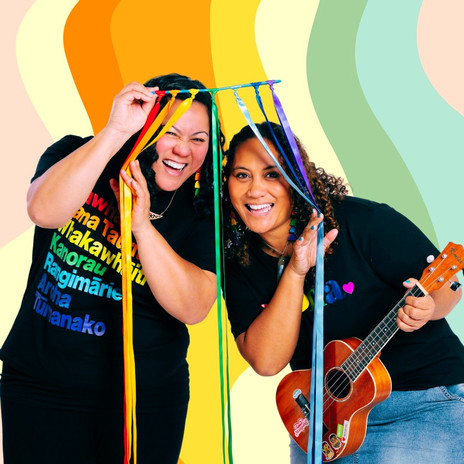
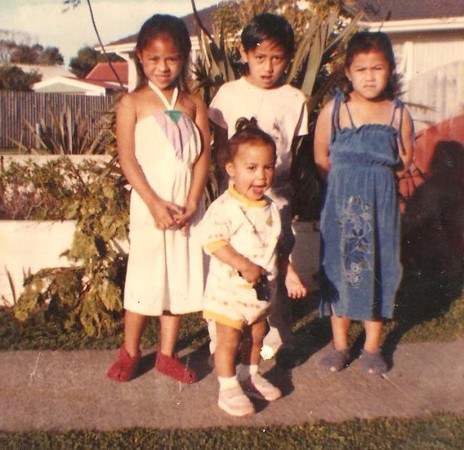
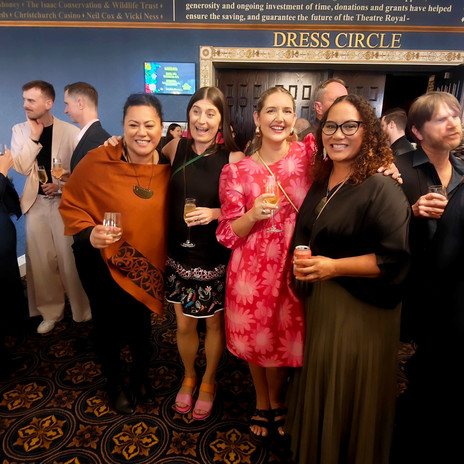
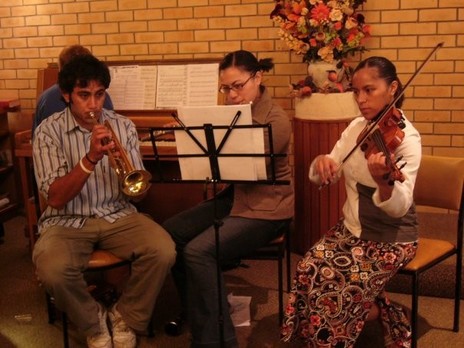
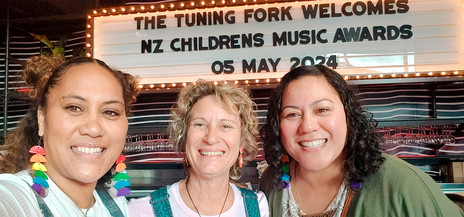
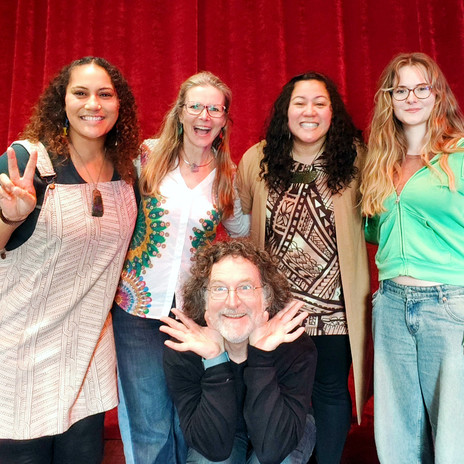
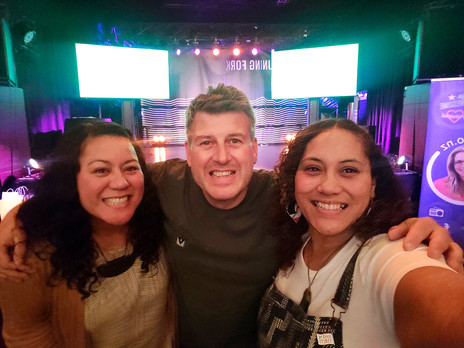
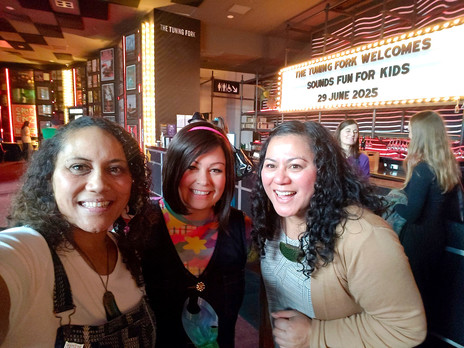
The sisters have been singing and playing music their whole lives.
“Mum’s Tongan,” says Williams-Partington, “and was strongly Methodist when we grew up, so we were very involved in the Tongan Church. We’d go every Sunday, and there’d be choir practices that we would be dragged along to and run amok with the kids. In the Tongan church, when they learn singing, they sing as a choir with all the harmonies. So, to me, that was church growing up. We left the Tongan church and became a part of the English-speaking Methodist Church, but we had that grounding from when we were young.
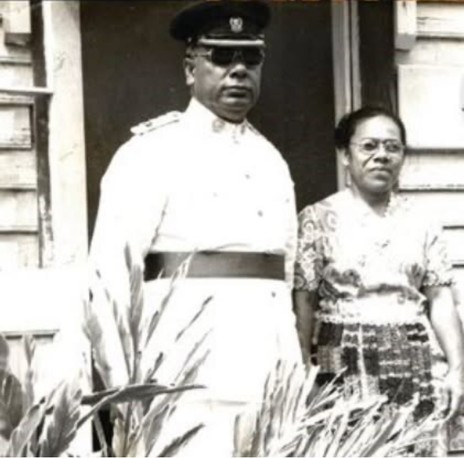
“Mum and Dad aren’t musicians, but our grandparents are on both sides. Dad’s dad – Massey Williams – was part of a Māori showband called The Diplomats back in the 60s. He was a guitarist, and I believe he played with the Howard Morrison Quartet once or twice, back in the day. On Mum’s side, our grandmother (Siu ki Holeva Tonga) is a pianist, and our grandfather (‘Inoke Fakavale Tonga) played in a police band (brass). So the musicality, we always say, sort of skipped a generation. But Mum and Dad created music opportunities by sending us to learn instruments at the Christchurch School of Music, and we all played a different instrument each. There’s four of us all together, three girls and our bro. It was just – to me, anyway – a normal childhood. Mum and Dad worked and tried to encourage us to do extra activities. Music, school and church was Mum.”
“Music was just a natural thing for us, but we didn’t always love it” – Siu
Williams-Lemi says: “I think I was six when I started recorder. I always dreamed of playing the cello. That’s what I wanted. But being the fourth child, I think Mum had already accessed the clarinet, and I had no choice … which I’m grateful for. I love the clarinet now. Music was just a natural thing for us, but we didn’t always love it. We didn’t always love playing orchestral music. It was just something we were kind of made to do. Any time Mum and Dad had visitors, it was like, ‘Go get your instruments,’ and we would have to do little chamber concerts.”
Williams-Partington: “It would be a piece that we were learning, in orchestra or something, and it would sound weird because there would be parts missing.”
Williams-Lemi says: “In hindsight, I’m really grateful to Mum and Dad that we had that opportunity, and both of us ended up teaching.”
Williams-Partington taught flute at the Christchurch School of Music for 18 years, before going private and doing itinerant teaching. Williams-Lemi worked creating music for adults with intellectual disabilities and has been lead singer and saxophonist of the Mainland Big Band. Then Loopy Tunes happened.
They began performing their music in 2010 – helping to create the weekly Outreach Music Sessions programme – and released their first recordings for children in 2019.
Williams-Lemi explains: “The minister at the time had asked for a preschool community music group. I remember thinking we could save money and just do our own music. And so the church that we were at – Beckenham Methodist Church – is within the Beckenham Loop, so ‘Loopy Tunes’. It all started there. Our babies were just under one, at the time, and we really just started it for all of our own children there. Then it just started growing. We knew Michal – I grew up with Michal’s husband. So, she was the one that, when we were thinking of doing an album, she said: ‘You should join the Kiwi Kids Music [Trust].’ It was from there that we were able to get a lot of support to go a lot further.”
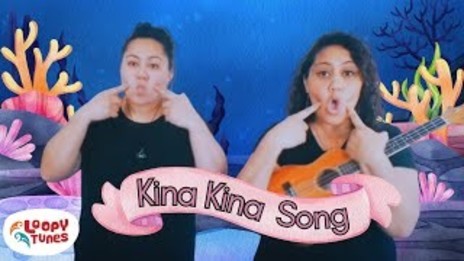
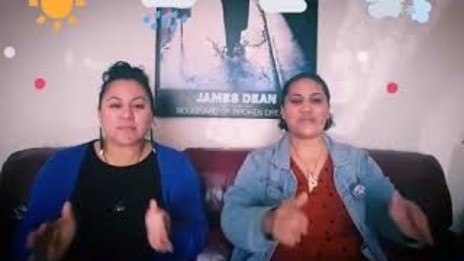
In 2019 they released their first 13-track children’s music album – Kākāriki: Simply Us. They have since released over 170 waiata, weathering 2020 along the way. As dauntingly as the Covid pandemic looms in people’s memories, the lockdowns caused a boom in online content, especially for children’s performers helping kaitiaki keep their tamariki entertained.
Williams-Lemi recalls, “We were actually going to change our name, just before the lockdown happened, because we felt that we had kind of moved – kaupapa wise – quite far from the name Loopy Tunes. And then when Covid hit, everything is online. We just became everywhere. That kind of catapulted us. So, we’re like, we can’t change our name now, because it is how people know us.”
The sisters have children the same age, who can be seen growing up in their videos
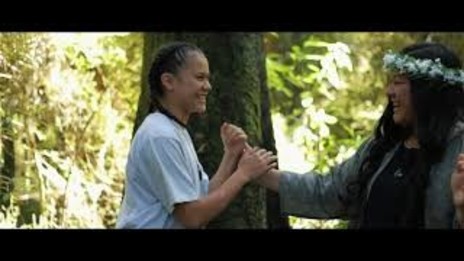
With two house loads of kids, logistics were tricky. The sisters have children the same age – all of whom can be seen growing up in their videos. The older girls are Leah’s, the older boys are Siu’s, then Leah has a younger boy (he’s 10 now), and Siu has a younger girl. Nieces and nephews born subsequently are the new babies. Six years ago, it was a lot to manage under isolation mandates.
“Leah became a part of my bubble,” explains Williams-Lemi. “She would travel each week. We’d do sessions – any video we needed to do – on a Wednesday. We usually would sit in the lounge, and we would lock the door and the kids would be outside. The kids actually broke the door handle coming into the kitchen, which benefitted us, because they couldn’t get back in. [They were older, they weren’t little babies.] We were able to film and then just bring them in when we needed them. Being able to have Leah in that bubble was awesome. Then, at home, Leah would sometimes film just with her and her kids, and I would film with me and my kids. But it was mental.”
While she says she loved the home TV studio experience, Loopy Tunes came to really miss the kanohi-ki-te-kanohi aspect of their mahi. She says: “It was when we came out of it that we realised how much we love performing to live children, and that we’re really not online people. That’s not our space. We love the interaction of real-life kids, which is why we’re touring a lot now, because that’s what we love.”
Late in 2020, and with the permission of their mother and aunties, they released one of their favourite family songs as a stand-alone single to coincide with Uike Kātoanga’i ‘o e lea faka-Tonga | Tonga Language Week. The Tongan lullaby ‘Umukisia’ was written by their maternal grandfather. It is a lament for his son Salesi Fakavale Tonga, who died young and far from home. Their grandmother played piano on the track.
Since then their recorded repertoire has grown to include a hugely valuable (and quite astonishing) 100-song collaborative project released in early May 2021, thanks to funding from the Ministry for Pacific Peoples. This saw them release 10 albums in 10 different Pasifika languages, including Rotuman, Kiribati and Tuvaluan. The albums were created to support the work Tāmaki Makaurau Plunket playgroup Pasifika Beatz facilitate, running preschool music programmes for Pacific Island whānau through Auckland libraries. The albums have become essential resources for parents, caregivers, kaitiaki pukapuka tamariki, and kaiako across the motu.
Their music is an essential resource for parents, caregivers, kaitiaki pukapuka tamariki, and kaiako
In October 2024 they released Kahurangi: Little Treasures – a 23-song collection of mostly bilingual tunes for young tamariki and their keepers. The Kahurangi album joins their Kōwhai: Kōrero Mai EP, released in 2023 in collaboration with beloved Suzy Cato (ONZM), and the team at Ko Taku Reo: Deaf Education NZ, and 2022’s Whero: Kirihimete | Kilisimasi Christmas album. The latter is chock-full of uniquely bilingual Christmas waiata that are a mix of originals and translated festive classics; it also includes their first original Tongan Christmas song, ‘Muimui Ki He Fetu’u’, which they co-wrote with their Māmā.
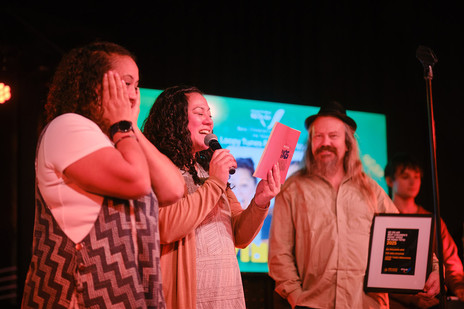
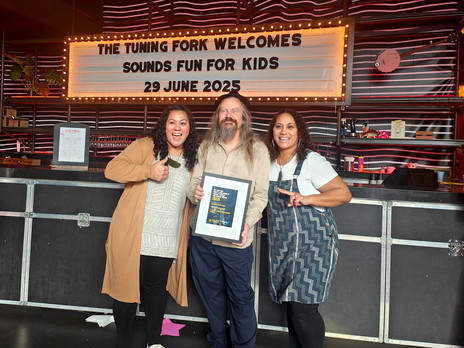
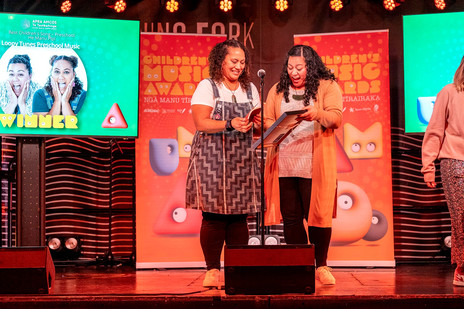
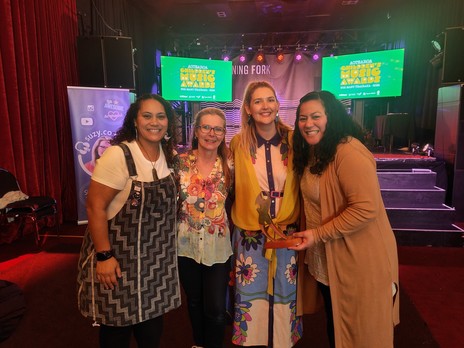
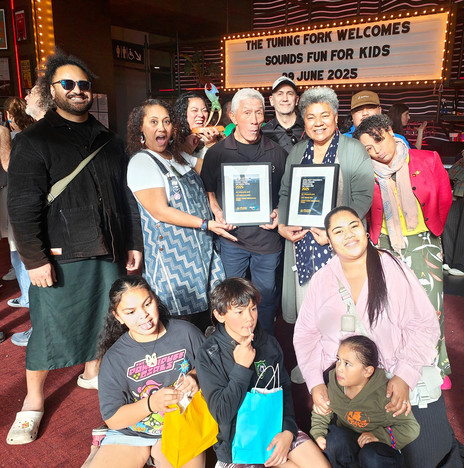
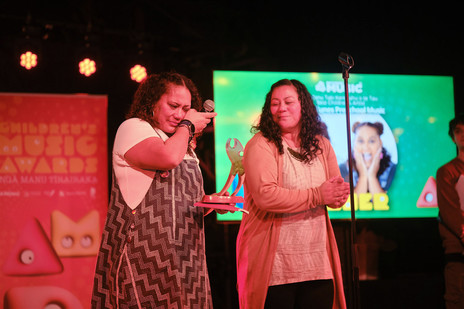
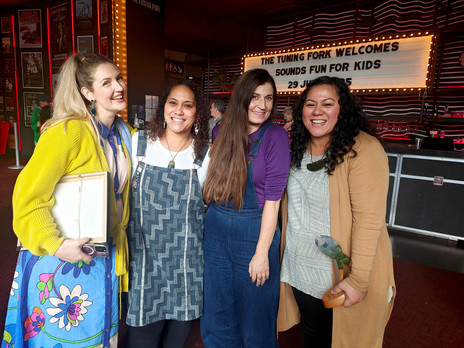
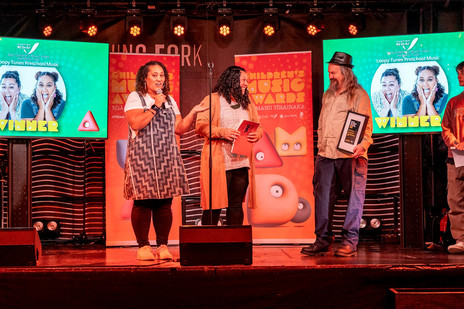
In June 2025, Loopy Tunes ruled the Aotearoa Children’s Music Awards / Ngā Manu Tīrairaka, winning three of the four categories they were nominated in. Recognised for their reorua/bilingual Māori and Pasifika children’s waiata, the duo received the coveted Tūī for Recorded Music NZ Te Manu Taki Kerekahu o te Tau / Best Children’s Music Artist; Best Preschool Song (for ‘Lele Means Run’); and Best Children’s Music Video (for ‘The Māui Dolphin’, with animation by Ross Payne). Their song ‘Little Taniwha’ was also nominated for APRA Best Children’s Song – Primary (which was won by fellow Ōtautahi musician and longtime Loopy Tunes friend, Michal “Music With Michal” Bush’s ‘Shapes and Colours’).
Loopy Tunes’ popularity shows no signs of plateauing any time soon. On a blazing Saturday in November 2025, they were excited to share news of another nomination.
“We just found out today that an album we featured on has just been nominated for a Grammy,” Williams-Lemi said. “So, that means it’s going to be te reo Māori played over in America, on the Grammy ceremony!”
The album is Flor Bromley’s Herstory, exploring the stories of historically notable women from around the world. Loopy Tunes collaborated with Bromley on the song ‘Fight’. “She wrote it about Louisa Wall, who’s a New Zealand politician who wanted to play rugby as a girl,” explains Williams-Lemi. “She knew of us – I guess, online – and asked us to be a part of the song. It’s massive for her, but to have Māori language in that album is huge.”
Among the nominees in the Best Children’s Music Album category is Tori Amos, with her book soundtrack The Music of Tori and the Muses. The 68th Annual Grammy Awards will be held on February 1, 2026. It’s a long way from the Beckenham Loop to the Crypto.com Arena in Los Angeles (where the ceremony will be held), but Loopy Tunes have already proved their music is powerful enough to build bridges across bodies of land, sea and culture, one way or another.
--
Update, 2 February 2026: The winner of the Grammy for Best Children’s Music Album was Fyütch, and his eight-year-old daughter, Aura V, for their album, Harmony.