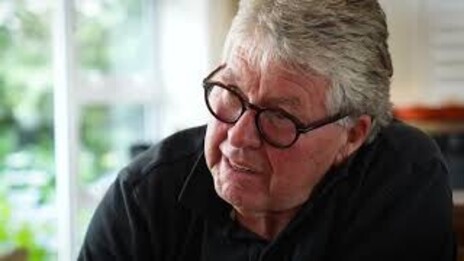
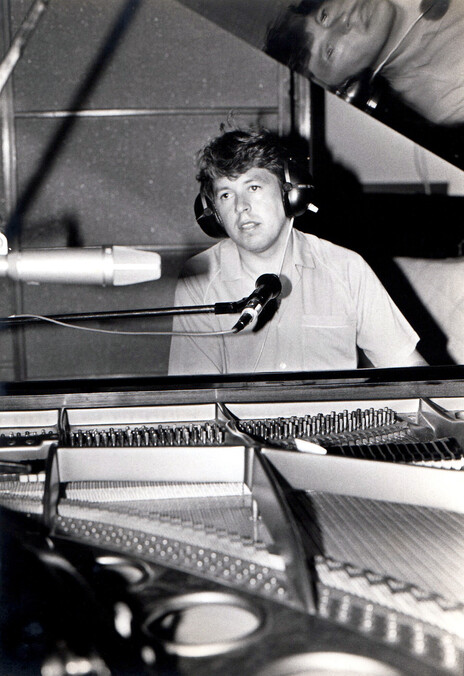
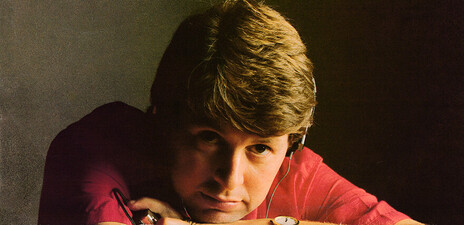
Mushroom New Zealand manager Mike Chunn was in the Mandrill Studios office in Parnell in 1983 when his ears pricked up at the sounds coming from the adjacent recording suite. Calling in, he encountered Stephen Bell-Booth recording self-penned songs that, in Mike’s words, were “so good, I bypassed the requirement to run new signings past the Mushroom bosses in Australia and offered him a contract on the spot.”
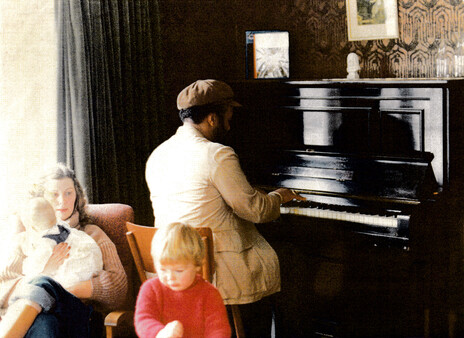
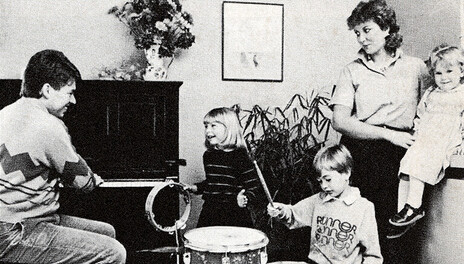
Growing up in Wellington suburb Johnsonville, Bell-Booth displayed a rare aptitude for music as early as the age of three when, encouraged by his grandfather, he started playing piano. By age seven he realised he could recall tunes perfectly, astounding his piano teacher by playing selected pieces back to her after just one listen – with no need for sheet music or laborious practice sessions.
Growing up, Bell-Booth displayed a rare aptitude for music as early as the age of three
Around this time Bell-Booth discovered this skill was coupled with perfect pitch: the ability to identify or produce a specific musical note without a reference tone. On leaving school he went to work for his father’s business, importing agricultural products.
From 1974 to 1981 Bell-Booth juggled a rapidly expanding family business with regular live work as a backing musician, studio session work, and even album production for a variety of artists in the Christian music field via interdenominational organisation Youth For Christ.
Bell-Booth’s recording debut came as keyboard player on the 1974 album Praise The Name Of Jesus, released globally on David and Dale Garratt’s highly successful Scripture In Song label, and a huge seller in the UK.
In 1975 Barry McGuire, a leading figure in the US folk and protest movement of the 1960s counterculture, attended a live show at the Wellington Town Hall where Bell-Booth was accompanying an artist on the venue’s Steinway piano. Introducing himself backstage, McGuire took Bell-Booth’s phone number, promising he would be in touch. Bell-Booth thought to himself, “yeah right”.
His first introduction to record producing came when Youth For Christ asked him to put together a compilation album of artists performing under the YFC banner. Having no existing relationship with any record company, Bell-Booth established the Pastoral Records label. Bell-Booth had an experienced guide for his first foray into production, recording at EMI studios in Wakefield Street Wellington under the watchful gaze of Frank Douglas.
The first release on the new label was 1975’s Spread a Little Love Around, a compilation featuring two tracks by Bell-Booth and John McLean with other tracks by Colin and Moyra Speir and Karen Dalglish. Two further compilations produced by Bell-Booth followed: Sharing Through International Needs in 1976, with a similar line-up of artists, and Melody in 1977. Melody featured touring vocal and instrumental YFC group Certain Sounds and was recorded live at the Wellington Town Hall.
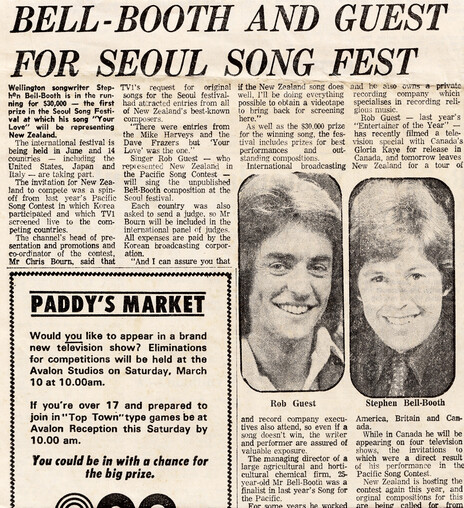
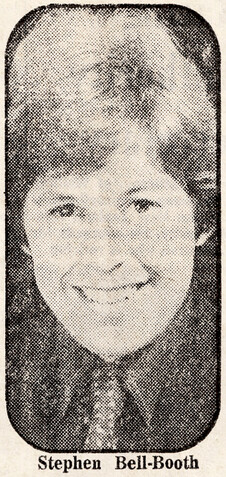
In 1979 Bell-Booth’s songwriting was recognised internationally when he was selected to represent New Zealand at the Seoul Song Festival, a competition involving contestants from 20 Pacific Rim nations. ‘Your Love’, written by Bell-Booth in honour of his mother who had passed away earlier that year, was performed by Rob Guest.
In 1979 a song by Bell-Booth represented New ZEaland at the Seoul Song Festival
In 1981, no less than six years after his promise, Barry McGuire proved as good as his word, ringing to invite Bell-Booth to tour the US as a duo with him in a series of church shows. At the final show of the tour at an artist retreat in Estes Park, Colorado, before an audience of 3000, McGuire unexpectedly invited Bell-Booth to close the show with one of his own songs. The terrific reception afforded him at this event gave him the confidence to write and perform more of his own songs and eventually to record them.
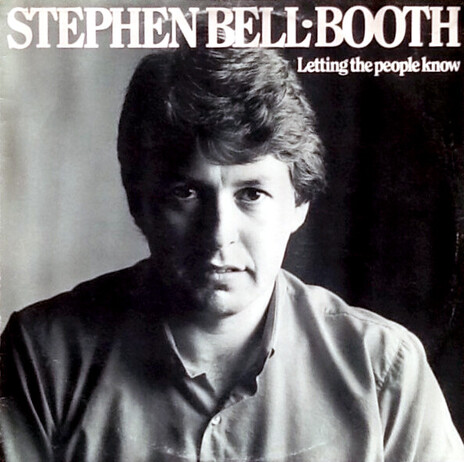
By 1983 Bell-Booth finally felt ready. An all-star cast was assembled in association with Steve Garden to record his debut album proper. Andrew Hagen, Bruce Lynch, and Graeme Myhre oversaw the production and engineering. Jacqui Fitzgerald, Bonnie Low, Brendan Power, Alastair Riddell, Stuart Pearce, Neil Hannan, Josie Rika, Chuck Morgan, Colin Speir, and Lyn Buchanan all contributed to a sophisticated adult-pop album that still resonates strongly with participants more than 40 years later.
Co-producer Hagen, formerly of Schtüng, remembers the sessions well, declaring them to be “some of the most important adventures of my life. Stephen’s lyrics and melodies are just so powerful, long-lasting, and well-intentioned. I still play the album regularly today.”
Bell-Booth wrote several of the songs in the studio, then arranged them. He sang and played keyboards on the recordings, despite the tragedy of his father passing away during the sessions. Chunn chose the title Letting The People Know to reflect the album’s aim.
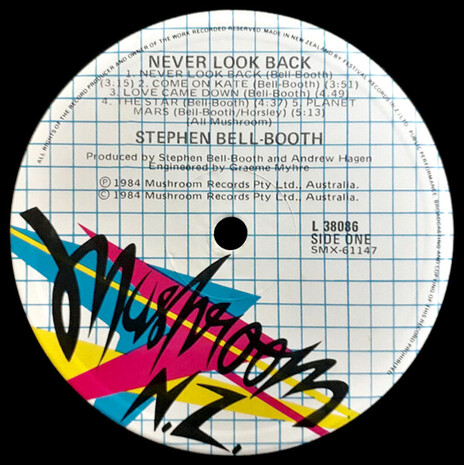
Trotting out the well-worn record company lament, Mushroom Australia insisted they couldn’t hear a hit single so pushed for an extra track. ‘Never Look Back’ was added, the album retitled and cover design replaced for its Australian release.
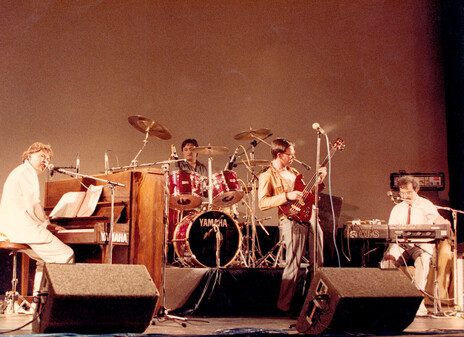
To help promote the album, Chunn effectively started managing Bell-Booth, arranging a New Zealand tour for him supporting the band America. Further tours followed with Joe English (the former drummer for Paul McCartney’s Wings turned Christian music practitioner); Lobo; and New Zealand artists The Rumour and Shona Laing.
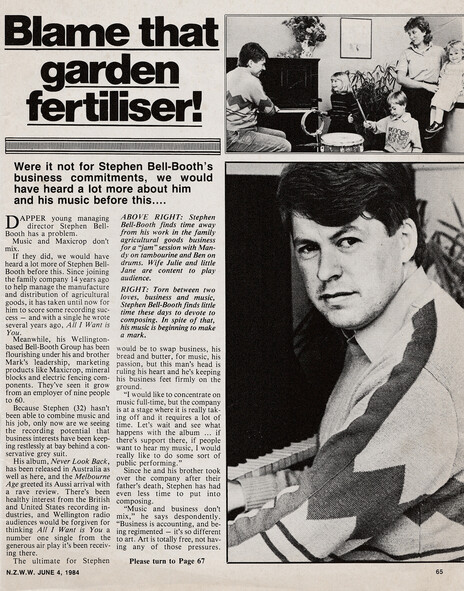
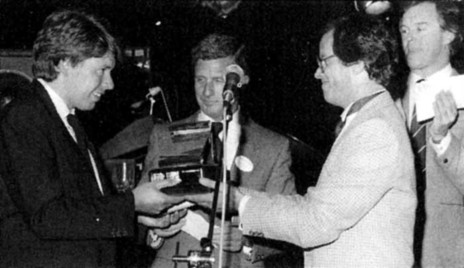
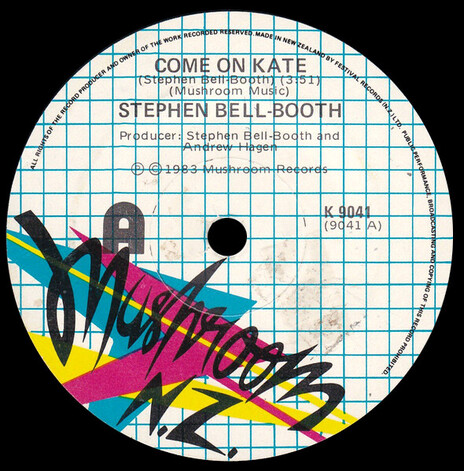
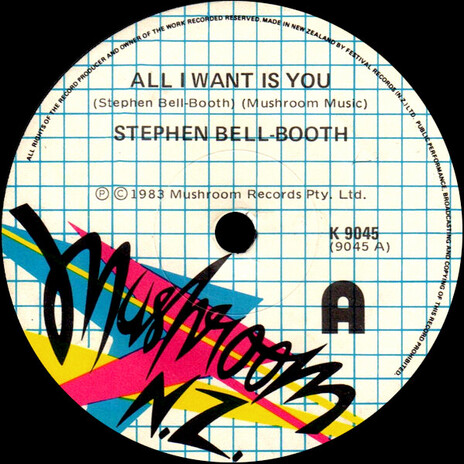
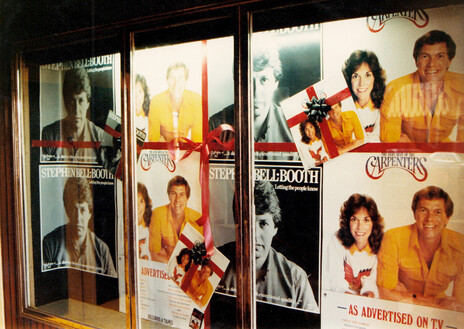
Airplay for the single ‘C’Mon Kate’ prompted modest album sales, though it was the track ‘All I Want Is You’ from the album, written for Bell-Booth’s wife Julie, that was voted Silver Scroll winner by the APRA academy in 1984.
In 1985 Bell-Booth was approached by Michael Shanahan, a Wellington barrister, to write the theme song for the inaugural New Zealand Special Olympics, established by Wendy and Grant Quinn and held at Avalon in Lower Hutt.
From 1987 to 1994 Bell-Booth focused almost entirely on music, his brother taking over the running of the family business. Mushroom Australia declined to take up the option for a second album so Bell-Booth reactivated Pastoral Records. Tapes and CDs were warehoused and dispatched from Bell-Booth’s garage in his home town of Wellington. In addition to releasing three albums by Bell-Booth himself, Pastoral distributed two albums by Auckland couple Chris and Rosie Boom. Further production work included the debut album by Steve Apirana, formerly of Butler, in 1986.
From 1987 to 1994 Bell-Booth focused on music, while his brother ran the family business
In 1988 prolific New Zealand Christian music duo David and Dale Garratt contracted Bell-Booth to record an instrumental album of keyboard pieces entitled Timeless – Music For Meditation, released on their new Earthmovers label. This title and others in the Earthmover series were made available again via digital reissue in 2026.
During this period Bell-Booth supplemented his income making soundtracks for commercials in partnership with Rob Winch. Recording at Marmalade Studios, high-profile clients included McDonalds, Citroen and Lotto among many others. Bell-Booth is most proud of an Air New Zealand commission to write an original piano piece to accompany an ad celebrating the airline winning an international excellence award.
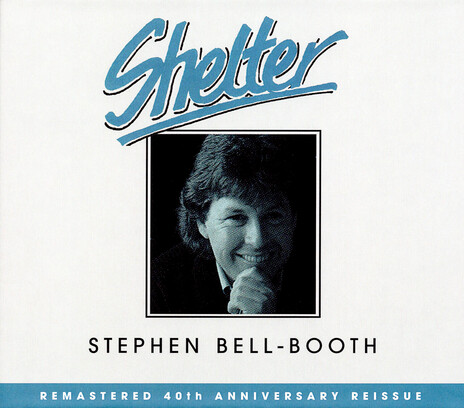
In 1989 Bell-Booth released the first of his own albums on Pastoral Records. Shelter, recorded at Progressive Studios, proved a high point in his recording career to date. The title track, with guest vocals by Annie Crummer, was a significant hit at Christian radio network Radio Rhema.
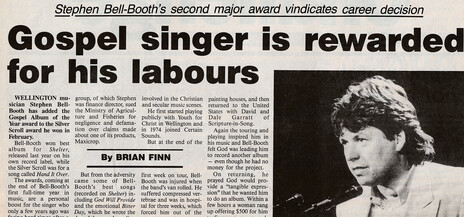
Announcer Rob Holding, who worked there at the time, remembers them playing the track relentlessly and noted that Bell-Booth was one of the most played artists ever on the station. The network also played other tracks from the album – ‘Hand It Over’, ‘God Will Provide’ and ‘Who Is This Man’ were on high rotate and have now become staples on Rhema’s sister station, Sanctuary. ‘Hand It Over’ went on to win Bell-Booth a second prestigious APRA Silver Scroll award. The album achieved platinum status, the 15,000+ sales channelled mostly through a network of Christian bookshops that flourished in New Zealand in the1980s and 90s.
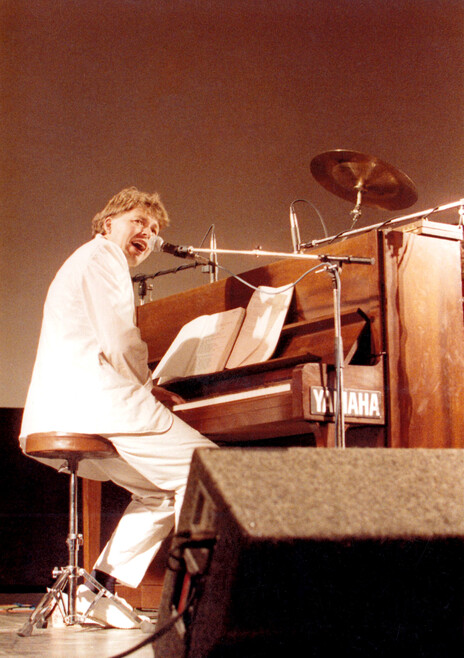
In 1990 Queen Elizabeth II visited New Zealand in conjunction with the Auckland Commonwealth Games. Debbie Harwood remembers a phone call from Bell-Booth requesting her presence along with other members of When The Cat’s Away, to sing backing vocals on a performance for the Queen the following day at Holy Trinity Cathedral in Parnell. A mix-up with security clearances meant no time for rehearsal, yet Harwood recalls a magical performance of the song ‘Shelter’, just 15 feet from the monarch. According to the Governor-General Cath Tizard, Her Majesty was most impressed. Bell-Booth was invited to perform after being spotted during a series of musical shows sponsored by World Vision that included vocal groups of six children from each of 23 different Commonwealth countries. ‘Shelter’ was a featured track in the show, arranged in African praise music Harambe-style and with dance moves by the children.
In 1992 Bell-Booth added yet another string to his bow, composing and performing all the music for Dale Bradley’s feature film Chunuk Bair, based on Maurice Shadbolt’s book about Gallipoli.
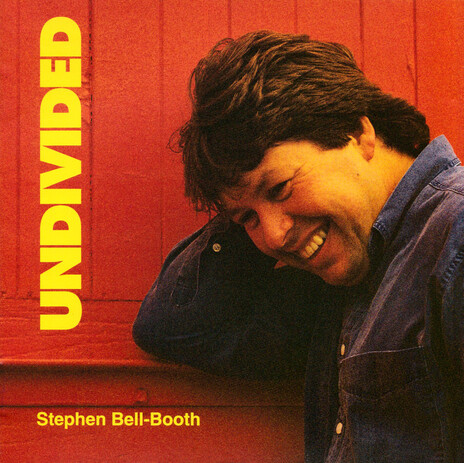
Bell-Booth’s next album Undivided was recorded at Marmalade Studios with Nigel Stone producing. Released in 1993, it won the Tūī award for best worship album at the 1994 Aotearoa Music Awards. Several tracks from the album were used on episodes of Shortland Street as a result of a short-term distribution deal for the album with Sony Music. The track ‘Diana’ from the album, written in memory of Diana, Princess of Wales, was used in TVNZ’s One News tribute to her.
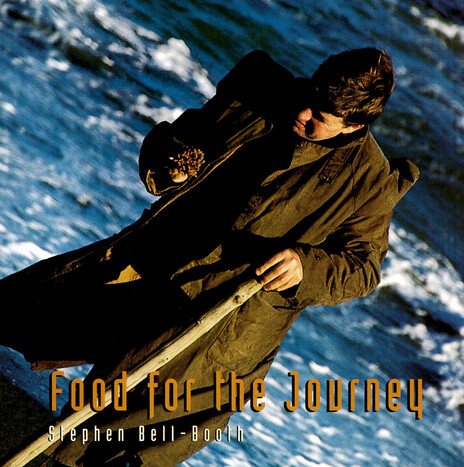
Bell-Booth’s third Pastoral Records release Food For The Journey followed in 1999. It was recorded at Stone’s Raging Goose studio and featured backing vocals from Bell-Booth’s children Ben and Jane.
And then … silence.
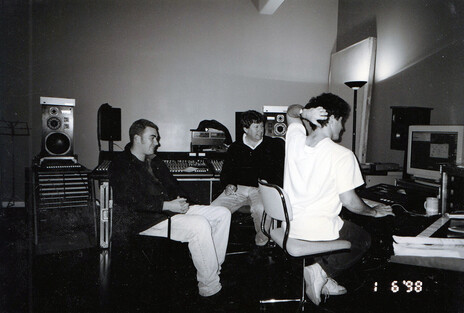
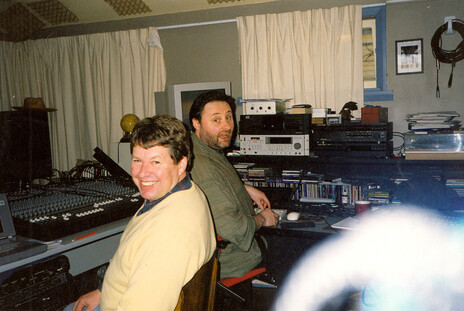
After eschewing music entirely, Bell-Booth returned to the studio in 2026
In 1994 Bell-Booth had moved to Palmerston North and rejoined his family’s agricultural business, which he ran in in parallel with his music career. By 1999, with income on the music side becoming erratic Bell-Booth decided to commit himself totally to the family business and eschew music entirely.
In 2020 Hamilton-based author Brett Wilson published Let’s Back Up A Bit, a book profiling major figures in the New Zealand Christian music world. In it, a revealing interview with Bell-Booth shows just how disillusioned he had become with the whole music scene. He declared his two Silver Scrolls meant nothing to him and that he had absolutely no interest in his albums being reissued on streaming services. Ironically, Warner Music, by now the owners of Mushroom Records, digitally re-issued Letting The People Know that very year. The tens of thousands of plays the tracks have garnered since demonstrate that a remarkably large audience had been patiently waiting to reconnect with Bell-Booth’s music.
But as dedicated as he was to the success of his agricultural business, in the background Bell-Booth had a very big itch that needed scratching. As far back as 1978 he had envisaged putting music to Psalm 139 from the Old Testament, originally taught to him as a young child by his grandmother. Having stepped aside from running the family business in 2025, and with his passion for music reignited, he is tackling the project with gusto.
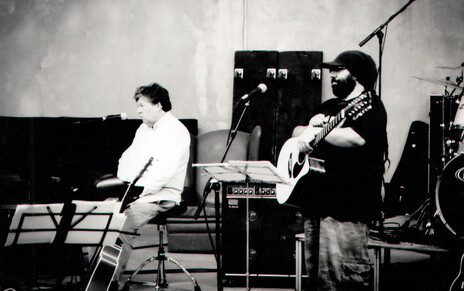
Nearly 50 years after it was first conceived, his vision for Psalm 139 is taking shape with recording sessions underway for an album to be titled Woven Together. Bell-Booth has written nine musical pieces to accompany the words in a variety of styles, including chamber music, te reo Māori and even Brazilian samba. Steve Garden is once again overseeing the recording sessions.
Bell-Booth has high hopes for his new album. He’s very keen to see that it is not pigeonholed for Christian music audiences only, and that it reaches listeners outside the confines of New Zealand.
And in good news for his fans, Bell-Booth has arranged for his full back catalogue to at last be reissued in parallel with the new album.