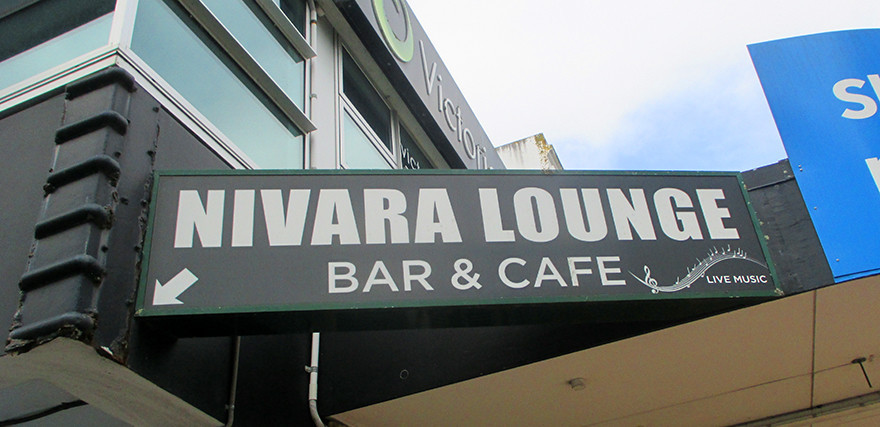
Nivara Lounge signage, 2024. - Photo by Danica Bryant
Tucked away down an unassuming set of stairs in Hamilton’s city centre lies one of Aotearoa’s coolest and most creative music venues, the prestigious Nivara Lounge. Owned and operated by Ivan Muir through two separate stints, the venue originally opened as the JBC in the 1990s before taking on a second life and name in the 2010s.
Now sadly expected to close after 2026, it’s a valuable time to document the venue’s fascinating history in the Waikato.
Ivan Muir is the heart of Nivara Lounge, and his genuine love for music has driven all of his business ventures within the industry, despite its lack of profit locally. “I’m still really loving the live music,” he says. “We still host over 200 gigs a year, not just music, sometimes film nights, comedy nights, burlesque … I’ve put a lot of blood, sweat and tears into this. It’s really heartening when people say they’ve experienced something new, so beneficial for the soul.”
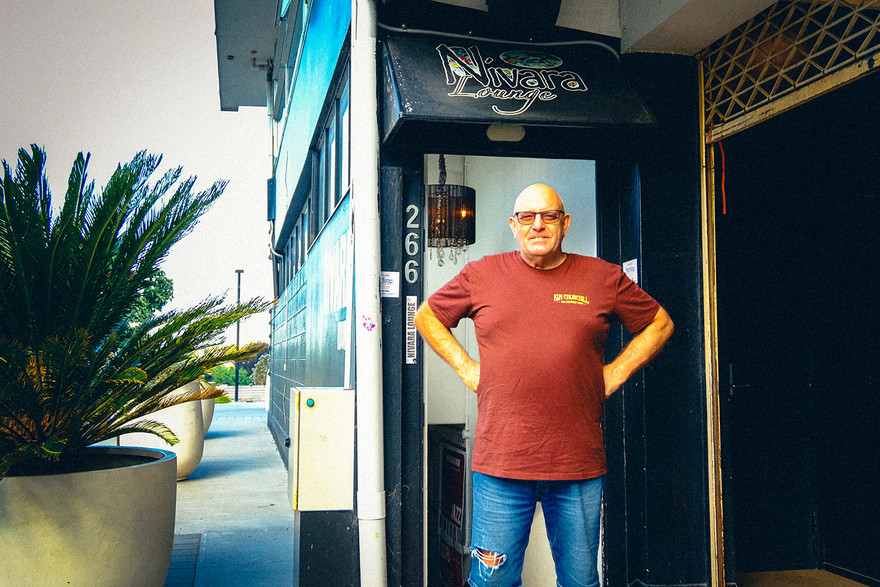
Ivan Muir outside Nivara Lounge. - Photo by Brad Miller
The lounge is about creating a space for consumers to fall in love with art across the board, in the same way Muir did growing up. “I got dragged out to concerts by my older sisters,” he says. “David Bowie, The Beach Boys, Elvis Costello … Lots of great New Zealand bands in the 70s, too. I just fell in love.”
Although he owned a lot of musical equipment, he couldn’t play any of it, and “still can’t sing to save myself!” Instead, he became an avid gig-goer and fell into managing several bands.
Soon after Ivan moved to Hamilton in 1988, he discovered an underground venue perfectly suited to fulfill his dream of hosting his own shows. An elderly couple running a snooker parlour in a Victoria Street basement space – which was previously luxury restaurant The Swiss Chalet – were looking to semi-retire and lease the space out. After Muir renovated to add a few necessities like a kitchen and a women’s bathroom, this basement would soon become Nivara Lounge’s prototype, Jazz Blues Concept (JBC), opening in 1997.
The original JBC became an iconic stepping stone for many musicians. Artists including Anna Coddington, The Datsuns (as Trinket) and Lips graced the stage in the early days. One performer who stands out to Muir is Kimbra, who appeared there at the age of seven. “I worked for a French drug company, and her dad was a doctor. I told him I was leaving to start a music venue and he said, ‘My daughter plays and sings music’, so we got him to bring her along.”

Aaron Tokona aka AHoriBuzz at Nivara Lounge, Hamilton. - Photo by Bob Fink
JBC regularly ran “HUM” events, standing for Hamilton Unemployed Musicians, bringing the local community together. They sponsored several radio shows, most notably the blues hour on what would become The Rock FM, and pioneered the local jazz and blues genre’s prominence in the region.
“Unfortunately it was my first time in business … I paid cash for everything. We only lasted three years because as soon as I opened the doors, the internet took over.” The world wide web briefly made live gigs less viable as the 2000s dawned, as people obsessed over the novelty of living vicariously through online entertainment for the first time.
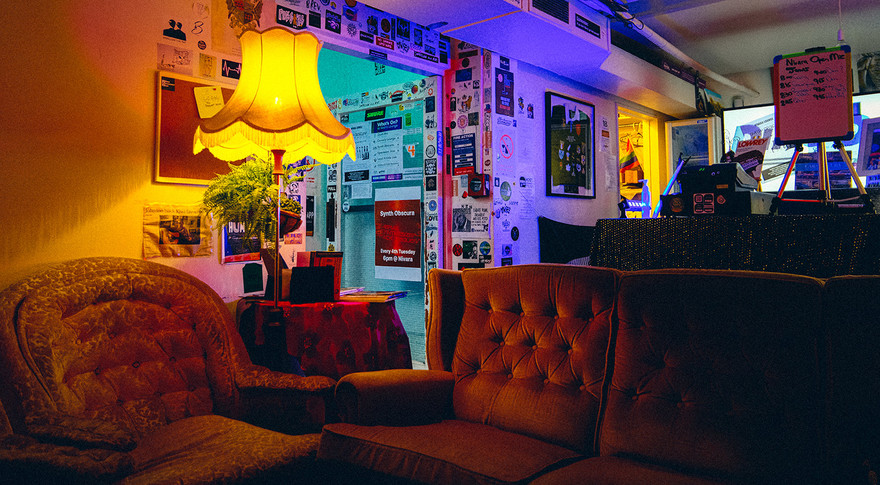
Entrance to Nivara Lounge. - Photo by Brad Miller
Muir tried to make the most of the craze. JBC became Hamilton’s first internet cafe, thanks to a local band who frequented the venue bringing in their expertise from their day jobs at IT Solutions, installing a Linux Box out the back. “Backpackers would come in from overseas to hire the internet and order a hot chocolate … They were used to the internet way before us.”
Nonetheless, dealing with the financial struggles of running his first business resulted in Muir stepping away at the turn of the century. “I didn’t understand business quite enough the first time around.”
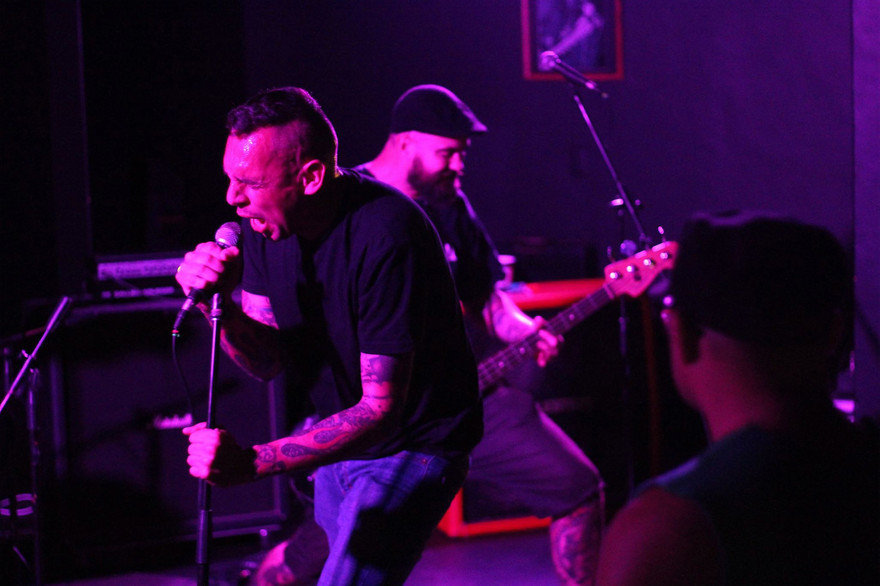
PCP Eagles at Nivara Lounge with Tom Anderson of Double Whammy on bass
Over the following years, the venue was leased out to various business owners who operated it primarily as a nightclub. But around 2012, the venue owners approached Ivan, asking him to bring back the focus on original live music and real instrumentation. With more business and hospitality experience under his belt, Muir felt it was the right time to return to his true passion, music.
However, undergoing the application process for new liquor licensing proved a difficult task. Muir waited almost two years to get the right licence approved. He specifically wanted to run as an undesignated venue where underage attendees could be present until 10pm, after which they’d need a parent or caregiver in tow. This was important to enable younger bands to play, as the alcohol-fuelled nature of the industry makes it so hard for youths to get involved in their local scene.
To fund the lengthy licensing process during this time, Muir resurrected the JBC acronym, running another café nearby as Jam Basement Café. The café’s food, drink and art income enabled him to hold onto the property until finally reopening under the new name, Nivara Lounge, in 2014.
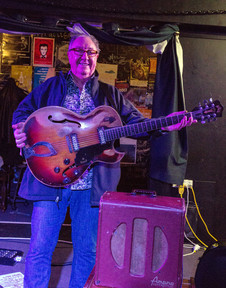
Midge Marsden, Nivara Lounge, Hamilton 2019. - John Mercer CameraWorks21
Contrary to popular belief, the title “Nivara” has no connection to the band Nirvana or the spiritual concept. “It’s a word I made up in the 80s,” Muir explains. “It’s my name Ivan mixed up.” Taking the extra letters from James and Muir, “Nivara” was registered as Muir’s limited company before finding its physical location with the lounge’s re-opening. The rebrand signified a fresh start, and also left space for the blues society and jazz clubs which had popped up around the area since JBC’s initial closure.
The new and improved Nivara Lounge defines itself as “a live performance venue that people pay to come in,” encouraging punters to support original music. “We get wonderful people that come here for the entertainment. It’s not a booze barn, no pokies, no sports screen, just focused on what’s on stage. People come here for a safe environment to go out … Not even knowing what’s on stage and experiencing it for what it is.”
Although Muir openly declares the lack of profitability in running the venue, he’s quick to make it clear how much value New Zealand’s entertainment industry still has in contributing to our overall economy. “(Music) does put a lot into GDP, right down to the fact that it supplies jobs for students behind bars and music shops. It contributes in many ways, not just hearing music on stage.”
But what makes it worth it for Muir is the looks he sees on the faces of both artists and attendees. One of Muir’s favourite events in the lounge is their recurring open mic nights. They’re typically attended by artists new to the live format, or who don’t already work in the industry full time. “But they are artists in their own right”, he says. “The very fact they get nervous and they get on stage still. There are some real hidden gems out there.” His favourite local act is a folk duo in their late seventies known as Princess and Petal, who perform those same open mics alongside children, high schoolers and middle-aged jam session goers alike.
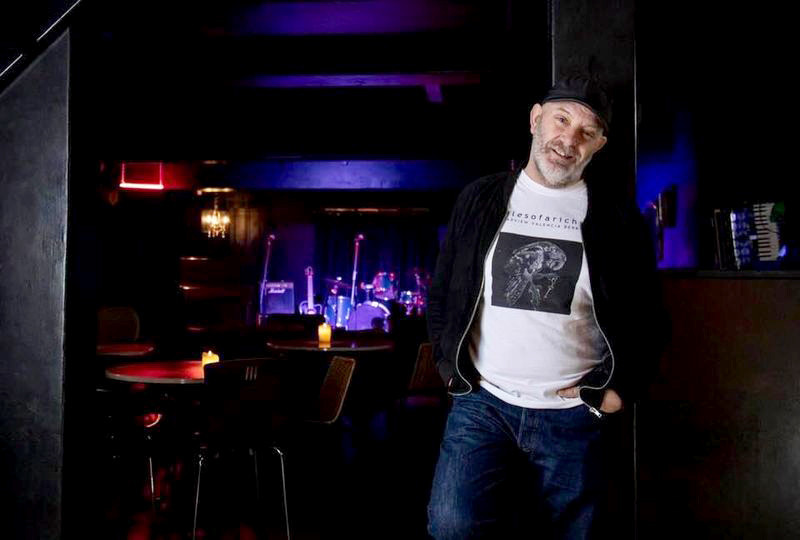
Ivan Muir inside Nivara Lounge. - Photo by Bob Fink
As for the venue’s aesthetic, it’s intentionally very relaxed, boasting an eclectic decor style that still feels comfortable and homely. “If someone wanted to put their feet up, I wouldn’t growl at them. It’s your lounge, but you’ve got a stage at the end of it you can enjoy,” Ivan says, smiling. Virtually everything in here is second hand, or being taken care of for a friend or family member. There are couches on loan from the sound tech, and from Ivan’s son who is currently in Australia. Assorted knick-knacks left behind decorate the room, glowing in the bar light in front of hundreds of posters and stickers of past and present touring artists. Where the staircase that once led to upper level property blocks the stage view, there’s a television screen broadcasting each performance, so the entertainment is never disrupted.
That cozy feeling you find in the lounge is of course, equally for Ivan’s own enjoyment. He spends most of his time at Nivara and quips he in fact “Intended to die down here”.
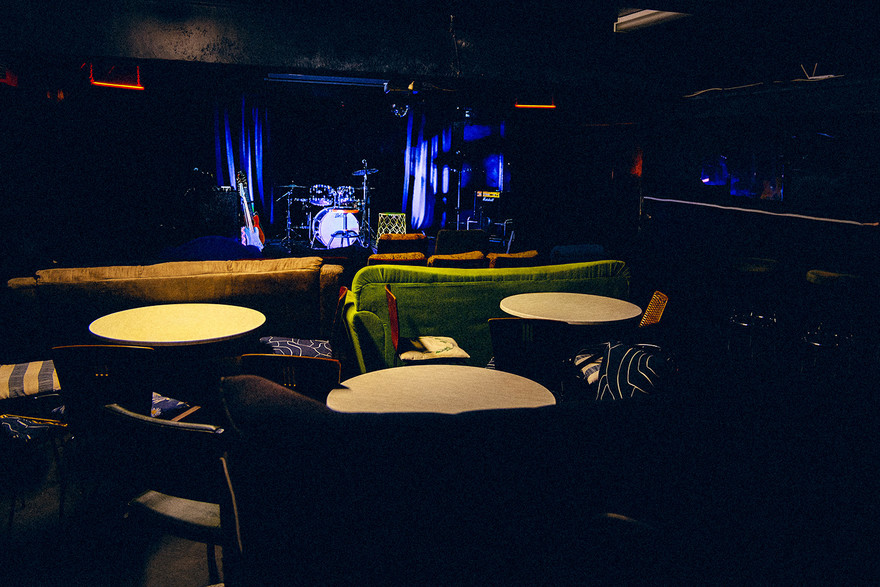
Nivara stage from the floor. - Photo Brad Miller
That would likely still be the plan if the building wasn’t tragically up for demolition in April 2027. Property developers from the Auckland Templeton group plan to rebuild apartment buildings and hotels on the site, after several years of complex property dealings with different developers and council workers. “Progress goes ahead,” says Muir. “What they’re going to build will be great for the city.” Nonetheless, his disappointment that the lounge’s days are numbered is palpable.
Muir hits retirement age next April, and whilst he’d like to keep Nivara open for as long as possible, covering his debts requires selling off the lounge’s contents sooner rather than later, so it’s unlikely the lounge will keep its doors open until the last second.
Also, these developments in discussion since 2020 have led to confused information among the general public regarding whether Nivara Lounge is currently open. This uncertainty has impacted scheduling gigs and attracting punters. “A lot of people don’t know we’ve still been open for the last five years, every day people hear we’re closed down.” Naturally, the Covid-19 pandemic had a further impact on getting people through the door, making Nivara a difficult business venture in its final years.
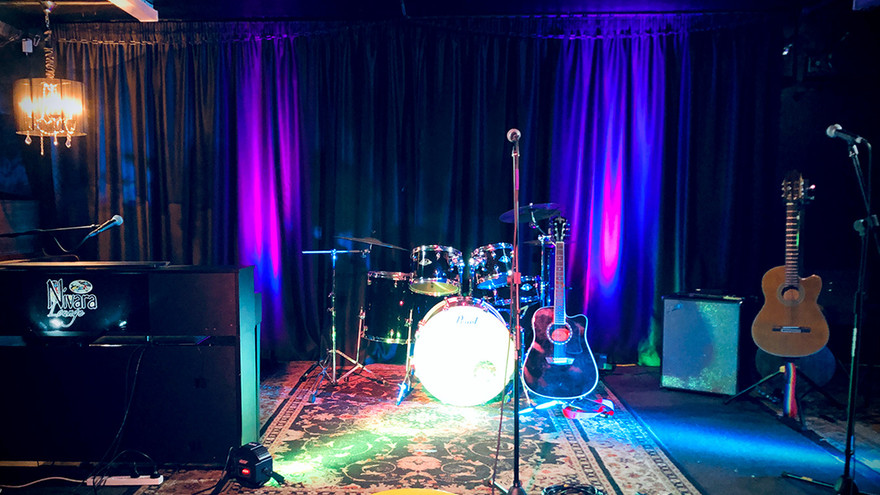
Nivara Lounge's open mic set up
Nonetheless, Muir doesn’t plan to give up on music when the lounge closes up. “I’d like to try and stay in the industry one way, shape or form.” One such idea is to run gigs with friends in the nearby Raglan music community. “These are the places that create a vibrant city … Live music will never die, but the independent music venues in Aotearoa need to be supported, and need to have legislation that protects them from gentrification.”
Indeed, places like Nivara Lounge make Hamilton thrive, and suggest the wider Waikato region could be an ideal place for emerging musicians. Its central location makes travelling to perform more affordable, and it’s a city with more going on than meets the eye. “Hamilton has actually got a whole lot of good musicians … I like the rawness of all the new ones coming through.”
The nearby Wintec boasts talented performers in opera, classical and musical theatre. And as Muir points out, many people move to the Waikato for work, creating a diverse community which Nivara proudly celebrates. The venue’s soundperson and resident DJ Goldfinger rocks a hat declaring they are autistic, and proud of it. Rainbow flags fly high above the bar. On any given night, the crowd could be an assortment of gig-goers from all different genders, sexualities and races, and there’s a magic in that mix.
And while Muir could resent the new age technologies and developments forcing Nivara Lounge’s eventual closure, he’s actually impressively informed and intrigued by the future of music. Before Covid hit, he installed a video booth on site for pay-to-view livestreaming, which he hopes future acts will increasingly prioritise. He’s fallen in love with the synth resurgence, thanks to the “amazing machines” coming out today. He is thrilled that communicating across distances in the online realm means many bands can survive longer and in new digitised ways. As he acknowledges, many of his favourite acts in the 90s wouldn’t survive past the 10-month mark when they were physically separated by study, relationships and kids. That’s a factor less relevant in our now obsessively online landscape.
For gig-goers, Nivara Lounge has been a haven to discover new acts and celebrate our artistic community over several decades. The venue is a testament to live music and to Ivan Muir’s own unique tastes. Before its fate plays out in 2027, it’s well worth a visit to recognise Nivara as a top experience for arts in the Waikato, and a beautiful part of our country’s musical history.