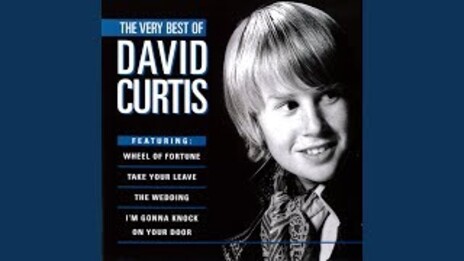
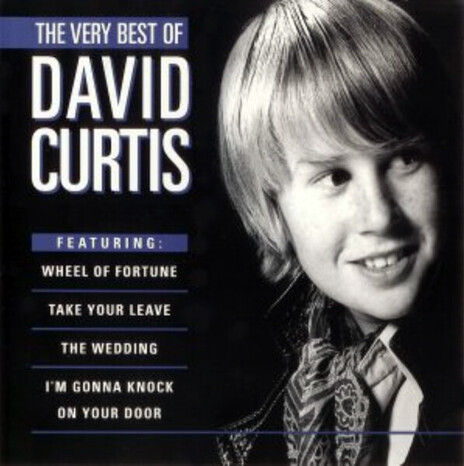
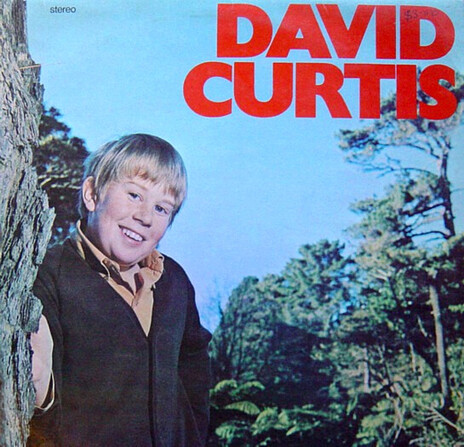
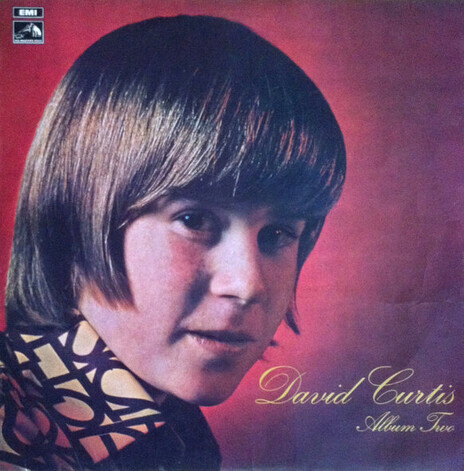
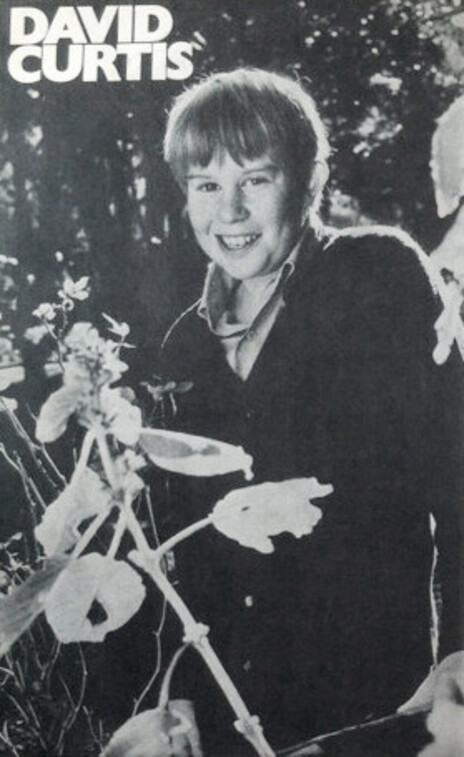
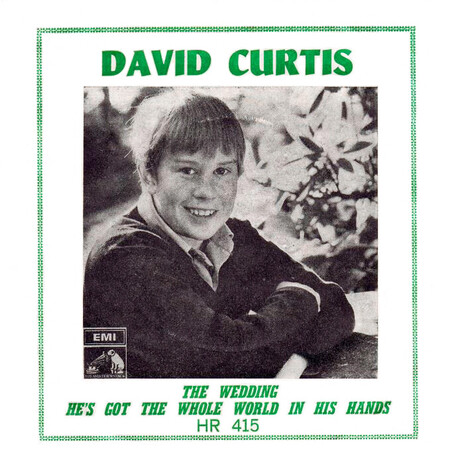
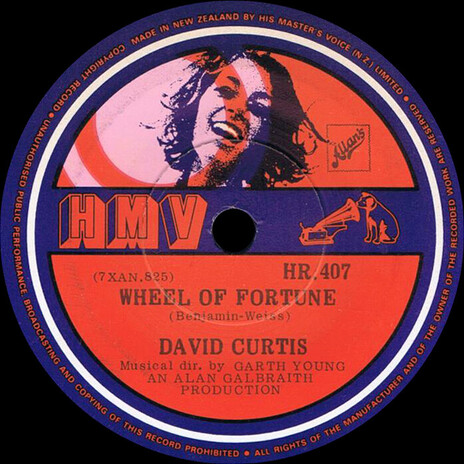
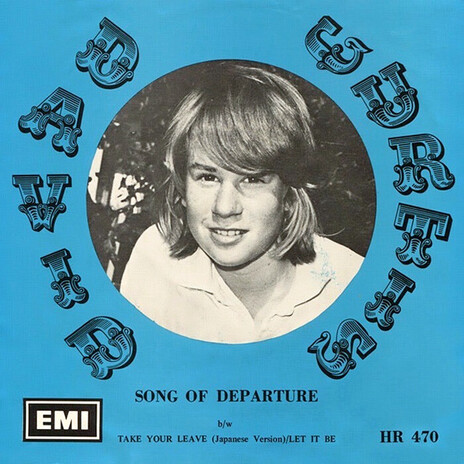
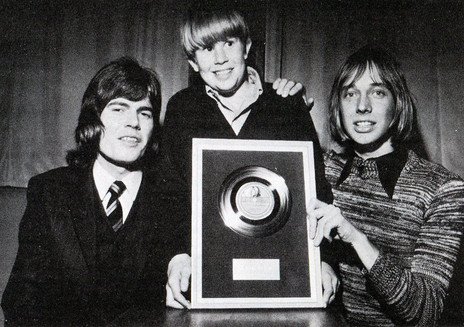
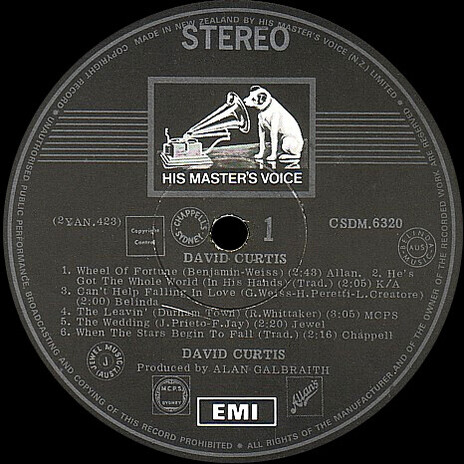
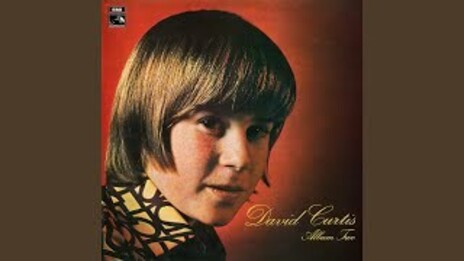
Curtis’s cover of US singer Kay Starr’s 1950s hit ‘Wheel of Fortune’ held steady at No.5 for three weeks in a row, after 11 solid weeks in the national Top 20. The song was also placed third in the Loxene Golden Disc awards that year, after Hogsnort Rupert and Craig Scott. His own fortune wheel had spun, turning the song into a surprising hit – and Curtis into New Zealand’s youngest hit-maker.
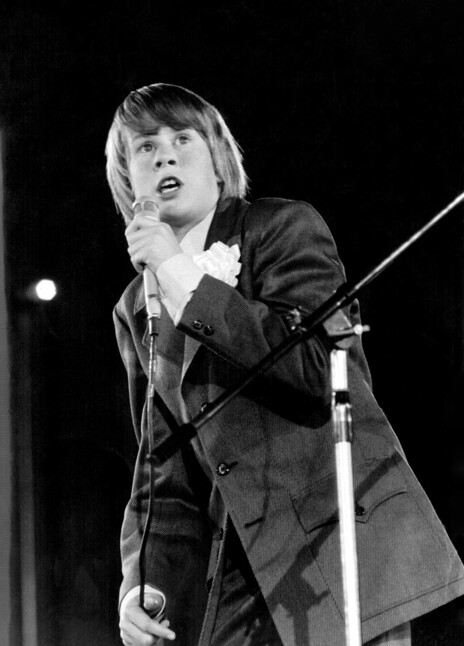
Born in 1957 and raised in Karori, Wellington, David Curtis first caught the ear of music professionals when he was chosen to be in the boys’ chorus of a 1969 National Opera Company’s production of Bizet’s Carmen, starring Kiri Te Kanawa. The chorus of “street urchins” had only a smallish role in the opera (apart from one boys’ chorus solo), but the experience of being on stage in Bizet’s masterpiece among major singers lit up his young life. He caught the bug for the biz.
Aged 12, singing in Bizet’s opera Carmen, David Curtis caught the bug for the biz
After the opera’s run finished, he decided to record some songs as a family keepsake and did so on Wellington’s Sonic label. He had been learning guitar since the age of seven, so he accompanied himself on four songs and gave a copy to his guitar teacher, Jim Baker. Unbeknown to Curtis, Baker passed it on to a contact at HMV. The demo found its way to A&R manager Bruce Ward, who had been looking for someone to cover ‘Wheel of Fortune’; he suggested that Curtis record an audition tape for up-and-coming producer Alan Galbraith.
Galbraith’s reaction was swift and positive. Soon after, Curtis was back in the studio recording ‘Wheel of Fortune’ with backing by members of the New Zealand Symphony Orchestra and a rhythm section of Dave Fraser on drums, Garth Young on piano and Kevin Watson on acoustic guitar. Alan Galbraith and Malcolm Hayman of Quincy Conserve provided backing vocals. The result was an instant hit and a gold record for the young singer.
HMV was keen to promote him as New Zealand’s answer to the Netherlands’ boy singer Heintje Simons, who had international success in 1968 with his cover of the Italian song, ‘Mama’. Both boys had vocal power and richness beyond the stereotypical ethereal boy-soprano tones. (“In Carmen I would have done a bit of falsetto,” Curtis says, speaking from his Auckland home, “but for ‘Wheel of Fortune’ I used the strong part of my range.”)
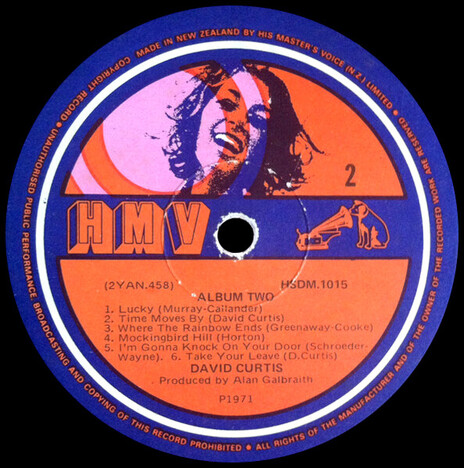
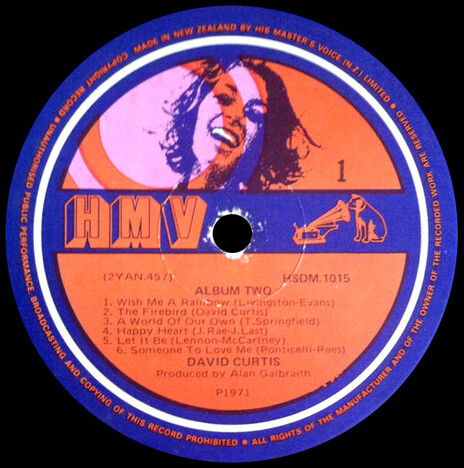
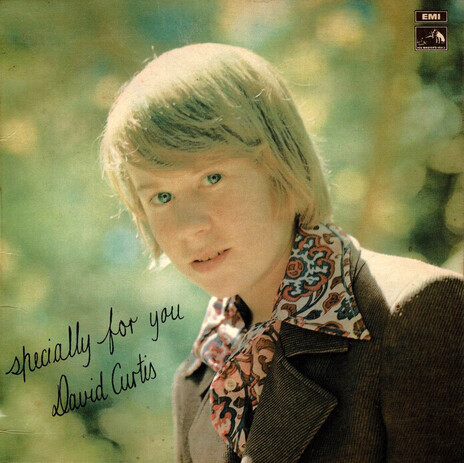
Curtis recorded two albums on HMV, with NZSO members and the same rhythm section. His sudden fame was thrilling but also confronting.
“It was both fantastic and equally bad. In the school corridor, for example, someone might kick me in the shins in passing, and I was challenged to a couple of fights. The worst thing, though, was the widespread coverage. At that time there was only one television channel and if anything was on television the whole country saw it. I just needed to go into the supermarket and they would all stop and stare at me. For a 13-year-old kid it was pretty challenging.”
There was another excruciating incident for him shortly after his TV appearance following the release of ‘Wheel of Fortune’. Curtis was playing with his school friends on a break when a TV crew turned up. “They plucked me off the playground, still in my uniform, took me back to the studio and had me miming to ‘Wheel of Fortune’. I’d not mimed to a song before and it proved difficult for the cameraman, apparently, because I was moving around so much.”
His age counted against him when the movie of Woodstock hit the theatres; it was rated R16. “It came out around the time of the Loxene Golden Disc, and everybody who was in the show was invited to go see the film, except for me because I was too young.”
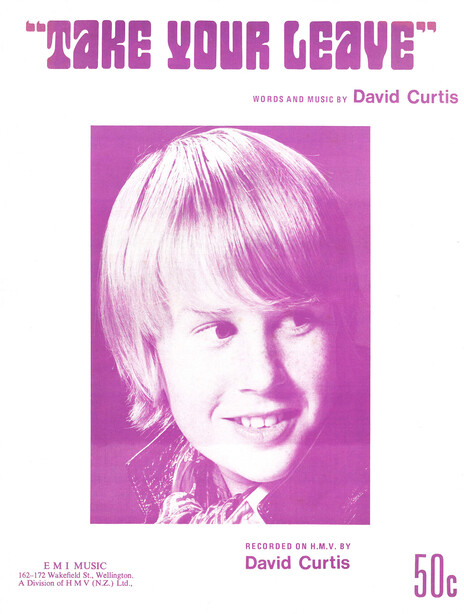
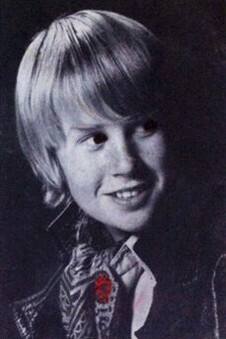
A major hit followed ‘Wheel of Fortune’ – the 14-year-old's own song, ‘Take Your Leave’
In 1971, another major hit followed for the now 14-year-old. ‘Take Your Leave’, for which he’d set his mother’s lyrics to music, was co-winner of the songwriting section of TV’s Studio One song contest alongside Shade Smith of The Rumour with ‘L’Amour est l’Enfant de la Liberté’. ‘Take Your Leave’ was the second-biggest original New Zealand song for 1971, and the fourth most successful on the charts. It spent six weeks on the charts and peaked at No.4, surpassing his first hit and further cementing his place in New Zealand’s recording history.
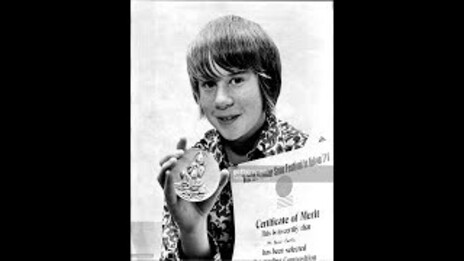
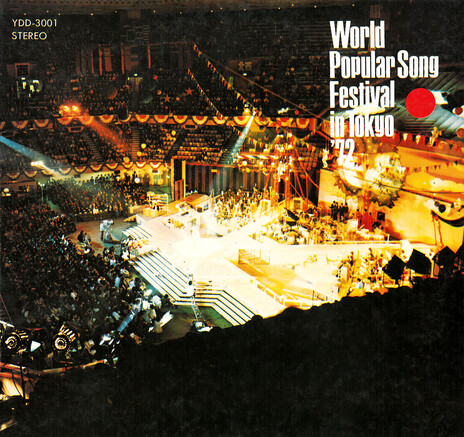
Television executives in the-then NZBC (New Zealand Broadcasting Corporation) entered ‘Take Your Leave’ in Japan’s Yamaha World Popular Song Festival, a regional Eurovision-style contest. Paul Mauriat (‘Love is Blue’) and Tony Hiller/John Goodison (‘United We Stand’ by Brotherhood of Man) had songs competing that year. David Curtis’s song was the sole entry representing New Zealand.
The 47 competing songs (selected worldwide from 757 submissions) were performed to capacity audiences over three nights in Tokyo’s Budokan Hall. Curtis won two major awards and was invited to enter the following year where competitors included ABBA, who won Eurovision later that year with ‘Waterloo’. He was also invited to perform ‘Take Your Leave’ on Japanese breakfast television.
HMV’s equivalent Japanese company, with its huge market, wanted a Japanese-language version of ‘Take Your Leave’ and expressed the wish for it to be recorded in Japan. HMV management turned them down and said they would record it in New Zealand. (“It was a colossal mistake,” Curtis says, “because that was the second-largest market in the world at the time.”) A Japanese lyricist provided the Japanese version and HMV hired an interpreter from the Japanese Embassy as a pronunciation coach.
Right at this point, fate dealt a major blow: just before recording, the adolescent voice decided to break. It dropped half an octave. The song needed to be re-scored in a lower key and re-recorded. In the time taken to do that, it had lost its head of steam somewhat and the lower vocals had lost their appeal to the Japanese. It was never released there. (“They also said my pronunciation was not good enough.”)
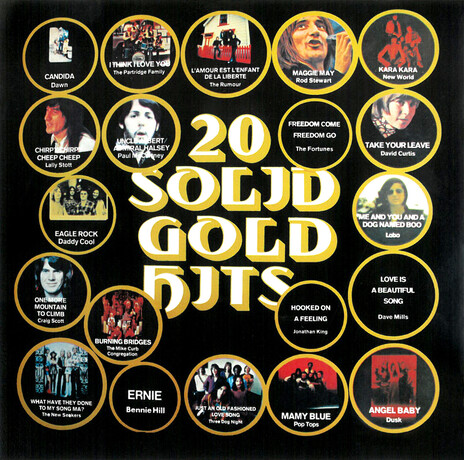
None of this stopped Curtis’s widespread appeal elsewhere. ‘Take Your Leave’ was one of three New Zealand selections included on the first 20 Solid Gold Hits album and, 30 years later – along with ‘Wheel of Fortune’ – was on NZ On Air’s Kiwi Gold Disc CD compilations. Over his two most famous years, according to figures held by PolyGram, Curtis amassed sales of 60,000 from his two albums and six singles.
breaking his voice at the peak of his fame was something of a relief for Curtis
While his voice breaking at the peak of his growing fame could have been disheartening or even devastating for someone so young, for Curtis it was somewhat of a relief.
“I was rapt!” he says. “I wanted to be a normal boy. Fortunately, I was good at cricket and that at least kept me normal, kept my feet on the ground.”
A love of cricket and athletics runs in the family. His late father Mike was a first-class Wellington cricketer, New Zealand under-23, and Wellington first-class selector, and the author of a handbook on wicket-keeping. Curtis was also a wicket-keeper. “For 10 years in the late-70s to mid-80s I played premier cricket in Auckland and Wellington, with one game for Auckland and a season for Auckland B. My wife Pauline was a New Zealand under-20 middle-distance champion athlete and record holder in the 800 and 1500 metres.”
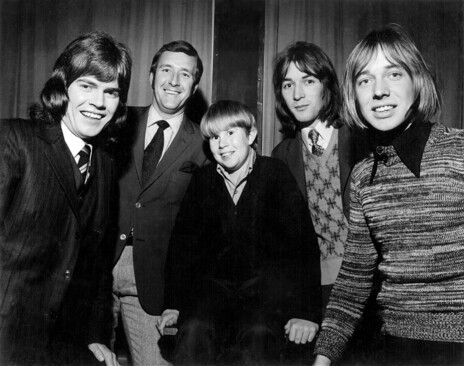
Curtis left school in the fifth form and began singing professionally, gigging and touring with Ebony and the Bulldogs Allstar Goodtime Band. As he told Jim Mora on RNZ Afternoons in 2009, he was “16 trying to be 26”.
He felt the time had come for him to seek some more formal music training and knowledge. At 17 he became a foundation pupil in the three-year music course at Wellington Polytechnic studying voice, guitar, and arranging. Notable singer and singing teacher Anthea Moller was his voice tutor and conductor/composer Bill Southgate – later Sir William – his tutor for arranging.
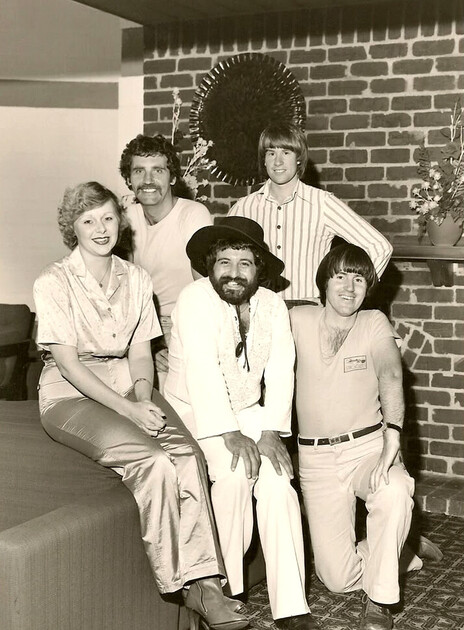
After Polytech, Curtis was gigging in and around Wellington. He had five days a week on voice and guitar at the Shaw Savill Lodge, as well as a residency for a couple of years at the Burma Lodge with Dave Luther from Hogsnort Rupert, Kevin Findlater (Bulldogs Allstar Goodtime Band) and others.
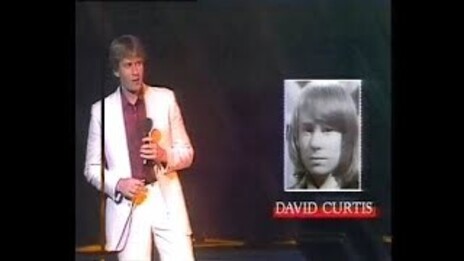
In 1982, he and wife Pauline moved to Auckland. This was a rich time for his career. Under Lew Pryme’s management he appeared in the New Zealand Opera Company’s production of Kurt Weill and Bertolt Brecht’s art piece, The Rise and Fall of the City of Mahagonny, directed by Raymond Hawthorne, and he was honoured as the rising star of the year (1983) by the New Zealand Entertainment Operators Association. Two years later he appeared in TVNZ’s 25 Years of Television programme, revisiting ‘Wheel of Fortune’.
While in Lew Pryme’s talent stable, Curtis had leading roles in music productions
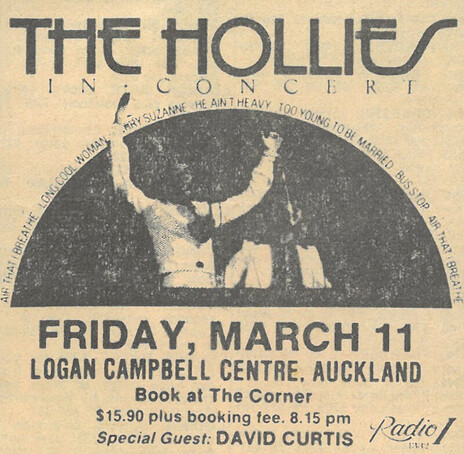
While in Pryme’s stable of professional singers (with Rob Guest and Derek Metzger) Curtis had leading roles in amateur operatic societies’ productions of Jesus Christ Superstar, Showboat and Grease, and he toured as the solo support act for international artists Leo Sayer, the Hollies, Richard Clayderman, the Troggs and the Irish Rovers. The Rovers made him an interesting offer.
“I toured [New Zealand] for three weeks with them. They were based in Vancouver, having moved to Canada, and offered me a job there. They’d taken out a lease on an Irish pub at Expo in Vancouver.”
He turned them down, choosing to focus on developing his career in other directions: in 1985 he and his wife moved to England. Cricket would be taking a back seat for a while.
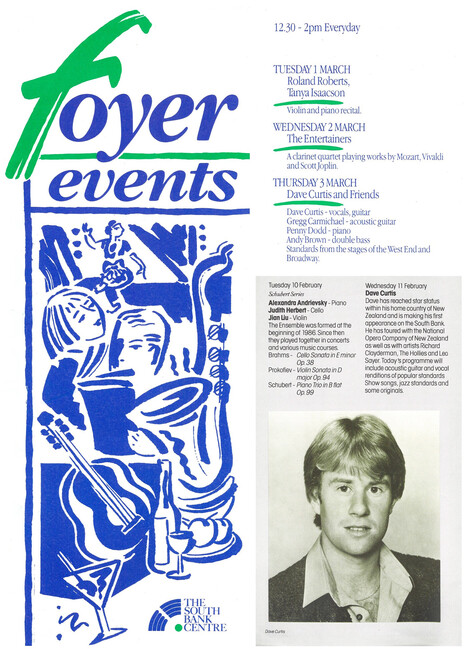
Based in London until the mid-90s Curtis had various solo residencies in small venues around Covent Garden in the heart of theatre world, West End, and he performed three foyer concerts in the Southbank Centre, an arts hub that is part of London’s storied Royal Festival Hall. He also worked with a number of prominent musicians.
“The owner of a place called Frère Jacques said he’d like to put me together for a residency with Greg Carmichael of the Grammy-nominated group Acoustic Alchemy, because he thought we’d work well together. And we did.”
Carmichael and his nylon-string stylings paired perfectly with Curtis’s steel-string guitar and voice, and the two worked together regularly from then on.
The family was growing. After their first son arrived, Pauline gave up her work in video production and the guitar-and-voice one-income situation meant times were considerably leaner. At one point Dave took up more steady work in a production show just off Piccadilly Circus. He also toured Britain for six months in Joseph and the Technicolour Dreamcoat produced by well-known theatre, film and TV production company Bill Kenwright Ltd.
Times were tougher and separation from home was beginning to set in for the couple. The appeal of raising their children in New Zealand with support from family and friends, coupled with the ache of homesickness, meant it was time to move back and they arrived back in Auckland in 1994.
David Curtis rekindled his musical profile in New Zealand and by the the late 90s was performing regularly in an acoustic trio with session guitarist Grant Ryan and jazz singer Beaver. They had concerts and gigs, including at SkyCity Auckland Casino, venues around the north, and residencies, including one at the former Iguacu Restaurant & Bar in Parnell. He lent his voice to jingles, such as those for Harvey’s Furnishings, Magic 91, Radio i, and Victoria Market, and in 2008 was featured among the 100 key moments in New Zealand music history highlighted in the documentary Rocked the Nation, which screened in prime time on the Media Works C4 television network.
Curtis stepped away from performing to focus on his family and his faith
Curtis stepped away from professional performance for several years to focus on the family and his growing devotion to Christianity and his local church. Still conisdering himself a singer-songwriter at heart, in his time away from the stage he built a broadcast-quality home studio where he can focus on writing and recording songs in the easy-listening folk, country, pop-crossover and gospel styles he enjoys most. He cites artists such as James Taylor and Joni Mitchell among his influences.
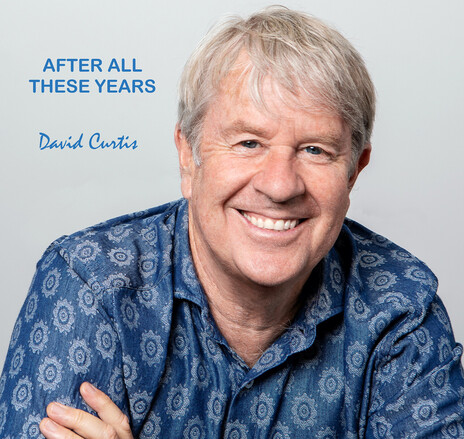
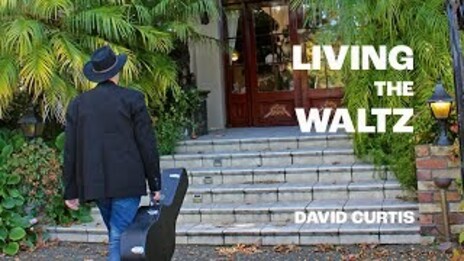
The studio time has been fruitful. The pandemic, strangely or fortuitously, opened interesting pathways: he could send tracks over to Nashville-based musicians to add their riffs and embellishments, and receive them back for mastering. His 2021 release, ‘After All These Years’ – a paean to wife Pauline to whom he has been married for 44 years – was completed in this way. The song spent five weeks in Britain’s Hotdisc Top 40 and his following release, ‘Living the Waltz’, was on the same chart for 13 weeks. Another track from 2022, Christmas Day (The First Day of Forever), features regular global airplay at Christmas time.
Witnessing his son Michael’s musical development has been a quiet revelation. Michael has a growing online presence and observing this underlined for Curtis the missing quotient in his own life, reminding him how much he enjoys expressing himself through music out of the studio – in live performance.
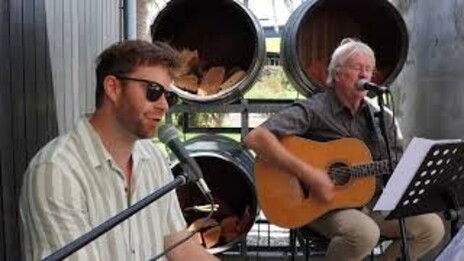
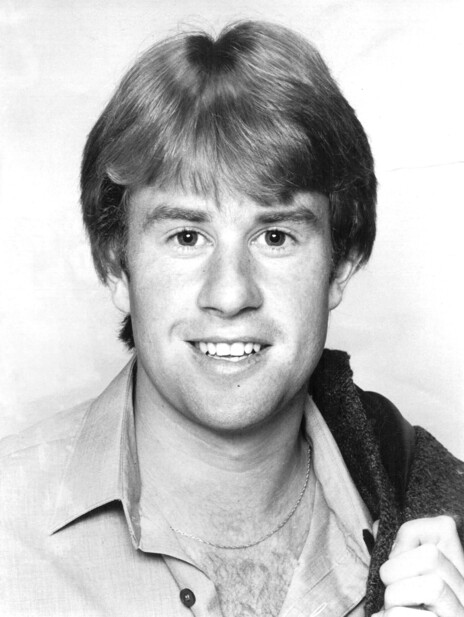
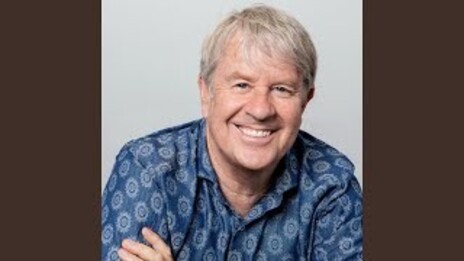
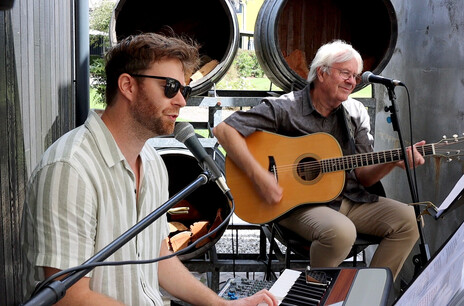
These days the father and son vocal-harmony duo – David on his Swiss-made Levinson steel string and Michael on his keyboard – can be found performing a mix of mellow covers and originals in various venues around Auckland. Fifty-six years on from becoming the country’s youngest ever hit-maker, the sweet Curtis voice can still be heard. The difference is, now there are two.