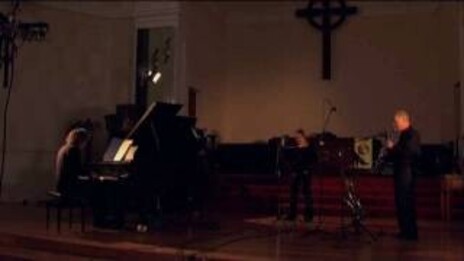
It was an epiphany that was to shape Hemmingsen’s professional ambitions and have a lasting impact on jazz education in Aotearoa.
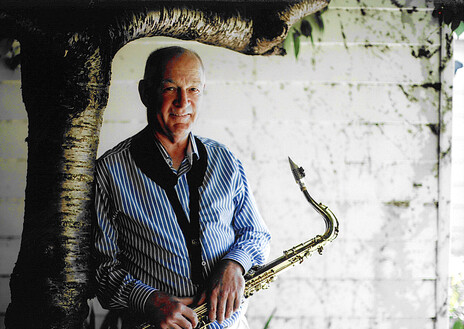
Born in Auckland in 1947, Colin was still in short pants when heard his uncle playing harmonica. He was inspired to take up the instrument, and Larry Adler was his first musical idol. His father, recognising Colin’s musicality, encouraged his son to take up the “liquorice stick” and commence formal lessons with respected Auckland teacher George Hopkins. Originally from the United States, Hopkins was the perfect teacher for Colin, emphasising analysis and attention to technique, and offering instruction on saxophone and bassoon as well as clarinet. Hopkins “had a real enthusiasm for teaching and for music,” said Colin. “He didn’t discourage me from playing jazz, which at those times a lot of English teachers would have done.”
As a teenager, seeing ‘Jazz on a Summer’s Day’ propelled him in a new direction
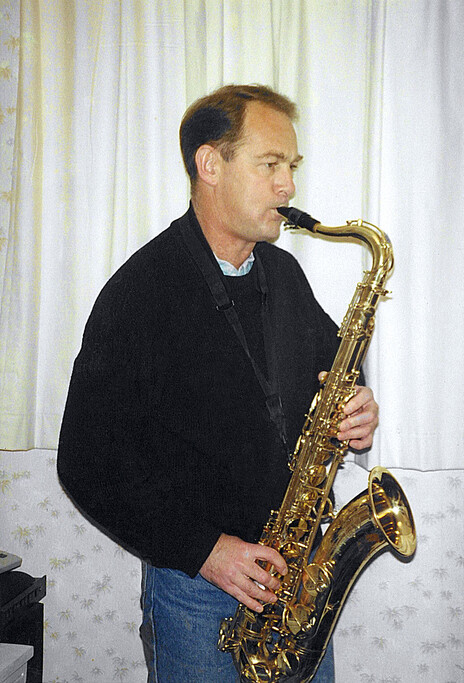
At Mount Roskill Grammar School, Colin played clarinet in the orchestra, but seeing the 1959 film Jazz on a Summer’s Day – filmed at the 1958 Newport Jazz Festival – propelled him in a new direction. Aged 16, he formed a Dixieland band with a few school mates: Col’s Combo. Soon he was performing with the group on saxophone as well as clarinet and getting to know jazz musicians around the city.
Deciding on a career in music, he attended the University of Auckland, majoring in clarinet and bassoon. He played bassoon with the Auckland Junior Symphony Orchestra and soon enough was enlisted by the Auckland Philharmonic Orchestra to fill the bassoon chair. There were also a few performances with the NZBC Symphony Orchestra and pit work for opera and ballet productions. When he had a night off, he played saxophone with local jazz musicians Bernie Allen and Tony Baker, and with television and radio orchestras recording with musicians including vocalist Tommy Adderley and pianist Mike Walker.
Mixing it all up – classical and jazz, pit work, radio and television recording – has been a pattern in Colin’s professional life. Composer and conductor Kenneth Young, who worked with Colin for many years in the New Zealand Symphony Orchestra (NZSO) called Colin “Gigs Hemmingsen” – because he was always on his way to another gig.
In 1970 Colin won a scholarship to Boston’s Berklee College of Music, then widely considered the pre-eminent jazz school in the world. After one semester, the modesty of the scholarship – covering fees but not living costs – and his placement in junior classes in which he was learning very little, prompted him to audition for the New England Conservatory (NEC) just around the corner from Berklee. Winning a fees scholarship and a generous stipend, he transferred to the NEC Masters programme majoring in bassoon performance. In parallel with his classical instruction at NEC, Colin took arranging classes with Thad Jones, studied theory with George Russell and played in the Conservatory Big Band under composer Gunther Schuller. While a student at NEC he also took freelance work with the Boston Philharmonic Orchestra and the Boston Opera and Ballet Orchestra, fitting in performances with a local jazz rock group when there were gaps in his schedule.
The passion for jazz education he developed in Virginia has endured across his entire career
After two years at NEC, Colin moved to Virginia Commonwealth University, in Richmond, VA, to play in their woodwind quintet and was given the opportunity to teach jazz. Colin loved the teaching and enjoyed having opportunity to put into practice the educational principles he had been thinking about. The passion for jazz education he developed in Virginia was to endure across his entire career.
During a particularly difficult tour in Europe with the quintet, Colin heard the NZBC Symphony Orchestra (now the NZSO) was looking for a bassoonist. Although he hadn’t intended to return to New Zealand, he sent an audition tape off anyway and was offered the position. He returned to the country at the beginning of 1974 to take up a role with the national orchestra, leaving for the post of Principal Bassoonist with the Auckland Symphonia in late 1975.
It was during this period that Colin’s commitment to music education really took root. He had taught private students for many years, but in 1974 began teaching improvisation to larger groups, at first with some workshops at the Wellington Musicians’ Club. In Auckland that work evolved into the Creative Music School which he established and ran with his wife Susan. Colin taught theory, improvisation and arranging in a programme that ran for about 18 months.
Without secure funding, and meeting resistance from some of the established Auckland jazz musicians – “They said ‘Who is this guy who thinks he can tell everyone how to play?’” – Colin was thinking about leaving for Australia when the contra-bassoon position became available with the NZSO. Returning to Wellington he quickly renewed links with local players and was soon performing regularly with musicians including pianist Kevin Clark and guitarist Martin Winch. He formed Cohesion (with Clark, Winch, bassist Russell Good and drummer Maurice Phillips) which recorded for Radio New Zealand, performed concerts and played a residency at The Last Resort Café on Courtenay Place. In his day job with the orchestra he rose from contra-bassoon to second bassoon, becoming principal bassoonist in 1980.
Somehow, Colin managed to find time to continue teaching jazz. He re-established his Creative Music School in Wellington, teaching from his home in Mt Victoria, a short walk from the Last Resort. In 1979 his unique capabilities as a respected performer in both the jazz and classical domains, coupled with his teaching expertise, saw him invited to teach improvisation to classical students at the Wellington Polytechnic. His contribution there, building as it did on the earlier work of Christopher Norton, was of foundational importance to what was to become New Zealand’s first tertiary jazz programme.
The national jazz clinics of 1980 and 1981 were pivotal to jazz education in New Zealand
A watershed moment for jazz education in New Zealand soon followed. In 1979 Colin attended a Jamey Aebersold jazz workshop in Australia and, along with a number of other local musicians, established the New Zealand Jazz Foundation to bring the Aebersold workshops to New Zealand. Simon Tipping, then head of music at the Polytech said, “The big thing in 1980 was the one-week National Jazz Clinic, with 12 jazz educators from America and over 100 participants from all over New Zealand. This was Colin and Susan's creation through their Creative Music School.”
Hosted by the Polytechnic and supported by the Department of Education, the workshops ran again in January 1981 and visiting artists included jazz luminaries such as Randy Brecker, Woody Shaw, John Scofield, as well as educators Jerry Coker and Dave Baker. The many local musicians and teachers who attended were inspired by the experience. The Jazz Foundation went on to establish the New Zealand Youth Jazz Orchestra which was an important part of the jazz education effort in the country for more than forty years.
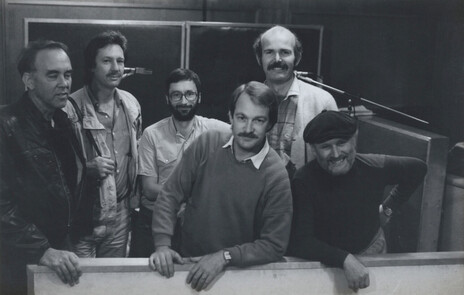
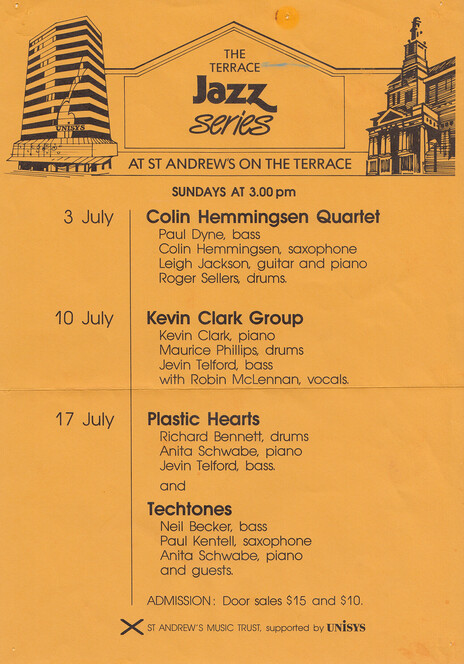
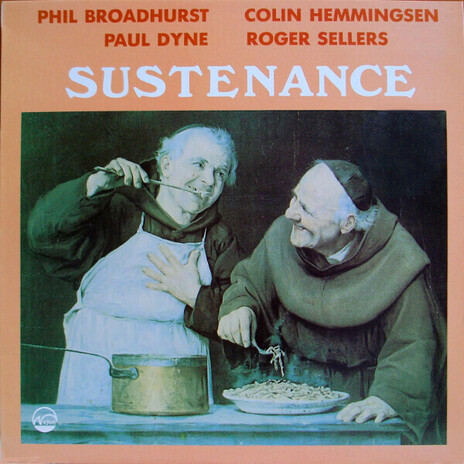
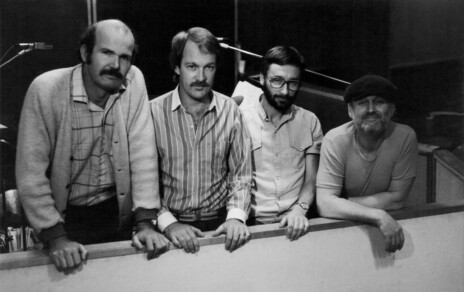
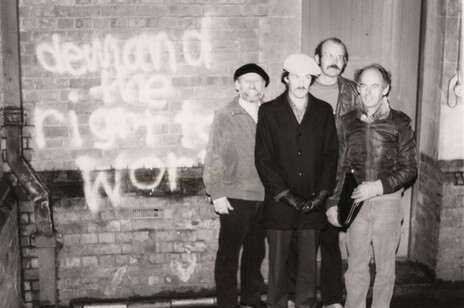
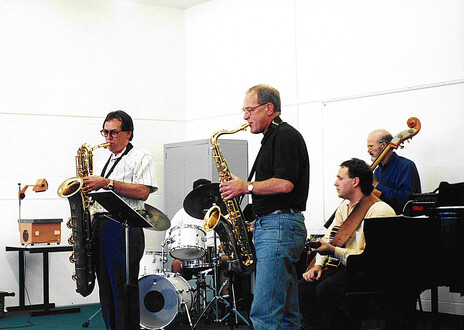
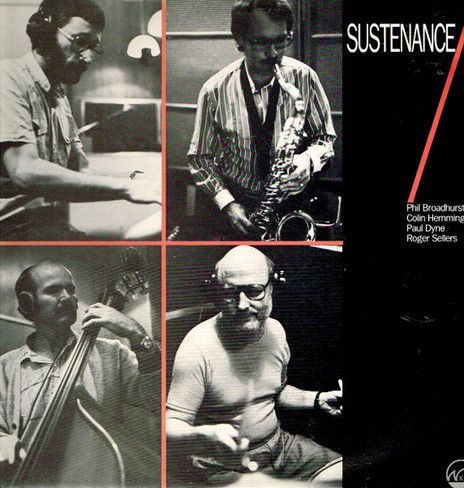
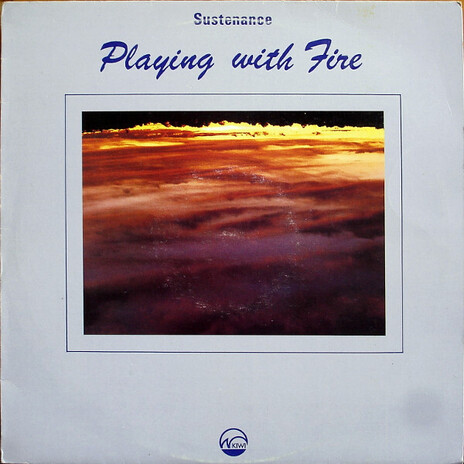
By the mid-1980s the Wellington Polytech was offering a dedicated jazz programme and Colin found himself juggling his growing teaching responsibilities with his NZSO commitments. And, of course, there were the gigs. He and pianist Phil Broadhurst were co-leaders of Sustenance, with bassist Paul Dyne and drummer Roger Sellers. The group was formed at the suggestion of RNZ producer Kevin Oliff and, while centred mainly on Broadhurst’s compositions, included music by the other members and was a thoroughly democratic outfit. Sustenance released four albums over the next 15 years, three of which were finalists for jazz album of the year, and in 1986 the group was selected to represent New Zealand at the Singapore Jazz Festival. Similarly close to the heartland of jazz was the music Colin recorded with the New Zealand Jazz Orchestra in 1982, led by his NZSO colleague drummer Bud Jones.
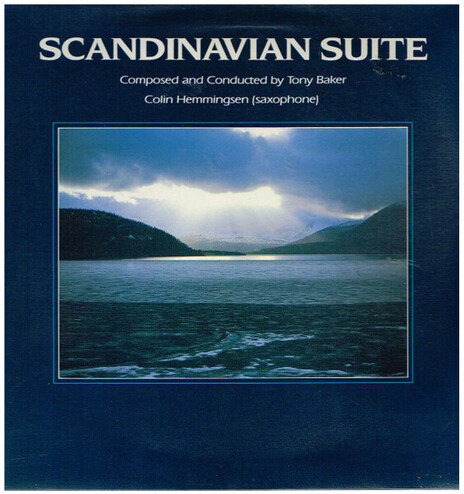
There were also projects that crossed over between jazz and classical music. Tony Baker’s Scandinavian Suite is exemplary in this regard; Baker’s lush orchestral writing offering a colourful backdrop for Colin’s saxophone solos. This crossover area was one he was to mine more thoroughly in the new century.
Colin continued full-time with the NZSO until 1993, when he stepped down to focus his energies on jazz. While he had loved his time playing the orchestral repertoire, he was aware of the cost it had extracted from his jazz career. “As a jazz player I’ve already suffered. Most jazz players work a lot, really hard – six hours a day is average. In the symphony, days would go by when I didn’t touch the sax.”
He did occasionally return to perform with the orchestra, notably when he guested as a jazz soloist alongside English saxophonist John Dankworth for the NZSO Pops concerts in 1993, 1995 and 1997.
without his NZSO commitments Colin could concentrate on his passion for jazz
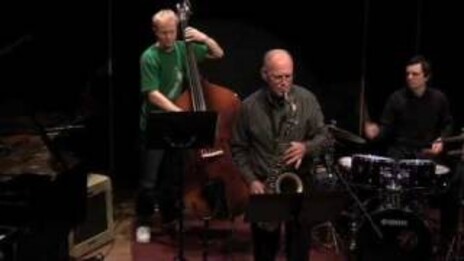
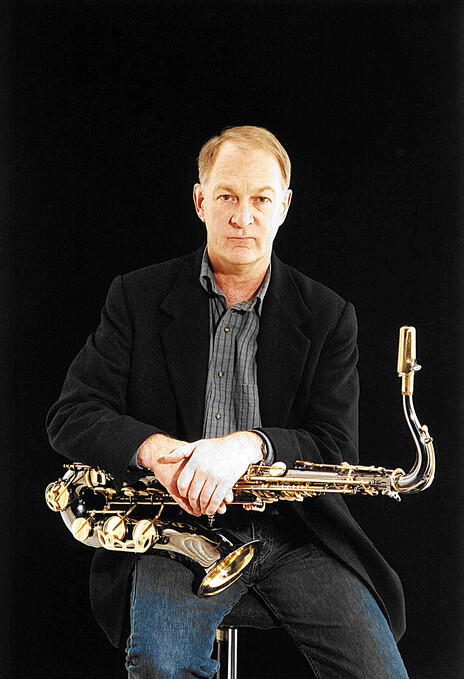
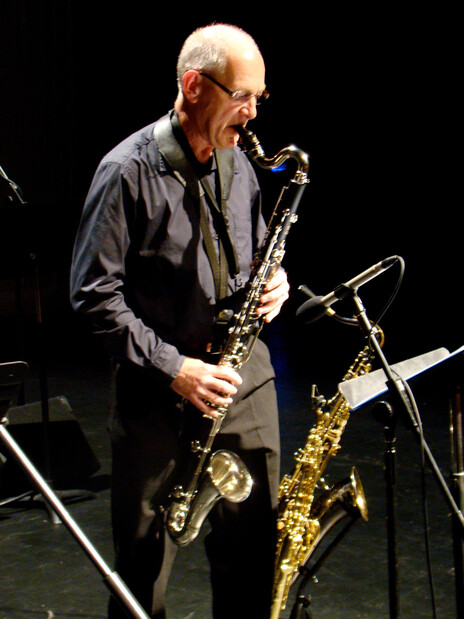
Over the years, the jazz studies pathway Colin had helped establish at the Wellington Polytechnic evolved into the jazz performance degree programme offered by Massey University and eventually a department of the New Zealand School of Music (NZSM) at Victoria University. In his role as a Senior Lecturer at the NZSM, he continued to teach improvisation and saxophone, but without his NZSO commitments was able to focus more of his energy on performing and recording music that matched his passion for jazz in all its myriad forms.
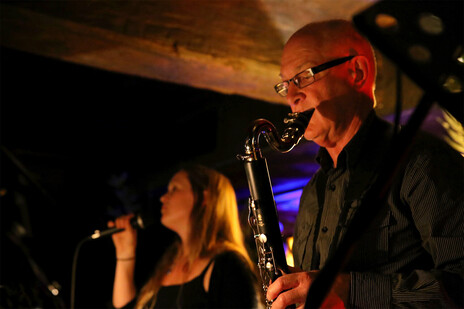
Colin’s fondness for contemporary fusion styles found expression with guitarist Leigh Jackson’s Parallax project, for which he played saxophones and Electronic Wind Instrument – a breath-controlled synthesiser. He was also excited by the music he played and recorded with Kevin Clark. Colin was a life-long fan of Wayne Shorter’s Native Dancer, so the Latin and Afro-Cuban-styled music on Kevin’s albums Once Upon a Song I Flew and Zahara were right up his alley.
He was the featured soloist on albums of chamber music that incorporated jazz approaches – Transformations and Sketches with music composed by Mike Nock, Phil Broadhurst and John Rae – and played on three albums of poetry set as jazz songs with pianist Norman Meehan and vocalist Hannah Griffin: Sun Moon Stars Rain, Buddhist Rain, Making Baby Float. He also worked with composer Dave Lisik on recordings that fall somewhere between jazz and electro-acoustic music. Curse of the Queen’s Diamond includes Richard Nunns’s taonga pūoro as well as standard jazz instruments, but on Fate and the Processor the sound-world is a long way from the republic of jazz: overdubbed saxophones and bassoon subjected to extensive studio manipulation in a beguiling colloquy of sounds.
Colin’s own albums during this period also explored the intersections between his art music and jazz interests. 2005’s Rite of Swing, while in some ways a straightforward jazz album, featured Colin performing jazz on bassoon. And on Quintessence, he presented pianist Daniel Hayle’s third-stream compositions (to use Gunther Schuller’s formulation for music that draws equally from jazz and classical traditions) to frame his bassoon playing in a jazz-adjacent context.
Colin retired from teaching in 2015 and in 2016 was awarded an MNZM for services to music. While the music he recorded and performed was memorable and sometimes exquisitely beautiful, it is probably as an educator that he made the greatest mark on the musical landscape in Aotearoa. One former student of Colin’s told me about having Colin as a teacher in the second year of his jazz performance degree. He described being in Colin’s classes as a little like being in the army: there was so much required of them, Colin cracking the whip every week to make sure they had done the work he demanded of them. The student said “I hated it at the time, but now I am so glad I had to do it.” Colin Hemmingsen has trained three or four generations of New Zealand jazz players, and the musical landscape in Aotearoa has been immensely enriched by his work.
--
Selected Discography
Recordings as leader / co-leader
Sustenance (Kiwi, 1982)
Sustenance – Playing with Fire (Kiwi, 1985)
Sustenance – Sustenance 3 (Kiwi, 1987)
Sustenance – Food for Thought (Southbound, 1997)
The Rite of Swing (Rata Records, 2005)
Transformations (Colin Hemmingsen Music, 2011)
Sketches (Colin Hemmingsen Music, 2011)
Quintessence (Colin Hemmingsen Music, 2011)
Triple Time (Ode, 2012)
Recordings as sideman / featured soloist
The New Zealand Jazz Orchestra: Original Jazz Compositions (Kiwi, 1982)
Tony Baker: Scandinavian Suite (Tartar, 1985)
Kevin Clark: Once Upon a Song I Flew (KCM, 2003)
Leigh Jackson: Parallax (Lydian Music, 2004)
Kevin Clark: Zahara (KCM, 2007)
Norman Meehan: Buddhist Rain (Rattle, 2010)
Rodger Fox’s Wellington Jazz Orchestra: Journey Home (TBone, 2011)