In April 1964 New Zealand, like much of the world, was in the grip of Beatlemania. Undeterred by the hysteria surrounding the British Beat Invasion, Basil Peterkin, Rodney (Dody) Potter, Brian McLaren and an unidentified rhythm guitarist played a handful of gigs at a venue that – much like the guitarist himself – nobody can now remember.
While audiences everywhere were going bananas over Liverpool-inspired beat groups, ths quartet instead gravitated toward US harmony acts such as The Beach Boys and The Four Seasons. To reinforce that US flavour, they christened themselves The Dallas Four.
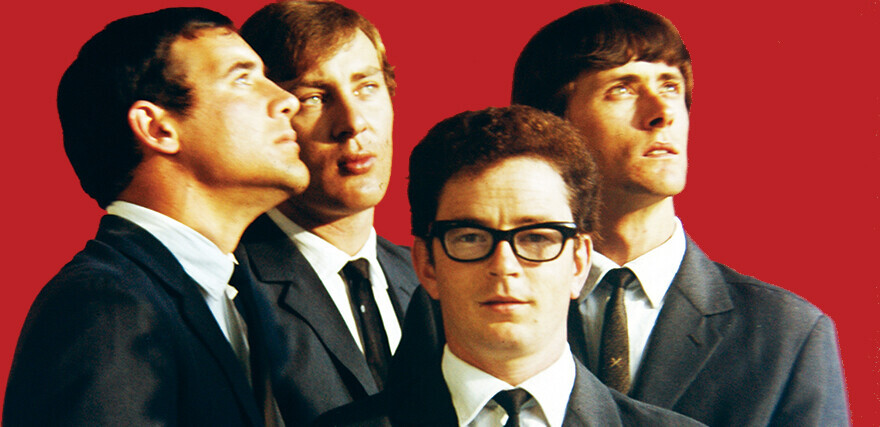
The Dallas Four (L-R): Jim Ford, Dody Potter, Jimmy Ellyett, Basil Peterken.
There was, however, one glaring flaw in their ambitious plan to master four-part harmony: none of them had ever sung before in public. Like most rock’n’roll musicians of the pre-1964 era, they all came from instrumental bands.
After only a few performances, Brian McLaren and the now-forgotten rhythm guitarist departed. Basil and Dody responded by recruiting drummer Jimmy Ford and guitarist Al Dunster from Darryl & The Demons, for both their musical and vocal potential.
Lead guitarist Dody Potter painstakingly arranged harmony charts for each member; he had two falsettos, a baritone, and a bass voice to work with. Potter had previously played in brass bands during his school years and begun his career at Wellington’s Mexicali Club alongside future Quincy Conserve vocalist Malcolm Hayman. Rehearsals were initially conducted separately before the group eventually combined as a cohesive vocal unit.
The Dallas Four soon lost count of the hours spent rehearsing, but the hard work paid off quickly. After only two months – and before the new line-up had even performed publicly – they had a chance meeting with Auckland nightclub owner Fred McMahon, who immediately signed them as the resident act for his new inner-city venue, The Platterack.
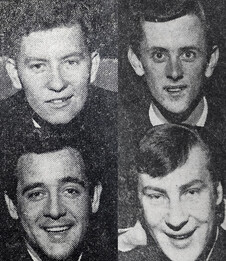
The Dallas Four, 1964. Clockwise from top left: Al Dunster, Basil Peterken, Dody Potter, Jim Ford
From the outset, the group became a major attraction, quickly turning heads and raising eyebrows. By the end of the year, under the headline “Novelty: They Sing In Tune” Auckland Star music columnist John Berry wrote: “In an age of outlandish pop gimmicks, shaggy hair and Liverpudlian beat, a group of Aucklanders have come up with one of the most novel ideas of all – they set out to sing in tune.”
Berry praised the group for rejecting the standard Mersey-style formula in favour of tightly arranged vocal harmonies.
With Graham Dent now managing them, the first half of 1965 became a whirlwind for the group. It began with a two-week North Island tour on Peter Sinclair’s Let’s Go show before expanding into what was intended to be a four-month stint in Sydney, Australia. Regular appearances had been secured on the Miller Hotel circuit along with television spots on the popular Tonight Show.
However, a maze of logistical and management problems forced the band to return to New Zealand earlier than planned. Shortly after arriving home, they entered Eldred Stebbing’s studio to record their debut single for the Allied International label, ‘Silence Is Golden’, backed with their impressive version of ‘Louie Louie’.
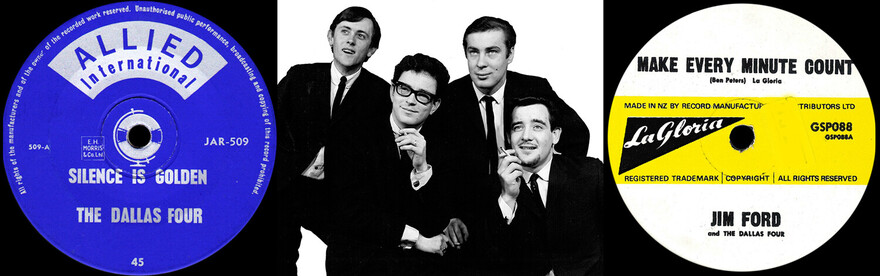
The Dallas Four: Silence Is Golden (Allied International, 1965); JIM FORD and the Dallas Four: Make Every Minute Count (La Gloria, 1966)
‘Silence Is Golden’, originally an album track for The Four Seasons, proved to be an inspired choice. It would remain in the Dallas Four’s repertoire for the rest of their career.
Their version sold strongly – particularly in Auckland – and the group quickly returned to the studio to record a follow-up. At the time, The Byrds were the latest international sensation, and the group were captivated by their immaculate harmonies. They selected Pete Seeger’s ‘The Bells Of Rhymney’, one of the standout tracks from The Byrds’ Mr. Tambourine Man album which had only recently been released in New Zealand.
Following the session, catalogue numbers were assigned and test pressings prepared. Unfortunately, before the single could be released, the NZBC banned The Byrds’ album version for being “too political”. Allied International promptly shelved The Dallas Four release as well – despite the falsetto-heavy B-side ‘Thou Shalt Not Steal’ being strong enough to stand on its own merits.
Also recorded during the session was ‘Don’t Worry Baby’, the Beach Boys track, although it remained unreleased until 2022. Remarkably, The Dallas Four never recorded for Allied International again.
Ironically, prior to ‘Silence Is Golden’, Allied had released only six local singles across the previous two years – four of them by The Four Fours. Yet from mid-1965 onward the label became a major force within the New Zealand recording industry, making its decision not to continue with The Dallas Four all the more puzzling.
During the fallout surrounding the aborted ‘Bells Of Rhymney’ single, Al Dunster left The Dallas Four to join Dave Miller & The Byrds. Miller later said, “We played a number of times with The Dallas Four – first at The Shiralee and later at The Platterack – and the two bands got along really well. Al Dunster loved our tougher R&B approach and would quietly tell me that if a position ever opened up he’d love to join us. A few months later Kevin and John O’Neill left our group, so Al became a valuable member of The [New Zealand] Byrds. During his time with The Dallas Four he had become an exceptional backing singer, and he certainly made a difference to our sound.”
Fortunately for The Dallas Four, the popular Wellington group The Premiers had recently disbanded, leaving keyboardist Jimmy Ellyett (Elliott) available. His arrival marked a significant evolution in the group’s sound through the addition of keyboards.
Seemingly unfazed by the upheaval, The Dallas Four secured long-term residencies at The Platterack and the Top 20 clubs. By this stage they were performing six or seven nights a week and effectively living and breathing music. Sharing a flat in the Hieber Building halfway down Dominion Road – which quickly became party central – allowed the band to rehearse constantly while ensuring they arrived at gigs together and on time.
The Platterack enforced strict penalties for lateness or incomplete line-ups, and the discipline helped sharpen the group’s professionalism.
In mid-1966 the La Gloria label was reactivated in conjunction with Viking Records, after nearly a year of inactivity following the breakup of the Howard Morrison Quartet. Howard Gable was appointed A&R manager, having already signed Wellington R&B outfit Tom Thumb and singer Peter Caulton.
One night in late 1966, Gable caught The Dallas Four performing at The Platterack and immediately signed them. For the group, it felt like being rediscovered after spending so long under the radar during their relentless “head down, bum up” residency work.
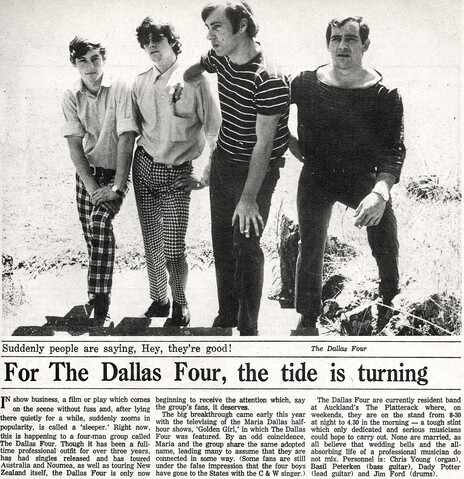
The Dallas Four in Playdate, April 1967
The renewed momentum prompted Playdate magazine to feature the band in its April 1967 issue under the headline “For The Dallas Four, The Tide Is Turning”. The article compared the group to “a sleeper movie” – one that slowly builds into a major success after initially slipping beneath the radar.
The group began 1967 with a whirlwind hotel tour of New Caledonia and Tahiti, where they were treated like visiting rock royalty. Jim Ford later recalled: “We loved it over there and the locals loved us. We had great crowds at every gig – if they’d had their way they would have kept us there permanently. We even did a television show in a studio about the size of an average bedroom. We were virtually sitting on each other’s laps lip-syncing and pretending to play our instruments with the camera only two feet from our noses – heaven knows what it looked or sounded like.”
Because of La Gloria’s close association with Viking Records – and perhaps because both artists shared the adopted “Dallas” surname – the group appeared on the Maria Dallas television special Golden Girl. The programme celebrated her recent Loxene Golden Disc Award success with the Jay Epae composition ‘Tumblin’ Down’. Screened on 19 February 1967, the special also featured Jay Epae, while The Dallas Four performed Maurice Williams’ classic, ‘Stay’. (In the clip above, The Dallas Four can be seen performing ‘Stay’ from 4'51".)
Shortly afterwards and two years after their debut release, the group issued ‘That Man’s Got No Luck’ backed with ‘I’m So Lonely’ on La Gloria. Premiered on 2ZB’s Sunset Show and later performed on the television pop programme C’mon on 12 February 1967, the single received strong nationwide airplay.
‘I’m So Lonely’, written by Basil Peterkin and Dody Potter, became the group’s first – and ultimately only – original composition to be recorded. Howard Gable later reflected: “I did some extra tracks when we recorded ‘That Man’s Got No Luck’. There was talk of an album, but as I recall there was tension within the group over musical direction. Not long afterwards I left La Gloria to work for HMV in Wellington producing local acts, including Mr Lee Grant, so I lost track of what became of the Dallas Four sessions.”
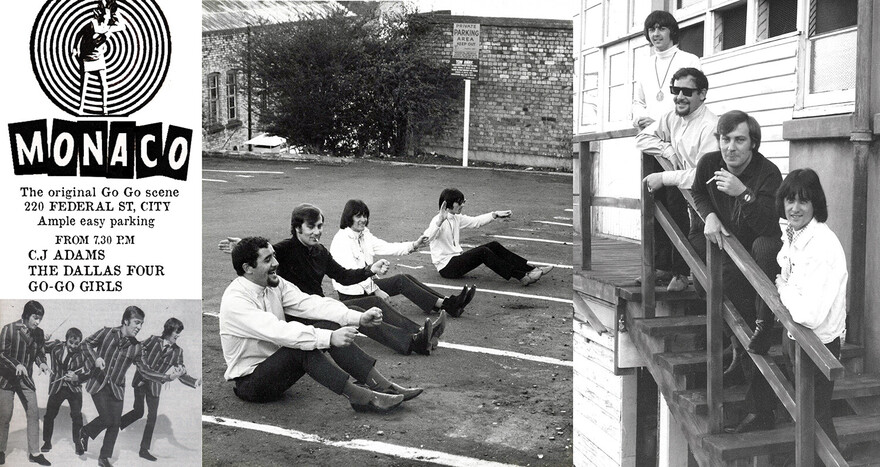
Carpark capers: The Dallas Four at the Monaco, Auckland.
Following the unreleased album sessions, Jimmy Ellyett left for Australia, eventually finding work with legendary Australian rocker Johnny O’Keefe. He was replaced first by Chris Young and later by Graham Gill from the Auckland group The Rogues.
Gill vividly remembered the pressure of joining the band: “The guys gave me tapes with Jimmy’s harmony parts isolated, so I could learn them. I had two weeks to master everything and, just to add to the pressure, they told me I also had to play keyboards – despite being a rhythm guitarist who had never played keyboards before. I ended up hiring Chris Young’s keyboard rig for the duration of my time in the band.”
He joined just as the group commenced a residency at Phil Warren’s Monaco club and began work on their next single, ‘Make Every Minute Count’.
Released in June 1967 credited to JIM FORD & The Dallas Four, the single immediately caused internal friction. The oversized, uppercase billing given to Ford’s name enraged the rest of the group, despite Ford himself blaming the label.
He later recalled, “Talk about World War Three. My name was in huge bold letters and underneath in tiny print was ‘and The Dallas Four’. We’d always had a Four Musketeers philosophy – all for one and one for all – so the others were furious. I was mortified too. We barrelled up to the La Gloria office, they were in disarray and on the cusp of folding, Howard Gable had already left. I can’t remember who was holding the fort but whoever it was got it from me with both barrels which appeased the other guys in seeing how upset I was. They tried to tell us that the latest rage was to have the singer’s name out front, which in mid-1967 was bullshit and showed how out of touch they were, and were floundering after Howard left.”
The dispute exposed growing cracks within the group. The label folded shortly afterwards, shelving plans for a Dallas Four album that had been in progress since late 1966. Had it been released, it would have emerged during the height of the psychedelic Summer of Love – by which stage its harmony-heavy material may already have sounded stylistically out of step.
Despite the turbulence, the Monaco residency became one of the group’s defining periods. Performing to a younger audience than they had previously attracted, The Dallas Four entered what many members later regarded as their golden era.
--
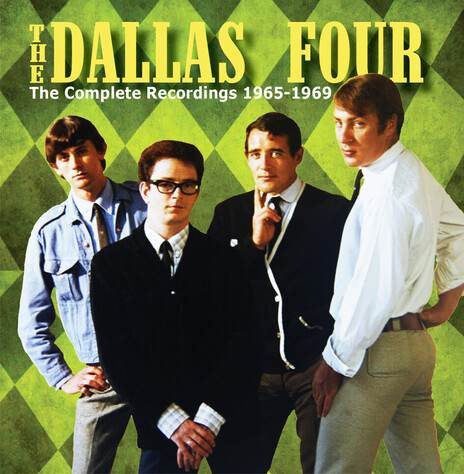
The Dallas Four: The Complete Recordings 1965-1969 (Frenzy, 2021)