Continued from The Dallas Four: part 1
By mid-1967 the Dallas Four had amassed a repertoire of more than 600 songs and prided themselves on being able to perform virtually anything on demand. One of the Monaco’s Friday-night highlights saw the group performing that week’s entire national Top 20 live on stage.
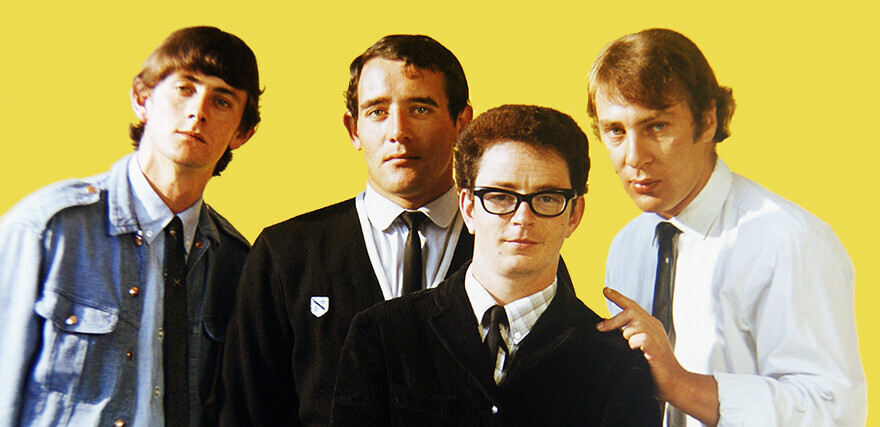
The Dallas Four, 1967 (L-R): Basil Peterken, Jim Ford, Jimmy Ellyett, Dody Potter.
Allied International attempted to capitalise on the group’s growing popularity by reissuing ‘Silence Is Golden’ in direct competition with the hit UK version by The Tremeloes. While The Tremeloes ultimately dominated the charts, the Dallas Four version received strong regional airplay and was briefly bracketed alongside the British hit on several local charts. The group appeared on the C’mon TV show on 3 June 1967, where host Peter Sinclair announced “this is going to be an exciting race between the Tremeloes and The Dallas Four”. (The Tremeloes’ version debuted on the NZ Listener’s “Pop-O-Meter” chart on 22 June and climbed to No.1.)
The group also became television favourites, appearing eight times over two seasons on producer Kevan Moore’s hugely popular C’mon series – more than any other non-regular act.
Moore later praised their professionalism and versatility: “The Dallas Four could handle everything from jazz to soul to current pop hits. Nothing was ever a problem for them. The cast and guest artists would all meet on the Monday morning prior to each show on the following Saturday. I would assign each artist with the songs that they were to practice during the week before performing it on the following Saturday evening, which was always met with grumbles by some – ‘I don’t like that song’, ‘Oh can I swap with someone’ – yes, I heard it all. The Dallas Four never gave me any grief and treated every song as a challenge and because they were always ahead of the game – nine times out of 10 they already knew the song and were already performing it.”
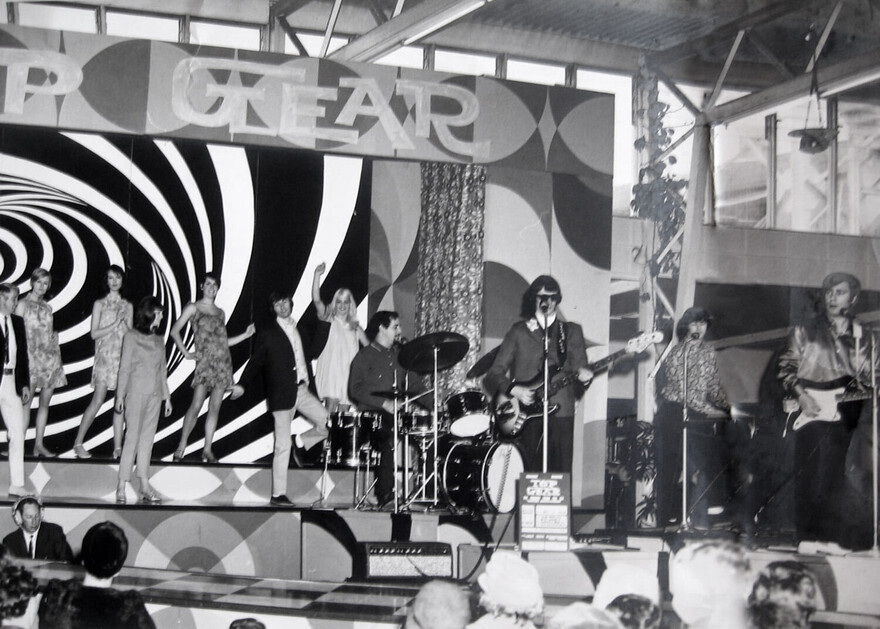
The Dallas Four performing at the Mod A-Go-Go fashion show, Farmers rooftop, Auckland. - Grant Gillanders Collection
Their adaptability made them the obvious choice when Moore later produced the lavish Mod A Go-Go fashion spectacular for the Farmer’s Trading Company in their Auckland department store. “This was usually the sort of thing that I would produce remotely and delegate someone to produce the day to day stuff,” he recalled. “Farmer’s weren’t interested in that scenario, they were throwing a crazy amount of money at the project and insisted that I gave them my full 100% commitment. They wanted the show to be just like the television series with fast-paced snippets of songs by different artists, while the models strutted on and off the stage. Along with the C’mon go-go girls I chose Gwynn Owen, Ray Woolf and Lew Pryme as the solo performers. For the backing band there was really only one option – The Dallas Four. I needed a band that could play everything from ‘The Girl From Ipanema’ to ‘Purple Haze’ and switch between styles within a nanosecond.”
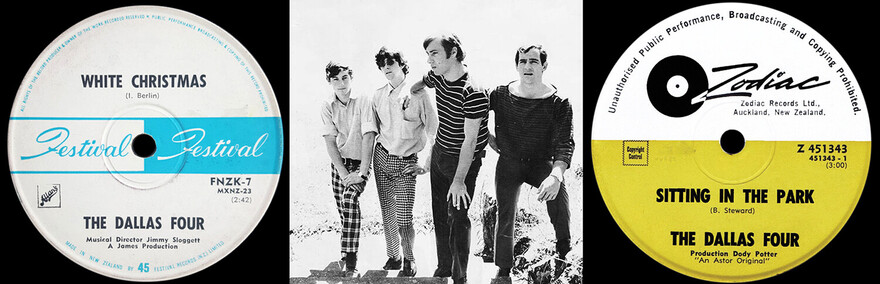
The Dallas Four: White Christmas (Festival, 1967); Sitting In the Park (Zodiac, 1969)
The Dallas Four closed out 1967 with the release of their fourth single, ‘White Christmas’ backed with ‘Toe-Hold’. The record reflected a growing trend in American pop, where groups such as The Happenings and Harpers Bizarre were successfully reviving standards from the 1920s and 1930s with modern brass-driven arrangements and layered four-part harmonies.
Produced by Jimmy Sloggett, The Dallas Four applied the same formula to Irving Berlin’s perennial classic ‘White Christmas’. While the single briefly entered the Auckland Top 20, the seasonal nature of Christmas releases gave it only a short commercial shelf life and it disappeared from the charts before Christmas Eve arrived.
The B-side, however, offered a clearer indication of where the group’s sound was heading as 1967 rolled into 1968. ‘Toe-Hold’, originally written by Isaac Hayes and David Porter for US soul singer Johnnie Taylor, leaned far more heavily into contemporary soul and R&B influences. The songwriting credit on the local label was cheekily attributed to “J. Ford” – either an honest mistake or Jimmy Ford quietly having some fun at everybody else’s expense.
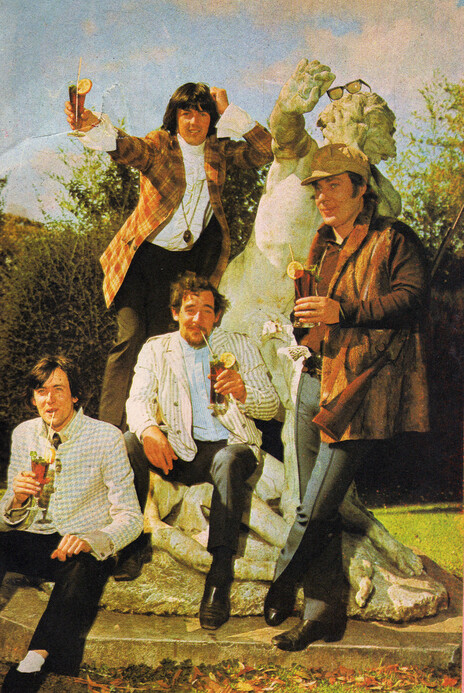
The Dallas Four in a Tea Council iced tea promotional campaign. - Grant Gillanders Collection
By 1968, the now-defunct Tea Council of New Zealand had embarked on an ambitious campaign to market tea to younger audiences in response to declining sales. Earlier that year the organisation had even helped keep pirate broadcaster Radio Hauraki afloat by advancing $20,000 in advertising revenue after the station’s vessel had twice been grounded during severe storms.
The campaign culminated in the nationwide Tea Rave band competitions, staged in conjunction with Radio Hauraki and promoter Phil Warren. Based loosely around Benny Levin’s popular “Battle of the Bands” format, the competition promised the winning act a trip to the United States for a proposed World Tea Rock Championship along with the possibility of recording opportunities overseas.
Regional heats in Christchurch and Wellington led to a grand final at Auckland Town Hall on 7 September 1968, where 23 Auckland groups competed alongside Wellington winners Dizzy Limit and Christchurch favourites The Fred Henry.
The Dallas Four’s performance slot fell around 5pm, and the Monaco faithful turned the occasion into a spectacle of their own. Fans formed a guard of honour stretching from the Monaco Club in Federal Street down to Cook Street as the band and their helpers carried equipment the 300 metres to the Auckland Town Hall stage entrance.
Because of the group’s close association with Phil Warren, many competing acts assumed The Dallas Four were favourites to win along with Wellington’s Dizzy Limit, although Christchurch contenders The Fred Henry were also highly regarded and were a resident band at Warren’s Monaco club.
In the chaos of a 12-hour marathon featuring constant equipment changes and hurried performances, technical disasters were inevitable. Graham Gill later remembered: “As we launched into our first number, I realised immediately that my keyboards weren’t working. I was down on my hands and knees following a maze of cables and plugs before discovering the keyboard lead hadn’t been pushed in properly. I fixed it and jumped back to my feet just in time for the second song.”
Despite the mayhem, the group’s professionalism proved decisive. Jim Ford later recalled tailoring the set to suit the judging panel: “Most of the younger bands were playing heavy blues and R&B material, but we stuck to a tried-and-true mix of pop standards and Motown covers. We were probably the most experienced act there. The judging panel included Radio Hauraki DJ Paul Lineham who was approximately our age, the CEO of the Tea Council who was about 100, and a Wellington journalist that we didn’t know but looked about my dad’s age.”
The strategy worked. The Dallas Four were announced winners shortly before they were due back at the Monaco for a midnight to 4am shift. Ross Laredo of The Fred Henry later conceded: “Coming from Christchurch, we were hugely impressed by The Dallas Four. We thought they deserved to win.”
During 1968 the group also expanded its live act by featuring rising soul vocalist Leo de Castro in two extended floor-show segments each evening. Already popular at the Monaco, The Dallas Four became an even bigger drawcard during De Castro’s stint. Weekend crowds routinely stretched out the door and around the corner.
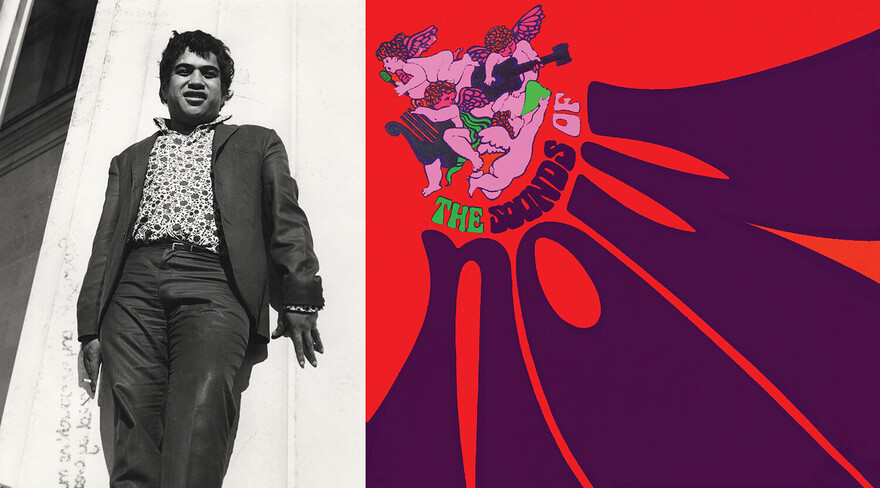
Left: Leo de Castro; at right, The Dallas Four appeared on The Sounds Of Now, a compilation LP funded by Fanta
Jim Ford later described De Castro in glowing terms: “Leo was the best soul singer I ever heard – period. I knew someone would eventually come along and whisk him away to bigger things.”
Graham Gill admitted that the decision to feature De Castro had initially divided the band, although Jimmy Ford believed it would broaden their appeal – which it ultimately did.
Robert “Dick” Roberts of The Troubled Minds later reflected: “The Dallas Four’s harmonies alone were incredible, but when Leo de Castro sang with them, you just wanted to cry. We eventually took over their Monaco residency in 1968, and boy were they a hard act to follow.”
Concerned that the promised international Tea Rave finals might never happen, Jim Ford controversially negotiated to exchange the group’s overseas prize for studio recording time. Phil Warren subsequently arranged for The Dallas Four to record tracks for The Sound of Now, a proposed compilation series featuring contemporary hits performed by local artists, funded by Fanta.
The group emerged as standout performers on the first volume with versions of ‘Elenore’ by The Turtles and ‘Hush’ by Deep Purple. However, the decision deepened internal tensions. Some members viewed Ford’s actions as sabotage, believing he had sacrificed an opportunity to compete internationally. Ultimately Jim’s intuition appeared correct as the proposed World Tea Rock Championship never eventuated.
Without Ford’s knowledge, Basil Peterkin and Dody Potter approached Eldred Stebbing at Zodiac Records to arrange another single. The resulting disc, ‘Sitting In The Park’ backed with ‘Rag Doll’, became The Dallas Four’s fifth and final single.
Stebbing brought in Mike “Spike” Walker to perform the dramatic church-organ introduction at St Matthew’s Church in central Auckland. Ford only discovered the single existed once it had already been released. “I always suspected some of the guys still held a grudge over the billing on ‘Make Every Minute Count’,” Ford later said. “Anyway, I thought it sounded terrible – and they butchered ‘Rag Doll’ on the other side – a nothing single, especially that funeral march intro. Looking back though, it really was the beginning of the end.”
Around the same time, the group was offered a lucrative year-long residency at the Hong Kong Hilton. The offer was declined and ultimately taken up by Peter Nelson, along with ex-Ray Columbus & the Invaders members Billy Kristian and Wally Scott, as Peter Nelson & Renaissance.
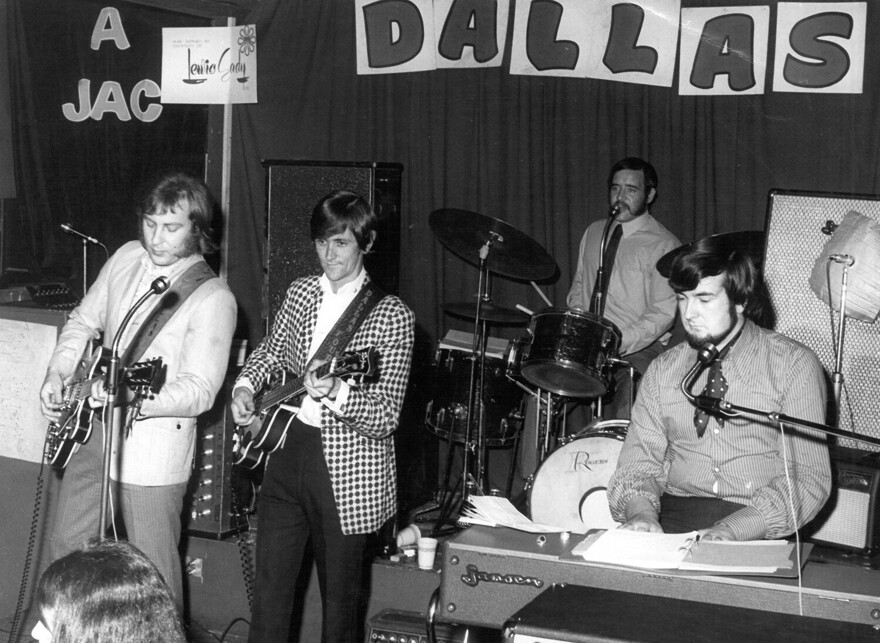
The Dallas Four, 4 December 1968: Basil Peterken, Dody Potter, Jim Ford, with new member Bob Smith on a Jansen keyboard.
By late 1968 the relentless pace, internal tensions and years of living in close quarters had begun taking their toll. Graham Gill eventually decided to leave the band and return to a more stable life outside full-time music. “The cracks were starting to show,” Gill later admitted. “Basil had hinted he’d had enough, and I made it clear that if Basil left, I’d probably follow.”
Gill handed in his resignation as he later recalled, “The group had some great gigs coming up over the Christmas break including a week at Mt Maunganui, which I was looking forward to but, unbeknownst to me [keyboard player] Bob Smith had approached the band for any opportunities and as insurance they had already auditioned him so he was ready to jump in straight away. It wasn’t the way that I wanted it to end it, but so be it, I gave Chris Young back his keyboard, which had been a nice little earner for him – and that was me done with being a full time musician.”
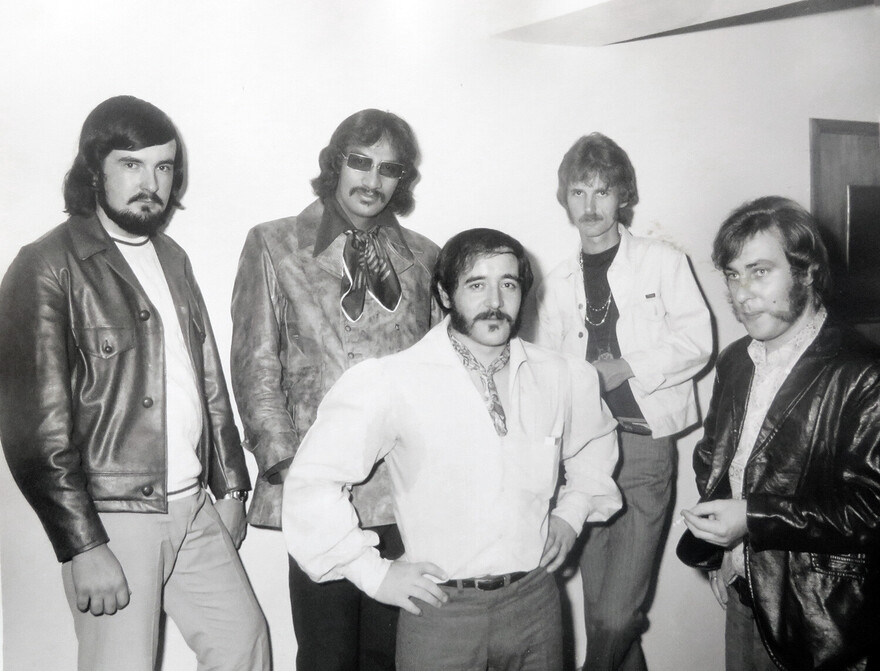
The Dallas Four, left to right: Bob Smith, Sonny Day, Jim Ford, John Kristian, Dody Potter. - Grant Gillanders Collection
The final version of The Dallas Four quickly became a revolving-door affair. Basil Peterkin soon departed and was replaced by John Kristian, formerly of The Action. Other short-lived residencies followed at clubs including the Tabla, the Crypt and the Montmartre. Sonny Day became a member of the group during this hectic period and was a popular drawcard during his short stint with the band.
As original members gradually drifted away, the group increasingly became an interchangeable collective of working musicians rather than a cohesive unit. By the time Dody Potter departed, Jimmy Ford was the only founding member remaining.
Ford later reflected: “In the end we weren’t really a group anymore – just a collection of musos who could step in and play as The Dallas Four depending on who was available.”
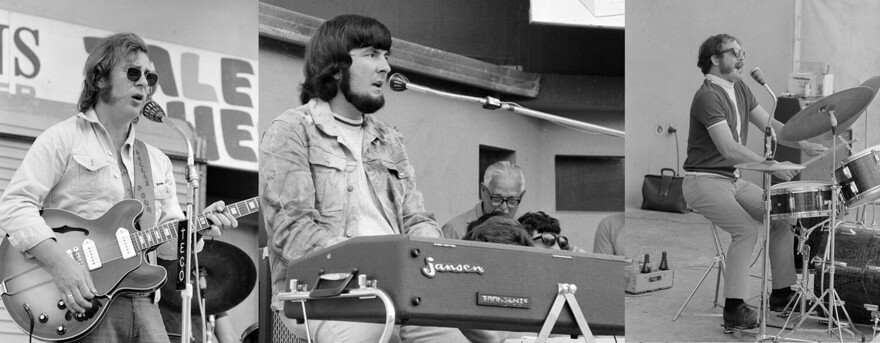
Three of the Dallas Four: Dody Potter, Bob Smith, Jim Ford. - Tauranga Photo News
What had once been one of New Zealand’s most disciplined and admired live acts slowly disintegrated. If the name “Dallas Four” had already sounded old-fashioned in 1964, by the beginning of the new decade it seemed positively prehistoric. Eventually, the remnants of the band evolved into a new outfit called Karma, which would go on to release three singles on Zodiac Records during 1972 and 1973.
On 24 May 1991, The Dallas Four reunited for the Monaco Reunion at the Mandalay Ballroom in Newmarket, Auckland. Also appearing on the bill were The Rebels (without Larry Morris), The Gremlins, The Rumour and Shane.
Broadcaster Jim Mora covered the event for TV1’s Holmes show and arrived two hours before doors opened to find the queue already stretching the length of Short Street. Mora later estimated that nearly 85 percent of those attending had come specifically to see The Dallas Four – a remarkable testament to the affection still held for the group more than two decades after their peak.
Jim Ford passed away in 2018, followed by Basil Peterkin in 2021. Jimmy Ellyett died earlier after a road-rage attack in central Auckland, in 2000, had left him with brain injuries. Graham Gill continues to perform as a solo artist and as a member of Shane’s Shazam Band.
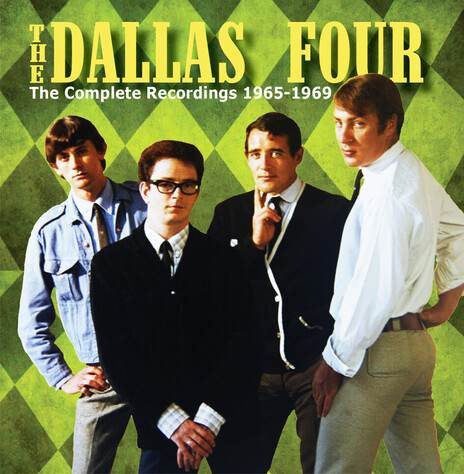
The Dallas Four: The Complete Recordings 1965-1969 (Frenzy, 2021)
In 2021 the Frenzy label released the CD The Dallas Four: The Complete Recordings 1965-1969. The CD features the aforementioned unreleased album from 1966-67.