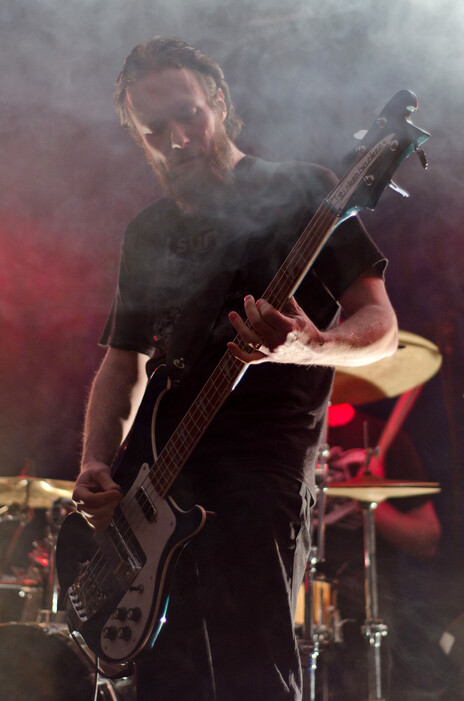
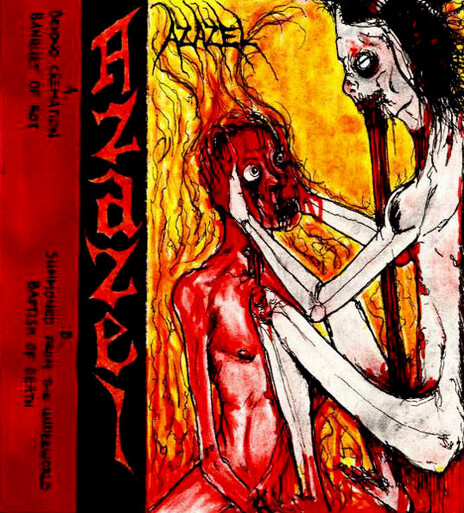
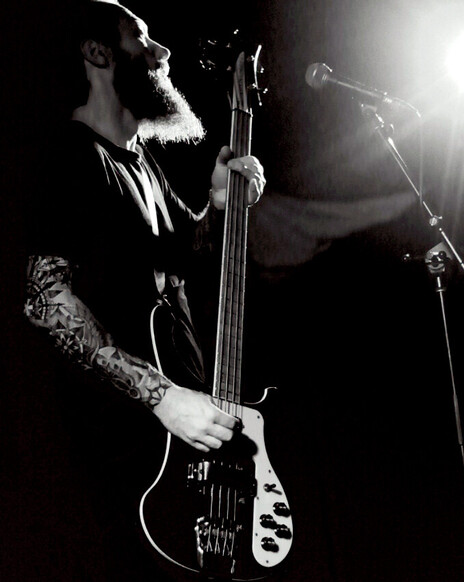
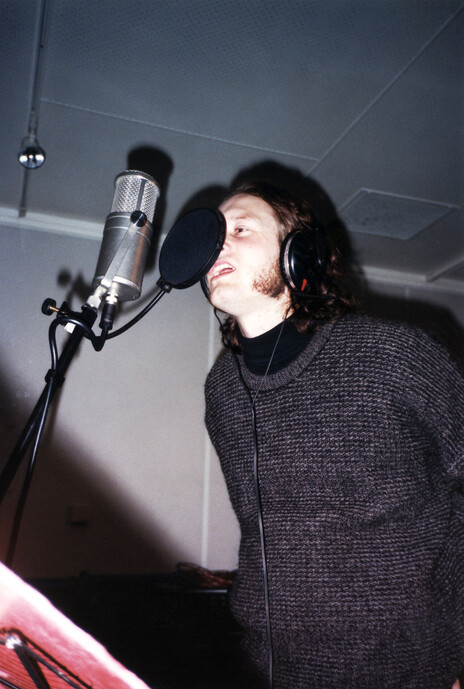
Listening to and learning from heavy fellas like Geezer Butler and Iron Butterfly’s Lee Dorman, Craig started playing bass, which is still his foundational musical tool. Although late-80s Aotearoa had thrash and death metal represented by bands such as Auckland’s Anigma and Invercargill’s Arcane, Azazel – formed in Craig’s late teens – was possibly New Zealand’s first black metal band. And it was Craig’s first “real” band, real as in they wrote originals and played gigs. Azazel’s drummer was a few years older, and introduced them to rarer and weirder stuff than the average Hamilton high schooler listened to, from the extremes of metal to crust punk and beyond.
He was introduced to rarer, weirder stuff than the average high schooler listened to
After a while Craig worked out the Azazel scene wasn’t for him, so he refreshed his passion by revisiting metal icons such as Black Sabbath and Witchfinder General, Candlemass and Cathedral. This shared love of Sabbath led Craig and a friend to form a new band, Datura, at the end of 1992. Sabbath were sticky and smokey in their way – they even had a song called ‘Sweet Leaf’ – but Datura were looking for something other than the chug and grunt of seventies metal if they were going to bloom into the Stoner Rock garden.
Meeting Richard Stockwell from Cranium Music at a record fair at Hamilton Rose Gardens, Craig first heard Aotearoa’s take on psychedelic rock via Space Farm, Human Instinct and Hamilton’s own acid-folkie Chris Thompson, as well as obscure Euro-psych like The Spacious Mind. Later, “we got to meet Maurice Greer and he signed my Stoned Guitar record!”
Datura had recorded a couple of demo tapes, and Craig gave one to Stockwell, who said “hmm that’s alright, but it’s a bit hard rock” – and Craig admits “it wasn’t that great, to be fair!” They took the criticism on board. Datura experimented a bit, swapped acid-rock mixtapes, expanded their horizons and later released their two albums on Cranium’s label.
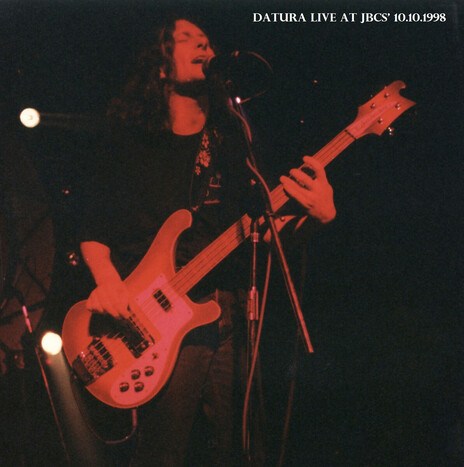
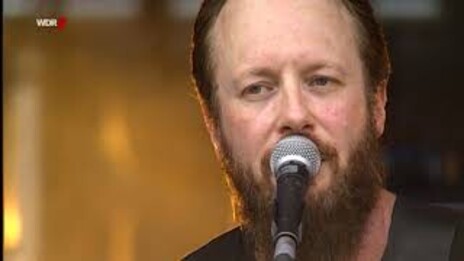
By 1998 the power trio had found their sound in blunt-force fuzz-tales, contrailing across their first album All Is One and the posthumous digital release Live at JCBs 10.10.98. Jon Burnside’s drums pummel ’n’ crash as one with Craig’s growling bass, a concrete foundation for Brent Middlemiss’s wah-heavy fuzz guitar cartography, with Craig’s mystical snarl peregrinating through the smoke rings in the rafters.
They sounded heavy and hard, fast and fun, but by the follow-up Visions for the Celestial they had acid-etched their singular groove into stone. All the songs were twice as long, with side two offering only two cosmic odysseys: the 9-minute ‘Voyage’ (the first Datura track to feature flute) and the 15-minute ‘Mantra’, whose delay unit is so prominent it deserves its own performer credit. If All Is One was stoner ROCK; Visions was STONER rock – but both albums blazed with beefier, smokier, altogether filthier riffs than that coeval Waikato band whose name also began with the letters D-a-t.
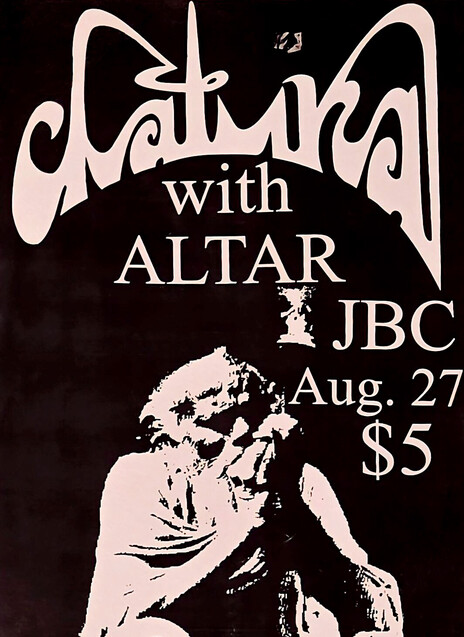
Datura gigged around the North Island, playing shows with like-minded metallers Crawlspace and Altar, but found Auckland a tougher crowd. “They’d stand there with their arms folded, going ‘you guys don’t sound like Tool or Shihad!’ We were into Sabbath and Human Instinct…!” Actually, the Datura guys loved the early Shihad records, and another early influence on Craig and drummer Jon was HDU. (Years later Craig was thrilled when his band Arc of Ascent shared a stage with HDU’s Tristan Dingemans.) Craig also found inspiration in New Zealand’s underground noise scene of improvisers such as Birchville Cat Motel and Antony Milton.
Datura’s name frequently inflammed punters familiar with the vespertine flower
The band’s name was frequently inflammatory among the punters personally familiar with the vespertine flower, “We’d get these old bikers lecturing us ‘Why the **** are you calling your band datura?? Don’t try it! It’ll make you go blind! I’ve got a friend who went nuts on it!’”
Riding high after six years as Aotearoa’s most ferocious transcendentalists, Datura’s flame was snuffed out pretty quickly after the second album, with missing royalties one of the reasons. Facing this dissolution, Craig briefly considered quitting music altogether but blessedly he was still busting with ideas. Instead of a new band he taught himself to play drums “really badly”, learning the basics of every other instrument he heard on the songs in his head “juuust enough that I could play the songs”: guitar, drums, sitar, sax, synth, mellotron and other keys, flute, violin, banjo, tabla, and probably more. There was heaps of material – but this lot was sans fuzz pedals, sometimes drumless, and Craig’s formerly imploring yowl now gently hushed – songs more in the spirit of Magic Carpet (who had backed Chris Thompson on his solo debut), early Pearls Before Swine and Donovan.
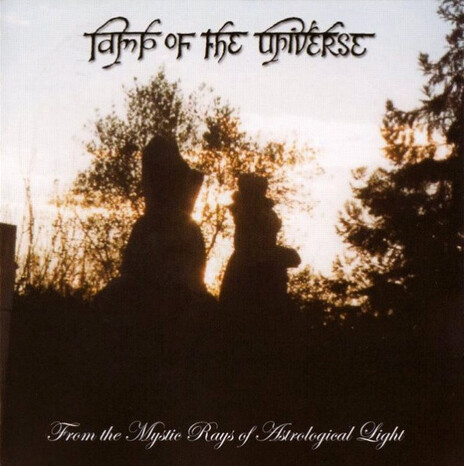
Lamp of the Universe, Craig’s quarter-century raga rock song-cycle, was born.
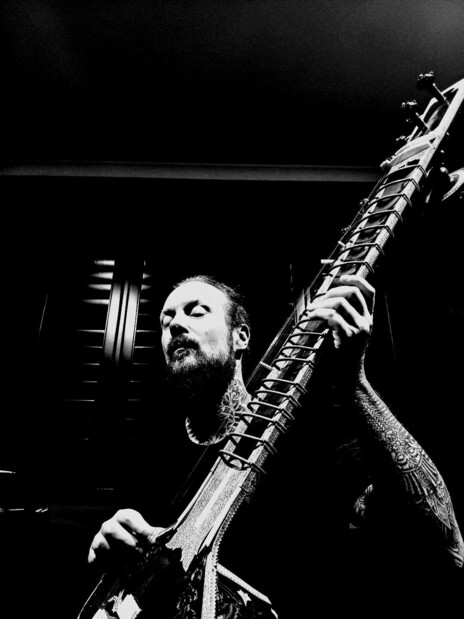
A signature sound of Lamp of the Universe is the sitar, which Craig first picked up in 1999. He “spent a year being absolutely terrible at it” and didn’t even know how to tune it. But it was the sound he heard in his head for this new project, so he practised for hours every day. After recording 50 or so 4-track cassette demos of new songs, he upgraded to a digital 8-track and spent six months in the flat’s spare room re-recording the best of them.
Craig wasn’t the first kiwi psych muso to spotlight the sitar: The Music Convention clashed it with fuzz guitar on ‘BellyBoard Beat’ in 1968, David Parsons’s sitar illumined the 40 Watt Banana on ‘Nirvana’ in 1970 (and elsewhere, for many years following) and sitar and tabla added a bit of exotica to single ‘Over the Hill’ for Strange Records folk group Sunday’s Problem.
Following a small lathe-cut run of the original 4-track demos under the simple artist name “Craig”, Lamp of the Universe debuted with The Cosmic Union. Offering up a platter of trippy sonic munchies, like long jam ‘Freedom In Your Mind’ and the sweet’n’hazy reverb-drenched minimalist ballad ‘Her Cosmic Light’, it’s a delightful assortment – from the upbeat raga-pop of ‘What Love Can Bring’ to touchstone ‘In the Mystic Light’, whose brawny backbone is heavily metal yet lotus-posed in a cozy hemp poncho. It's a template Lamp of the Universe would continue to revisit for the next two and a half decades.
Lamp of the Universe albums found an audience among psych-fans around the world
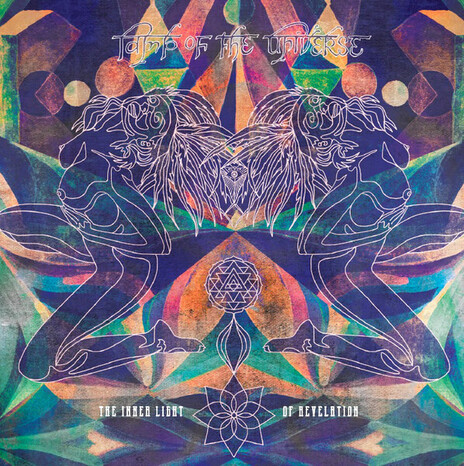
Craig was releasing Lamp of the Universe albums roughly every 18 months, and they found an audience among psych-fans around the world. As the original small runs sold out, they were reissued by European or US labels. He alternated between song-based and long-form instrumental albums – consistently meditative, expansive and deeply immersive – with titles and lyrics hinting at numerous philosophies and spiritual paths, and sounds that are transcendental or trance-inducing. Craig prefers to let the music speak rather than explain his particular devotions, and no great elucidation is really required – there is an ecstatic ethereality inherent in these songs, a gnosis which cannot be clarified so much as osmoted.
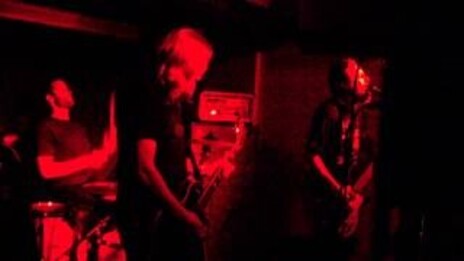
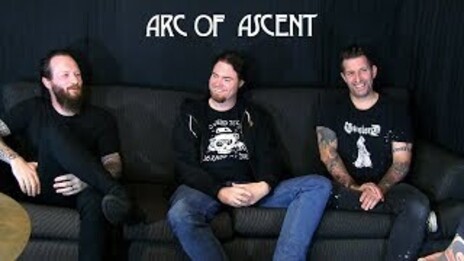
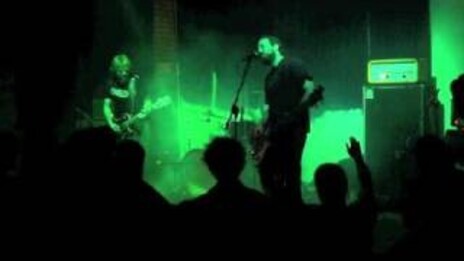
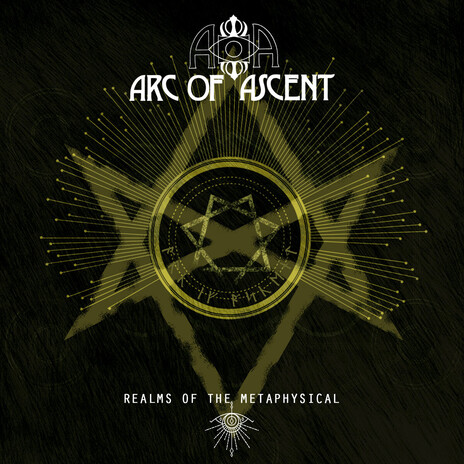
Arc of Ascent, named after a 2007 Lamp of the Universe album, marked Craig’s 2011 return to playing hard rock music – live, and with a band. They recorded three full-length albums, and played shows in Aotearoa, Australia and Europe. Sarah Kidd described their May 2019 performance at Auckland’s Whammy Bar: “fans immediately submit themselves to the music, their heads nodding in hypnotic submission to the all-consuming riffs as Williamson’s vocals fill both the room and minds with visions of higher places … this is not just straight stoner rock; there are wisps of psychedelic that caress the edges of songs, celestial movements that have guided notes into position and pits of acid which sizzle on the skin of its admirers who dive in for a closer look.” After close to a decade, Arc of Ascent drifted apart later in 2019, and the subsequent Covid years killed any enthusiasm to return.
However, the Lamp was still burning. Building on the trio of instrumental albums of the mid-2000s – including the epic Tony Conrad & Faust-like Heru – Craig was writing lyrics and singing again by 2016’s Hidden Knowledge, his synth-iest, most space-faring record. ‘Dawn of Nebula’ for instance, layers filtered monosynth leads and effects over organ drones, with gull-like echoes spiralling into distant infinities.
Recent albums Akashic Field and Kaleidoscope Mind were the first Lamp albums to feature drums recorded in a proper studio. But Craig, always attentive to and critical of the tone of his recordings, found the result a bit too slick. For 2026’s Existence of the Self he returned to the rawer, earthier sound of his home studio recordings. His early solo albums were captured with only two microphones, and Craig has continued to deliberately mix his records with a small-studio, analog, underproduced feel.
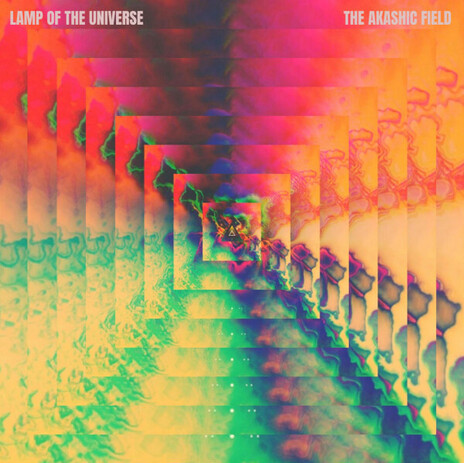
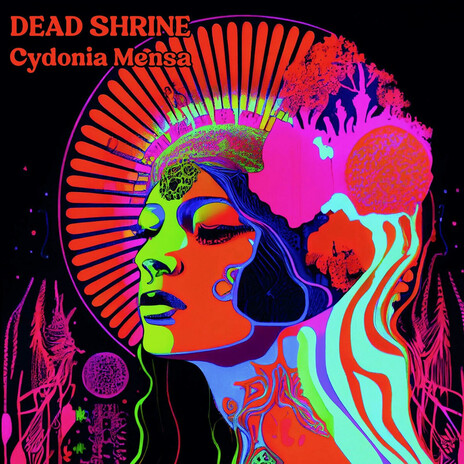
The Covid era brought about another shift, beyond the end of Arc of Ascent. While Lamp of the Universe was always the quietest of his paths, the songs were starting to flirt with dirtiness. The drums on 2020’s Dead Shrine album were recorded in mono and further mucked up through a vintage Ibanez Fat Cat distortion pedal, coating them in heavy crust yet giving almost a gated electronica character. Akashic Field, from 2022, is the racketiest rocker of his Lamp albums: ‘Re-ascension’ sounds like the Byrds channelling Ray Columbus and the Art Collection’s garage classic ‘Kick Me’; ‘Descendants’ is pretty much Datura unaided; and ‘Seventh Seal’ is Lamp Zeppelin’s ‘Kashmir’.
Williamson budded off a second solo persona, and baptised it Dead Shrine
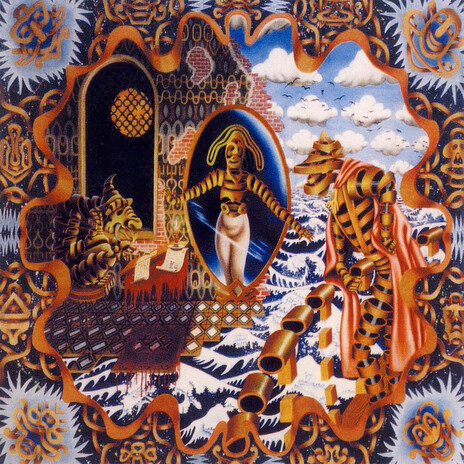
This all felt pretty bloody good but Craig recognised it wasn’t the right fit for Lamp, so he budded off a second solo persona, baptised it Dead Shrine after that earlier album, and released two records of overdriven, crunchy-as psych rock for German label Kozmik Artifactz.
Since 2006, Craig’s used his label Astral Projection to release his own CDs, and one self-titled sludge metal album by mates Shallow Grave. But he’s a vinyl junkie from way back, and his overseas labels feed that addiction with deluxe pressings on acid-coloured vinyl and thick cardboard gatefold sleeves. Craig remembers that, as a young person, it was “the format – records – that blew my mind, how the music would come out of this black piece of plastic.”
Sound Effect Records in Greece is his current Lamp label. They also re-released the first two solo albums, which were originally recorded on an early digital 8-track – using the obsolete Zip Drive format. Craig had to find a new, old Zip Drive to gently tease apart the multi-tracks for a tidy-up. While he’s happy that listeners are rediscovering his early material, Craig reckons it’s a blessing that there are listeners waiting to hear each album of new material. It’s this anticipation – combined with his love for the actual physicality of playing and his excitement about his own songs – that keeps him creative.
With limited live performances since Datura days, and an audience based mostly overseas, he often feels he’s recording for himself and releasing the songs into the void. Then came Arc of Ascent’s gig at Germany’s Freak Valley Festival in 2019.
“We go backstage and all the rock stars are there, and one of the stagehands points at me and goes ‘I’ve been wanting to meet you for 20 years. Datura is one of my favourite bands!’
“I am so grateful! That’s amazing, bizarre and humbling.”
Afterwards, fans lined up for autographs, many with complete Lamp of the Universe collections plus posters and postcards to sign.
“Wow, this was mind-bending! And then you get back to New Zealand and it’s like, ‘Oh you do music, do you?’”
Lamp of the Universe and Dead Shrine are Craig’s solo projects, and he plays all the instruments: guitar, flute, sitar, drums, keys, percussion, etc. – a feat some find surprising, suspecting session musicians or clever sequencing and programming. At Freak Valley, Craig enjoyed proving otherwise. After playing bass in his set with Arc of Ascent, Craig was shoulder-tapped to fill in on drums for a no-show. Craig could sense the hesitancy, aware of the rumours that his one-man bands were actually one man with a laptop full of virtual instruments. So he was pretty chuffed to strut his admittedly limited – but still sh*t-hot – skills as a drummer in this spontaneous jam.
And there’s good news for those folks hoping to see Craig perform again: as of 2026, for the first time this century, Datura has begun relearning their songs and working on new material to record and tour. As always, there are further solo albums to come, and maybe some secret projects he’s not ready to share.
For 25 years Craig Williamson has traversed the inner and outer limits of his very niche but dependably familiar sound. In this troubled century there’s comfort knowing that Lamp of the Universe is out there, across the sands of time, casting forth the warm glow of his p’spiralling psychedelic p’searchlight through the fogs of war, inequity and ecological decline.
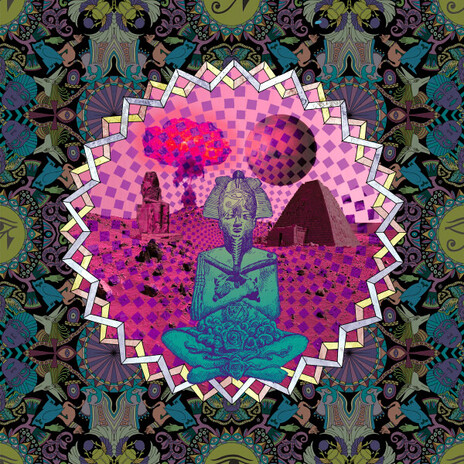
Light the Lamp: it’s just between the La De Da’s and Larry’s Rebels on the shelf. Slide the neon-orange-with-black-splatter vinyl from its solarised mandala-clad sleeve, pop it on the spindle, drop the needle, sit back – and float away.