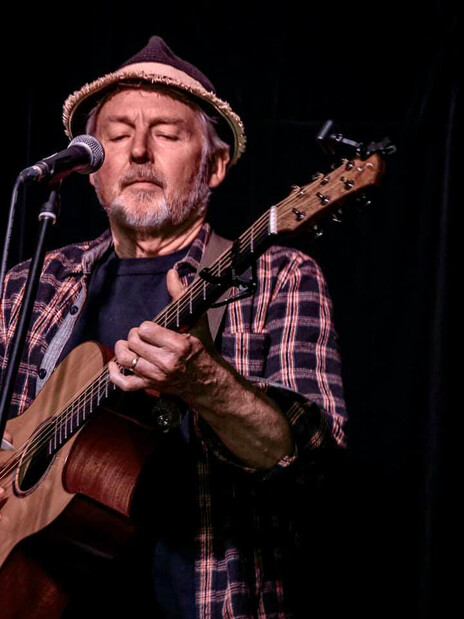
Paddy and his brother Chris bought themselves guitars from the hardware store in nearby Rangiora. Paddy still has his: a cheap Suzuki, which his children and grandchildren have since learned to play on.
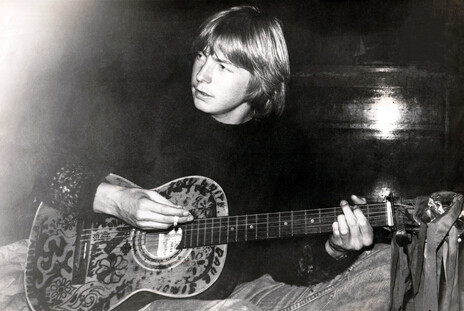
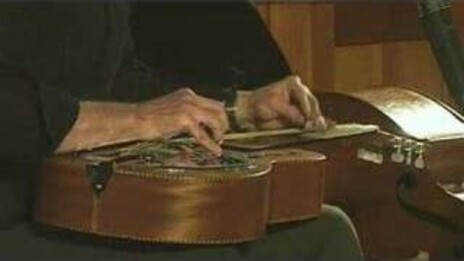
Around the same time, the brothers made a discovery. Hidden in a cupboard amongst the shotguns and fishing gear was a home-made lap steel guitar their father had built in the 1940s, before they were born. This find, along with the brothers’ new instruments, seemed to reactivate their father’s love of music. “So evenings on the farm were my brother and I accompanying this airy, feather-light lap steel sound that my dad managed to coax out of his slide guitar, despite his hands being crumpled and beaten by farm work. He would run through this exercise book of tunes and our job was to sit there for hours and accompany him. He had a huge list of instrumental tunes we had to get through before we could go to bed.”
But there were more contemporary sounds coming Paddy’s way, via a new wave of folk-inspired singers and songwriters: Bob Dylan, Donovan, Simon and Garfunkel. Paddy painstakingly figured out fingerpicking techniques from Simon and Garfunkel showpieces like ‘Kathy’s Song’. “We had a limited number of records in the house, but we studied them. They would just be on repeat. You’d be playing Sounds of Silence forever.”
At boarding school in Christchurch, Paddy encountered a fellow guitarist, Eddie Hansen. A couple of years ahead of him at school, Eddie would go on to become a rock guitar hero with the bands Ticket and Living Force, but Paddy first heard him at school assembly, playing and singing the Beatles’ song ‘If I Fell’. “It was mesmerising. It’s got lots of major-minor, changes, really interesting chord structure. I looked at this guy and thought, that is amazing skill, you know? You just see something sometimes that’s very inspirational. ‘Give me a guitar, I want to do that!’”
By the time Paddy got to secondary school, folk had gone rock. A pivotal moment occurred at another school assembly when the school band, Throb, came on stage with twelve string guitars and drums and played ‘The Bells of Rhymney’ by the Byrds. “My brother and I knew the song but I had never seen a band actually playing before. I was basically struck by lightning at that moment.”
Records by Cream, Hendrix and Deep Purple heralded the arrival of a harder brand of rock. For Paddy, ‘going electric’ meant going back to his early piano training. Inspired by the sounds that Deep Purple’s Jon Lord was able to coax from a Hammond organ, he bought an old pedal-powered harmonium from Christchurch musician John Sanchez-Lloyd (later of the Coalrangers, then living in Barbadoes Street and listed in the phone book under the name J Hendrix). In the barn at Swannanoa, with his father’s help, Paddy built a Leslie cabinet: a combined amplifier and speaker that modifies the sound of an instrument by rotating baffles along the axis of the speaker cone. Paddy’s homemade model utilised a motor from an old sewing machine. “I shudder to think how it sounded,” Paddy says today. “Actually the Leslie cabinet shuddered quite a lot too, at full speed.”
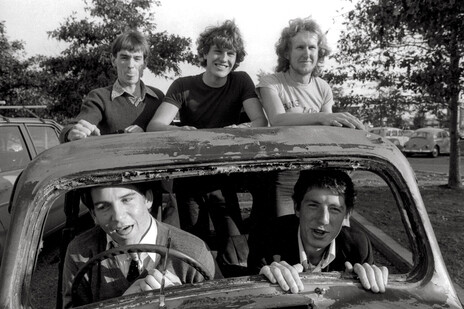
Paddy saw out his school years playing keyboards in a school rock band, initially named Strange Brew (after the Cream song), later changed to Peace. But on leaving school he returned to the acoustic guitar. There were factory jobs by day, Christchurch folk clubs by night. By the early 70s he had moved to Wellington to study journalism, and found his way into the city’s vibrant music scene, playing acoustic gigs at the Chez Paree, and catching local underground heroes like Mammal and BLERTA at the Victoria University Union Hall.
One afternoon he returned to his flat to find, seated in the middle of the living room floor, “one of the coolest people I’d ever seen in my life, a young man with long dark hair and a black velvet jacket, and draped around this gorgeous young woman. His name was Brian. He was from Auckland, and we talked about politics, about music. He knew everything. He was funny, he was erudite, and I thought, I am not worthy to be in this cool person’s presence. I was so disorientated by how cool he was that I got up and left. And my friend Stuart, who had brought him around, said, “What were you doing? You got up and left! He’s come all the way down from Auckland to meet musicians.” Of course, it turned out it was Tim Finn.”
A move to Te Awamutu a couple of years later to work on a regional newspaper brought him into contact with the Waikato music scene, and another future Split Enz member became friends with Robbie Lavën and Marion Arts, whose Red Hot Peppers were based in Hamilton. Guitarist Mike Farrell, playing with the Peppers at the time, was also living in the region. A famine in East Africa motivated Paddy to put some of these talents to use. The movie of The Concert For Bangladesh had recently screened in provincial cinemas. If George Harrison, Bob Dylan and Eric Clapton could do it at Madison Square Garden, why couldn’t it be done in Te Awamutu?
“I talked to a few people, Robbie and Marion came along, and we hired the Empire Theatre. It was a motley collection of folkies and others. Somehow I had been appointed stage manager. We were just organising who was going to do what, and someone came over to me and said, ‘Oh, there’s a kid over there wants to be in the show.’ I said, ‘Well, who is he?’ ‘Ah, his brother plays in that band, you know, that Split Ends band.’ I thought, What? Art rockers? We don’t do art rockers here, we’re all blues and folk. He said, well, you better talk to him, so I went over there anyway. So there’s a kid in short pants by the piano with his mother and I thought, oh God, okay, what’s your name? He said, oh, my name’s Neil. Okay, good to meet you Neil, what do you do? And he didn’t say anything. He just walked over to the piano, sat down, and he started playing ‘Rocky Raccoon’ and singing it. And I stopped him after the first verse. I said, “Right, that’s enough. You’re gonna be extraordinary.” And he was. Absolutely amazing.
“I saw him several times after that, doing stuff at folk concerts and things. By then he’d moved on to these really intricate Elton John things and stuff like that. He was fearless.”
By the late 70s Paddy was back in Wellington, working as a journalist and playing occasional folk gigs. He had also begun making his own furniture. “I had always made stuff. Whenever the house needed anything I’d just make it. Could be doors, could be chairs, tables, whatever. In Wellington at the time they were pulling a lot of buildings down, and I met other people in town and we would pull bits of wood out. When the five o’clock whistle went, we would be there. You’d just climb into these partly wrecked buildings and chop out these huge kauri beams or rimu beams and stuff like that, haul them out, cut them up, make them into tables and chairs.”
His workshop was a waterfront shed leased from the Harbour Board. After the breakup of his first marriage he found himself living there. “My friends Margaret and Stuart ran a furniture shop in Newtown which specialised in craftsman-type furniture. They would take anything from any hippie builder, and so they took all my chairs, anything I made, and I could also sell out my door on the wharf.”
One night, walking home to his waterfront abode, he passed the Irish bar Molly Malone’s and heard ‘this amazing music’ coming from within. “I looked in the window, and there’s just a bunch of guys and women sitting around a table drinking Guinness, with fiddles and concertinas and mandolins and things.”
Energised by the music and the scene, he bought himself a mandolin and an Irish songbook. “I turned up a couple of weeks later with my mandolin and a few tunes, and they were very accommodating, sat me down, and, you know, rustled out a few tunes. And then I started meeting other Irish musicians, and before you know it I was in a couple of bands.
“The whole Irish music scene was just taking off at that stage in the mid-80s. It was huge. There were students from Vic who were putting themselves through university playing in Irish bands, because it was so lucrative.”
At one point Molly Malone’s was presenting live music seven nights a week, with a band in the main bar and another playing upstairs.
“There were many different facets to Irish music. There was the folk-tune based, which I could do pretty well, and then the other thing was the sort of rock-Irish. I was in two Irish rock bands and one folk band, so pretty busy. That went on through the 90s and right through the early 2000s.”
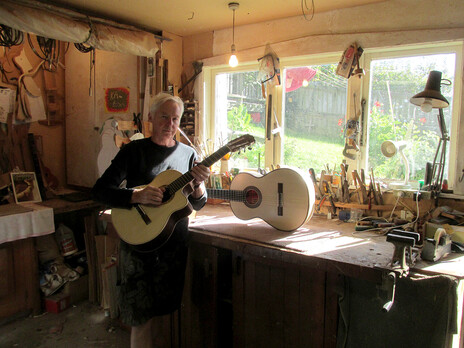
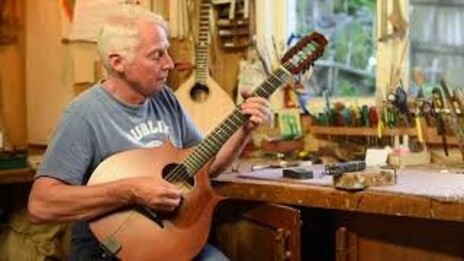
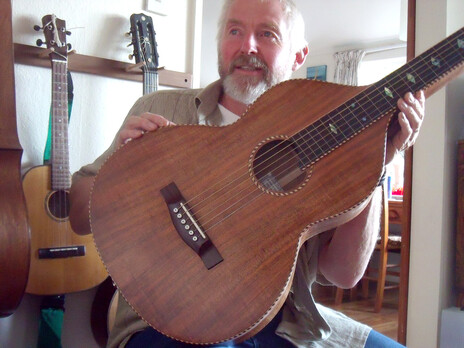
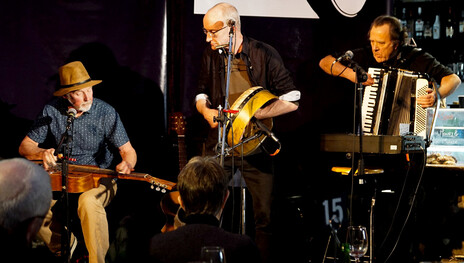
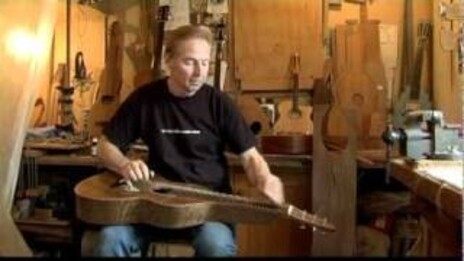
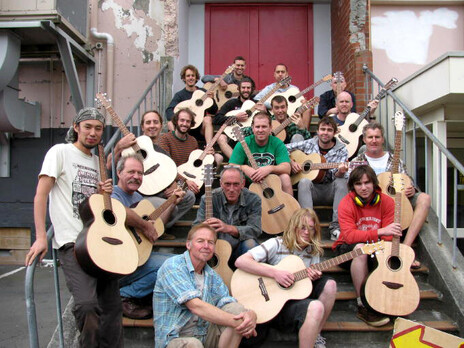
He had also been recruited, in the late 80s, to the Dunstan Rangers, a self-described “bunch of homesick South Islanders marooned in the North Island”, consoling themselves with a repertoire of weepy country songs by the likes of Gram Parsons and John Prine. Initially Paddy contributed accordion, later moving on to a self-made Weissenborn guitar. The Weissenborn would eventually become his signature, both as a musician and an instrument-maker.
As the group moved from country covers into original material, Paddy was motivated to start writing. Though he had occasionally written for bands in the past, this fresh burst of creative energy coincided with his first visit to the United States to learn the art of guitar making.
“It might have been because of my brush with Americans and Canadians, and that whole world of guitar-based songwriters. I thought, well maybe I could do that. I have a guitar in the workshop, so while you’re gluing stuff up, you might just want to sit down, have a bit of a strum, and then things start happening. You start writing, and then it’s like a version of a crossword puzzle or Sudoku or something, it’s a challenge that you can’t resist. You’ve got an idea, and you want to impart that idea, and you’re putting it to music.”
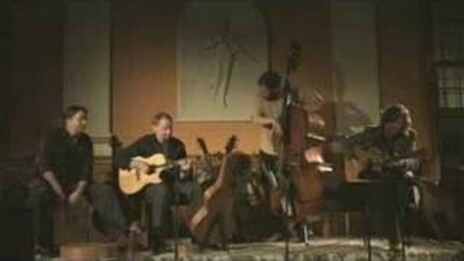
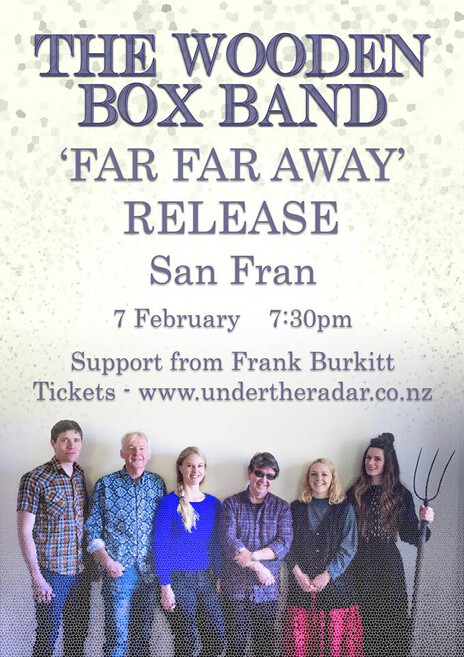
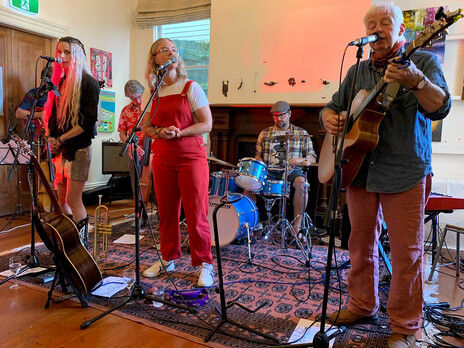
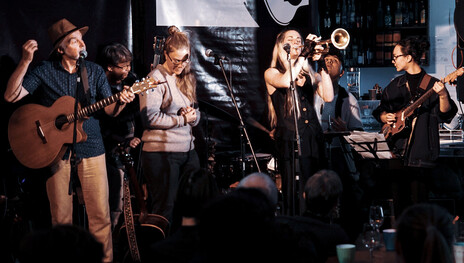
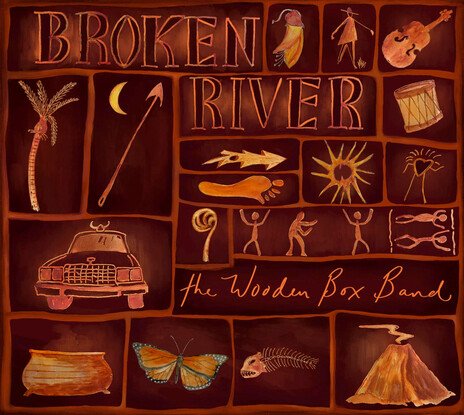
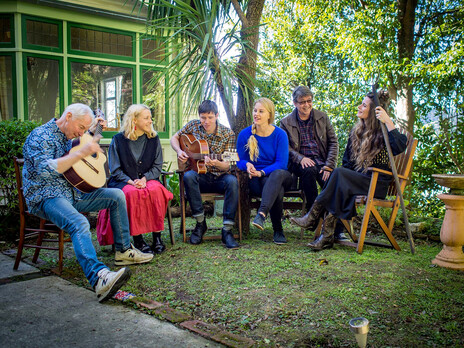
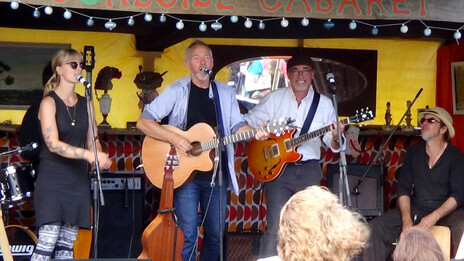
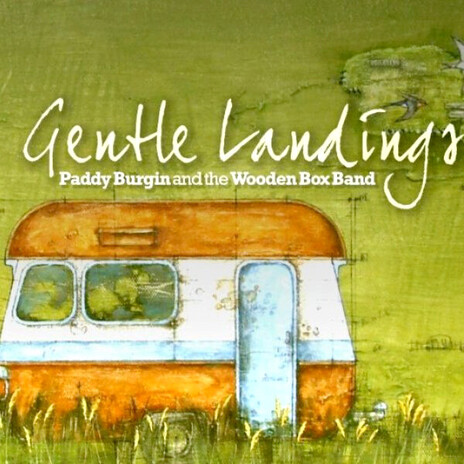
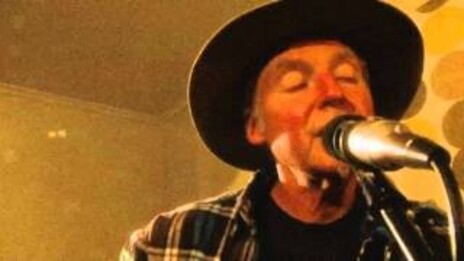
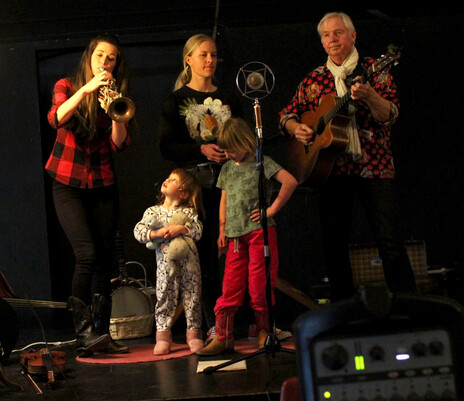
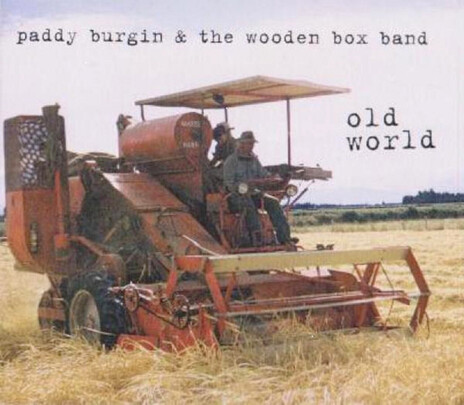
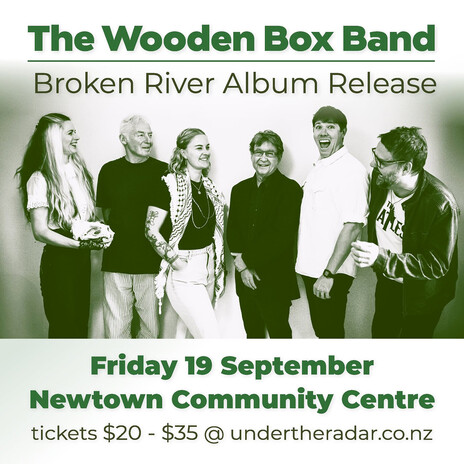
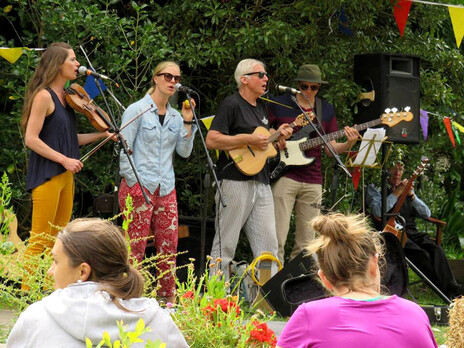
Eventually Paddy had enough songs of his own to launch what has been his central project for the past two-plus decades, The Wooden Box Band. An initial recording was made at Robbie Duncan’s Braeburn studio as a duo: just Paddy and bass player Tom Callwood playing spare versions of Paddy’s songs. Gradually others joined the line-up, such as guitarist Justin Clarke and percussionist Bruce McNaught, who played a homemade cajon – literally a wooden box. This was the core of the group that recorded a second collection, My Sweet Town in 2008. When Tom Callwood got too busy with the Phoenix Foundation, Murray Costello came in on bass. Jesse Moss joined in 2013, bringing her own songs, voice and guitar. Emily Clemmet brought trumpet, violin and vocals. Other members would come, go, and sometimes come back again. More albums followed: Gentle Landings (2011), Old World (2013), Far Far Away (2018), and Broken River (2025) which won the Aotearoa New Zealand Folk Alliance Award for the year’s best folk album.
“We often refer to ourselves as a family band,” says Paddy. “We’ve all moved in each other’s orbits for years. We’ve had marriages, births, deaths, divorces, trauma, great times, ecstatic times, and we’ve shared everything in our kind of loose group, all family triumphs and tragedies. It’s been a very organic process, and it ebbs and flows, just like the sea. We might drift a little bit and then we’ll have a time of intense work if we’re building up to a new album or something like that. Then we sort of like dissipate for a while, and then we’ll come back through that.
“You’re aware that in a country of five million you’re not going to make a huge dent with your music, you’re not going to make a vast amount of money out of it, or anything like that. So, it has to fit in with everything else that we’re doing with our lives. We’re all parents, and some of us are grandparents, and we’ve all got obligations.”
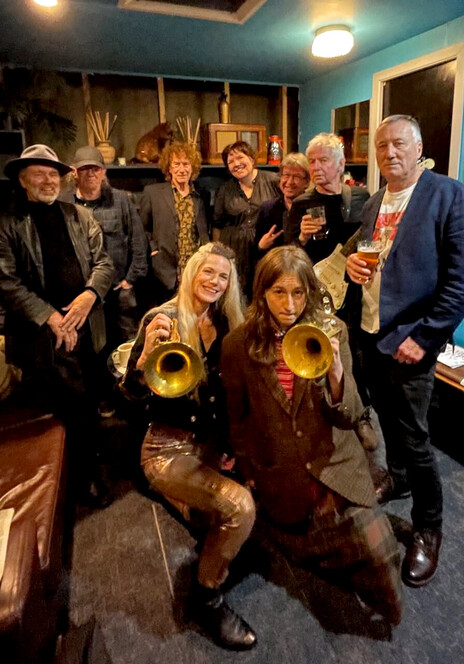
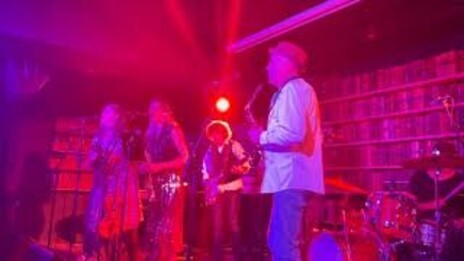
Many of the Wooden Box family also play together in another occasional project, the Zimmermans. “My friend Chris Nichol and some other people from the Dunstan Rangers had often talked about maybe doing a Dylan band or something like that. Then about seven years ago a work colleague of mine, Jim, who was an amazing Dylan fan, said to me he had cancer. And I said to Chris, what if Jim died and we hadn’t played him some Dylan songs in a band? And so we looked at each other and then we found another eight or nine people who’d never even heard of Jim, and we said, “Right, we’re forming a Dylan band, we’re gonna call ourselves the Zimmermans, are you on?” And they rose to the occasion. Jim came to our first gig, and he was just in heaven. It was amazing, fantastic. And so we thought, we just can play every six months and we’ll keep Jim alive. And he came to every single show.”
Jim died in 2024, by which time he had seen a good number of Zimmermans gigs. Since then the group has continued to perform on its roughly twice-yearly basis. “And something weird has happened. The demographic at the shows is going down! At the last show I’m looking at a young guy in a Bob Dylan T-shirt, filming us with a video camera.”
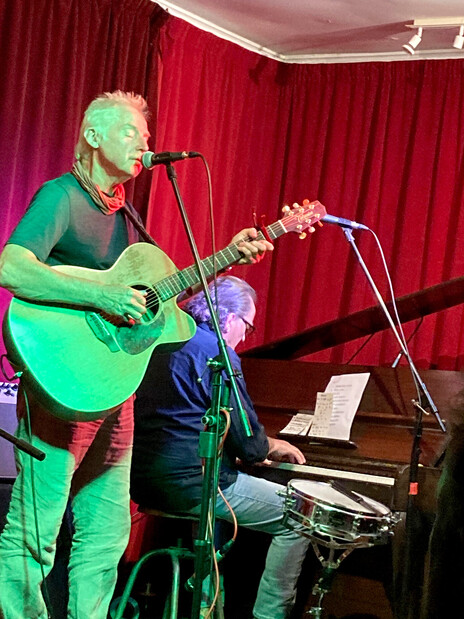
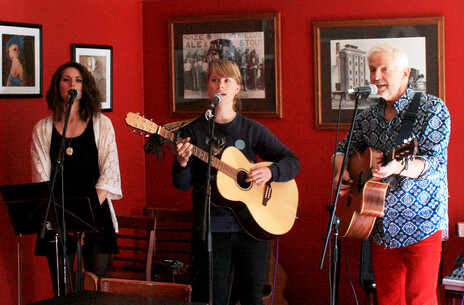
Lately he has joined yet another occasional line-up, with singer-guitarist Andy Kerr and multi-instrumentalist Alan Norman. As Burgin, Kerr & Norman, the trio accompany each other on a selection of their originals, swapping instruments and stories. The music is intimate, the presentation low-key, and yet like any of Paddy’s projects it can prove that sometimes it is the quiet and thoughtful moments in music that communicate the most powerfully.
“We recently played at a place called Tsunami, which is like a recording studio and events centre in the country, north of Levin,” he says. “Seventy people showed up. There was a woman in the audience who came up to me afterwards and said, ‘You know, this is the best show I’ve seen since 1972 when I saw Led Zeppelin at Western Springs.’
“I said, ‘We’re a folk trio.’ She said, ‘I know.’”