Michael John Farrell was born in the northern Hawke’s Bay town of Wairoa on 29 August 1948. His mother Maureen and her two sisters sang in local theatre in Wairoa. At family gatherings, their luscious harmonies on the likes of Doris Day’s ‘Sentimental Journey’ would be interjected by the humorous baritone ad-libs of Farrell’s father Bob, or Bobby O.
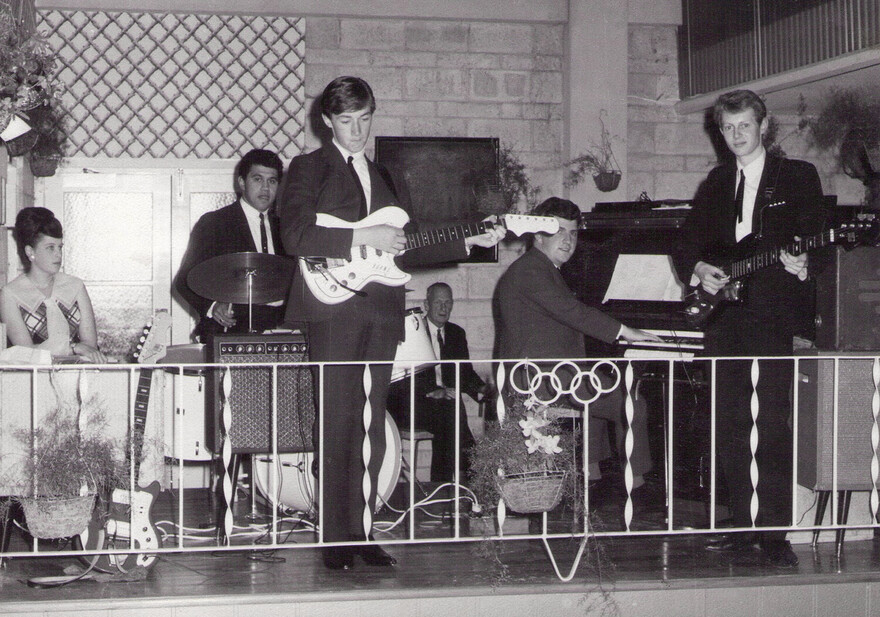
Older sister Christina Farrell watches on as a young Mike Farrell (centre) plays a Burns guitar at the Caltex Lounge, Taranaki Street, Wellington, in the mid 1960s. The drummer is Mel Lahina, the pianist is Trevor Lane, but the bass guitarist is yet to be identified. - Farrell Family Collection
Maureen’s dad, John Gallagher, immigrated to New Zealand from Ireland. Whenever young Michael visited his grandfather’s house he would tap up and down the hallway on the noisy floorboards while Gallagher exclaimed, “That boy’s got rhythm!”
In the late 1950s, the Farrells moved to Te Pene Avenue in Tītahi Bay. According to schoolmate and drummer Rob Clarkson, Mike Farrell was “the hip dude” at Mana College, Porirua, where his interest in blues and jazz was encouraged by the school’s head of music Louis Fox, father of Rodger Fox. Around the age of 15, he received his first guitar and taught himself to play along with the radio and the family record player.
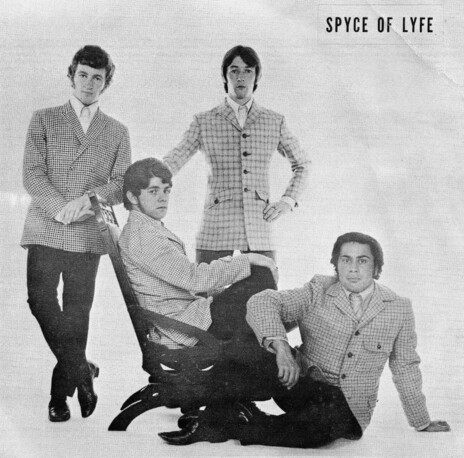
Spyce: The Spyce Of Lyfe, 1968. Left to right: Dennis Hayes, Bob McKay, Mike Farrell, Tom Swainson. - Bob McKay Collection
Joining his dad at the local abattoir by day, by night Farrell checked out the bands at the John Bosco Youth Club. When regulars there The Survivors were splitting up in 1967, they’d heard Farrell was a pretty good player and invited him to join their new group The Spyce Of Lyfe. Rhythm guitarist Bob McKay had hung out with Farrell at Mana College, where their girlfriends were best friends.
To the horror of Farrell’s mother, The Spyce Of Lyfe were soon gigging in Nelson, Whanganui and Gisborne. To Farrell’s delight, he had managed to steer them away from their desire to be a clone of local pop stars The Avengers towards the music of Jimi Hendrix, Cream and John Mayall & The Bluesbreakers.
Neil Hannan was the 15-year-old guitar player in a Tawa College band when he encountered Farrell in The Spyce Of Lyfe. “I was a big fan of the band,” Hannan said. “One day we got to play with The Spyce Of Lyfe at this church dance and Mike let me use his amp. I got onto the stage, and he had this Jansen 6/20 amp or something like that, and every knob on it was up full.”
Around the same time, Farrell was an apprentice technical operator at the New Zealand Broadcasting Corporation in Broadcasting House in Bowen Street. While he was upstairs in Suite 11, where Arthur “Cotton-Eyed Joe” Pearce recorded his radio shows, apprentice programme producer and ex-Breakaway Midge Marsden was working downstairs, each unaware of the part they would play in the other’s career.
In a 2000 Radio New Zealand tribute, fellow NZBC employee (and guitarist) David Knowles recalled he and Farrell being given an ultimatum by their superiors. “He and I were called into the regional engineer’s office and were told to cut our hair or face disciplinary action. Well, I cut my hair, and Mike, true to his principles, resigned.”
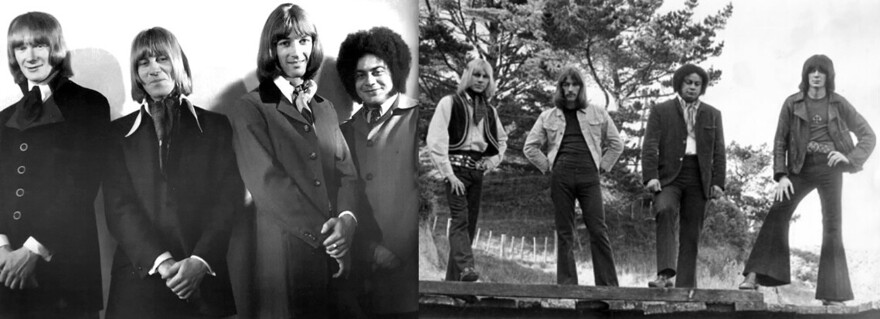
Tom Thumb: Rick White, Bruce Sontgen, Mike Farrell, Tom Swainson. At right: Bruce Sontgen, Mike Farrell, Tom Swainson and Rick White
After three singles on La Gloria, Wellington R&B pacesetters Tom Thumb were revamping their sound in mid 1968. Swapping to bass guitar, Rick White brought former Layabouts singer Bruce Sontgen down from Auckland and then enlisted Mike Farrell, who White had seen playing with soul singer Andrew Parata. Farrell brought along Spyce Of Lyfe drummer Tom Swainson.
The updated Tom Thumb were signed to His Master’s Voice by new in-house producer Peter Dawkins, who recorded five singles with the band in 1969 that all failed to chart. “Peter tried everything – gimmicks, cover versions, string sections – he could never quite get us a hit record,” said White.
One night at their residency at The Place, Farrell’s medical condition reared its head when he had a seizure mid-performance. “[Co-owner] Ken Cooper had just got strobe lights installed,” White said. “All of a sudden, I heard this incredible clatter and noise, and I looked around and Mike was having a fit on the other side of the stage and his guitar’s feeding back like hell. What we were unaware of was he was an epileptic and the strobe lights had put him into a fit.”
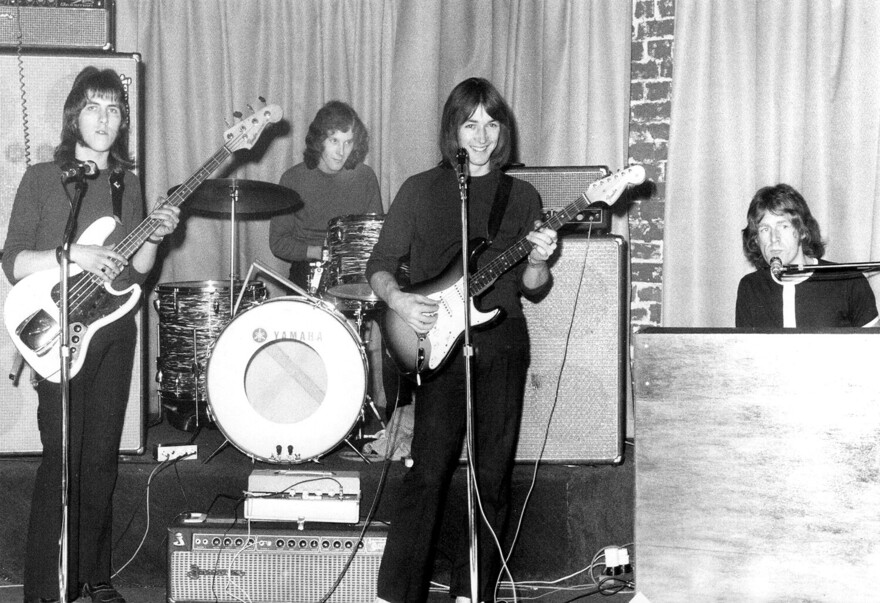
Rebirth on stage, circa 1970. Left to right: Clinton Brown, Keith Norris, Mike Farrell, Warren Willis. - Farrell Family Collection
Eventually, Tom Thumb fired Farrell for “erratic behaviour”, but he wasn’t without a band for long and formed Rebirth with ex-The Society rhythm section Clinton Brown (bass) and Keith Norris (drums), plus keyboardist Warren Willis. They, too, were signed to HMV by another new in-house producer, Alan Galbraith, releasing two singles in 1970. Galbraith also had Farrell add guitar and backing vocals to his first HMV album production, Brendan Dugan’s A Touch Of Nashville.
When Brown and Norris took off to join ex-Relics guitarist Milton Parker in forming Tangent in Melbourne in 1970, Farrell and his first wife moved to Christchurch at the behest of singer Barry Saunders, whose band Orange had recently split. Saunders had seen Farrell with Tom Thumb at The Scene in the old Edison Hall building in Christchurch.
“We all shared the world’s coldest house, in Greers Road, and spent a lot of time pushing cars,” Saunders recalled. With a wife and child to support, Farrell got a job at PDL Electrics. Serendipitously, Brown and Norris’s seven or so months in Tangent hadn’t worked out and they joined Farrell and Saunders in Christchurch. The new line-up kept the name and briefly held a residency at The Scene before going their separate ways.
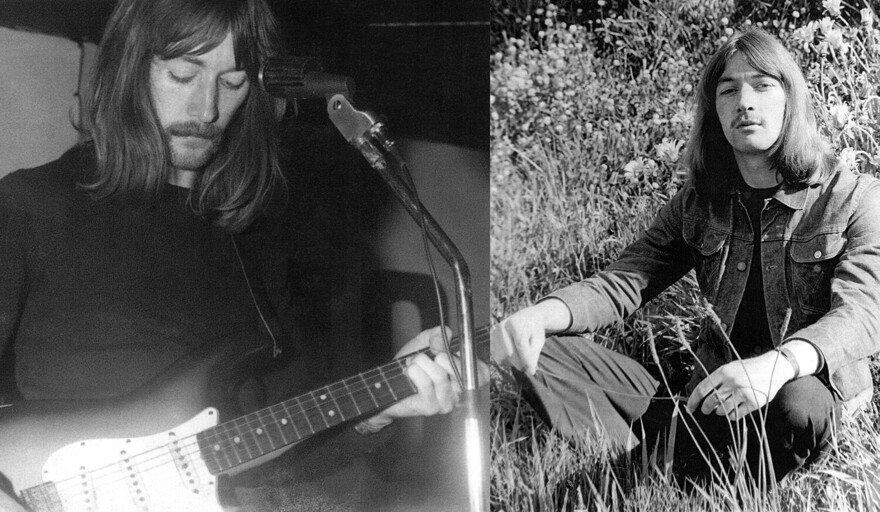
A contemplative Mike Farrell in the 1970s. - Farrell Family Collection
Farrell headed to his wife’s family’s home in Te Awamutu, where, despite his father-in-law giving him a box of carpenter’s tools, his mind again turned to music. He found the local folk club and met Neil’s Record Bar owner Neil Nooyen. Nooyen drafted him into his band, The Fourmost Four, and then tried to enlist Hamilton bass player Sid Limbert.
“Neil came to see me and said, ‘I’ve got this fantastic guitar player. I’d like you to play bass,’” Limbert said. “I said no, but he came back a couple of times. I went along and here’s Mike. We jammed and we were making a noise that Neil didn’t understand. Mike and I just hit a groove, and Neil was trying to find a place to sort of come in and couldn’t, so Mike started singing.”
After just one gig, where Farrell’s loud wah-wah solos in Nooyen’s safe MOR repertoire sounded like Hendrix gatecrashing a Tony Orlando & Dawn dinner dance, Nooyen sold Limbert his PA system and left them to it. Bringing in drummer Billy Meehan, they took over the residency at Waikato’s first licensed restaurant, the La Ronde in Te Awamutu. Soon, Limbert invited Hamilton Folk Club stalwart Robbie Lavën to sit in.
“We were playing at the La Ronde, and all of a sudden Mike undid his strap and just let his Strat drop,” Limbert said. “It hit the floor and just fed back. He wiped out three mic stands and he just disappeared. Robbie and I and Billy carried on and tried to patch it up. As soon as I could, I went out to the toilet, and he was bashing the walls. He’d had a seizure. He lived in fear his whole life of having another one on stage.”
In early 1973, Limbert and Farrell formed Pendulum with drummer Neil Reynolds, fresh out of the fledgling Dragon, for a residency at the Ōhaupō Tavern. Then Farrell and Reynolds joined Robbie Lavën, bass player Rick Rika, and tenor saxophonist Andrew Kimber in Pardon, who played regularly at the Hillcrest Tavern.
Having discovered the music of Little Feat, Farrell spent a few months of 1974 living in his Bedford van parked in the driveway of artist and guitarist Chris Grosz’s farm in Halswell, at the time a village outside of Christchurch. “I remember I gave him a painting that I had done of Blind Willie McTell,” Grosz said. “I introduced him to a lot of black blues slide players such as Blind Willie, and Blind Willie Johnson, Robert Johnson, and early Muddy Waters.”
He often sat in with The Glide Band led by piano player Liam Ryan. “We used to play every second Friday at the Gresham, which was kind of like the student pub in Christchurch,” Ryan said. “I was playing in a guitar-less band, and Mike dropped in on slide, and it was like, ‘Oh, fuck, this is like having Lowell George in the band.’ Not to mention his voice. He really turned the scene on its arse, actually.”
Sharing the residency on alternate weekends was Grosz’s band Pork Chops, featuring 17-year-old drummer Steve Garden. “Mike came along to the Gresham, where we were playing,” Garden recalled. “He got up and jammed with the band, and I loved his playing and he loved mine. He said, ‘Let’s form a band. Who’s a good bass player here?’”
Garden recommended Chris Hudson, who was part of Baby with John Purvis and Nancy Kiel, and the three men went into Robbins Recordings’ studio in Springfield Road. “Mike was wanting to get a band together to work on his own material. Then he got fed up with Chris because Chris was not the kind of bass player Mike was after. Chris was way too Chris Squire [from Yes] and Mike was after someone like Kenny Gradney from Little Feat.”
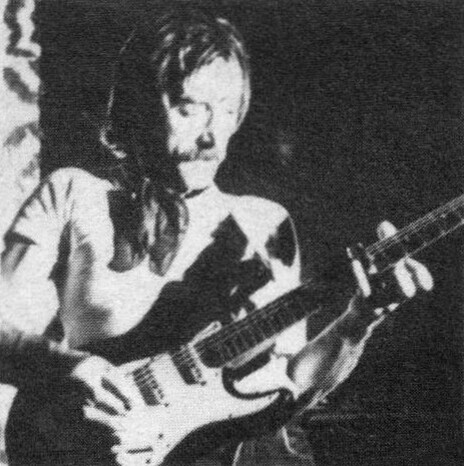
Mike Farrell in Red Hot Peppers, mid-1970s
By around April 1975, Farrell was back in the Waikato, where he joined Robbie Lavën and Marion Arts in Red Hot Peppers. “The band quickly became a favourite with students and the 1970s flower-power generation and created enough excitement for Marion and I to chuck in our stopgap day jobs and go on the road,” Lavën said. “That didn’t work out for Mike as he had a young daughter.”
Later in the year, his marriage on the rocks, Farrell returned to Wellington. He joined Andy Anderson’s short-lived Rocket, who had taken over The Country Flyers’ Royal Tiger residency while they went on the road. Rocket also included electric violinist Nik Brown, who’d emigrated from Northern Ireland four years earlier.
“Mid-to-late 1975, I scored a couple of gigs with Andy Anderson, who was playing with Rocket,” Brown said. “Mike Farrell was the lead guitarist. I remember he was a little miffed to have his space invaded by a mad Irishman with good chops. The crowd hadn’t heard an electric violinist playing rock-blues before and went a bit nuts. Lovely for me, but not so for Mike, who was a bit dark. If I had been in his shoes, I would have felt the same.”
Soon after, Farrell served a brief stint in The Country Flyers with Midge Marsden and Neil Hannan – “He was going in a different direction,” Hannan said – before Wellington tour manager Patricia Watson teamed him up with Rick Bryant and Fane Flaws in Rough Justice in mid 1976. In need of a good drummer, Farrell put a call in to Steve Garden in Christchurch.
“I shifted to Wellington and joined that band, and we went on the road for a good six or seven months,” Garden said. “Fane didn’t last long because Mike and him didn’t connect musically. Mike basically said to Rick, ‘It’s him or me,’ which was Mike’s tactic. I kind of fell in love with Mike. I mean, he was like my elder brother. I just would go anywhere he went. I was so committed to working with him that everything else was put on hold.”
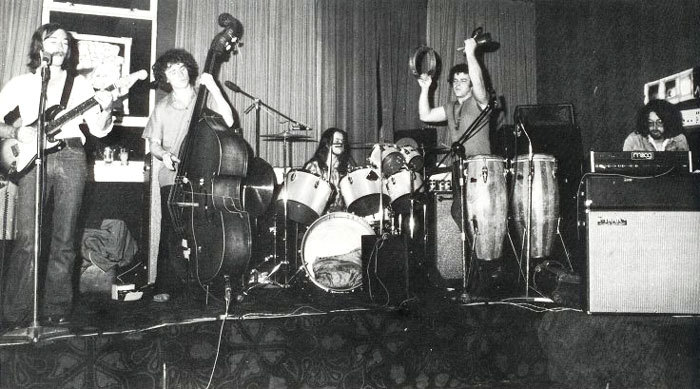
Rough Justice Mk.1, Wellington, 1976 – Mike Farrell, Patrick Bleakley, Steve Garden, Rick Bryant and John Key
When Rough Justice imploded after playing at the Cabana in April 1977, Bryant and the roadie took off in the bus and left the rest of the band stranded in Napier. Farrell and Garden retained the group’s keyboardist John Key, picked up bass guitarist Mike Parker, and started booking themselves as The Whale Bay Boogie Band. It didn’t last and neither did Farrell and Garden’s tenure in another Andy Anderson-fronted group. “At that point, Mike said, ‘Fuck this,’ and went to Australia to join Robbie Lavën,” Garden said.
--