Continued from Mike Farrell, part one: Hip Dude to Hot Pepper
Robbie Lavën and Marion Arts took their Red Hot Peppers concept to Melbourne at the end of 1976, recruiting Australian players and recording the album Bright Red. But by mid 1978 the band “had collapsed under the weight of the incessant demands of the Australian rock’n’roll industry.
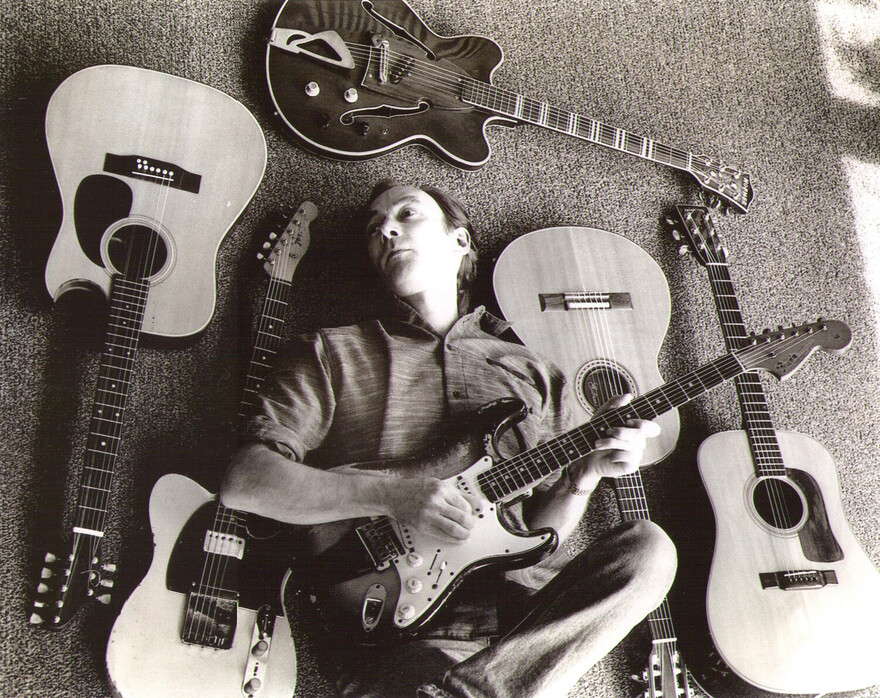
Mike Farrell surrounded by his guitars. - Farrell Family Collection
“The idea was to have a supergroup with our favourite musicians – Mike [Farrell], drummer Neil Reynolds, bass player Peter Kershaw, and Marion and I,” Lavën said. “The band was great. We did some spectacular gigs, appeared on TV and in pin-up magazines, and recorded an album [Stargazing].”
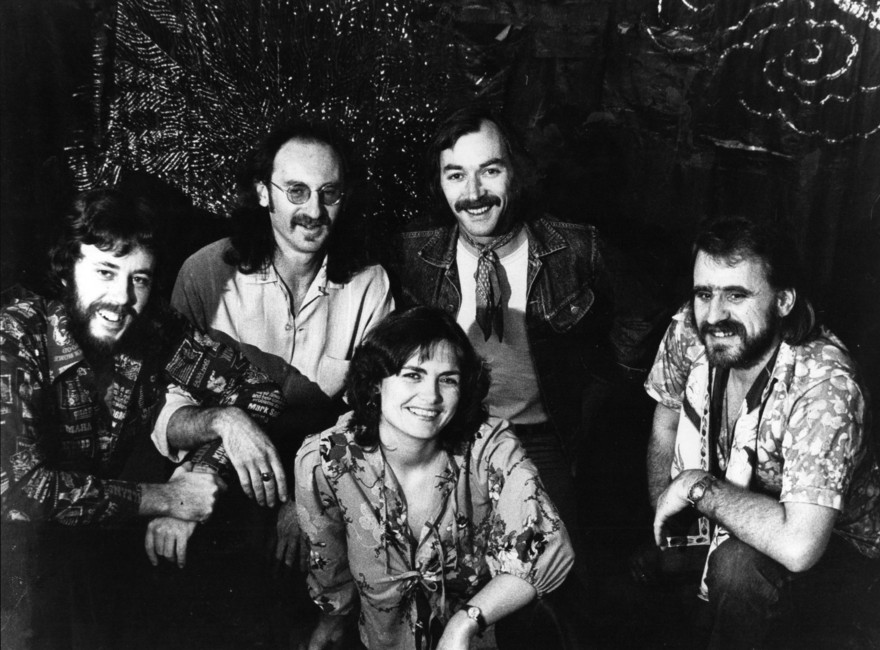
Red Hot Peppers Mark II, Australia. From left: Neil Reynolds, Pete Kershaw, Marion Arts, Mike Farrell and Robbie Lavën
But friction with the album’s producer, Englishman John Wood, and a falling out with their manager, which resulted in Lavën sacking him, raised the hackles of the Melbourne music industry. Red Hot Peppers became Marion Arts and Her Red Hot Peppers before grinding to a halt, and Lavën and Arts headed to Europe.
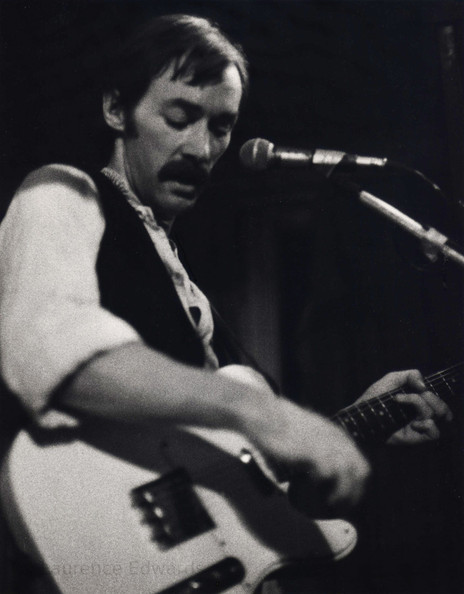
Mike Farrell. - Photo by Laurence Edwards
In an oft-repeated story from this time, Farrell told bandmates he was part of early rehearsals with the soon-to-be famous Men At Work but withdrew because he didn’t like the songs. However, Men At Work leader Colin Hay denied Farrell was ever involved. “I don’t remember a Mike Farrell, but that doesn’t mean I didn’t run into him at some point,” Hay told AudioCulture.
What Farrell did do was add slide guitar and vocals to Melbourne group Shaper’s 1979 single ‘Boat People’, produced at Richmond Recorders. The project’s singer and songwriter Joe Dolce put the recording on his 1981 LP Shaddap You Face. “I included it on the album because I always liked it and hardly anyone had heard it,” Dolce said.
Also in Melbourne was Midge Marsden, called over by promoter Barry Coburn to inject some personality into The Phil Manning Band. Farrell and Marsden crossed paths occasionally, but Marsden headed back to New Zealand at the end of 1979 to lead his own Kiwi Connection band.
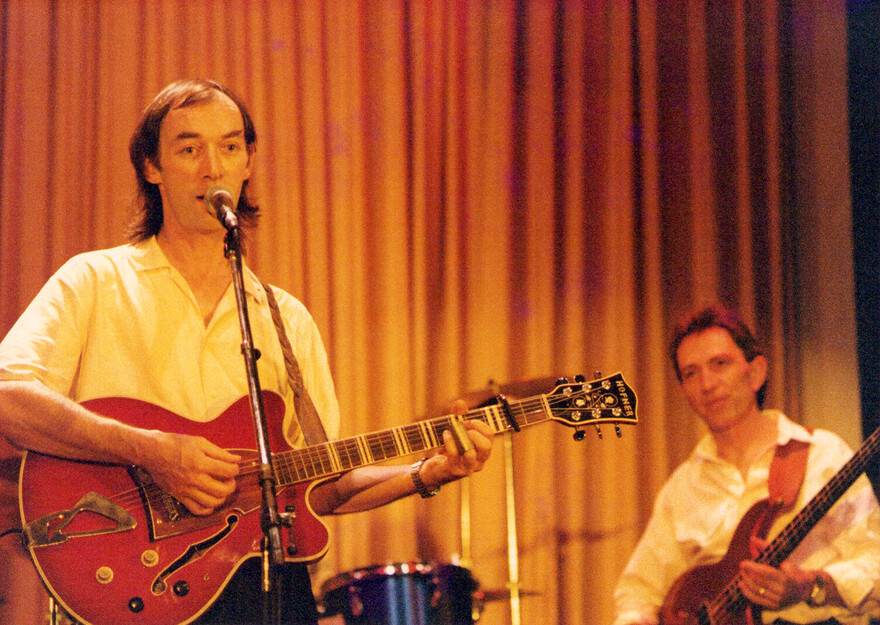
Mike Farrell and Sid Limbert. - Farrell Family Collection
The group’s initial tour was beset with a road accident, a missed Cook Strait ferry crossing and a line-up that didn’t quite gel. So bass guitarist Sid Limbert suggested bringing Mike Farrell into the fold. “I rang Mike and he came back,” Limbert said. “I picked him up at the Auckland airport. He had to get his amp back from Australia, we had to pay his airfare, and he brought his lady with him. So, everywhere we went we had to make accommodation arrangements for her. He was really hard work on that tour.”
At its conclusion, he was let go. By the middle of 1980, he had joined The Al Hunter Band, who held a Sunday night residency at Jilly’s in Auckland, just as Hunter was transitioning from a soul repertoire to a country one. The bass guitarist was John Dodd, late of pseudo-reggae outfit Bamboo.
“I’d never played with such a great guitar player and such a strong singer who was writing really good songs,” Dodd said of Farrell. “I was a big fan of Little Feat, and Mike’s songs, voice and guitar playing had that Little Feat vibe. So, I was immediately attracted to his musicianship in a big way. We started jamming and thought, ‘Let’s knock a band together.’”
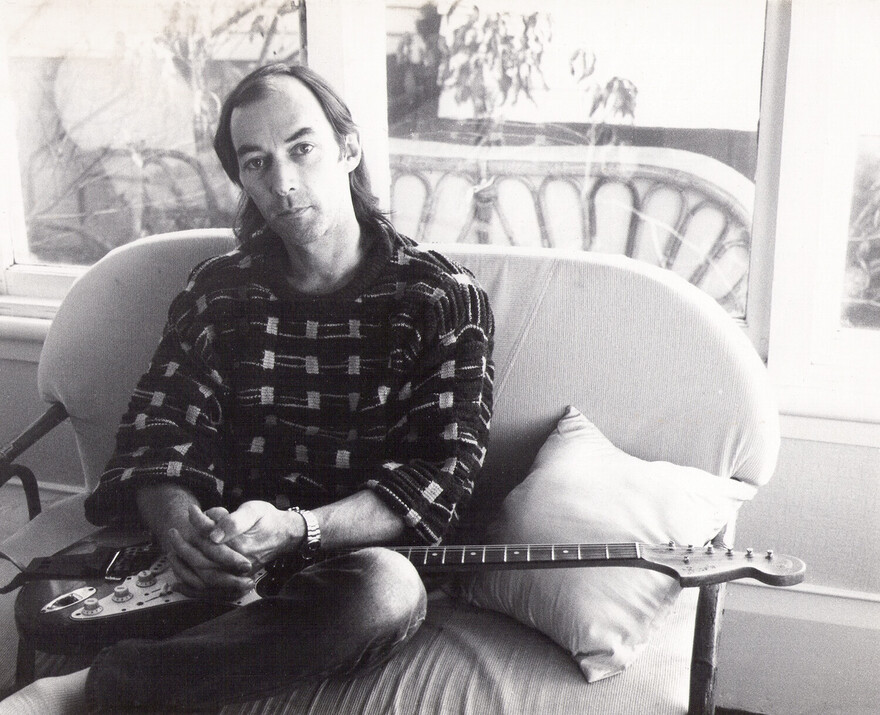
Mike Farrell with his beloved Fender Stratocaster. - Farrell Family Collection
Dodd pulled in his former Bamboo bandmates Mike Abbott (drums) and Liam Ryan (keys), who had already fallen under Farrell’s spell six years earlier in Christchurch. They hired a practice room, put together a repertoire of all their own music and were booked around the North Island by New Music Management as The Flying Doctors.
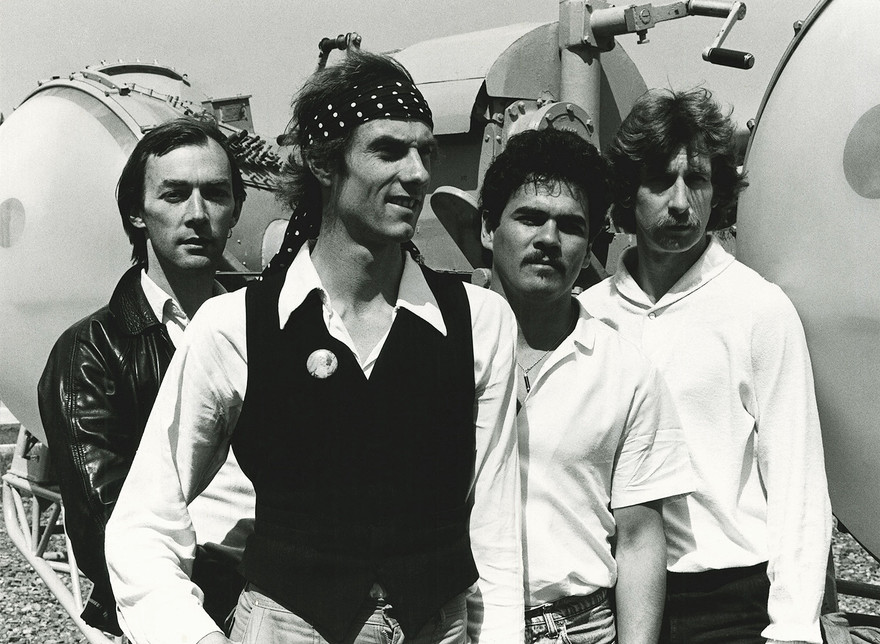
The Flying Doctors, Auckland, 1980. From left: Mike Farrell, John Dodd, Mike Abbott, Liam Ryan.
A single recorded at Harlequin – Farrell’s ‘All For You’ b/w Dodd’s ‘Deep Blue Sea’ – was never released because The Flying Doctors were soon grounded. “We weren’t earning much money; we were struggling really,” Dodd said. “Then the next thing, Liam says, ‘Midge has given me an offer to join his band and they’re earning good money, and I can’t afford not to do it.’ That was the end of The Flying Doctors.”
The Midge Marsden Connection had been chipping away at their own album at Mandrill. Farrell and Ryan had already appeared on sessions and when Limbert got fed up with the slow pace of proceedings and the travel back and forth from his Raglan home, he suggested Marsden use The Flying Doctors for ‘Optimism Blues’. Before long, Dodd was invited to join Marsden’s band.
The Midge Marsden Connection LP was released around October 1981. Guitarist Ta Rutherford opted out at the end of the corresponding tour, and Dodd and Ryan convinced Marsden to bring Farrell into the newly named Midge Marsden Band. Ross Burge replaced Kevin Thomas on drums.
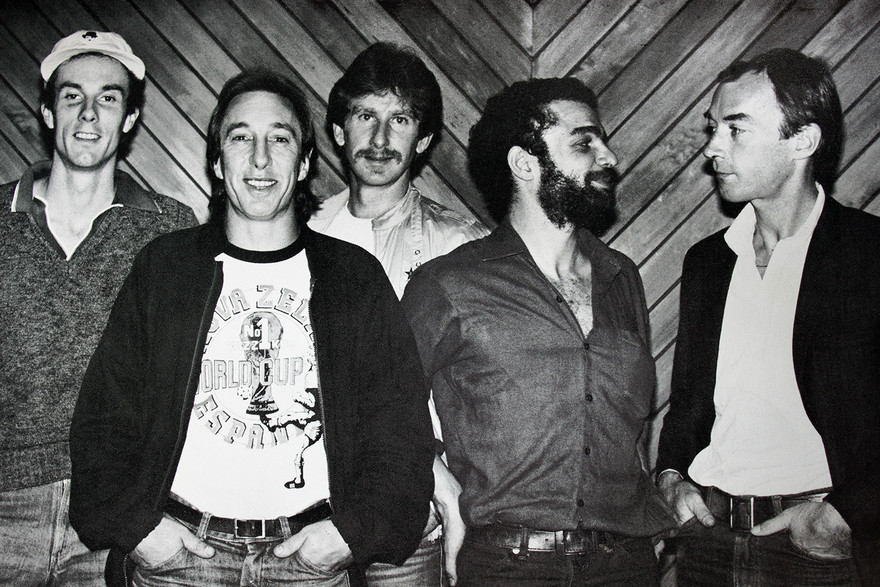
The Midge Marsden Band in a promo shot for the '12 Bars from Mars' LP at Harlequin Studios, Auckland, 1982. From left: John Dodd, Midge Marsden, Liam Ryan, Ross Burge, Mike Farrell.
This line-up recorded the 12 Bars From Mars album that opened with Farrell’s Flying Doctors scorcher ‘Carry My Blues Away’, a song that would remain in Marsden’s live sets for the next 40 years. The band toured New Zealand extensively before calling it a day after their 1983 Sweetwaters appearance. Along the way, The Flying Doctors recorded a handful of songs at Mandrill, but nothing came of them; there was also a one-off gig at the Globe in December 1982.
By this time, Steve Garden had settled in Auckland and set up his Basement Tapes studio, calling on Farrell to add guitar and vocals to several projects while he taught himself to engineer. One of these was the Phil Bowering/Low Profile mini album Quiet Streets, on which Farrell sang ‘Glass Cage’.
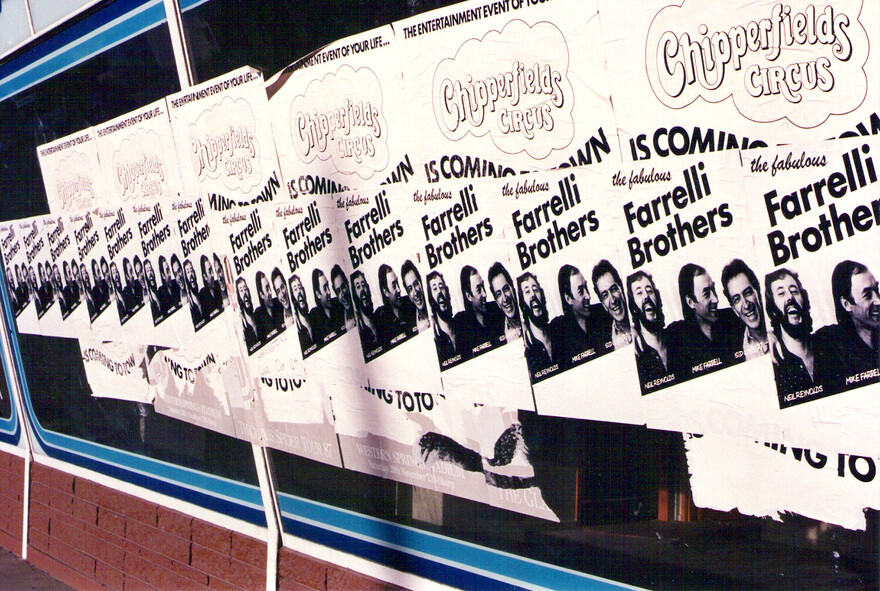
Never mind the circus, here’s the fabulous Farrelli Brothers. - Farrell Family Collection
Farrell’s solo gig at Spices Café turned into a duo with the addition of Sid Limbert on bass and then a trio with Garden on drums. When Garden became unavailable, Kevin Thomas jumped in. One night at the Performance Café, the manager asked for a band name to put on the blackboard. Marsden had got a kick out of introducing Farrell as Michael Farrelli during 12 Bars From Mars days, so Limbert suggested The Farrelli Brothers. Farrell had wanted to go with Farrelli Round The Flag, after ‘Rally Round The Flag’ from Ry Cooder’s Boomer’s Story album.
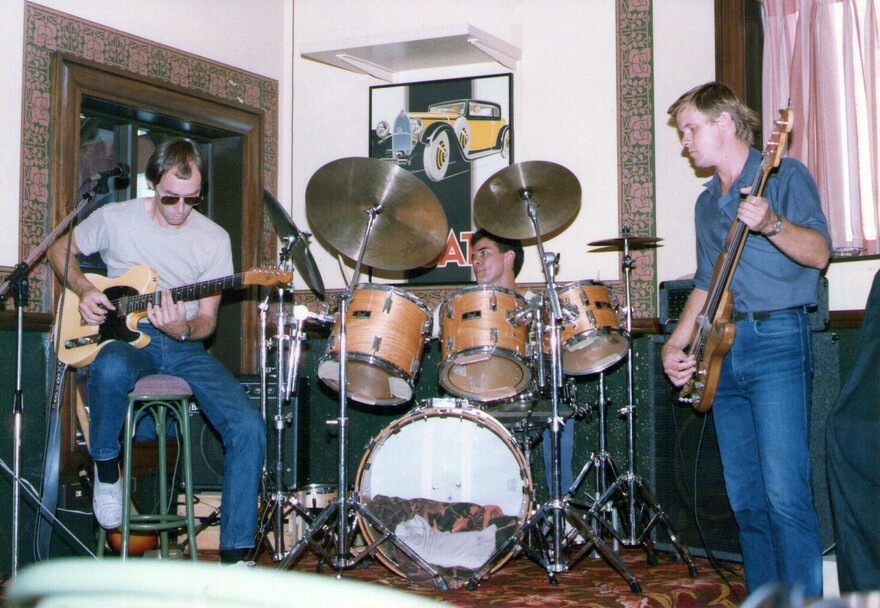
The Farrelli Brothers on stage at the Gluepot Corner Bar, circa late 1980s. Left to right: Mike Farrell, Mike Abbott, Neil Hannan. - Farrell Family Collection
The Farrelli Brothers were a regular sight around Auckland for the next decade or so. When Limbert had to withdraw through illness, Neil Hannan took over bass duties. There evolved a Waikato version of the band with Limbert and drummer Neil Reynolds, while the Auckland Farrellis continued with Hannan and a roll call of the city’s top drummers, including Garden, Lyn Buchanan, Ross Burge, Ricky Ball and Paul Dunningham.
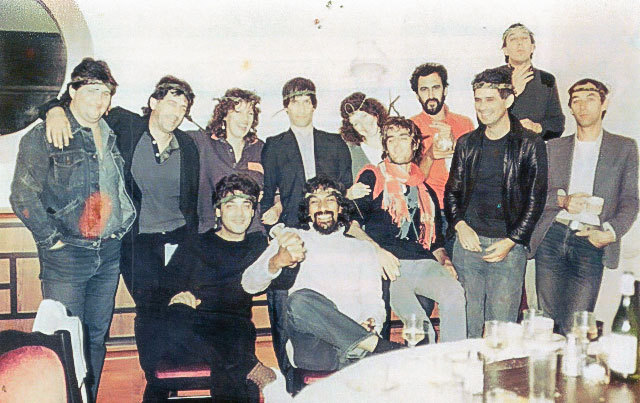
All-Stars Play the Blues end of tour dinner at Christchurch, 1984. Rear, left to right, Dennis Ryan, Hammond Gamble, Beaver, Wilko Johnson, Jane West, Neil Edwards, Paul Walker, Midge Marsden, Mike Farrell. Front, Walter Bianco, Sonny Day, Paul Hewson. - Photo by Wiiliam West. Courtesy of Paul Walker.
In 1984, Farrell and Marsden were part of promoter Paul Walker’s All-Stars Play the Blues extravaganza that toured nationally and featured Dr Feelgood guitarist Wilko Johnson, Sonny Day, Hammond Gamble, and Walker’s wife, Beaver. Before the decade was out, Farrell was in Marsden’s touring Giant Killers unit, which also included Billy Karaitiana, and the Waikato Farrelli Brothers toured the country with Marsden and Gamble.
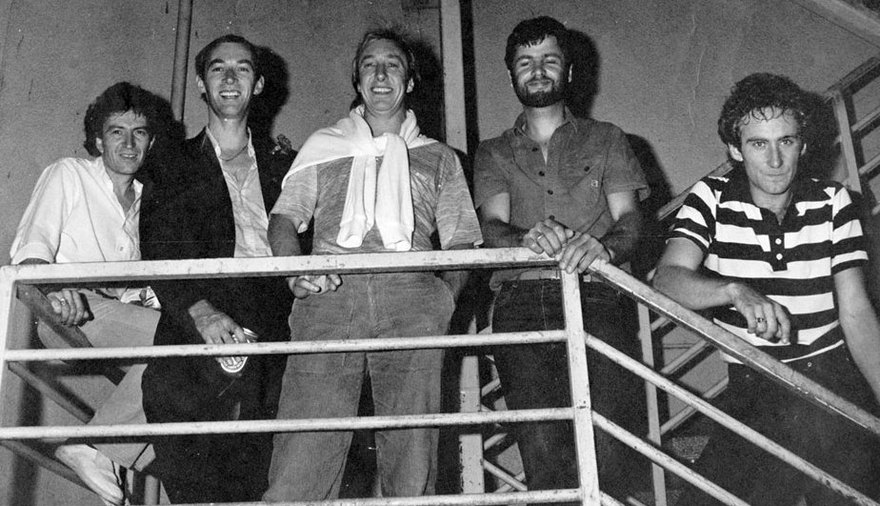
The Midge Marsden Band, 1985. Sidney Limbert, Mike Farrell, Midge, Andrew Kimber and Kevin Thomas. - Sidney Limbert collection
Farrell recorded demos and jingles at Reynolds’s Musicare facility in Hamilton, where he took a liking to engineer Lawrence Arps’s guitar synthesiser and subsequently bought his own. Sessions with Ray Columbus at Stebbing Recording Centre brought him to the attention of jingle king Murray Grindlay, and Farrell’s acoustic slide guitar was a feature of Grindlay’s 1986 ‘Travellin’ On’ campaign for Europa.
Sid Limbert remembers being called on to add bass on some of those demos. “Mike rang me up one night and said, ‘Sidney, I’ve got a song I think is a hit, and I want you to come up and record it tomorrow with Steve [Garden] and I.’ He said, ‘Can you come up tonight and we’ll just go over it?’ We went in the studio the next morning and put it down first take. It was called ‘Wings Of Love’ a beautiful, laid-back ballad. Steve played it back and it was like, ‘Wow.’ But we never ended up with anything finished.”
Columbus recorded ‘Wings Of Love’ for National Radio and tried to get the song placed in Nashville, but to no avail. Song plugger David Stone, Tim Murdoch’s former right-hand man at WEA Music NZ, garnered interest in Farrell’s ‘Little Ray’ from American star Lyle Lovett’s representatives. “The publisher listened to it and liked it and said, ‘Lyle’s in town, we’ll have a chat with him,’” Stone said. “They got back to me, but he had plenty [of material].”
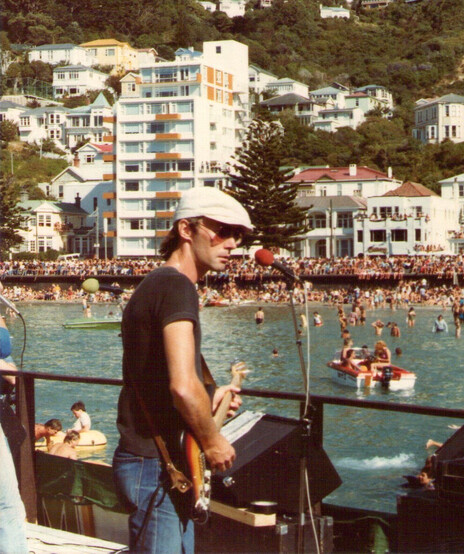
Mike Farrell basking in the sun on the barge in front of Oriental Bay, Wellington. - Farrell Family Collection
In 1987, Farrell scored the Michael Firth ski movie The Leading Edge. He talked about it with Richard Gordon in a Metro magazine article from December that year. “I did that at Mandrill Studio properly; writing in front of pictures, sweating it out. It was a good experience. That was the first film I’ve been let loose on completely.”
He also discussed the future of The Farrelli Brothers, regularly voted Auckland’s best pub band in the magazine. “Maybe we’ll go on the road or make a record. Touring for three weeks at a time isn’t too bad. Much longer than that and you start meeting yourself coming back. There are a limited number of gigs out there, so it gets a bit pointless after a while.
“I’m waiting for a $40,000 package and a guy saying, ‘I believe in you, son, go and make a record.’ New Zealand has to start getting its own musical identity sooner or later. Bands like The Warratahs and Al Hunter are the closest to a true Kiwi sound than anything else.”
With Wayne Laird and Billy Karaitiana, Farrell wrote the 1990 Commonwealth Games song ‘This Is The Moment’ and performed with an all-star band at the opening and closing ceremonies.
In exchange for recording time, he built Neil Hannan’s wooden recording desk in his Scoop de Loop studio. Hannan says: “I’ve got a lot of recordings here that never got released, because he just wouldn’t let anything go. He was such a perfectionist. The Farrelli Brothers never put anything out, but we used to record in at Airforce and various studios.”
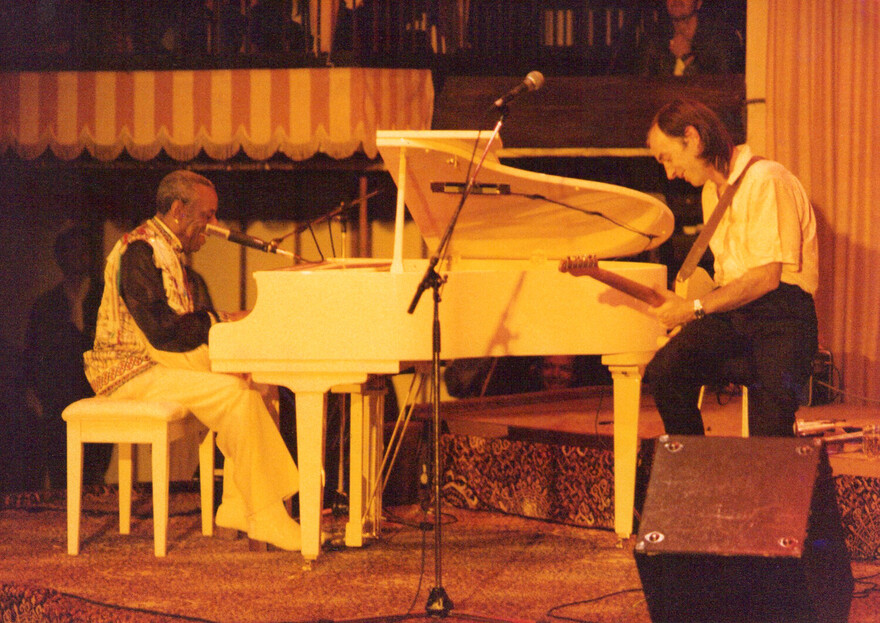
Mike Farrell picking guitar with New Orleans blues and boogie-woogie artist Champion Jack Dupree at the Mandalay, Auckland, February 1988. - Farrell Family Collection
In the late 1980s, Farrell wanted Steve Garden to produce an album with him. “He came into Progressive [Music Studios] and we had a kind of a loose deal over the studio time,” Garden said. “Basically, he had as much time as he wanted and we would work nights and things like that. He and I chipped away on this album for months and months. We got to a point where we had at least four or five tracks in pretty good shape and then he kind of lost interest. Then Burning Rain came along.”
Ater an extended period in Texas, Midge Marsden was back in Auckland and looking for material for a new album. He turned up at Farrell’s place with some phrases he’d jotted down, and the pair wrote ‘Struck Down By The Blues’. It would eventually turn into a tribute to Marsden’s Texan guitarist friend Stevie Ray Vaughan, who perished in a helicopter accident on 27 August 1990.
“Mike was living in a funny little flat in Newmarket,” Marsden recalled. “He said, ‘Look, I’ve got this other song, but I don’t think it will suit you. I don’t think you’ll like it,’ and he played me a verse and a half of ‘Burning Rain’. Holy shit! I said, ‘Wow, what a bloody song.’”
Released at the start of 1991 and produced by Steve Garden, Marsden’s album Burning Rain kicked off with three Farrell originals – the title track, ‘Little Ray’ and ‘Elle’ – and included the co-written ‘Struck Down By The Blues’. ‘Burning Rain’ saw Farrell a finalist for the 1991 APRA Silver Scroll songwriter award, pipped by Rikki Morris and ‘Heartbroke’, and was the biggest single of Marsden’s career, peaking at No.18 during its 12 weeks in the NZ Top 40.
“Hell’s bells, what would I have ever done without that song? I was fair shitting myself singing it in front of Michael in the studio,” Marsden said. “He knew I was a bit nervous. But Michael was there every day. When I first had a go at it, I wasn’t doing it very well. Once again, he was there and he’d sing along with me and guide me.”
Garden recalled the fastidiousness Farrell put into his guitar parts and backing vocals on the project. “It was sort of as much his album as it was Midge’s,” he said. “We had to do a solo just before we went to Sydney to mix it. We started at two o’clock in the afternoon and we were still doing takes at 4:30 in the morning. So, I had something like 17 takes of guitar solos to listen to and cut, and in the end, I went for the take we did at two o’clock in the afternoon!”
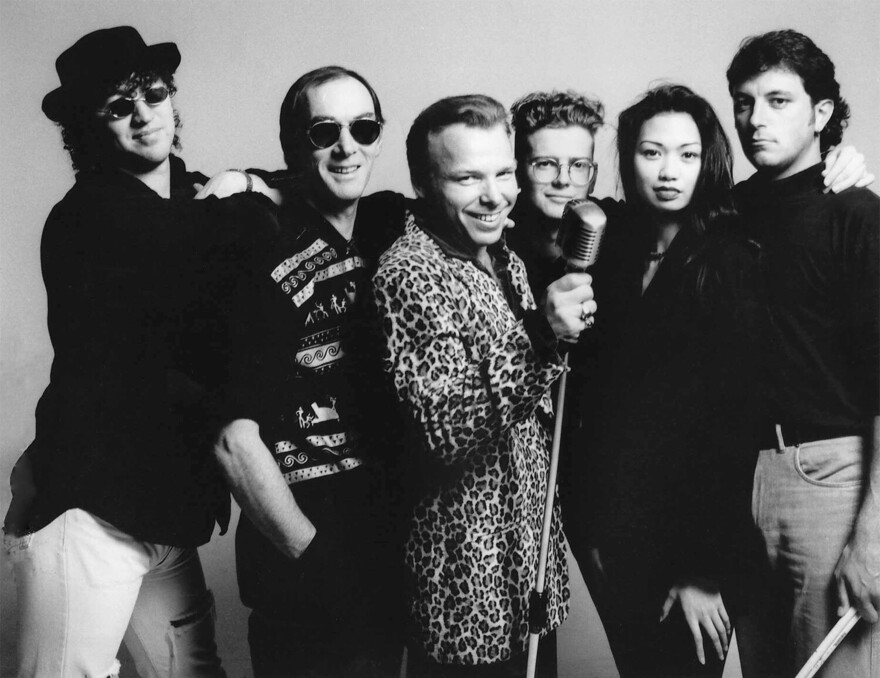
Ted Clarke’s Backdoor Blues Band in the early 1990s. Left to right: Daryn Karaitiana, Mike Farrell, Ted Clarke, Andy Bickers, Boh Runga, Patrick Kuhtze. - Ted Clarke Collection
In the early 1990s, Farrell gigged with Ted Clarke & The Backdoor Blues Band and Clarke cajoled him into joining him and Marty Free on their latest NZ Blues Brothers Revue national tour. That led to a Blues Brothers theatre show that ran at the Mercury Theatre in Auckland for about a month and supplied Farrell with the beret that thereafter became part of his stage attire. Farrell produced and played on Ted Clarke & The Backdoor Blues Band’s 1993 CD Déjàvoodoo.
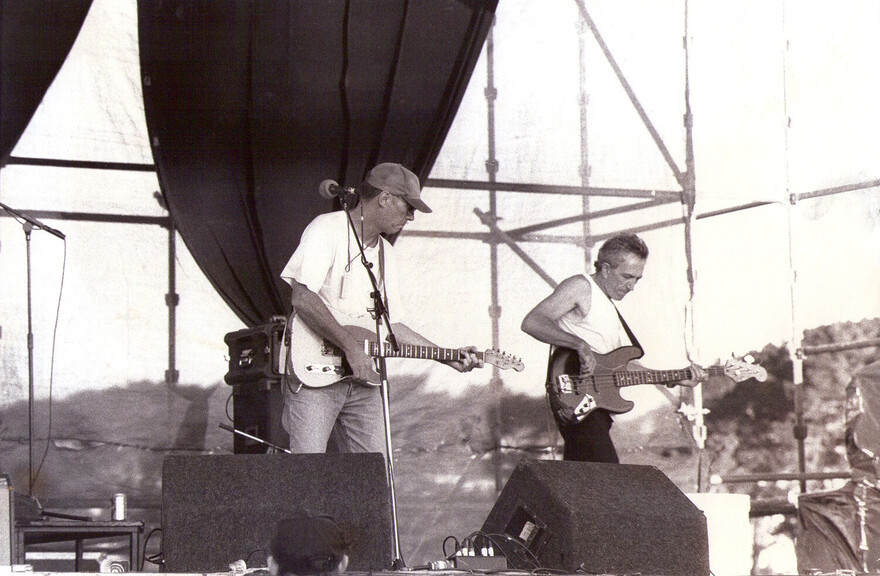
Mike Farrell (left) and Sid Limbert with The Remarkable Beat Roosters at Sweetwaters 1999. “It was Mike’s last big gig,” Limbert said. “He had just joined The Beat Roosters, and we’d been rehearsing a new album with mostly Mike’s songs, and a couple of Ted Clarke songs. We came off stage after a fantastic set to find The Amazing Rhythm Aces in our tent raving about our band.” - Farrell Family Collection
Three years later, the man who in 1969 had fired Farrell from Tom Thumb was asked to put the band back together for a reunion of Wellington bands of the 1960s at the Lower Hutt Town Hall. “I thought, ‘I haven’t spoken to Michael for 20 years and we didn’t part on the best of terms’,” said Rick White. “I was given his phone number and I rang him. ‘G’day, Mike, it’s Rick White.’ ‘Oh, g’day, man!’ I said, ‘We’ve been asked to do this thing.’ ‘Oh, we’ll do it!’ We went to Mike’s little home studio and just started to play, and it sounded great.”
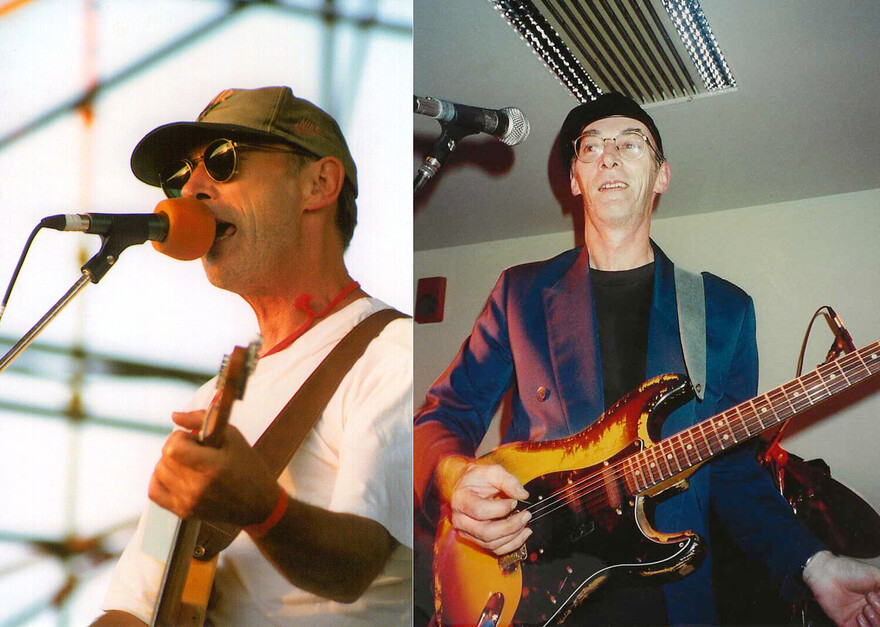
Mike Farrell at Sweetwaters 1999 (Farrell Family Collection); and at right, wearing his beret (Ted Clarke Collection).
The reunion show was a huge success. Marmalade Studios founder Rocky Douché wanted to record an album, and Farrell talked to White about moving to Wellington and re-forming Tom Thumb permanently. Farrell’s wife, Fiona, confirmed they were entertaining a move.
“We had discussed this at length, but nothing firm had been decided,” she said. “Mike’s income was sporadic, and he was having health issues. I had a regular income, which gave us the stability we needed with two young kids. Mike worked from home in his studio, which he built at the back of our Sandringham home, and he was there for the kids after school.”
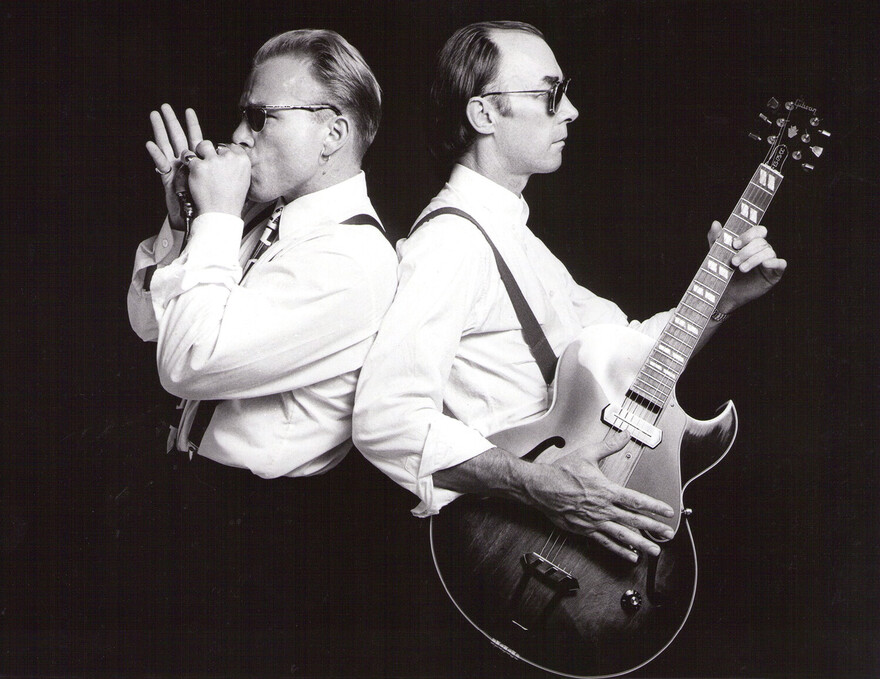
The Juke Giants, early 1990s. Ted Clarke (left) and Mike Farrell. - Farrell Family Collection
Meanwhile, Farrell had continued working with Ted Clarke, touring in duo form as The Juke Giants, and as musical director in Clarke’s neo-swing outfit Del Piranha and His Rhythm Kings. It was while working on Del Piranha material at Clarke’s home that Farrell noticed a page of scribbled lyrics. “I gave him a few and he came back with some songs,” Clarke said. “We basically wrote 12 songs and recorded 11, I think.”
Over the next couple of years in Farrell’s small Sandringham studio, Farrell and Clarke crafted what would become Clarke’s Wildlife album. “He’d never worked with computers,” Clarke said. “We made a deal: he bought all the gear and I bought the speakers. That was the initial deal we had. I probably got a really good deal in terms of the time he put in because he was such a perfectionist. He just put in so many hours.”
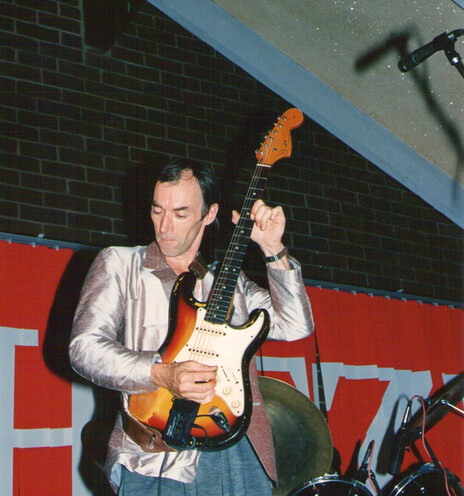
Mike Farrell with his beloved Fender Stratocaster, Roland GK-1 synth driver plugged in and at the ready. - Farrell Family Collection
In May 2000, Clarke picked up the packaged CDs from the manufacturer and dropped one to Farrell’s home. The next night, Farrell had a trio gig at the Java Jive Café in Ponsonby during which he fell ill. It was evident to the venue’s management and his bandmates that he was having a heart attack, but he refused to let them call an ambulance and insisted on being driven home. Michael Farrell passed away at home in the early hours of Saturday 20 May 2000 at the age of 51.
“Six weathered guitars on their stands surrounded his casket and his lilting voice and peaceful slide guitar were coming through the speakers,” Midge Marsden wrote in a NZ Herald obituary. “It was as though he had written the music for the occasion. Michael leaves his partner Fiona, children Bridey, Megan, Luke and Phoebe and a vault of original songs yet to be heard.”