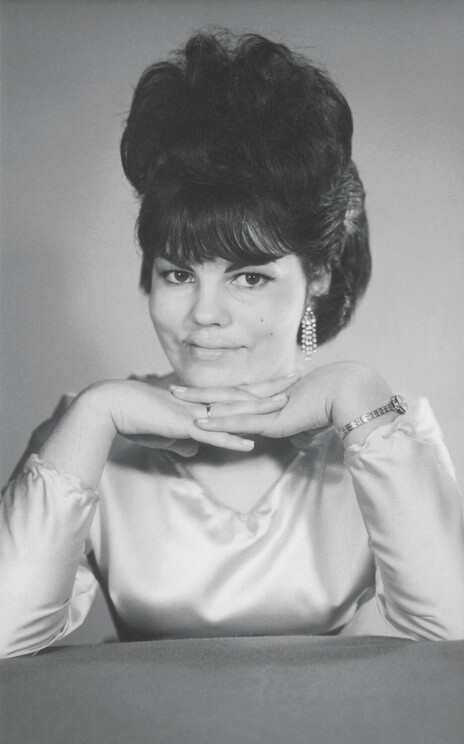
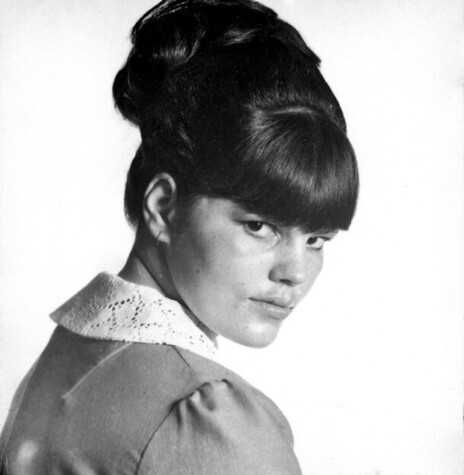
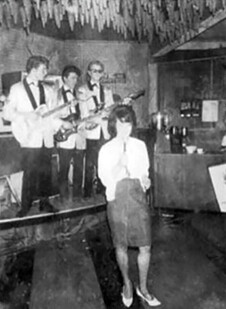
Howe was especially close to her father, whose encouragement inspired her to promise that she would one day pursue a career in music. Tragically, he died suddenly in 1962. Determined to support her ambitions, the Howe family rallied behind her. Her sister Judy arranged an audition with a local North Shore group, The Starlites, while her brother took on the role of driver and minder.
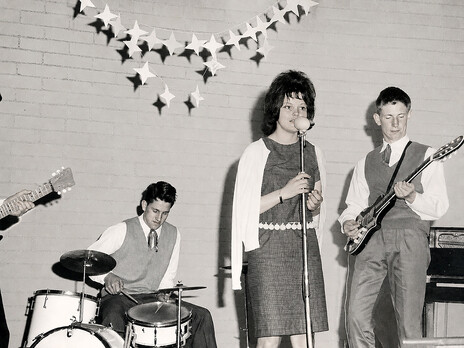
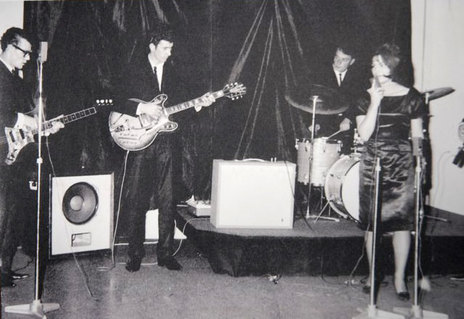
Bruce Jarvis of The Starlites recalled: “We were just starting out as a group and had a regular gig every Friday night from 7pm to 9pm in the supper room behind St George’s Presbyterian Church in Takapuna. Howe would join us for a 10-15 minute spot each week. She’d arrive with her brother, quietly sit in the corner beside the stage, and when it was her cue, jump up and belt out a few Brenda Lee and Connie Francis numbers, usually throwing in a Helen Shapiro song as well. Before you knew it, and with the applause filling the room she was heading for the door where her brother would be waiting in the car with the engine running.”
“Before you knew it, with the applause filling the room, she was heading for the door”
After several months with The Starlites, Howe moved on to a regular Friday night engagement at the Takapuna War Memorial Hall. It was there that she came to the attention of Gary Daverne. He saw that pairing her with The Silhouettes – a North Shore band featuring his brother Wayne on drums – was “an ideal way to relaunch my Viscount label, which had been in limbo for several years.”
Meanwhile, Howe continued gaining valuable stage experience. She secured regular paid work at the Bel-Air Coffee Lounge on Queen Street, opposite the Auckland Town Hall. During 1962-63, the venue’s resident backing group was Gene and The Dynamites, who later evolved into Zodiac recording artists The Seakers (later known as The Rayders).
Howe later recalled: “I enjoyed the atmosphere at the Bel-Air, it was certainly a different crowd than what I was used to. One memorable night I shared the bill with Ray Woolf, who was my idol at the time. He had only been on the scene a short while, and had already released several singles on the Zodiac label and had just completed a national tour with Helen Shapiro. Making records was another goal of mine.”
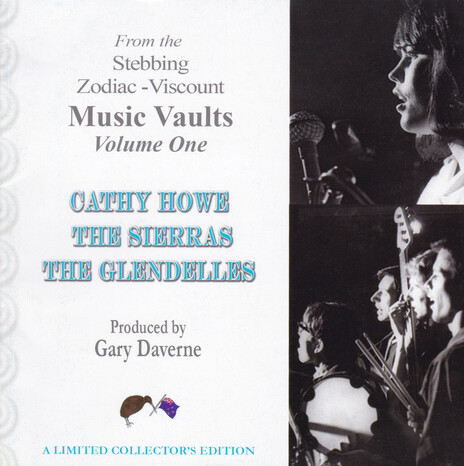
For Howe’s first Viscount recordings, she was backed by The Silhouettes and female vocal group The Glendelles (from Glendowie College).
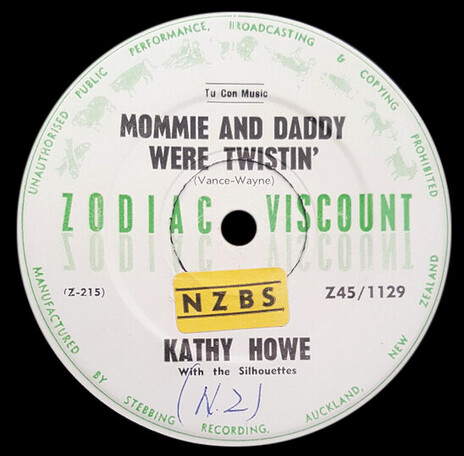
Comparisons to popular English singer Helen Shapiro had followed Howe since her earliest public appearances; this intensified with the release of her debut single, ‘Mommie & Daddy Were Twistin’’ b/w ‘Then He Kissed Me’, in October 1963. Auckland radio personality Merv Smith of 1ZB reportedly proclaimed it the finest local record of the year.
Reviewing the release on 24 October 1963, the Auckland Star noted:
“A new vocalist, KATHY HOWE, sounds a little like Helen Shapiro, with the same distinctive voice. Backed by THE SILHOUETTES she sings ‘Mommie & Daddy Were Twistin’ (Zodiac Z45-1129). It’s a catchy number that is sure to keep you twisting. ‘Then He Kissed Me’ on the reverse has a strong beat and the backing is prominent.”
Although intended as the B-side, ‘Then He Kissed Me’ was quickly identified by radio programmers as the stronger commercial track and became the record’s plug side.
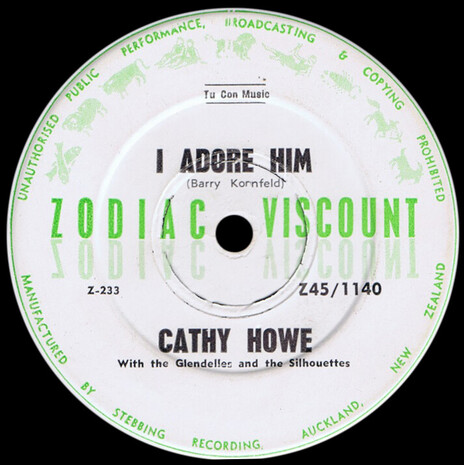
Only a month later, Howe released her second single, ‘I Adore Him’ b/w ‘Keep An Eye On Her’. Reviewing the record on 21 December 1963, the Auckland Star wrote: “Deep-voiced Cathy Howe captures the catchy rhythm of ‘I Adore Him’ on Zodiac 1140 and the result is good.”
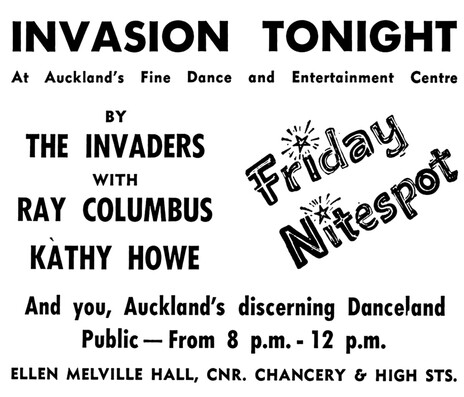
At the same time, fellow Zodiac act Ray Columbus and The Invaders was promoting its own second single. The two acts shared a four-week residency at the newly opened Friday Nitespot, held in the Ellen Melville Memorial Hall just off High Street in central Auckland.
“The Invaders sounded so good I wanted to stop singing and just sit down and listen”
Howe later recalled: “I had sung with some good groups up until that stage, but with The Invaders behind me it took a few songs to get used to the power of the band. They sounded so good that I wanted to stop singing and just sit down and listen to them play. From memory, Billy Karaitiana had just joined the group and he was such a powerful bassist that I could practically feel my intestines vibrating.”
The association led to an even bigger opportunity. Early in 1964, Howe joined the Showtime Spectacular North Island tour alongside Ray Columbus & The Invaders and other acts. The tour opened at Claudelands Racecourse in Hamilton before moving on to Napier and Whangārei, with every show selling out.
“I had never sung in front of that many people before. The cast and crew all travelled together on an NZR bus. It was both scary and exciting. I was the only female on the tour, so I was definitely out of my comfort zone. Ray Columbus – bless him – watched my back throughout the tour, especially when the crates of beer came out and started taking effect. I’ll always be grateful for his mentorship and protection, both during that tour and beyond.”
During 1964 Howe released four singles, starting with the Motown classic ‘Please Mr Postman’ which was released as a B-side to the Glendelles’ second single.
Her next solo release was originally intended to be ‘Teenage Heaven’, one of her own compositions. However, producer Gary Daverne had other ideas, as Howe later recalled; “Gary had a penchant for older show tunes and movie songs, so he shelved it in favour of ‘High Noon’, the theme from the 1952 Gary Cooper film of the same name”.
The decision disappointed Howe, who had long harboured ambitions as a songwriter. “When I was growing up, most dads spent their spare time in the garage tinkering with cars or tools. My dad would be inside tinkering with his guitar and noodling around with lyrics. I’d sit with him and we’d bounce ideas off each other. They were special times and they fostered my hopes of one day writing my own songs.”
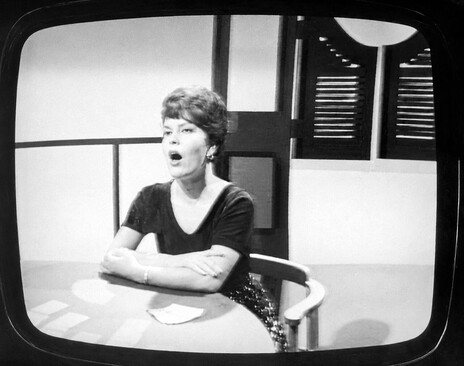
Despite her reservations, ‘High Noon’ provided another milestone when she performed it on the television pop programme In The Groove, marking her first of many TV appearances.
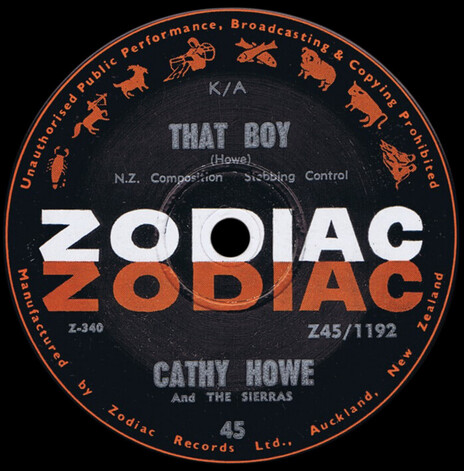
Two further singles followed during 1964. The first was a rock-styled version of ‘Meet Me in St. Louis’, inspired by Judy Garland’s performance in the 1944 film of the same name. The second finally granted Howe her wish: the release of another of her own compositions, ‘That Boy’.
She reflected later: “The release of ‘That Boy’ remains one of the proudest and most treasured memories of my career after the disappointment of seeing ‘Teenage Heaven’ shelved.” The single’s B-side, ‘Easy Come, Easy Go’, was – fittingly – a Helen Shapiro album track.
‘That Boy’ is believed to be the first commercially released New Zealand recording in the pop genre written by a local female songwriter.
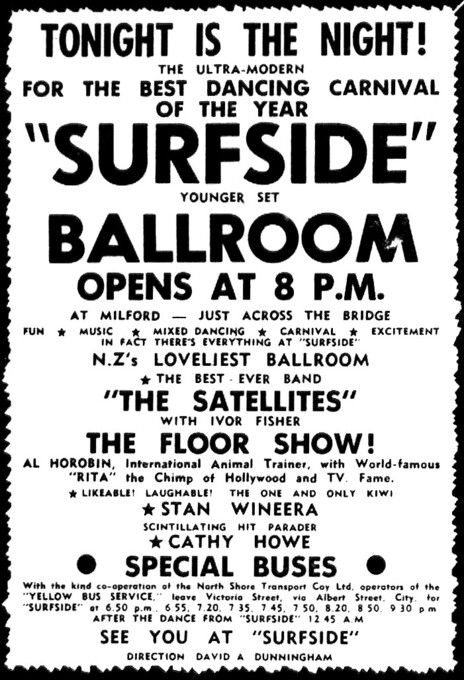
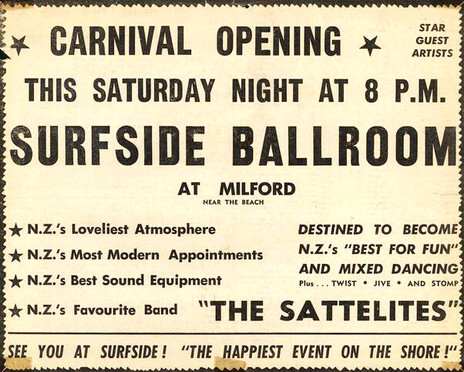
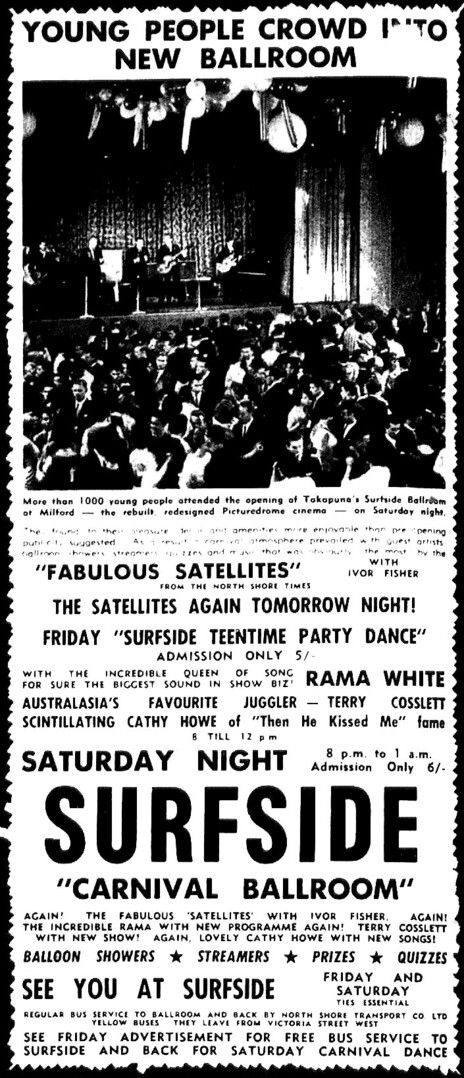
A major turning point in Howe’s career came on 4 May 1964 when Auckland promoter Dave Dunningham opened The Surfside in Milford on Auckland’s North Shore. Described as New Zealand’s first “ultra-modern” nightclub, the former cinema had undergone renovations costing more than £20,000.
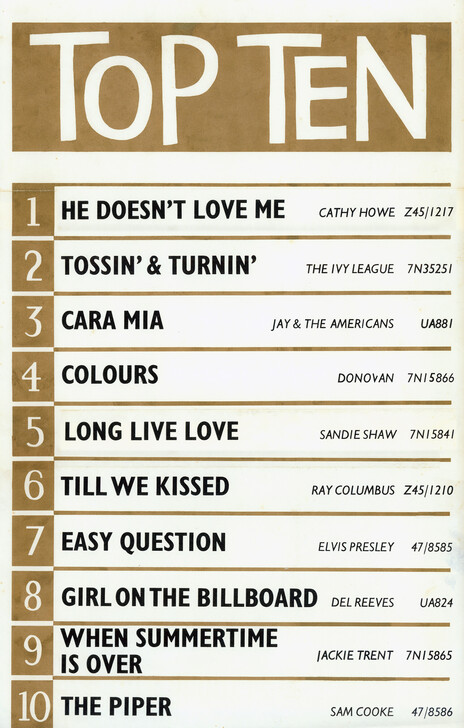
Howe was billed, “The Scintillating Hit Parader Cathy Howe of ‘Then He Kissed Me’ Fame”
Howe, together with Hamilton group Ivor Fisher & The Satellites, was selected to open the venue and became one of its resident attractions. What was initially expected to be a short engagement evolved into an eight-to-nine-month residency that significantly elevated her profile.
The Surfside became a mecca for music fans on both sides of the harbour bridge; every Saturday night nine buses brought them from central Auckland direct to the club. Howe was billed, “The Scintillating Hit Parader Cathy Howe of ‘Then He Kissed Me’ Fame.”
Opening night also featured comedian and compere Stan Wineera and, in one of the more unusual bookings of the era, Rita the chimpanzee. It was claimed around 1000 people attended the opening night, although this may have been an understatement to avoid scrutiny from council and fire authorities.
For Howe, the residency represented a dramatic step up. After two years of performing in smaller venues she was now performing in front of large crowds on a nightly basis.
In early 1965 she left The Surfside to begin an 18-month residency at the newly reopened Crystal Palace nightclub on Mt Eden Road. “Phil Warren, who was running the club, became my booking manager when I started there. Lew Pryme began his residency on the same night, along with The Sierras.”
By this stage, however, Howe had already begun planning her future beyond the music industry. “After about a year at the Crystal Palace, I started doing my own bookings so I could gradually ease my workload. I wanted to fade away from the scene and concentrate on my next goal — getting married and raising a family.”
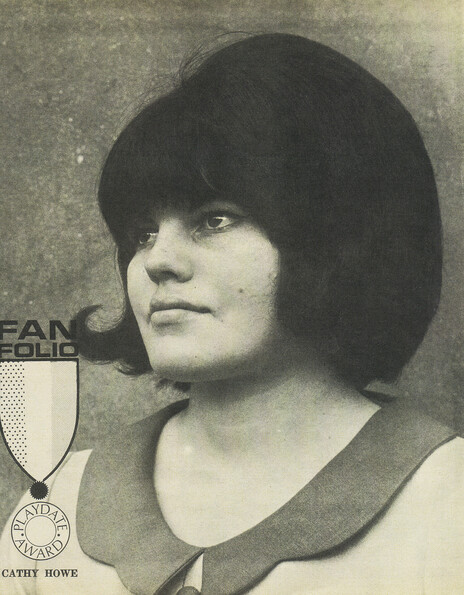
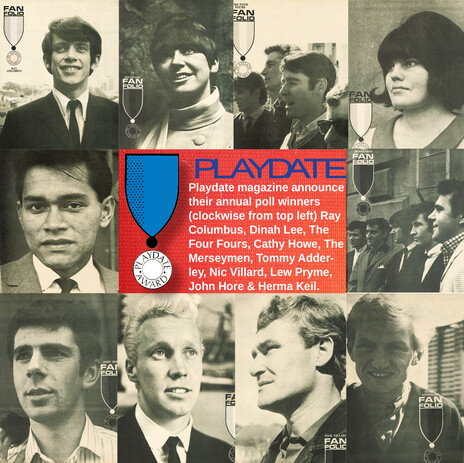
Ironically, as she began withdrawing from the spotlight, her career began an upward trajectory starting with being voted into Playdate magazine’s annual poll winners list alongside leading New Zealand entertainers such as Ray Columbus, Dinah Lee, John Hore, The Four Fours, Lew Pryme, Herma Keil, Nick Villard, Tommy Adderley, and The Merseymen.
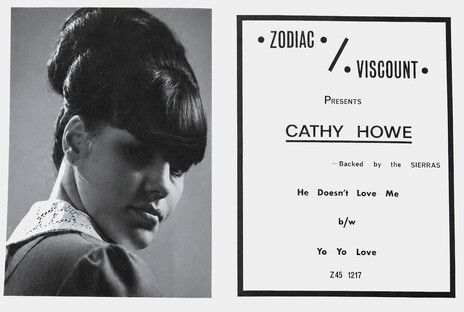
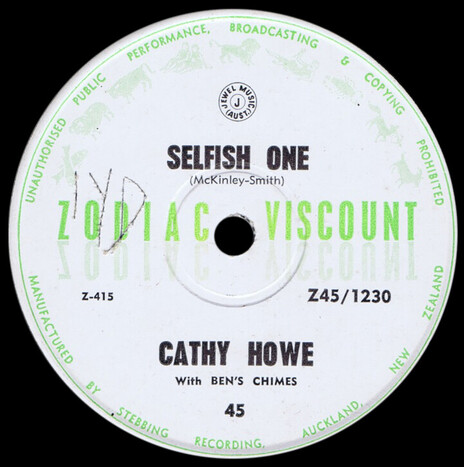
December 1965 saw the release of Howe’s final single, ‘Selfish One’ b/w ‘He’s My Boy’.
Up until then, Howe had generally been backed in the studio by either The Silhouettes or The Sierras. When neither group was available for the session, Gary Daverne assembled a formidable recording band featuring himself on saxophone, guitarists Ben Tawhiti and Graham Gibson, and the rhythm section of Leo Sleeman (bass) and Alex Behrans (drums) from Terry Dean & The Nitebeats.
Shortly afterwards, Howe accepted one final summer engagement at Orewa’s Soundshell, appearing with Ray Columbus and backed by an emerging Auckland group called The Cossacks, whose bass player was a young Chris Parfitt – later, lead singer of The Hi-Revving Tongues.
Parfitt recalled: “This was a big deal for us. Ray and Cathy were regulars on television pop shows, so we were in awe of them. Ray was a bundle of energy, while Cathy seemed more than content to sit quietly in the corner by herself.”
Howe: “I had offers to perform at all the summer holiday hotspots over that Christmas holiday period and turned them all down in favour of Orewa. It was only 30 minutes from home and I could sleep in my own bed.”
During 1966 she steadily reduced her professional commitments until she virtually stopped accepting bookings. She married and quietly stepped away from the entertainment limelight, satisfied that she had achieved the goals she had set for herself as a young girl.
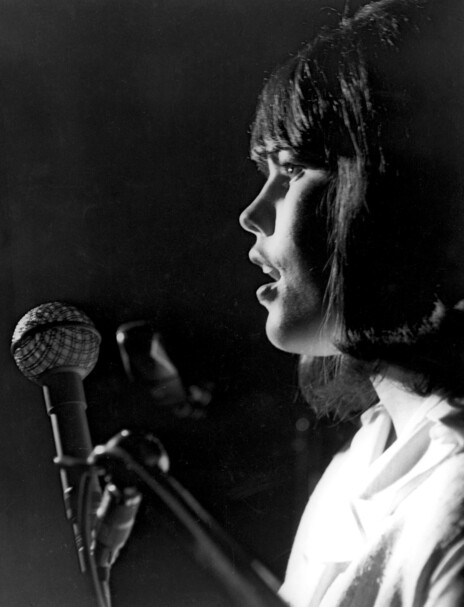
Howe described herself as “chronically shy” and “a bit of a homebody”
Howe had overcome formidable personal obstacles to build a successful recording and performing career. By her own admission she was “chronically shy” and “a bit of a homebody” – characteristics rarely associated with a pop performer.
Yet something remarkable happened whenever she stepped onto a stage. The nervousness was replaced by a confidence that surprised even those who knew her best. Friends from her neighbourhood and former classmates would see her on television or hear her records on the radio and struggle with the fact that the polished young entertainer before them was the same shy girl they remembered.
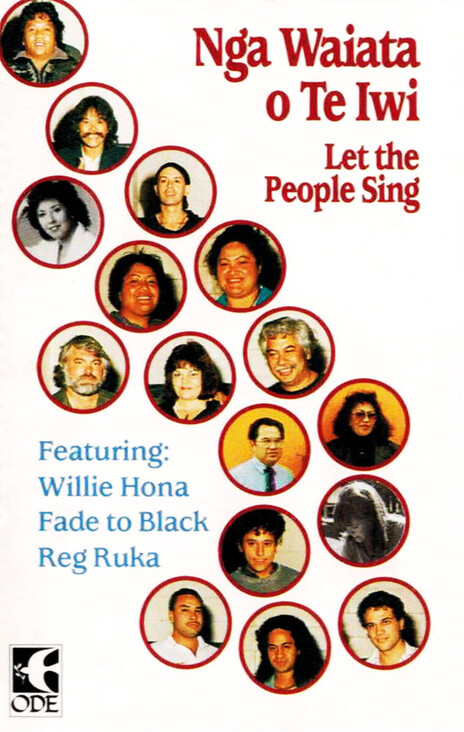
More than two decades later Howe re-emerged when, in August 1989, Ode Records and the Māori newspaper Te Iwi o Aotearoa launched a nationwide songwriting competition seeking material for the album Ngā Waiata o Te Iwi (Let The People Sing). The project was created to commemorate the 150th anniversary of the signing of the Treaty of Waitangi. Recording under her married name, Cathy Baker Howe, she was selected to contribute three original compositions: ‘A Song For Shannon’, ‘Rahui’, and ‘Maori Girl’. Other artists featured on the compilation included Mark Heke, Reggie Ruka, and former Herbs member Willie Hona; recording took place at Mandrill and Ocean West Studios.
Creative writing increasingly became Howe’s creative outlet. In 1997 she completed the novel Tales of Te Teko and the short story “Destined Appointment”, which became a finalist in the Huia Short Story Awards. Her children’s books Duckie Duddle Leaves Home and Masport and Murray were published in 2002, and a second novel, Roses in Autumn, followed in 2003.
The final decade of Howe’s life was marked by declining health. Following a short illness, she died on 6 July 2024. While she never achieved the level of fame enjoyed by some of her contemporaries, Howe succeeded on her own terms. She built a respected recording and performing career, wrote and recorded her own songs, published books, and left behind a body of creative work spanning more than 60 years.