Roger Perry at The Siren, High Street. - Brigid Grigg-Eyley
High Street
Roger Perry had also become mates with someone who would play a major role in his future. Grant Fell had been a member of the Auckland band Children’s Hour, but when that band split, he had headed to Australia. He returned in 1986 and, after the tragic suicide of bassist Johnny Pierce, he joined the other former Children’s Hour members in the Headless Chickens. He took over Johnny’s roles as both bassist and the band’s unappointed manager. Grant was a doer; he made things happen and was both musically adventurous and a cultural visionary, with projects spanning music, clubland, publishing and fashion.
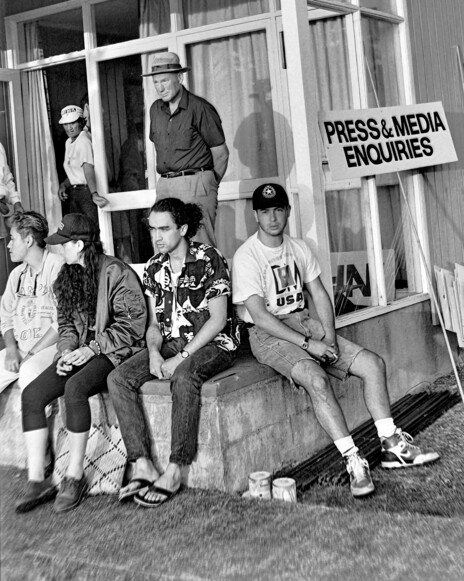
Rachael Churchward, Grant Fell and Roger Perry at sunrise on the Waitangi grounds on the 150th anniversary of the signing of Te Tiriti o Waitangi, 6 February 1990. - Darryl Ward
Roger’s girlfriend at the time, Carla Perillo, was a fashion stylist. Through that connection, he and Grant met and instantly formed a bond that would last decades.
“I was a big fan of Children’s Hour,” Roger told AudioCulture. “I met him in the [Debrett’s] Corner Bar. We hit it off straight away. I think he had discovered more club-style music in – I think they were in Melbourne, right? It was just bang, from the get-go.”
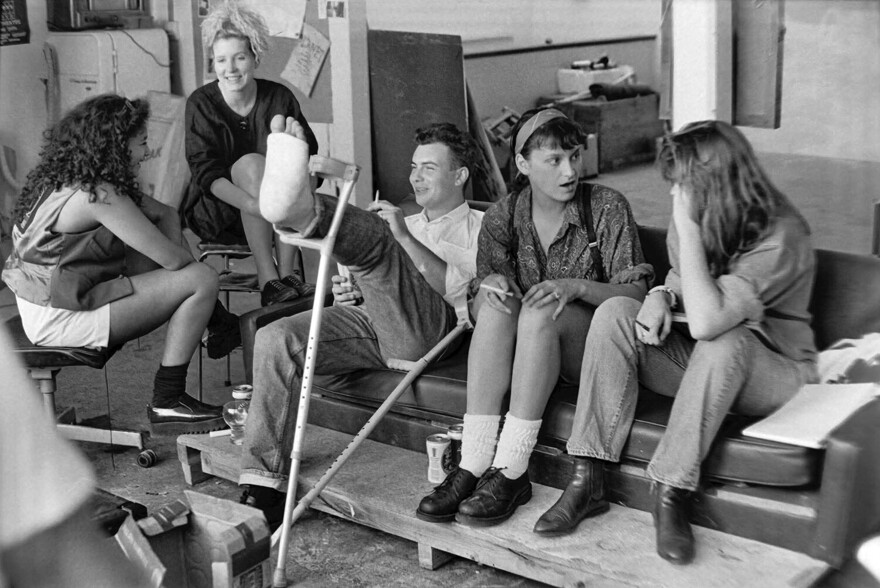
Planet Magazine offices, December 1989: Judith Campbell, Yvonne Davidson, Roger Perry (with a broken heel), Rachael Churchward, unidentified. - Darryl Ward.
The two began hanging out, plotting and planning bigger things. While they did that, Tom Sampson and I had found a new space, the old Club Mirage on High Street. With the stockmarket implosion, the money market dealers had disappeared as quickly as their expense accounts. With a little haggling and minimal renovation, we opened on 9 December 1988, with Roger as the primary DJ, supported by Jon Davis, a UK DJ we had sponsored to immigrate to New Zealand; also, now increasingly token, me.
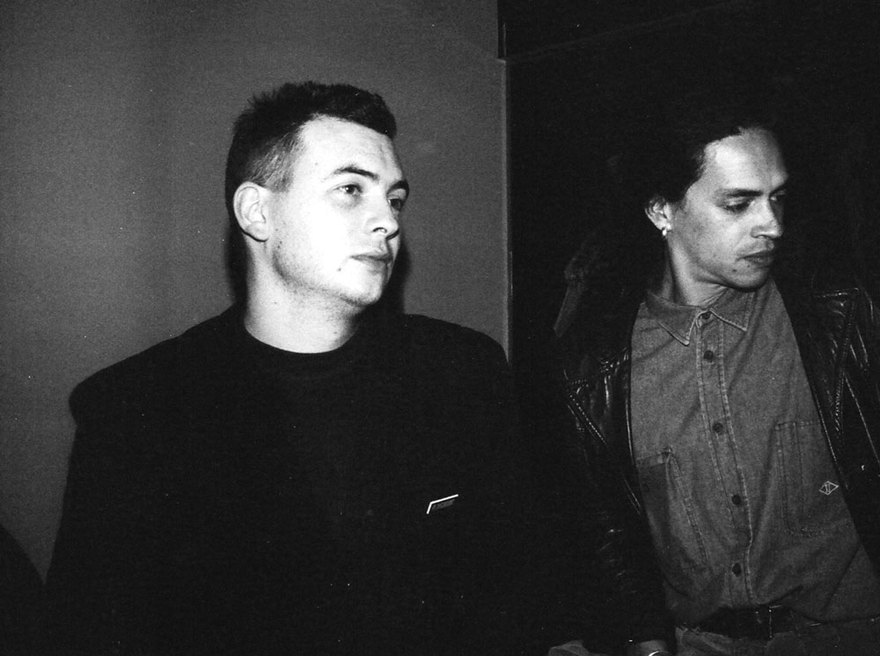
Roger Perry and Eddie Chambers, The Siren, 1989. - Photo by Brigid Grigg-Eyley
We named it The Siren. It was a far more compact place, an underground cellar with a low ceiling, hit-and-miss air conditioning (these were still smoke-in-club days), so it was always hot and smoky. It was painted black, and the room flowed around the DJ booth – still the Mirage one Roger had used earlier – with a big, central dancefloor. It was the classic grungy underground nightclub, so perfect. It also had a rare 24-hour liquor licence, but we decided to close at 3am for sanity’s sake.
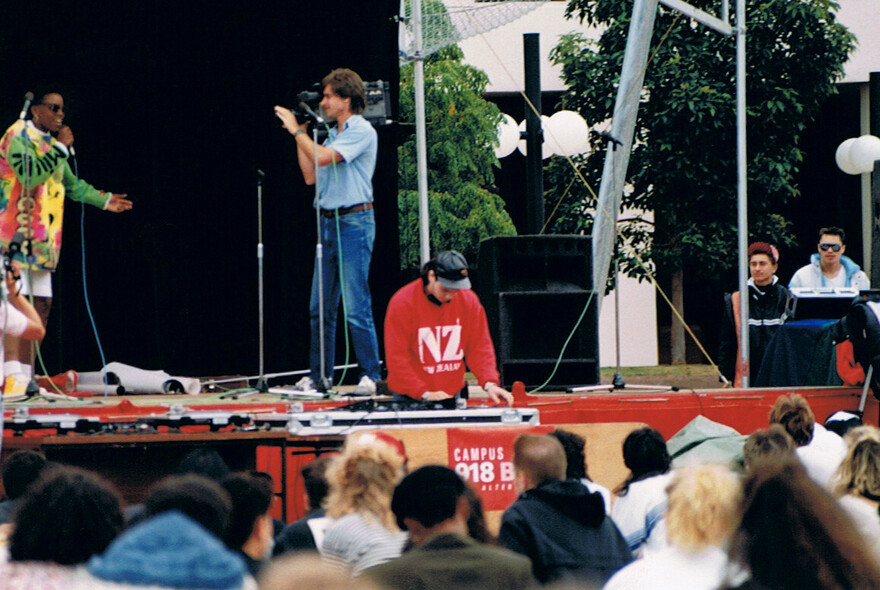
Roger Perry playing at the 1988 Campus 918 Radio rap competition, Manukau City. Rapping, far left, is MC Koi-Ski. - Simon Grigg
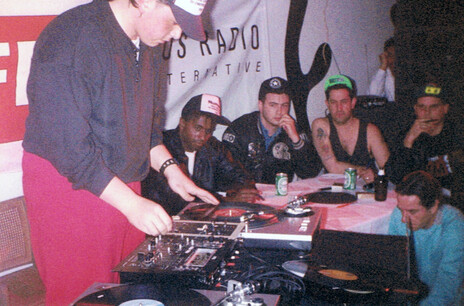
DJ Raw and the judging panel at the 1989 NZ DJ Champs, The Siren, August 1989. Sitting are, from left, Jon Davis, Roger Perry (head judge), Kerry Buchanan and MC Nick D'Angelo. - Simon Grigg
Roger was the drawcard and the reason High Street saw clubland queues by Christmas that year. His music had evolved again, with lots of dubbier records from the Northern Hemisphere and deep NYC garage.
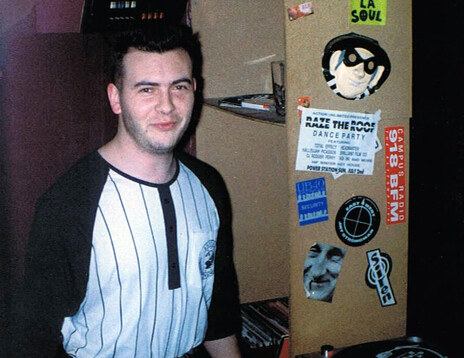
Roger Perry in The Siren, 1989. - Simon Grigg
To that, he was adding more local sounds. Upper Hutt Posse’s ‘E Tu’ was an inner-city anthem, as were the new records released by Murray Cammick and Simon Lynch’s Southside Records label; Sistermatic (ex-Newmatics) and Dave Bulog (ex-Car Crash Set) had music to play. South Auckland had a growing hip-hop scene and, in late 1988, Roger was the headlining drawcard at a well-attended competition in Manukau City Centre, judged by Roger, Rip It Up writer and all-round hip-hop guru Kerry Buchanan, and me. The winners, an underage rap crew, won a place at a Voodoo Rhyme Syndicate showcase that also featured Sisters Underground and Semi MCs.
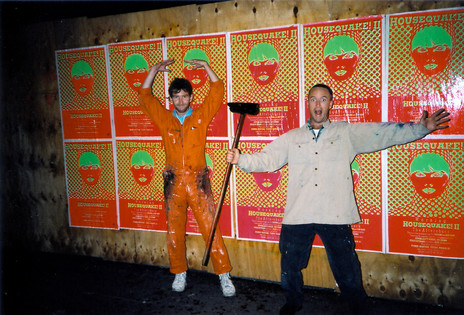
Housequake! – Russell Brown and Stuart Page with Grant Fell behind the camera. - Grant Fell
In March 1989, former Rip It Up assistant editor Russell Brown teamed up with Grant Fell and multimedia artist Stuart Page to stage a dance party at The Powerstation, called Housequake!, and asked Roger to play. It wasn’t exactly Auckland’s introduction to house or the dance-party concept, but it was a brave experiment that combined the music currently filling the city’s dance floors with video and live acts, including Semi MCs, Upper Hutt Posse, and Phil Fuemana’s Houseparty (later called Fuemana).
As Roger recalled, “They were good nights. I was already playing most of that stuff at The Siren club by then. Stuart Page was visually incredible. Grant was just fizzing on the energy of it all.”
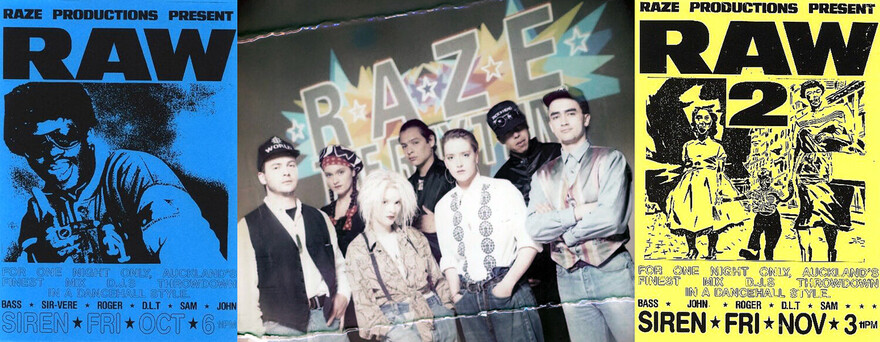
Raze Productions present Raw; The Raze Crew in Darryl Ward's studio, 1989 (L-R): Roger Perry, Rachael Churchward, Debbie Watson, Barry Morgan, unidentified, DLT and Grant Fell; Raze Productions present Raw 2.
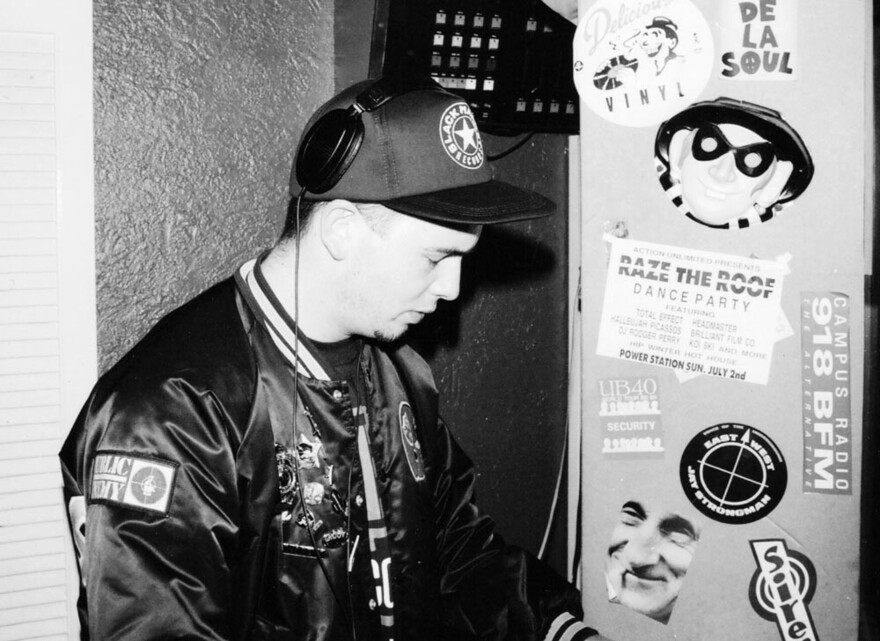
Roger and Grant then followed it up with their own successful Sunday night at The Powerstation on 2 July 1989; DJing were Roger and Upper Posse’s DLT. They called it Raze the Roof, and the live shows featured Hallelujah Picassos, the West Auckland hip-hop crew Total Effect, MC Koi-Ski, and Headless Chickens, who performed as Headmaster.
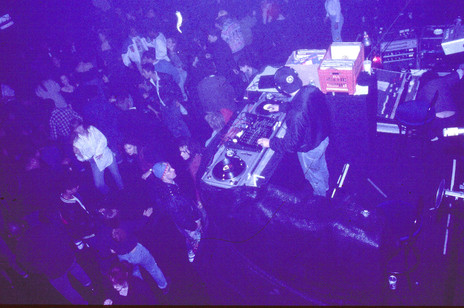
Roger Perry on the decks at Raze the Roof. - Brian Murphy
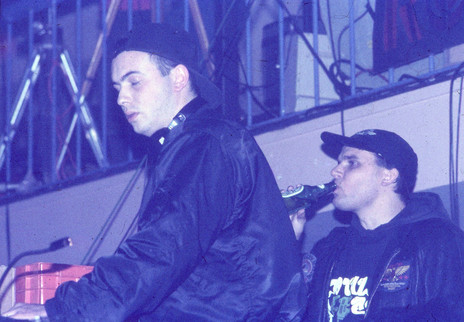
Roger Perry at Raze the Roof with 95bFM station manager Nick D’Angelo. - Brian Murphy
“Tackhead had just played there and, inspired by that, the Chickens did an amazing instrumental set. It was my 23rd birthday and [Public Enemy’s] ‘Fight The Power’ had just come out.”
Unity
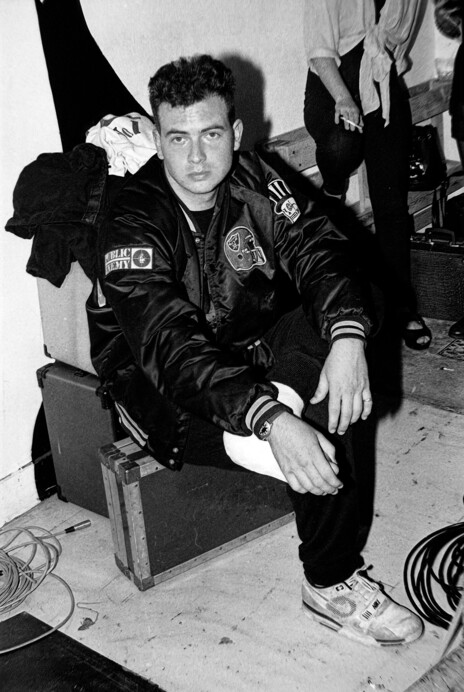
Roger Perry, December 1989. - Darryl Ward
In late 1989, competing crews were trying to put on dance parties across the city. As well as Roger and Grant, and Gothym City’s Phil Campbell and David Teehan, Jason Miller (later Jason Bringans) and Costa Zoras had put on Rule The Tracks on 9 September at the Auckland Railway Station. It was a party that substantially lifted the game, given the size of the venue. It also hosted side rooms, notably Alex “Slowdeck” Doyle’s reggae room. Further out, Andy Vann and Chris Bateup’s Voodoo Rhyme Syndicate was showcasing young acts in West and South Auckland. New Year’s Eve, which had added importance as the first of the last decade of the millennium, was approaching.
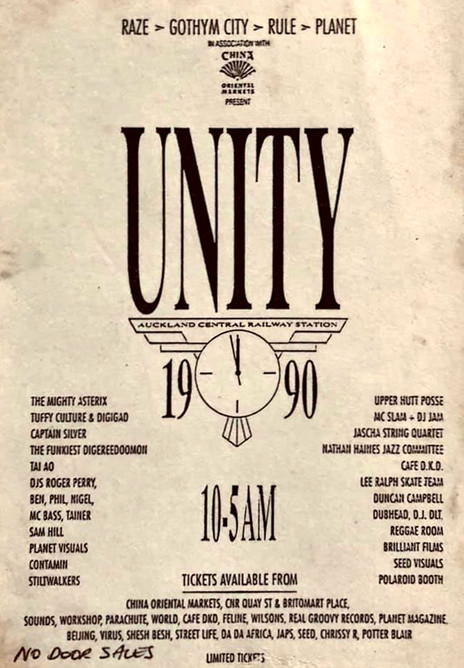
Unity poster. Among the promoters named, "Raze" refers to Roger Perry and "Planet" refers to Grant Fell.
Roger: “We reached out to all of them and said, Instead of trying to compete, which is stupid, why don’t we all get together and do one big party?”
Meetings, held over a beer or three, followed, and Unity was born. They agreed to combine forces and put on a massive party at the Railway Station again.
And so it was. “It came together really well, to be honest. Grant was responsible for a hell of a lot of it. We had that big skateboarding half-pipe right down at the far end. I’d stayed at the club [Siren] until two or something. Then I went down. I was playing on quite a big DJ tower, looking down the end, and there was Tony Hawk in the Bones Brigade skateboarding. It was the most fucking surreal thing. One hell of a New Year’s Eve gig.”
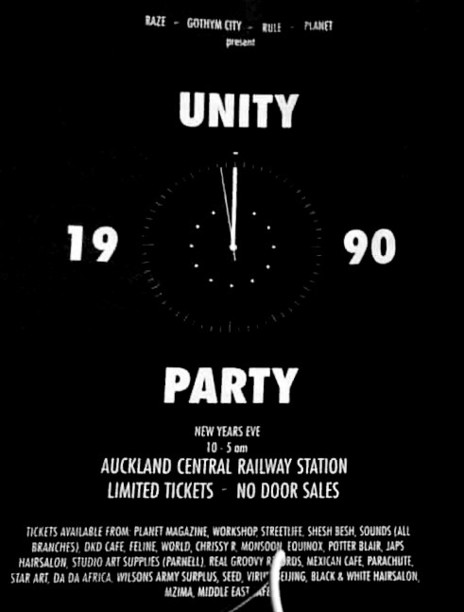
Unity ad on the back of Monitor Magazine, New Year's Eve, 1989.
What made it more surreal was that Roger had broken his heel bone and was still on crutches. He had to hobble to the DJ booth, except this one was up a tower. The crutches hung out of the booth as he played.
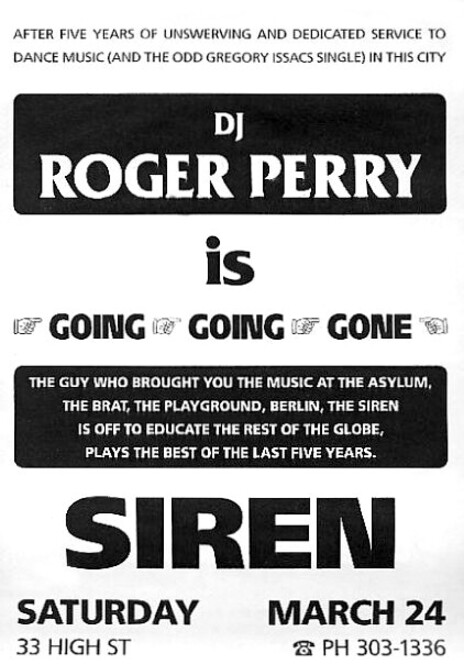
Roger Perry's farewell party at The Siren, 24 March 1990. - Simon Grigg collection
The pair followed that with a couple of Raze Presents parties at The Siren, using the large new adjoining room we had rented (soon to be Box), rolling them into 1990. But the urge to explore remained. In early 1990, he announced he was moving to London, in part to follow a girlfriend, but mostly to follow the music. On March 24, Roger Perry’s farewell at The Siren filled both rooms to overflowing. He left the next week.
London and return
Over the next two years, working bar jobs to support himself, he immersed himself in club culture, especially the UK sound systems such as Bristol’s The Wild Bunch (which birthed Massive Attack) and London’s Soul II Soul, which provided him with dancefloor killers before he left. He made contact with producers and DJs who would open doors for him when he returned, including Phil Asher, Bob Jones, Smith & Mighty, the Acid Jazz crew, and London’s legendary Boys Own Productions (Terry Farley and Pete Heller).
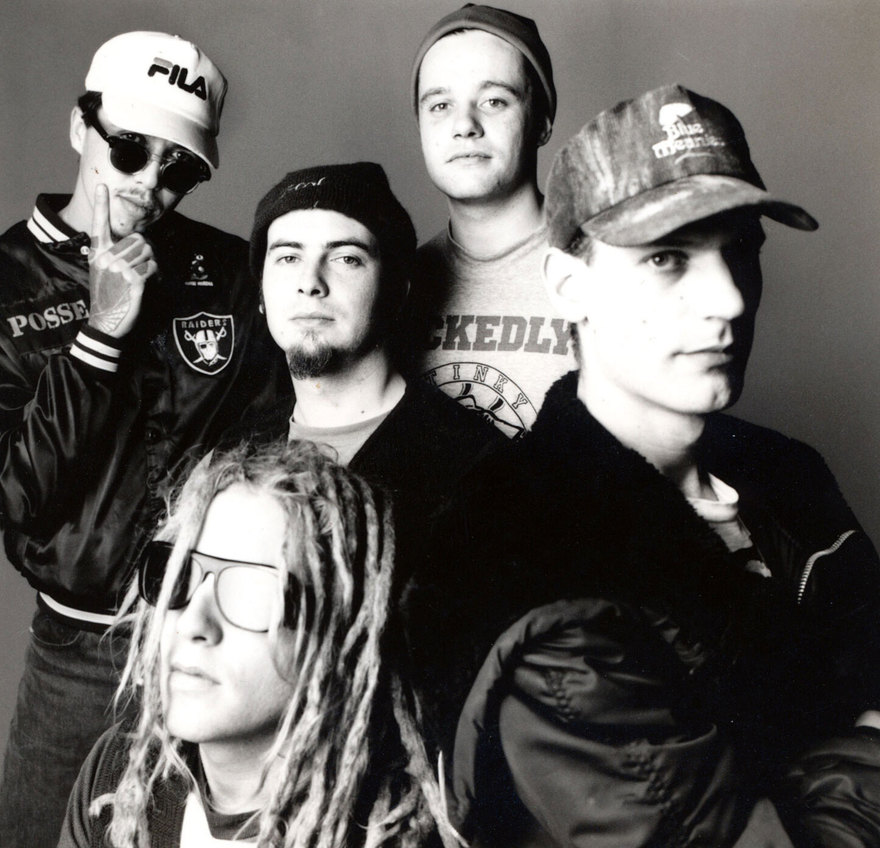
The Stylee Crew (later known as 37 Degrees) .Clockwise from top left: DLT, Roger Perry, Stinky Jim, Dubhead, Slowdeck. - Photo by Darryl Ward, Dubhead collection
Roger returned to New Zealand around April 1992, again following his girlfriend, and quickly reconnected with his friends Darryl “DLT” Thomson, Jim “Stinky Jim” Pinckney, Patrick “Dubhead” Waller and Alex “Slowdeck” Doyle, who called themselves The Stylee Crew. The crew had already held a party in Arcadia on Symonds Street before Roger joined.
“We decided to do a few parties together, and create an outlet for a lot of these young, up-and-coming MCs, give them a platform to skill up and work their material.”
The first gig with Roger was in a carpark behind Standard Issue at 24 Kitchener Street. Billed as Reggae Owes Us Money, Roger paid the building manager $200, and the manager looked the other way as the crew filled the place without council or owner permission. Another took place at The Blue Tile Lounge on Symonds Street, followed by a final one in a Turners and Growers warehouse on Graham Street, off Victoria Street West, which drew some 2500 patrons, although the crew had by then renamed themselves 37 Degrees.
“It’s so crazy how big they were, and then they kind of got lost to the mists of time, because the newspapers and stuff didn’t write about them and Rip It Up was still pretty rock-centric.”
Burntime
Parallel to the Stylee parties, Roger was making his first music. “Murray [Cammick] came up with some money for us to remix MC OJ and Rhythm Slave’s ‘Joined at the Hip Hop’, and then we made this fresh cut, ‘Burntime’, for the B-side, which introduced, for the first time, Danny D and Sol E from Dam Native, and China Muffin, pretty much the crew that would all then go on to be on Darryl’s The True School album. It had Bobbylon and Harold [from Hallelujah Picassos] singing all the BVs.”
For the A-side remix, Roger and DLT called themselves The Sons Of Thunder. When the single was released in mid-July, Nick D’Angelo’s review in Rip It Up positively said that the pair had “dispensed with [the cuteness] and put a little beef into OJ & Slave’s diet.”
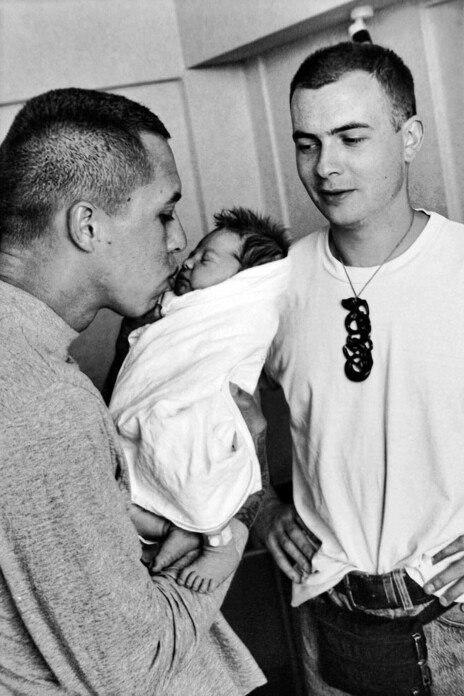
DLT and Roger Perry, with Darryl and Natasha Simich's newborn son Reegan. - Darryl Ward
A remix of Headless Chickens’ ‘Donde Esta La Pollo’, with Grant Fell and Michael Lawry, arrived at the same time. Roger was credited with Break Beats, as he was with its sequel, ‘Juice’ b/w ‘Choppers’.
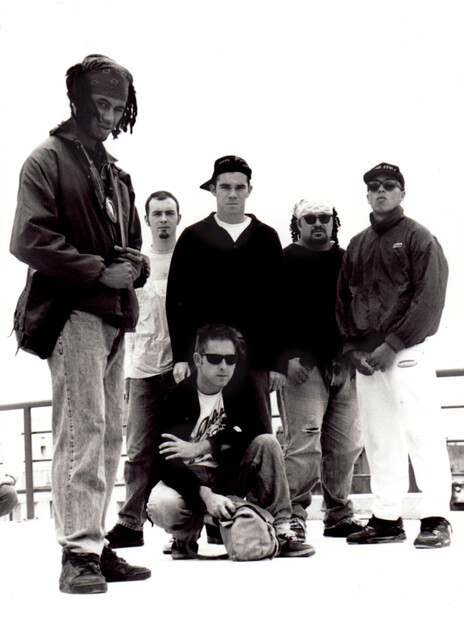
Joint Force with Danny D, Roger Perry, Mark “Rhythm Slave” Williams (back), Otis “MC OJ” Frizzell (front), Fred “Jazz Man” Harrison, and Darryl “DLT” Thomson - Murray Cammick Collection
When DLT teamed up with Otis and Slave in 1995 as Joint Force, ‘Burntime’ was re-recorded as their second single. It was again remixed by Roger and DLT, and Roger was part of the team that made Darryl’s classic 1996 album, The True School, which featured Che Fu on ‘Chains’.
Calibre
Roger was regularly featured on DJ billings throughout those years, playing the occasional dance party or bar set, but mostly he was content to bide his time with non-musical activities until something came his way that interested him. That something was Calibre in St Kevin’s Arcade.
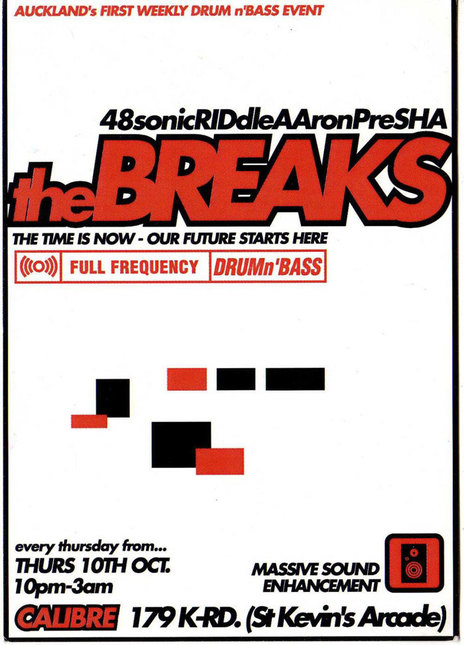
The Breaks is launched, Calibre, 1996. - Nick Collings collection
Calibre was the former Japanese restaurant Yamato, reinvented as a bar in 1995. Originally, it was a listening bar: the DJ spun records from behind the bar and worked as a barman while people lounged on bean bags and sofas (they called it a Leisure Lounge). They asked Roger to help put it all together. Once that was done, the owners decided they no longer needed him and let him go. Business slumped, and they asked him back. Roger had an idea and called his old friend Geoff Wright, aka DJ Presha, who was living and working as a DJ in Christchurch. Roger suggested that Geoff come back to Auckland to create a new weekly night at Calibre. Geoff agreed, and the result, launching on Thursday, 10 October 1996, was The Breaks, Auckland’s first drum & bass night.
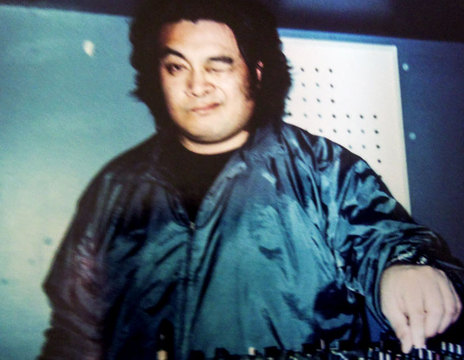
DJ Soane at Calibre. Soane's journey from club doorman to headlining DJ to record producer to the UK club charts made him one of the stars of the thriving Auckland club scene of the 90s and early 2000s.
The Breaks was an instant hit, but the venue remained empty for the rest of the week, and the owners turned to Roger again. Roger had drifted away from house music after he’d left for London, but was pulled back towards it when a friend, promoter Chris O’Donoghue, asked him to create a mix tape from Chris’s records. Roger fell in love with the third wave of independent, funk-fuelled deep house coming out of New York, the US West Coast, France and the UK, and again suggested a formula to Calibre’s owners. He would create a New York style late-night venue – very late-night, closing as the sun came up – and fill it with the DJs he thought would fill it. That meant Roger himself, Soane, and a number of ace younger DJs who were struggling to find work around the city. Also, Roger had begun to work with O’Donoghue’s Lightspeed to bring international DJs down to Calibre.
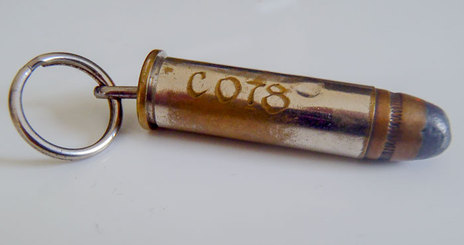
The keyring - Calibre '98
By the middle of 1998, Calibre was the place to dance to house music in Auckland. With astute door staff, often including Roger himself on the door, it was hard to get in and exclusive, but once you wandered down the stairs into the pitch-black back room – still filled with sofas and bean bags – you belonged. At its peak, the club wouldn’t kick off until 3am, and crowds staggered out at 8am into St Kevin’s Arcade, just opening for shoppers. It was as if Calibre was the heir to Asylum, Playground and Siren. Roger had built the scene, and now it was maturing. The music he had championed and nurtured was also filling venues such as the St James Theatre and Ellerslie Racecourse for parties, playing to crowds numbering in the thousands. He described it to Lewis Tennant on the Verbal Highs podcast in 2018 as Auckland’s Summer of Love. And, increasingly, the music the crowds were dancing to was local.
Reactormusic
The soundtrack to inner Auckland’s summer of 1998/9 was ‘Calibre ’98’. A deeply dubby and infectious instrumental house track, it came out of windows, cars, shops and radios: 95bFM thrashed it. The artist was Reactormusic: Joost Langeveld and Roger Perry, who had tentatively started messing around in the studio in late 1997. Joost was half of Unitone HiFi and had just returned from several years in New York City. He and Roger bonded over music, and said, “It felt like the right moment – Roger was (and is, in my opinion), the best and coolest DJ around Auckland, and I had spent a lot of time in studios learning tricks and honing production skills. With evolving technology, I was able to set up a home studio that could deliver decently polished results.”
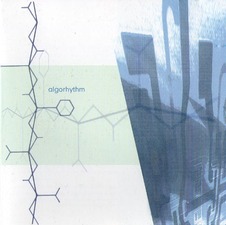
Algorhythm 1 (Reliable Recordings compilation, 1999).
Joost returned to New Zealand with studio gear and set out to create both the space and the means to create and distribute local electronic music. To that end, he set up what was Aotearoa’s first dedicated house label, Reliable Recordings, distributed via the new Kog Transmissions collective he was part of.
The label’s first project was the classic Algorhythm compilation, New Zealand’s first dedicated house album of local music. ‘Calibre ’98’ was featured on Volume 2 but soon found a life of its own, as it was added to 95bFM’s playlist and picked up by other DJs. It topped the 95bFM Top Ten in mid-1999.
Algorhythm, in turn, kick-started what seemed to be an avalanche of local house tracks, many of which found a ready audience on DJ playlists nationwide, with Roger having a hand in many of them.
Joost: “After the release of that first Algorhythm compilation, Roger became more deeply involved on the label side of things and really leaned into the A&R role. His fingerprints are all over the Sun Valley Sounds compilations, for example, which continue to be referenced as important snapshots of Aotearoa house music in the early 2000s. For me, those releases still stand out as some of the most accomplished work to come out of Reliable.”
A night at Calibre could see tracks by Roger, Joost, Soane, Greg Churchill, Phully, Chelsea, Cuffy, Reed & Radley, and others played, and it was rare for a local track or two not to be a peak-time anthem at one of the dance parties that seemed to happen every weekend, aided by the arrival of George FM, Auckland’s first dedicated dance radio, in 1998.
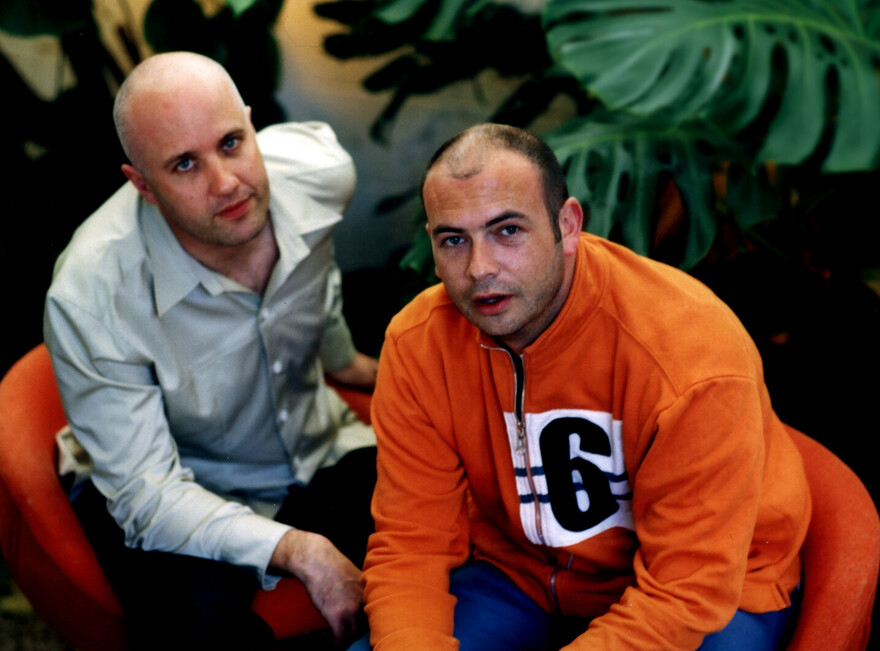
Joost Langeveld and Roger Perry
Joost again: “Being able to make music with a mate is undoubtedly the biggest win. The bonus was to have DJs drop some of those productions in their sets at Splore, The Gathering, Calibre and other events and clubs around Aotearoa. Hearing your music loud and seeing people dance – wow!”
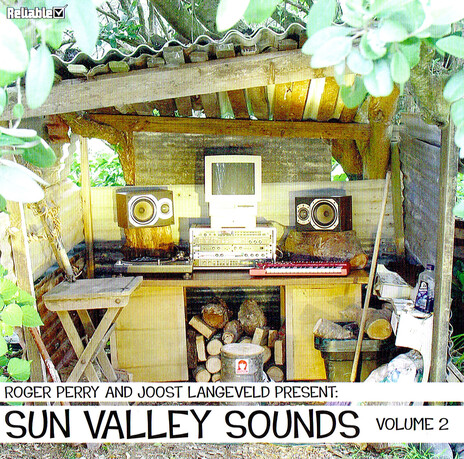
The cover of Sun Valley Sounds 2, compiled and created by Roger Perry and Joost Langeveld, 2004.
Then, in late 2001, the single ‘Nobody But You’ by Kingsland Housing Project (Roger with engineer Dave Fisher), featuring Stephanie Tauevihi on vocals, crossed over to MaiFM and gave Roger a second summer anthem. The song began life as ‘All Tied Up’, used in a Coca Cola TV commercial, and is better known in clubland as ‘That Coke Track’.
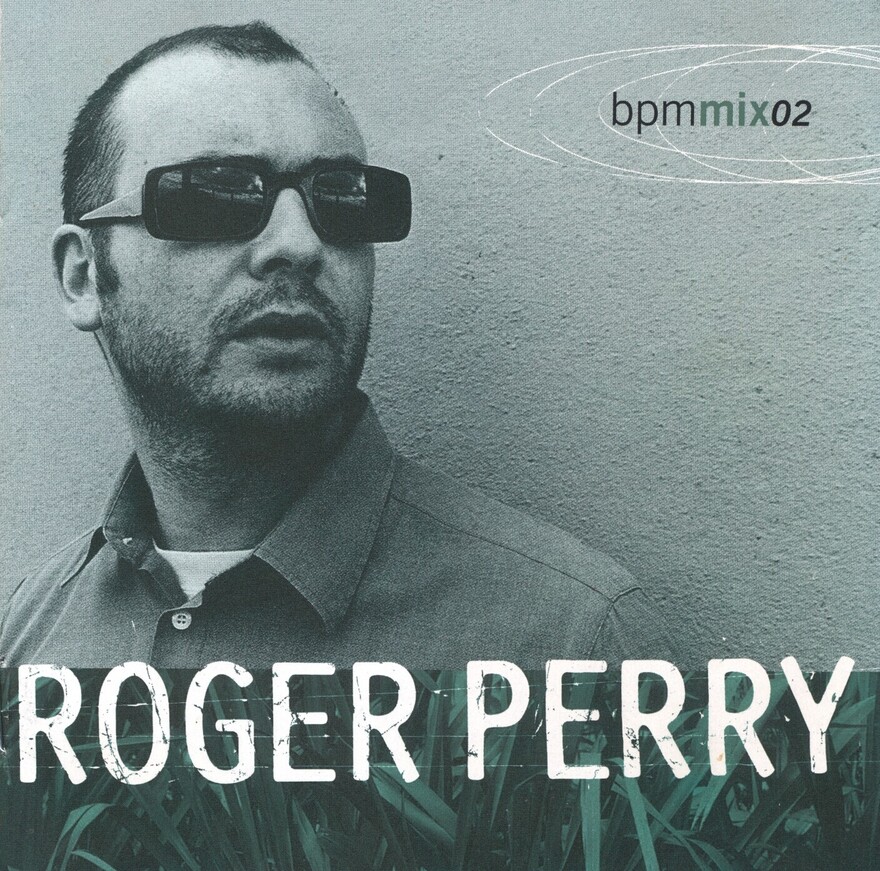
Roger Perry, bpmmix02, November 2000. - Photography by Rebecca Thomas. Design by Andrew B. White.
Two mix CDs arrived as well: the first was a cover CD for Remix magazine in late 1999, followed by a shop-release CD on my Huh! label in October 2000.
Bpmmix02 mixed local tracks, mostly from his crew, with international tracks and entered the New Zealand compilation charts at No. 1 in early November. The week before its release, Roger made me sit up all night listening to it, asking me and some friends over and over, “Is it alright? Is it good?” It was, and the public agreed.
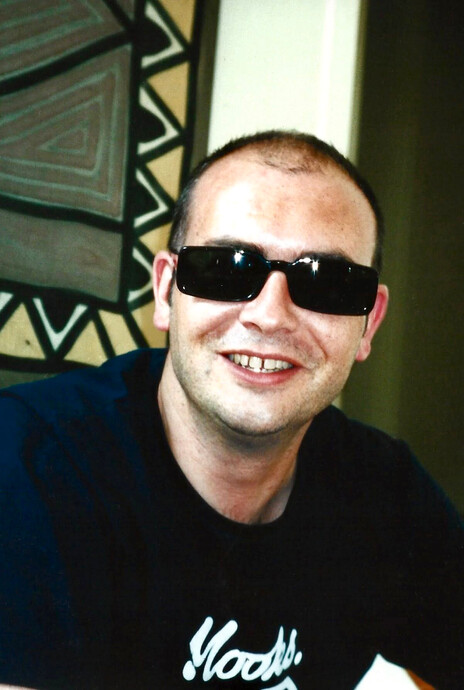
Roger Perry, early 2000s. - Dick Johnson
The records, dance radio, the clubs, and Roger’s profile saw him back on the airwaves too, both on George FM and then on a must-listen Friday evening pre-club show with his mates Jason “Rockpig” Hall and Glenn “The Professor” Prosser on 95bFM. There was also a single 24-hour show on George FM, which devolved into party chaos around Roger, a chaos he ignored as he deftly wove his musical textures for the airwaves. Again, much of what he played was local, peaking – some 18 hours in – with a selection of music by his friend Soane Filitonga.
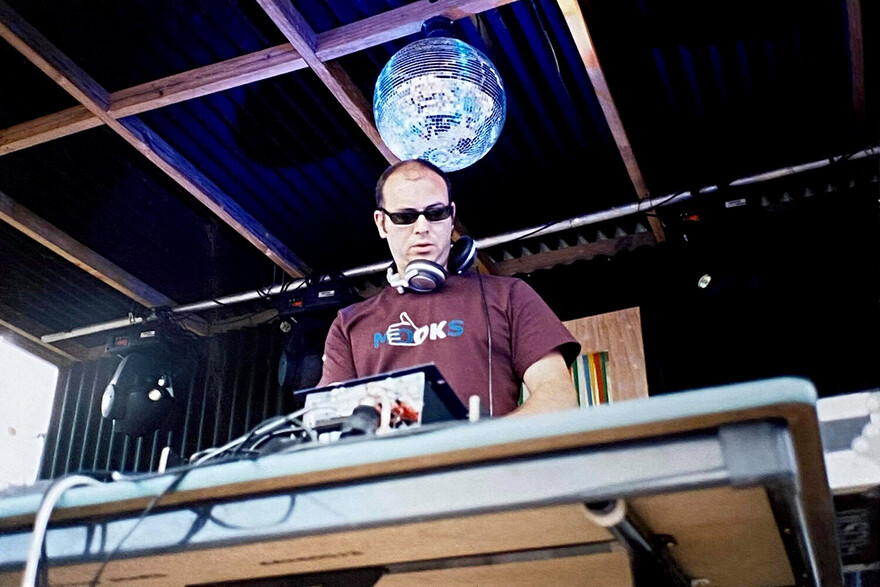
Roger Perry at the Big Day Out, 2000. - Karl Pierard
Roger revelled in these successes: “I remember sitting down at [Cause] Celebre on nights in the mid-90s, and Nathan [Haines] was playing from, like, one in the morning till seven in the morning. [Bassist] Steve Harrop would have blood on his fingers. Passion. Then, a few years later, I was in Miami with Rob Salmon, and we went to the Body and Soul party, and there was Francois K, and he dropped Nathan’s tune [‘Earth Is The Place’]. I could hear it just floating in. And then the whole place went mental. And I was – me and Rob were both – we looked at each other and just said, fucking New Zealand, yes!”
Splore
In 2001, Splore’s Amanda Wright and Morgan Sibbald asked Roger to oversee the DJs at the Waharau Regional Park festival, and, as Russell Brown wrote, the whole Auckland inner-city scene transposed to the countryside – Mikey Havoc, Sola Rosa, Concord Dawn, Greg Churchill, Roger Perry, Dubhead and many more – including Wellington’s The Nomad and Gathering stalwart Bluey, and DJs and VJs from California and the UK.
He repeated this each year until 2004, but didn’t return again until 2017, when he filled in as a surprise headline substitute for US DJ John Morales, who had cancelled at short notice. Roger delivered an eclectic set that blended soul, 80s funk and house with indie pop. The following year, he returned as a headliner on the DJ stage.
The later years
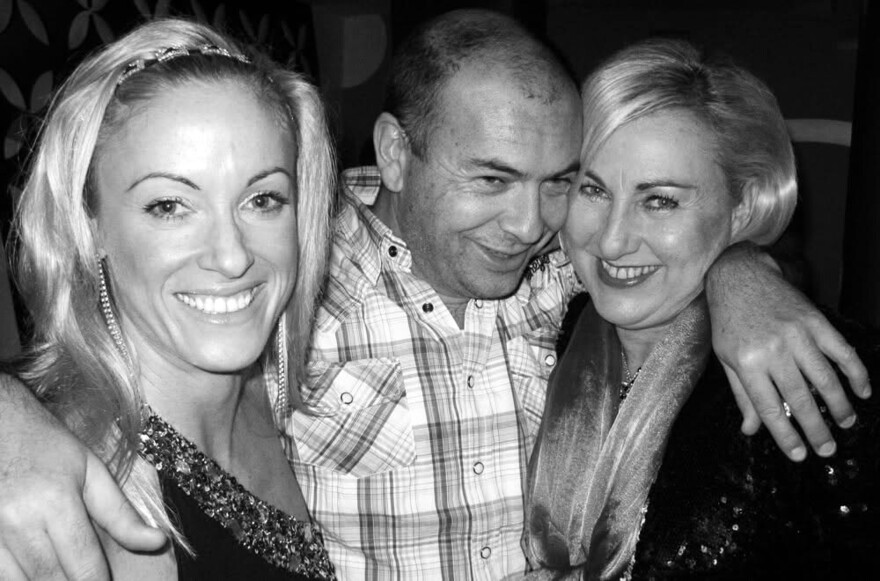
Sandra Evans, Roger Perry, and George FM programme director Pam Walker, Take Me Back Box/Siren reunion, The Studio, 27 June 2009. - Simon Grigg
Roger stepped away from Calibre in 2002. As he said, “It takes a lot out of you when your club closes at eight.” The club drifted on for a while but, by the time it shut, the scene had evaporated. Roger was enjoying the freedom to do what he wanted. He held a residency at Wyndham Bowling Club in Wyndham Street, until it caught fire and closed. He was part of the team that put on the Titanic private parties on Auckland Harbour. He played Shimmy parties, invitation-only events in hotel rooms. With his friends Manuel Bundy and Mike Haru, he hosted a popular 80s retro bi-monthly, The Principal’s Office, at Rakinos in High Street, upstairs from the old Siren. And he regularly played international shows for touring DJs as a major drawcard.
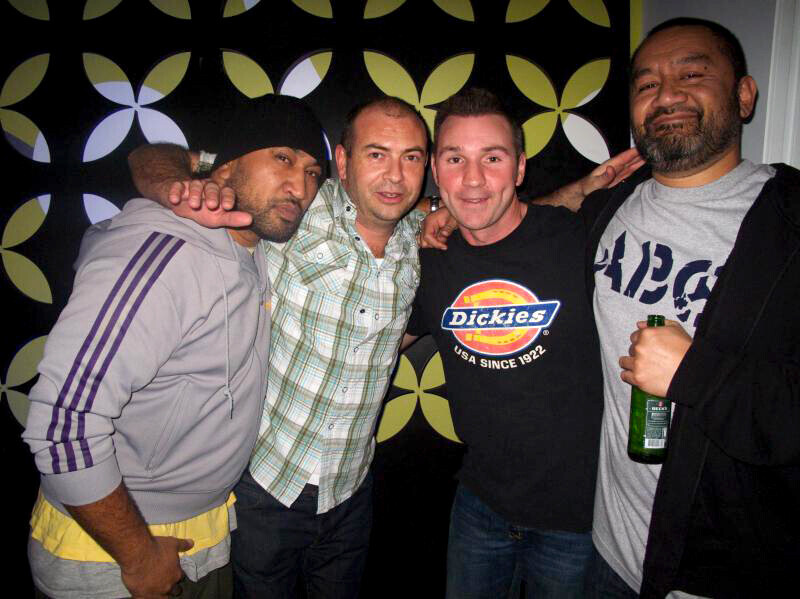
Mike “Lo-Key” Haru, Roger Perry, Bevan Keys and Manuel Bundy, Take Me Back Box/Siren reunion, The Studio, 27 June 2009. - Jackson Perry
Along the way, Roger and I revisited our partnership a couple of times at club nights in the city. He played regularly at Match in Pitt Street, at Coast above Princes Wharf, and particularly at Ink Bar in K Rd, the philosophical and musical heir to all those earlier clubs. He developed a close friendship with the owner, Andy Mack, so much so that, in an act of selfless generosity, he loaned Ink money, interest-free, to get through a tough patch. It was, as he said to me, “all family”.
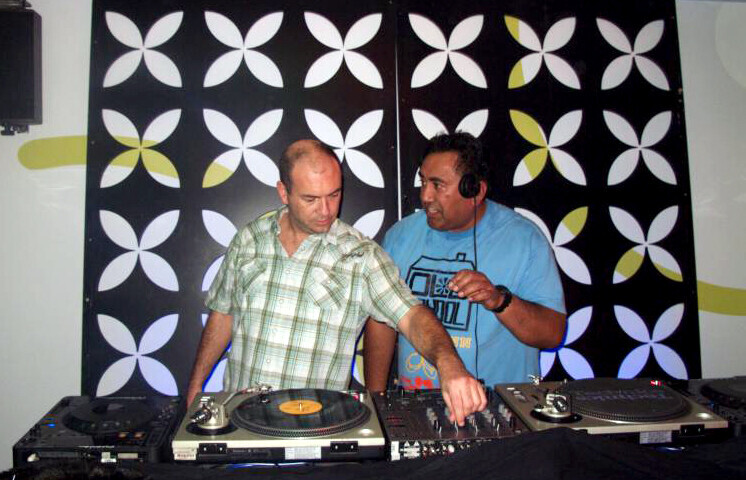
Roger Perry and Sene Atafu, Take Me Back Box/Siren reunion, The Studio, 27 June 2009. - Jackson Perry
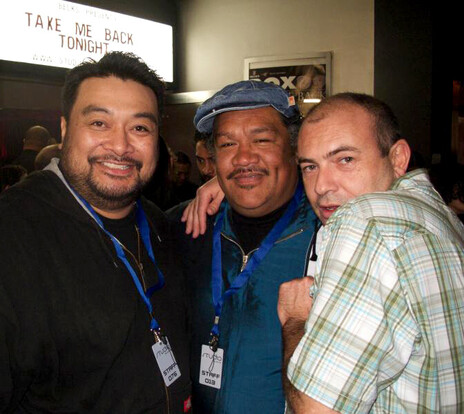
Soane, Time Sulusi and Roger Perry, Take Me Back/Siren reunion, The Studio, 27 June 2009. - Jackson Perry
On June 27, 2009, Tom Sampson and I celebrated the (almost) 20th anniversary of The Siren’s opening with a big party at The Studio on K Rd. The event, called Take Me Back, saw Tom’s wife, Ann, deck out the venue's rooms as a replica of Siren/Box/Celebre, but mostly people just wanted to dance. The celebration finished at 8am after Roger, Rob Salmon, Sam Hill, Soane, Bevan Keys and others had returned the crowd to a time when nothing else mattered. Just the tunes and the people.
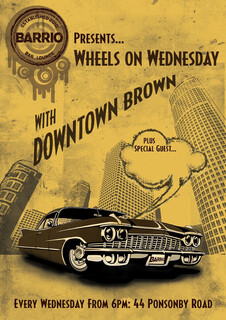
Barrio flyer, early 2010s.
“It was about 7.30 in the morning, and I looked out … and I thought, like, these guys will dance all day …”
In 2010, with family backing, Roger bought the lease of a bar at 44 Ponsonby Road, not because he needed to, but because he wanted to create that listening room at last, the one that, despite a similar urge to make people dance at Calibre, had eluded him. Barrio opened its doors in June of that year.
Gradually, though, the day-to-day demands of running a business wore the DJ down. Despite good business, it was the first time Roger had been pushed face-to-face with the realities of rent, wages, licensing, and all that they entailed. In 2016, he sold the business and moved to Leigh, north of Auckland. There were still gigs – the Leigh Sawmill was one, Ink was another, and there was a successful Red Bull-sponsored road trip/tour with his good friend Mikey Havoc, where they took house and dance to places off the beaten DJ-touring circuit – but he decided to step back.
In 2021, after a health scare, Roger was invited to co-headline the Sonorous Festival in Auckland. The billing was low-key (as Kingsland Housing Project), and yet it was triumphant. For many, it was the Festival highlight as the crowd paid tribute to a man who had, in large part, made it all possible.
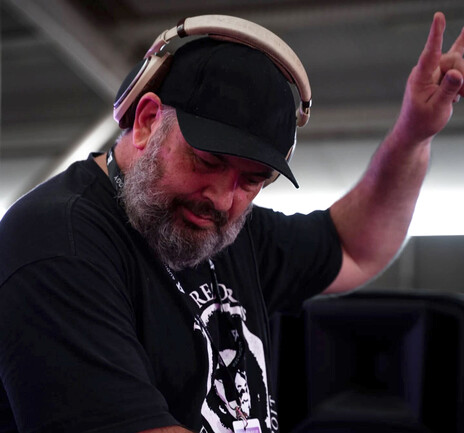
Roger Perry co-headlining at Sonorous, 2021. - Courtesy of Cam Harris.
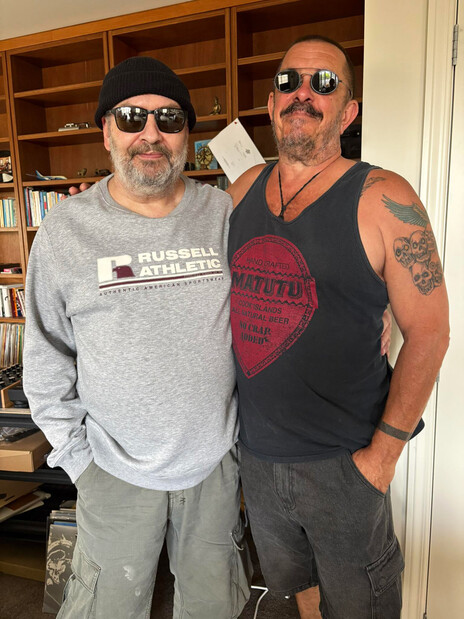
Roger Perry and Brett Evington, one of his closest friends from Whakatāne, late 2025.
Roger Perry had done his bit; he’d taken the city he loved from racially segregated bars with cover bands playing the Top 40 to a vibrant place where Pacific crowds from Aotearoa thronged into venues, small and massive, to listen to music that matched anywhere in New York City, London or Paris. He had helped engineer a revolution in local music production and helped us understand that the music we made was as good as theirs, or better, pushing us to a place where we didn’t even think about it anymore. He changed us.
Roger Perry died on 5 June, 2026.
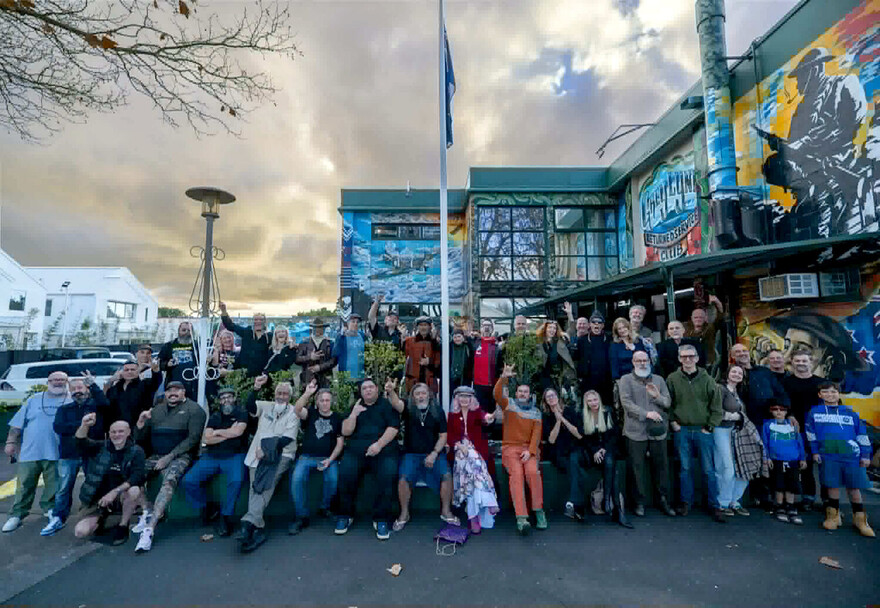
The attendees at the private commemoration for Roger Perry, Grey Lynn RSC, 13 June 2026. - Greg Riwai
Interviews with Roger Perry were conducted by Simon Grigg in 2024-26, and by Gareth Shute in 2026.
--