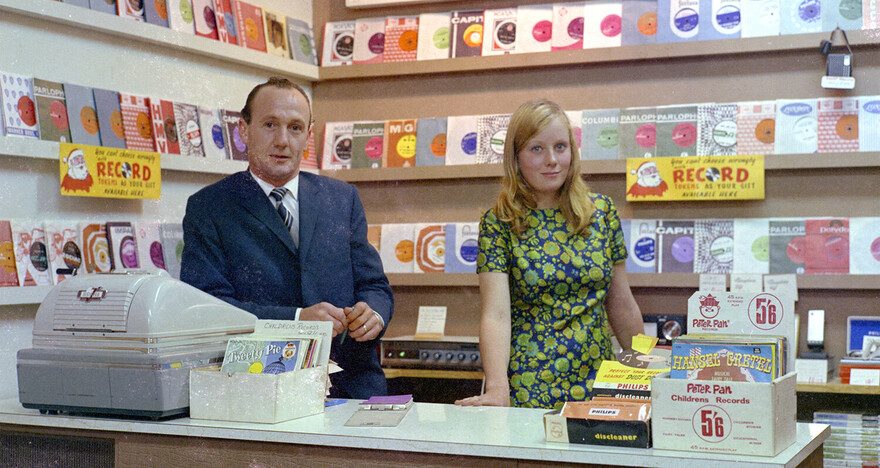
Behind the cash register at The Sound of Music, Upper Hutt, 1967, are Bob Batenburg and his assistant Stephanie Wimms. - Revelle Jackson collection, Upper Hutt City Library
Every rising pop star aspires to have a hit single. Sometimes it only takes one breakthrough song to draw listeners to an artist’s wider catalogue and bring crowds to their shows. Yet the path to achieving a hit has varied widely over the decades.
Before there could be hit singles, there had to be a recording industry. In New Zealand, this leads us back to ‘Blue Smoke’ which was the first song to be written, recorded, pressed, and released in New Zealand. The song, written in 1940, was sung and performed by New Zealand troops overseas and musicians at home for several years before it was recorded in October 1948. When it was released in June 1949, it was featured in a weekly newsreel that showed before movie screenings. All this long-tail exposure helped the single – a 10", 78rpm shellac record – sell over 50,000 copies.
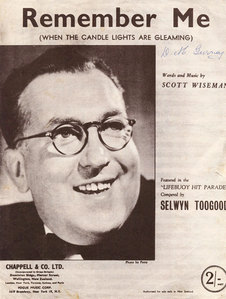
Selwyn Toogood on the cover of the sheet music for Scott Wiseman's Remember Me, a song he featured on The Lifebuoy Hit Parade.
However, at that time, it was primarily radio play that broke new hits. Each major centre had a publicly owned station overseen by the NZBS (the New Zealand Broadcasting Service, which became the NZBC in 1962, and was split into RNZ and TVNZ in 1975). These stations had to appeal to the whole family so the radio programmers became the key gatekeepers. From 1946, NZBS did have the Selwyn Toogood-hosted Lifebuoy Hit Parade but it was mostly songs from musicals and/or overseas hits. These were chosen by the programme producers for their topical interest; a national sales chart did not exist. It took three years for a local single to be chosen for the No.1 spot: vocal group The Knaves, in 1949. In 1955 the programme was renamed the Lever Hit Parade.
Usually artists used their popularity on the live scene to gain a record deal, then the label would push their music to radio, but some musicians went directly from the stage to the radio studio. Country quartet The Tumbleweeds performed on Dunedin’s 4YA, which impressed Wellington label TANZA, leading to the single ‘Maple On The Hill’ which sold 80,000 copies.
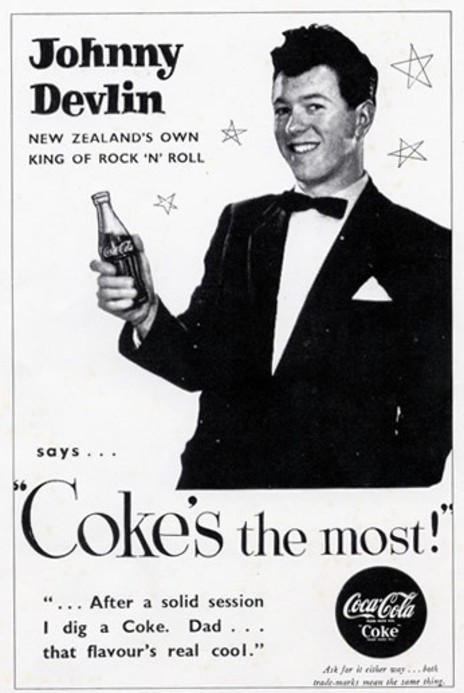
Johnny Devlin's 1958-59 national tour was sponsored by Coca-Cola.
Gaining coverage in print was more difficult. The 1956 novelty hit ‘Opo, the Crazy Dolphin’ gained a few lines by capitalising on the interest in the famous dolphin that frequented the seaside town of Opononi (though when it suddenly died, so did the single). The New Zealand Elvis, Johnny Devlin, resorted to publicity stunts. The press ran pictures of him having his shirt torn off by fans – they had been purposely unpicked so they fell apart easily – and his management arranged equally attention-grabbing meet-ups with Cabinet Minister Mabel Howard and preacher Billy Graham.
1960s: New Zealand pop on 45
In the early 1960s, John McCready worked at Philips and had the job of getting their singles on the radio, though this required the NZBC to purchase them, since they believed that getting them for free could be seen as a bribe/payola.
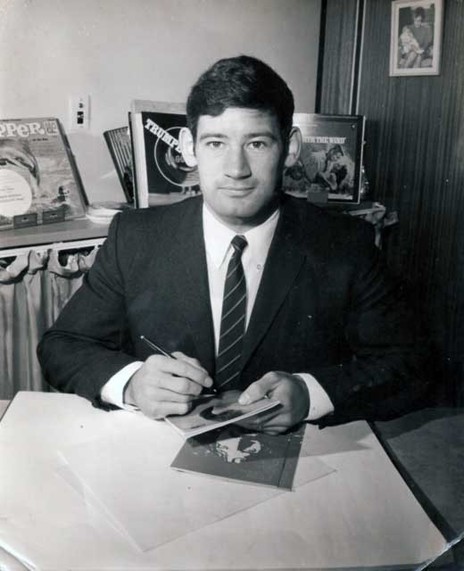
John McCready at Philips in the mid-1960s
McCready explains: “Each week I would take our new releases to the head buyer and endeavour to convince him to purchase individual recordings. Their maximum purchase was 26 copies, which meant the record would possibly be played on all of their stations that played pop music. It was considered a successful trip if a few of that week’s releases were given the full 26-copy order, but that was rare. I had a list of each programme director at the various radio stations throughout their network, and each week I would send them a package of what I considered would suit that particular radio station’s format. I hoped by persuading a local programme director on a particular recording, they in turn would influence a head office purchase.”
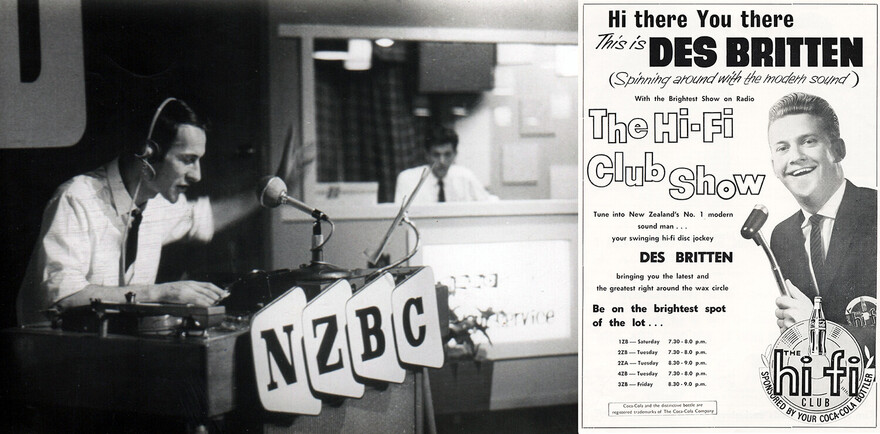
Keith Richardson at 2ZB, 1960s; and an advertisement for Des Britten's Hi-Fi Club Show, early 1960s.
His task became easier with the arrival of new, half-hour radio shows dedicated to pop records, hosted by DJs such as Neville Chamberlain (aka Cham The Man), Des Britten, Justin Du Fresne, Peter Sinclair, and Keith Richardson. Televisions gradually became more widespread and an act could get a boost from appearing on pop music shows such as In The Groove and Let’s Go. The Librettos were the resident act on Let’s Go, which led to a run of minor hits and an album through HMV.
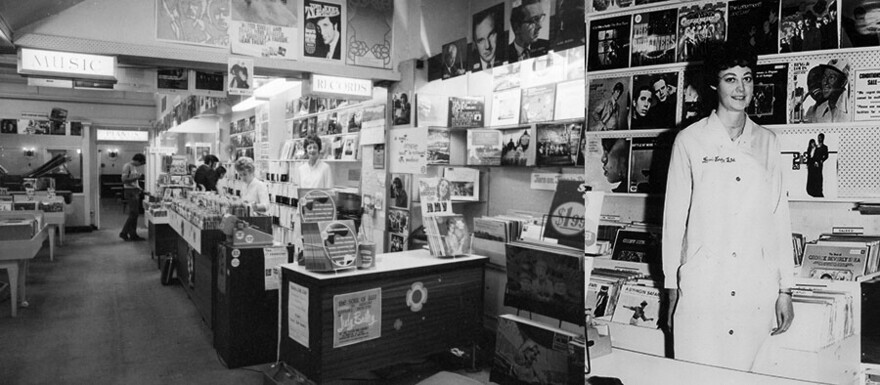
The record department at Lewis Eady, circa 1970; and Marlene Short in the store uniform, ca. 1968. - Kevin Hall collection, Auckland Libraries Heritage Collections 1160-1-16A; Marlene Short Collection
McCready found that record stores could also help present a record to the public. “We relied on our sales representative to entice the retailer to play particular tracks in the store. Shops like Vanvi’s in Wellington and Lewis Eady in Auckland became important. One of the major marketing tools was in-store displays in retailers’ shops and windows. A large portion of the company’s marketing budget was spent on retail display.”
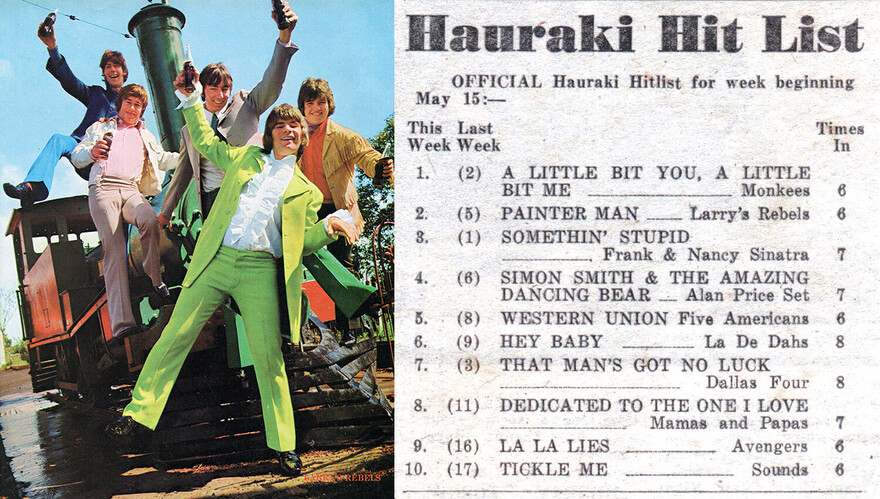
Larry's Rebels riding high in Playdate, 1968; and Radio Hauraki's May 1966 Hit List chart featuring Larry Rebels' cover of The Creation's 'Painter Man' at No.2. Other New Zealand acts on the chart are The La De Dahs (sic), The Dallas Four, The Avengers, and Sounds (aka Sounds Unlimited).
The short-lived newspaper Countdown (circa 1964) gave coverage to local acts alongside international stars, while the magazine Playdate often had music features. However, McCready found that the biggest change came in December 1966 when Radio Hauraki began broadcasting from outside the legal jurisdiction of New Zealand.
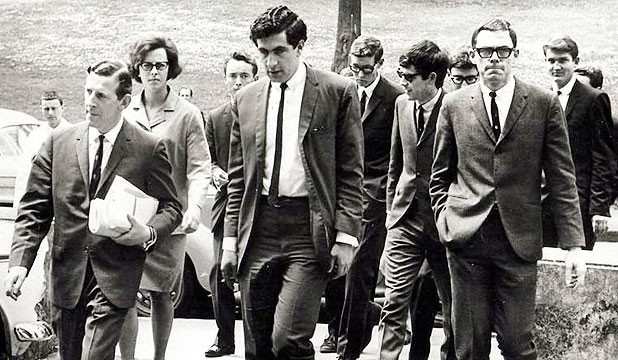
Defence lawyer Roger Maclaren and a group of Radio Hauraki defendants led by David Gapes and Chris Parkinson arriving at Auckland Magistrate's Court, 2 November 1966.
“At a meeting of record companies,” recalls McCready, “some were reluctant to supply Radio Hauraki with records, as they considered Hauraki an illegal operation. I didn’t agree, and immediately on returning to our office, I dispatched a parcel of our latest releases to the pirate station. A new era of pop music radio in New Zealand had begun. The introduction of an opposing pop music radio station placed RNZ in a position where they had to respond, and popular songs were repeated frequently. Individual RNZ stations had more say on their music content, and local contacts became important for record promotion. Eventually RNZ had their own pop music-dominated stations.”
In 1965 the television talent show New Faces was launched, introducing Sandy Edmonds to the nation. This was a standalone programme until 1968, when it was briefly incorporated into the more songwriting oriented Studio One. In the early 1970s Shona Laing, Space Waltz, and John Hanlon all had hits following their appearance on Studio One. In 1973, on New Faces, a band called Split Ends enjoyed its first national exposure, if not the judges’ comments.
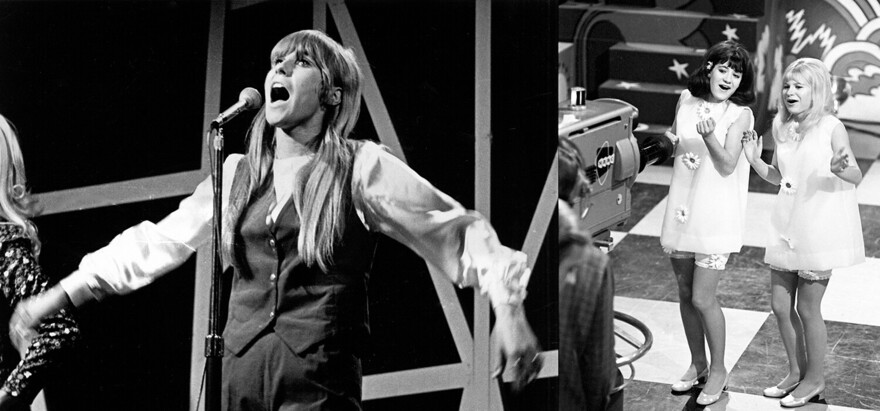
Left: Sandy Edmonds on C'mon, c. 1967; and The Chicks on C'mon, 1968. - Phil Warren Collection; Judy Donaldson collections
From 1967 the dominant music television show was the groundbreaking C’mon. It featured artists chosen for having a solid track record on the live scene – and for being telegenic. The Chicks seemed synonymous with the show, although they first come to prominence in 1965.
There was no disputing that C’mon could turn a promising entertainer into a fully-fledged star. Mr Lee Grant was one of the show’s first resident singers. His 1967 single ‘Opportunity’ went gold and it kicked off a run of Top 10 hits.
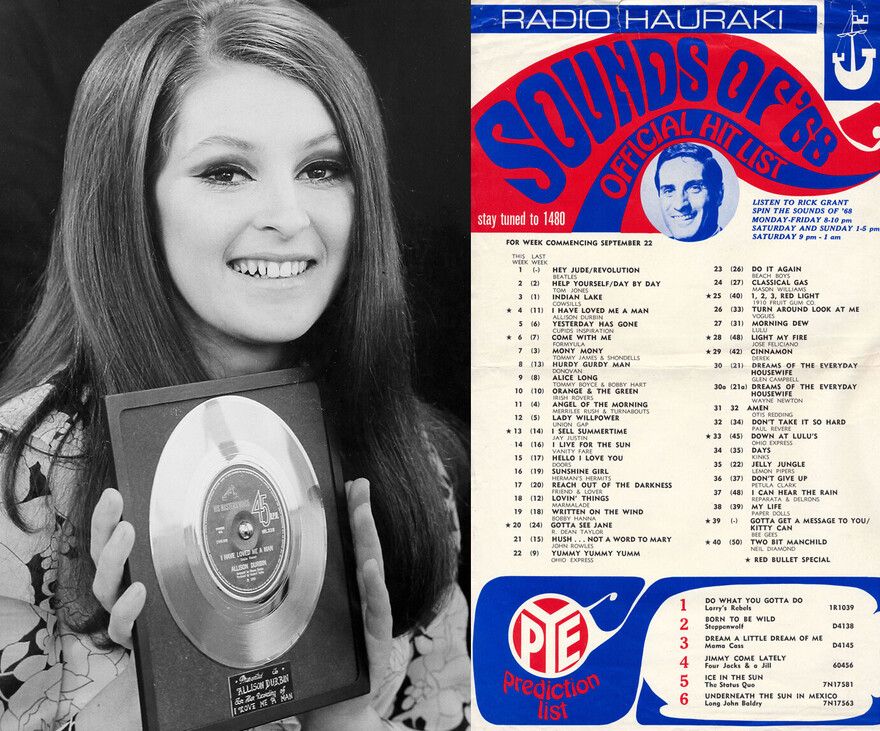
Allison Durbin with her 1968 silver disc for ‘I Have Loved Me A Man’, which reached No.1 on the local charts and won the Loxene Golden Disc. Right: Hauraki's Sounds of ’68 chart of 22 September 1968 shows ‘I Have Loved Me A Man’ heading to the top at No.4 – with a bullet.
During the 1960s, there was also a steady stream of local stars heading across the Tasman and sometimes artists used their overseas acclaim to boost their career back home. Allison Durbin left for Australia in her mid-teens and scored multiple television appearances. She returned a star and her homecoming single ‘I Have Loved Me A Man’ sold over 30,000 copies. Both Durbin and Mr Lee Grant were signed to HMV, whose studio in Wellington was fast becoming a hit-making factory, though independent labels such as Zodiac and Viking were thriving too. The run of local hits would take decades to match.
The 1970s-1980s: Fighting the Cultural Cringe
When C’mon came to an end, it was replaced with Happen Inn, which was less interested in youth culture. Instead, it presented easy-listening tunes sung by accomplished but harmless singers. A prime example was boy-next-door Craig Scott, who had left his band behind to go solo. His single ‘Smiley’ was purposefully released to coincide with his appearance on the debut episode of Happen Inn, propelling the song to No.3.
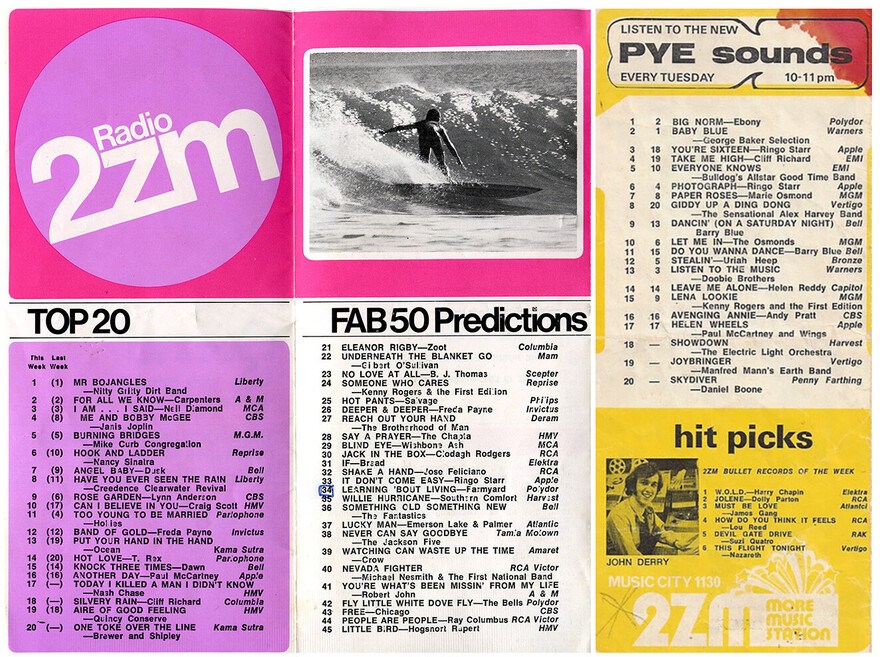
Radio 2ZM charts from 1970 and early 1974: New Zealand artists in the station's 1970 Top 20 are Craig Scott, Nash Chase, and Quincy Conserve. The same chart's Fab50 Predictions note The Chapta, Farmyard, Ray Columbus, and Hogsnort Rupert. At right, an early 1974 2ZM Pye Sounds Chart has Ebony's 'Big Norm' at No.1 and Bulldog's Allstar Good Time Band at No.5 with 'Everyone Knows'.
Colour television finally became available in New Zealand at the end of 1973, in time for the Christchurch Commonwealth Games in January 1974. This was perfect timing for Mark Williams who, on programmes such as Popco and Free Ride, flaunted the glam look of the day: shiny costumes, make-up, and platform boots. Shock value still had impact if you had the songs to match – and fortunately Williams did.
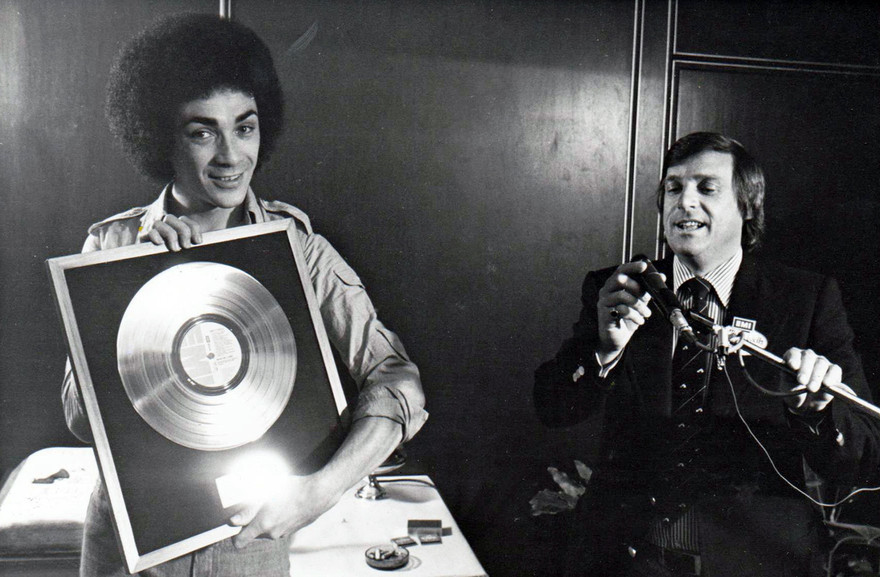
Mark Williams and EMI managing director Mike Wells, 1976. Mark is holding his gold-selling 1975 self-titled album, which included the Vanda & Young-penned hit song 'Yesterday Was Just The Beginning Of My Life'. - Louise Warren Collection
Written by Australian hitmakers Harry Vanda and George Young, Mark Williams’ ‘Yesterday Was Just The Beginning of My Life’ became the first New Zealand No.1 on the new national music chart introduced in 1975 (based entirely on sales, rather than the haphazard approaches previously used).
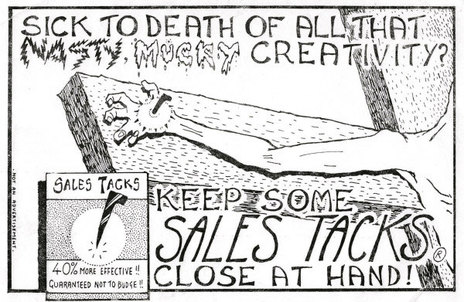
Chris Knox in the NZ Listener with a position taken by most in the New Zealand music community - Chris Knox Collection
That same year, the local music industry was hit with a sudden shock when the government doubled the sales tax on LPs from 20% to 40%. The number of local singles released dropped from 50 in 1975 to 26 in 1977 (compared to 70+ per year in the mid-sixties).
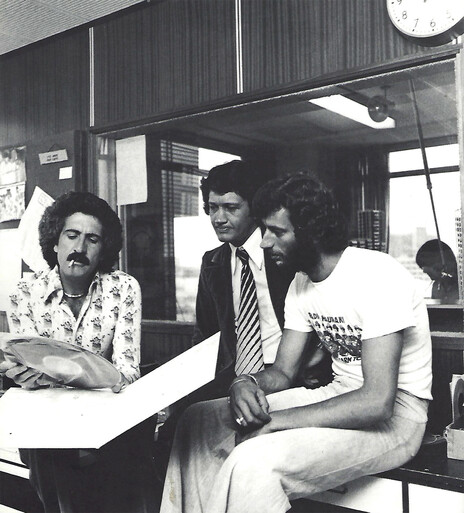
An Allied International Records Ltd promotions manager discusses a new release with executives at Radio Hauraki, 1976. The station's co-founder David Gapes is at left and Fred Botica on the right.
Radio also took an unfortunate turn. The number of commercial stations went from five stations in 1972 to 22 in 1982. All but a few were owned by the NZBC/RNZ, but the public broadcaster wanted to ensure its popular music stations (the ZM network) remained competitive with fledgling independent stations such as Hauraki, Windy, and Avon. So in 1979 they employed Todd Wallace, a US radio programmer and consultant. He encouraged them to use listener surveys conducted in the US to get an advance view on which songs would be popular, but this led to them programming more emerging hits by American artists to the detriment of local artists.
Ready To Roll opening titles, 1975; the theme is The Commodores' Machine Gun.
Music on television went through a similarly huge change. Pop music show Ready To Roll (RTR) initially employed local acts to perform the hits of the day (including some homegrown releases), but by the early 1980s it switched to showing music videos by the original artists.
These clips were so popular that a second show was created, Video Releases, which showcased new tracks, as producer Peter Blake explained to Chris Bourke in 1985.
“Any release on RTR will normally be a song that will take off and be a hit. With a million viewers RTR is the flagship show with the most impact. Video Releases hasn’t got a great slot, but it reaches a lot of the record-buying public; it makes the teenage record buyer familiar with the songs. Radio station programme directors follow very closely what is shown as new releases. If he sees a new Pat Benatar song, obviously he’ll consider playlisting it because of popular demand. The hit process snowballs: people hear the song on the radio and are induced to buy the record.”
Peking Man - Room That Echoes (1986)
Changes in technology made it difficult for local acts to sound as slick as their overseas counterparts, given the expensive studio equipment (midi-keyboards, synthesisers) used for recordings and the flashy accompanying music videos. Local music was seen as inferior, ramping up the cultural cringe. Only long-established acts of the calibre of Dave Dobbyn’s DD Smash had much chance of airplay. It was a rare event when a new act like Peking Man came out with a song that could stack up both musically and visually.
After success with Peking Man and When the Cat’s Away, singer Margaret Urlich relocated to Australia where the music industry took local acts more seriously. For decades Australia had been welcoming to New Zealand-born hitmakers such as Allison Durbin, Dragon, Split Enz, Sharon O’Neill, Jenny Morris, and Neil Finn of Crowded House. In many cases it was only once they reached the Australian charts that New Zealand programmers took note.
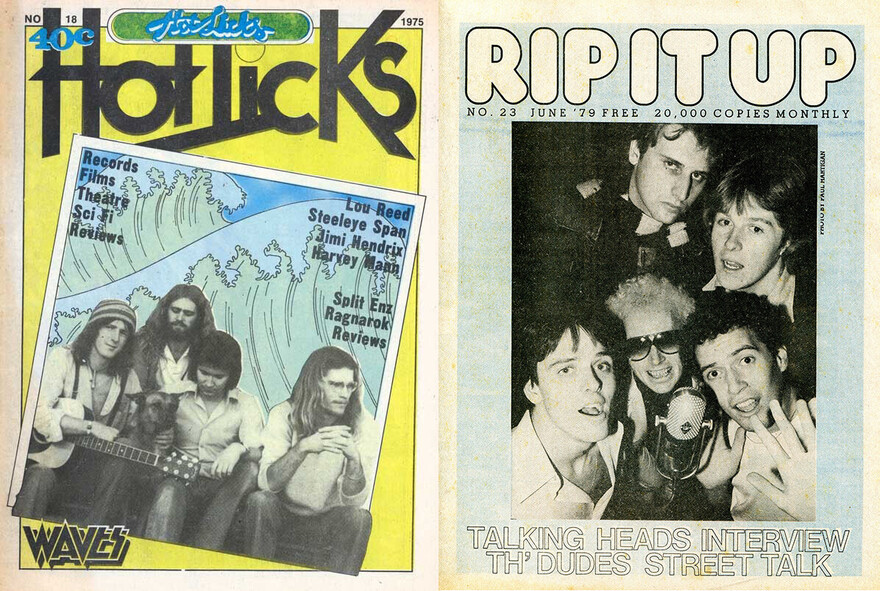
Waves on the cover of Hot Licks No.18, 1975; Th' Dudes on the cover of Rip It Up No.23, June 1979
From the 1970s and into the 80s, music media evolved. The mid-70s rock mag Hot Licks was followed in 1977 by the groundbreaking Rip It Up, which became highly influential as the 80s went on. Rather than “creating hits” they raised the profile of local acts – to the public and some programmers.
Radio with Pictures opening titles; the theme is Marginal Era's This Heaven (1983)
On television, Radio With Pictures provided a late-night option for checking out music videos that hadn’t yet reached the Top 40, which gave local acts a chance to launch themselves onto screens. This allowed acts from indie labels like Flying Nun to make the Top 40, despite being unlikely to receive mainstream radio play.
The 1990s-2000s: A Dedicated Effort To Create Local Hits
Local radio play was dire when the 1990s began. APRA research in 1993 showed that fewer than three in every hundred songs played on commercial radio were by a New Zealand act. A key turning point came with the establishment of NZ On Air’s music wing, which funded local artists to create professional music videos that could be screened alongside those from overseas. Major labels also had pluggers on staff, who promoted overseas hits to radio so NZ On Air employed their own to work on local releases. By the end of the decade, they were also organising showcase performances so radio programmers could see the power of local musicians in person.
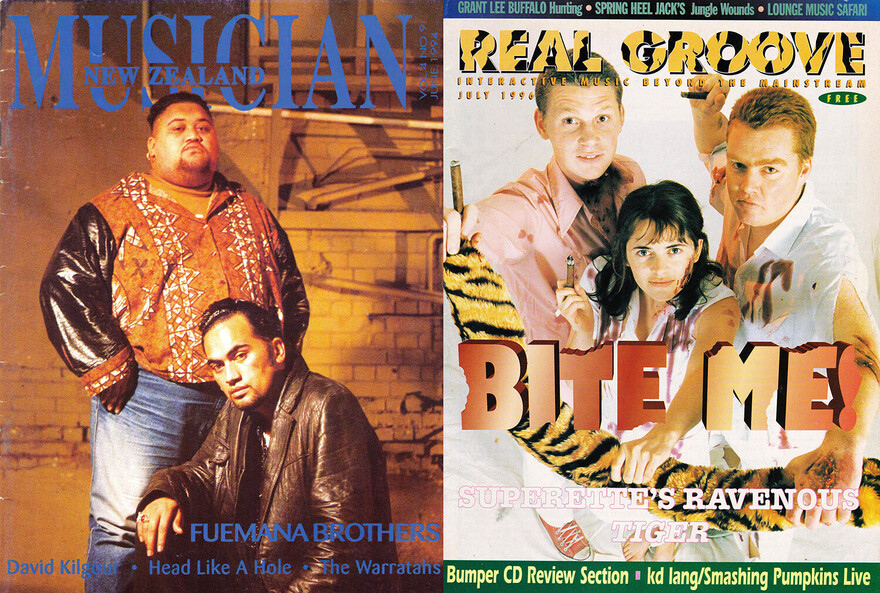
Left: Fuemana brothers Phil and Pauly on the cover of New Zealand Musician magazine, June 1994. Right: Superette (Ben Howe, Greta Anderson, Dave Mulcahy) on the cover of Real Groove magazine, July 1996
The era of “alternative rock” had arrived, which helped student radio gain listeners, while making it more viable to crossover from indie buzz to mainstream success. The music print media was growing steadily, with the arrival of New Zealand Musician (founded 1988), Real Groove (founded 1993), Remix (founded 1998), and dedicated music sections in newspapers and other magazines.
Max TV hits the airwaves in October 1993: from 50 Years of New Zealand Television, part 1 (2010)
Perhaps most importantly for emerging hitmakers, the decade-long heyday of the music video had begun. Local acts were no longer confined to late music video shows, following the arrival of Max TV (Auckland, in October 1993), Cry TV, Juice TV, M2 (an overnight feature on TV2), and MTV. The high watermark came when the fourth largest TV station in the country (TV4) was rebranded as a music TV station, C4.
Nonetheless, many of the approaches used back in the 1960s still remained relevant: record stores were thriving so window displays and instore posters were still effective, and the live scene was healthy enough that acts could promote themselves through gigging.
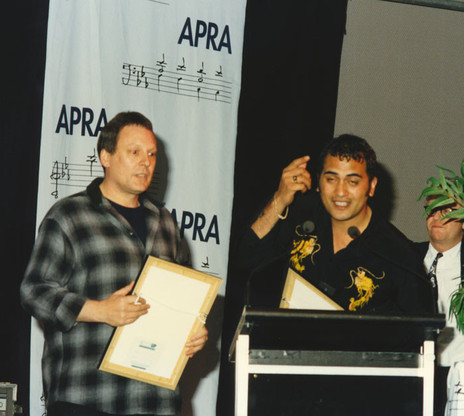
Alan Jansson and Pauly Fuemana win APRA's award for Most Performed Work Overseas, 1996.
The biggest success of the 1990s was ‘How Bizarre’, by OMC. Released in December 1995 by the independent label huh! through Universal NZ, the single won the immediate support of urban Auckland station Mai FM. As the song’s impact spread from its South Auckland epicentre, other stations began to playlist the record. By the end of January 1996, it was No.1 in New Zealand. Unusually, it was Universal Australia – or rather, New Zealand staff members there – which saw the most potential in the single, and a worldwide promotional push saw the song top the charts in many countries.
Radio play remained the most important factor in creating a hit and fortunately there had been a remarkable turnaround in their attitude to local music. This was partly helped by the increased range of radio stations, with the rise of Mai FM (for hip hop, R&B) and rock station The Rock, while the more short-lived Channel Z provided a crucial stepping stone between student radio and the commercial stations.
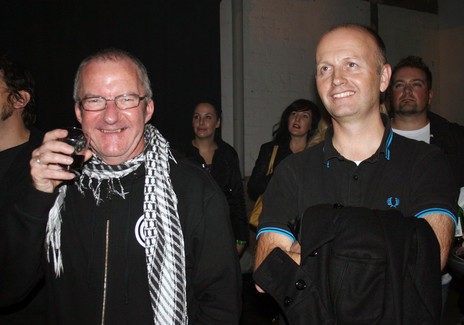
Brendan Smyth from NZ On Air and Universal Music NZ Managing Director Adam Holt at the launch of Elemeno P’s Trouble In Paradise album, 2005. - Adam Holt Collection
However, the most important impact on radio had been the tireless work of NZ On Air and the passion of its music manager, Brendan Smyth. The head of EMI at the time was Chris Caddick. He believes the introduction of “Phase Four” album funding was particularly beneficial.
“The funding meant that there was absolutely nothing stopping us from having a crack at releasing local artists,” says Caddick. “I got the reins of EMI in the year 2000 and within five years, we represented a huge roster of local talent – ranging from The Black Seeds to Salmonella Dub, to Blindspott to Pluto, to Greg Johnson to Goldenhorse to Opshop. The reason was because NZ On Air had taken the risk out of signing them. The scheme involved us paying them back NZ On Air afterwards if the album did well, but we were generally successful, so it worked out absolutely fine.”
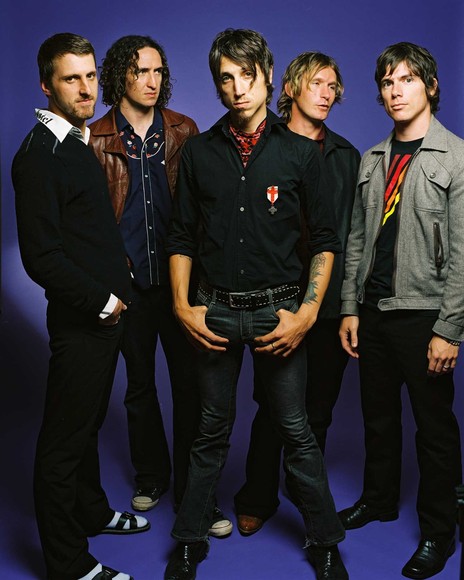
Pluto, in a 2005 EMI publicity shot (L-R): Tim Arnold, Michael Franklin-Browne, Milan Borich, Matthias Jordan and Michael Hall. - Photo by Rob Trathern
By 2005, radio play of local artists had surpassed 20% and the charts were bombarded with local hits. The preceding decade had seen a remarkable series of achievements: in 1998, pop group Deep Obsession had three No.1 hits in a row; in 2003, rapper Scribe had the most weeks at No.1 of any New Zealand artist (13 non-consecutive weeks); while hip hop/R&B act Nesian Mystik had 11 Top 10 hits.
Deep Obsession - Cold (1999)
Nesian Mystik - Unity (2002)
However, the good times were about to end. From 2005 to 2010, the revenue generated from selling physical albums was halved by illegal downloading. The internet had a slower, but equally profound effect on print media. Newspapers reduced their staff, with music journalists often first to go, and the majority of the music magazines folded. Meanwhile, YouTube gave viewers easy access to music videos, which largely killed off the music television. Musicians would have to find an entirely new way to create hits.
The 2010s: The Digital Era
The arrival of digital music access was hugely disruptive, but there were early signs of how it might allow New Zealanders to take their music to the world. Brooke Fraser gained an international audience after featuring on the home page of iTunes and Ladyhawke found a connection with UK fans through myspace. The promise was realised when Lorde released her first EP as a free digital download, which gained her fans around the world.
In the early 2010s, if you wanted to know how well a local act was doing internationally then the best signpost was YouTube views. The Naked and Famous filmed parts of their video for ‘Young Blood’ in the US, so that it would connect more smoothly with fans overseas. The song grew in popularity too slowly to enter the Hot 100 and so the only way to know it was becoming a hit was through the steadily growing views on YouTube.
The Naked and Famous - Young Blood (2010)
In 2011, ‘Young Blood’ had more viewers than any other New Zealand act aside from Mt Eden Dubstep (who went viral in a similar fashion), though within a couple of years Lorde (‘Royals’) and Kimbra (‘Settle Down’) would supersede it.
For a time, it seemed as if online music blogs would take over the tastemaking role of music magazines. Local supergroup Leisure had a breakthrough with their very first single due to blog coverage. However the era of the music blog wouldn’t last, as readers were drawn away by social media – sapping them of the page views they needed to draw advertising revenue.
Leisure - Got It Bad (2016)
Instead, musicians had to find online communities that might be open to their music. Tumblr gave an early boost to Lontalius and Salvia Palth, enough to get the ball rolling on Spotify. Soundcloud also provided a community for new acts to be discovered (particularly hip hop acts). Music blogs were also influential.
The streaming service Spotify was launched in New Zealand in 2012 and as it grew in prominence it became possible to go viral entirely within its ecosystem. Schouse’s ‘Love Tonight’ was initially placed on a few dance music playlists and when the listeners didn’t skip the track, the algorithm began presenting to more and more users, until it finally reached a billion streams.
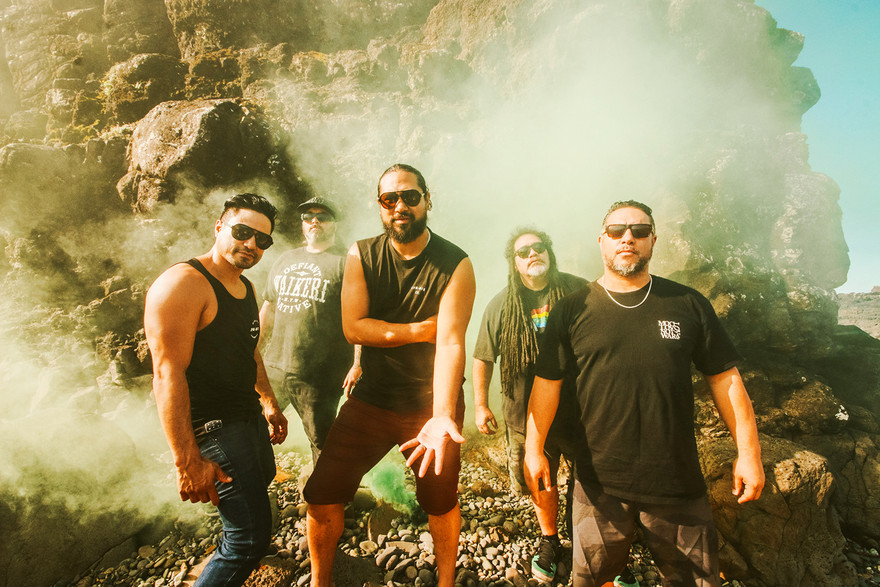
Katchafire, April 2018.
Some of the old ways continued to be important. Radio may have lost a chunk of its audience to streaming, but it still had great reach. Even more so, playing live continued to be a viable avenue to launching an artist. This was particularly true within the reggae scene. Early in the 2000s, bands such as Katchafire and 1814 developed a touring circuit through the small towns of Aotearoa, often performing covers for years before writing originals. Summer music festivals emerged on the back of this. Soon these acts appeared on the charts.
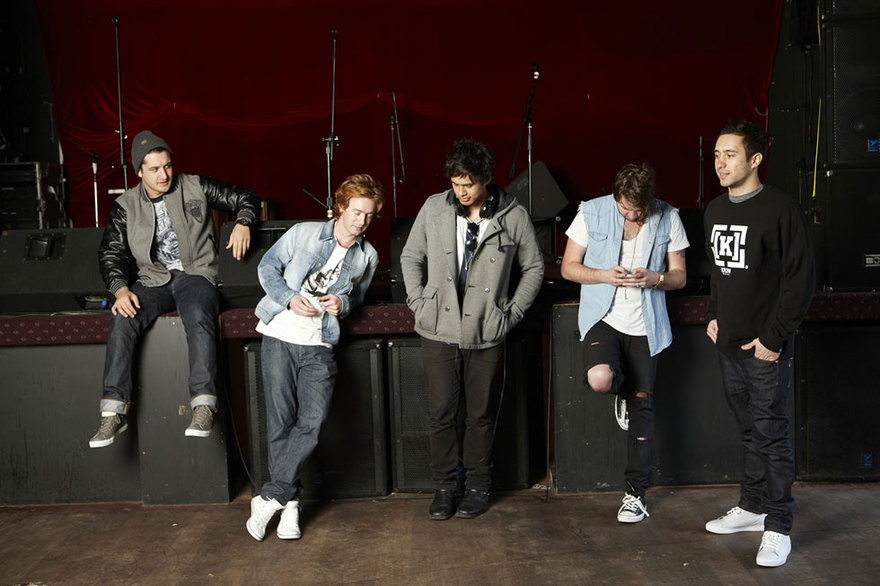
Six60: Matiu Walters, Ji Fraser, Eli Paewai, Chris Mac, Marlon Gerbes
The prime example of how far touring could take you was Six60. They spent two years playing gigs – mainly performing covers – before signing to Universal and releasing their first official single ‘Rise Up 2.0’ which reached the top of the charts. Their music moved smoothly between genres, meaning different tracks could break them on different radio stations. ‘Don’t Forget Your Roots’ was a reggae track that was perfect to break them on Mai FM. In contrast, pop song ‘Special’ reached across radio formats from the start and was given the award for “most performed New Zealand work in New Zealand” at the 2015 APRA awards.
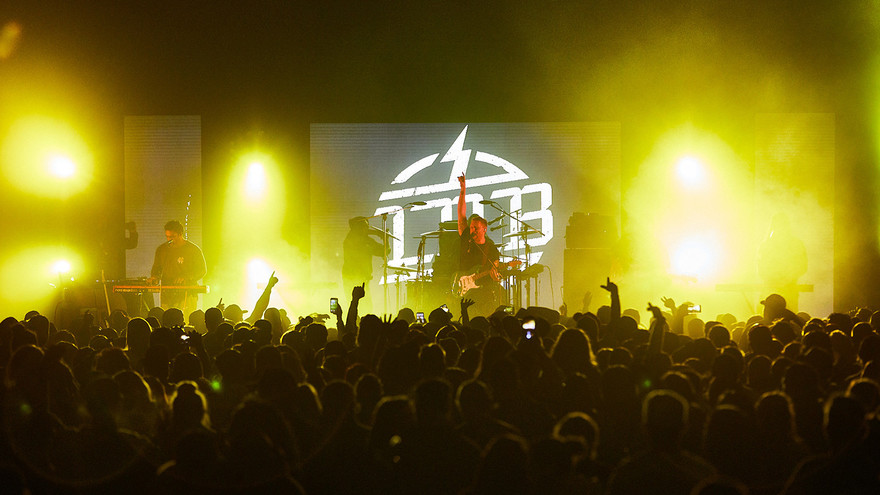
L.A.B. at Good Vibes festival, 2019. - Publicity photo
It was clear there were now two, widely-divergent paths to making a hit. The first approach was exemplified by a hard-touring act like L.A.B. who gathered fans show-by-show, before achieving breakthroughs on radio and streaming. In contrast, hip hop act producer 9lives worked for years releasing music online before he ever considered playing a gig.
The streams for 9lives’ biggest hits far outstripped those of Six60, though his gigs (when they finally came) were at small nightclubs or afternoon sets at music festivals, while Six60 could draw crowds of over 50,000 to Western Springs and Mt Eden stadiums. 9lives never made the local charts, while Six60 (and L.A.B.) were so dominant that the charts required a rule change – songs over 18 months were moved to a separate chart to avoid their old hits crowding out new acts.
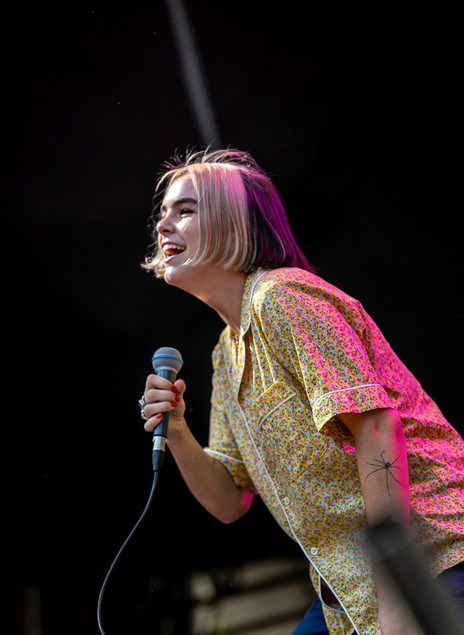
Benee, Laneway 2020. - Photo by Ngamihi Pawa
TikTok played a big part in the success of 9lives, but did even more for pop act Benee, through dances that users created for her songs ‘Glitter’ and ‘Supalonely.’ However, the most astounding TikTok-driven hit was ‘Freaked Out’ by Fat Papi. This young Kurdish-Kiwi rapper had his song used by a young woman showing off her bob haircut, which sparked off a trend.
‘Freaked Out’ was used in over 13 million posts and became so huge, so quickly that it shot into the real charts in Germany (No.17), New Zealand (No.38), the UK (No.42), Australia (No.42), and US (No.89). His monthly listeners on Spotify went past 10 million, putting him behind only Lorde and Crowded House when it came to local acts.
The fact that Crowded House were still riding so high is a story in itself. Their song ‘Don’t Dream It’s Over’ might have been 40 years old, but it had been used in over 10.8 million posts, keeping it in front of a new generation of listeners (TikTok did an even more remarkable job, bringing OMC’s ‘How Bizarre’ back into prominence).
Crowded House - Don’t Dream It’s Over (1986)
It was a good reminder that the one key element of creating a hit was having a good song in the first place. Now that listeners around the world have instant access to music from New Zealand, we are finally proving what Kiwis have always known: we produce some of the best music in the world.